
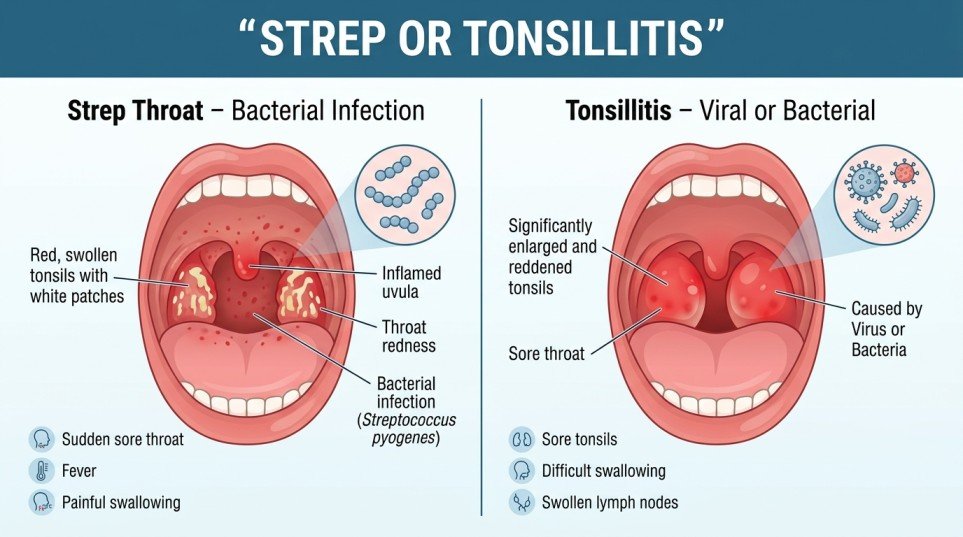
Quick Ans: The main difference between strep or tonsillitis is the cause. Strep throat is a bacterial infection caused by Streptococcus bacteria, while tonsillitis is inflammation of the tonsils that can be caused by viruses or bacteria. Both share similar symptoms, but diagnosis and treatment can differ.
Many people get confused when comparing strep or tonsillitis. Both conditions cause sore throat. Both can make swallowing painful. And both often come with fever and swollen glands.
However, they are not the same illness.
Strep throat is a specific bacterial infection. Tonsillitis is a broader condition that refers to swollen tonsils. Because of this, tonsillitis can be caused by viruses or bacteria, including strep bacteria.
This overlap creates confusion. For example, someone with tonsillitis may assume they have strep throat. On the other hand, a person with strep may not realize it requires medical treatment.
Understanding the difference between strep or tonsillitis is important. It helps you know when to rest at home and when to see a doctor. It also helps avoid unnecessary antibiotics.
In this guide, you will learn symptoms, causes, treatments, key differences, and practical examples. By the end, you will clearly understand how to tell them apart.
Quick Answer: Strep or Tonsillitis
To understand strep or tonsillitis, focus on the cause and treatment.
| Feature | Strep Throat | Tonsillitis |
|---|---|---|
| Cause | Bacteria (Group A Streptococcus) | Virus or bacteria |
| Area Affected | Throat and tonsils | Tonsils |
| Treatment | Antibiotics required | Depends on cause |
| Contagious | Yes | Yes |
| Common Age | Children and teens | All ages |
In simple terms, strep throat is a type of bacterial infection, while tonsillitis is a general condition affecting the tonsils.
What Is Strep Throat?
Strep throat is a bacterial infection caused by Group A Streptococcus. This infection affects the throat and tonsils and spreads easily through respiratory droplets.
Common Symptoms of Strep Throat
People with strep throat often experience:
- Sudden sore throat
- Pain when swallowing
- Fever
- Red and swollen tonsils
- White patches on tonsils
- Swollen lymph nodes
- Headache
Unlike many viral infections, strep throat usually does not include coughing or a runny nose.
How Strep Spreads
The bacteria spreads through:
- Coughing
- Sneezing
- Close contact
- Sharing utensils
Because of this, strep throat spreads quickly in schools and crowded places.
How It Is Treated
Doctors usually prescribe antibiotics. These medicines:
- Kill the bacteria
- Reduce symptoms
- Prevent complications
Early treatment is important to avoid serious health issues.
What Is Tonsillitis?
Tonsillitis is inflammation of the tonsils, which are two small glands located at the back of the throat. This condition can be caused by viruses or bacteria.
Types of Tonsillitis
There are different types of tonsillitis:
- Acute tonsillitis (short term)
- Chronic tonsillitis (long lasting)
- Recurrent tonsillitis (repeated episodes)
Common Symptoms of Tonsillitis
Symptoms may include:
- Sore throat
- Swollen tonsils
- Difficulty swallowing
- Fever
- Bad breath
- Ear pain
Because viruses often cause tonsillitis, symptoms can also include cough and runny nose.
How Tonsillitis Is Treated
Treatment depends on the cause:
- Viral tonsillitis usually improves with rest and fluids
- Bacterial tonsillitis may require antibiotics
In severe or repeated cases, doctors may recommend tonsil removal surgery.
Key Differences Between Strep or Tonsillitis
Cause
The main difference in strep or tonsillitis is the cause. Strep throat is always bacterial. Tonsillitis can be viral or bacterial.
Symptoms
Both conditions share similar symptoms. However, strep throat often lacks cold symptoms like cough or runny nose.
Diagnosis
Doctors use a throat swab test to confirm strep throat. Tonsillitis diagnosis is usually based on symptoms and physical exam.
Treatment
Strep throat requires antibiotics. Tonsillitis treatment depends on whether the cause is viral or bacterial.
Advantages and Disadvantages of Early Diagnosis
Benefits of Identifying Strep Throat
- Quick treatment with antibiotics
- Faster recovery
- Reduced risk of complications
- Less chance of spreading infection
Risks of Misdiagnosing Tonsillitis
- Unnecessary antibiotic use
- Delayed proper treatment
- Prolonged discomfort
Accurate diagnosis plays a key role in managing strep or tonsillitis.
Real World Examples
Example 1
A child develops sudden throat pain and fever without a cough. A doctor performs a test and confirms strep throat.
Example 2
An adult has sore throat, cough, and mild fever. The doctor diagnoses viral tonsillitis and recommends rest.
Example 3
A teenager gets repeated sore throats throughout the year. Doctors identify recurrent tonsillitis.
These cases show how strep or tonsillitis differ in real life.
Regional and Global Occurrence
In Schools
Strep throat spreads easily among children due to close contact.
In General Population
Tonsillitis affects people of all ages worldwide.
Seasonal Trends
Both conditions are more common during colder months when infections spread easily.
Thus, environment and lifestyle influence the occurrence of strep or tonsillitis.
Related Concepts and Comparisons
Strep vs Viral Sore Throat
Strep throat is bacterial. Viral sore throat comes from viruses and does not need antibiotics.
Tonsillitis vs Pharyngitis
Pharyngitis refers to throat inflammation. Tonsillitis specifically affects the tonsils.
Strep or Tonsillitis vs Cold
| Condition | Cause | Fever | Cough |
|---|---|---|---|
| Strep Throat | Bacteria | Common | Rare |
| Tonsillitis | Virus or bacteria | Common | Sometimes |
| Cold | Virus | Rare | Common |
These comparisons help clarify the differences further.
Common Mistakes About Strep or Tonsillitis
Assuming All Sore Throats Are Strep
Not every sore throat is bacterial. Many cases are viral.
Taking Antibiotics Without Testing
Antibiotics only work for bacterial infections. Using them unnecessarily can cause resistance.
Ignoring Severe Symptoms
High fever or difficulty swallowing should not be ignored. Medical advice is important.
Delaying Medical Care
Waiting too long can lead to complications, especially in strep throat.
Avoiding these mistakes improves health outcomes.
Beginner to Advanced Care Tips
Beginner Level
- Drink warm fluids
- Rest properly
- Use throat lozenges
Intermediate Level
- Monitor symptoms closely
- Use over the counter pain relief
- Gargle with salt water
Advanced Level
- Seek medical testing for persistent symptoms
- Follow prescribed antibiotics fully
- Consider specialist care for recurring cases
Proper care depends on accurate understanding of strep or tonsillitis.
Step By Step Diagnosis Scenario
Imagine you have a sore throat.
If symptoms include fever and no cough:
- Visit a doctor
- Get a throat swab test
- Confirm strep infection
- Start antibiotics
If symptoms include cough and mild fever:
- Rest at home
- Drink fluids
- Monitor symptoms
- Seek help if condition worsens
This approach helps distinguish between strep or tonsillitis.
Exercises With Answers
Exercise 1
Which condition is always caused by bacteria?
Answer: Strep throat.
Exercise 2
Which condition can be viral or bacterial?
Answer: Tonsillitis.
Exercise 3
Which condition requires antibiotics?
Answer: Strep throat.
Exercise 4
Which condition may include cough and runny nose?
Answer: Tonsillitis.
Exercise 5
True or False: All tonsillitis cases require antibiotics.
Answer: False.
When Should You Choose Medical Care?
Seek medical help if you:
- Have high fever
- Experience severe throat pain
- Struggle to swallow
- Notice white patches on tonsils
- Have symptoms lasting more than a few days
These signs may indicate strep throat or severe tonsillitis.
FAQs About Strep or Tonsillitis
What is the main difference between strep or tonsillitis?
Strep throat is a bacterial infection, while tonsillitis is inflammation of the tonsils caused by viruses or bacteria.
Can tonsillitis turn into strep throat?
No. However, strep bacteria can cause tonsillitis.
Which is more serious, strep or tonsillitis?
Strep throat can be more serious if untreated because it may lead to complications.
Do both conditions require antibiotics?
No. Only bacterial infections like strep throat need antibiotics.
How can you tell if it is strep or tonsillitis?
A doctor uses a throat swab test to confirm strep throat.
Is strep throat contagious?
Yes. It spreads through close contact and respiratory droplets.
Can adults get tonsillitis?
Yes. Tonsillitis affects both children and adults.
How long does tonsillitis last?
Viral tonsillitis usually lasts a few days to a week.
Can you prevent strep throat?
Good hygiene and avoiding close contact with infected people can reduce risk.
When should you see a doctor for strep or tonsillitis?
Seek care if symptoms are severe, persistent, or include high fever.
Conclusion
Understanding strep or tonsillitis helps you respond correctly to sore throat symptoms. While both conditions affect the throat and tonsils, their causes and treatments differ.
Strep throat is a bacterial infection that requires antibiotics. Tonsillitis is a broader condition that may be viral or bacterial. Because of this, not all cases need medication.
Recognizing symptoms such as fever, absence of cough, or white patches can guide your next step. However, proper diagnosis often requires a medical test.
Early action leads to faster recovery. Ignoring symptoms can result in complications or prolonged discomfort.
By learning the differences between strep or tonsillitis, you can make informed decisions about treatment and care. This knowledge helps protect both your health and the health of others.
Discover More:-
- Cellentani vs Cavatappi: Differences, Uses, and Best Pasta Guide
- GT vs Duke: Key Differences, Performance, and Buying Guide

Lisa Thompson is a USA-based content writer and language specialist focused on grammar, writing improvement and digital publishing.
She holds a degree in English Language and Communication and has professional experience in educational and web content creation.
As the author of Gramtivo.Com, she aims to help readers improve their writing skills through clear and practical guidance.

Pingback: White or Wheat: Differences, Nutrition, and Which Bread Is Better
Pingback: Kneck or Neck: Correct Spelling, Meaning, and Common Mistakes Explained
Pingback: Boxer or Briefs: Key Differences, Comfort, and Which to Choose