
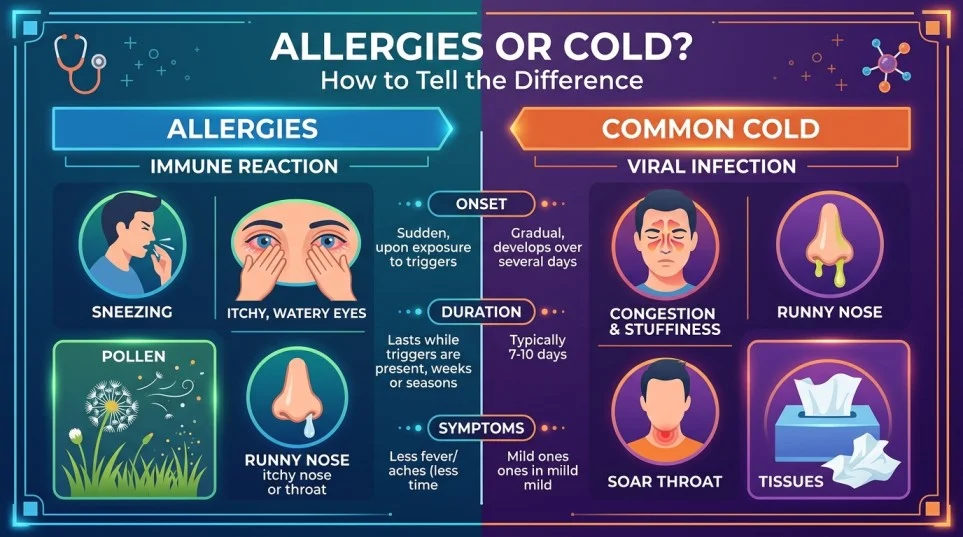
Quick Ans: The main difference between allergies or cold symptoms is the cause. Allergies happen when the immune system reacts to substances like pollen, dust, or pet dander, while a cold is caused by a viral infection. Although symptoms can overlap, certain signs such as fever, itchy eyes, and symptom duration can help you tell them apart.
Many people struggle to determine whether they have allergies or cold symptoms. Sneezing starts. A runny nose appears. Congestion makes breathing difficult. At first, both conditions can feel almost identical.
However, the underlying causes are completely different.
A cold develops because of a virus. Allergies occur when the body’s immune system overreacts to normally harmless substances. As a result, treatment approaches differ significantly.
Misidentifying the problem can lead to frustration. For instance, allergy medication may not help a viral cold. Likewise, treating seasonal allergies as a cold may leave symptoms lingering for weeks.
Knowing the difference helps you choose the right remedies and avoid unnecessary medications. It also allows you to recognize when professional medical attention may be needed.
This guide explains allergies or cold symptoms in simple terms. You will learn the causes, symptoms, advantages and disadvantages of diagnosis methods, common mistakes, practical examples, and frequently asked questions. By the end, identifying the difference will become much easier.
Quick Answer: Allergies or Cold
The easiest way to distinguish allergies or cold symptoms is by looking at triggers and symptom patterns.
| Feature | Allergies | Cold |
|---|---|---|
| Cause | Immune reaction | Viral infection |
| Fever | Rare | Sometimes |
| Itchy Eyes | Common | Rare |
| Sneezing | Common | Common |
| Body Aches | Rare | Common |
| Duration | Weeks or months | 7 to 14 days |
| Contagious | No | Yes |
In simple terms, allergies are triggered by environmental factors, while colds result from viruses.
What Are Allergies?
Allergies occur when the immune system mistakenly identifies a harmless substance as dangerous. Consequently, the body releases chemicals such as histamine, causing various symptoms.
Common allergy triggers include:
- Pollen
- Dust mites
- Mold
- Pet dander
- Certain foods
- Insect stings
Because allergens can be present year round, allergy symptoms may last much longer than cold symptoms.
How Allergies Develop
The immune system normally protects the body from harmful invaders. However, in allergic individuals, the body reacts to harmless substances.
This reaction can lead to:
- Sneezing
- Itchy eyes
- Runny nose
- Nasal congestion
- Skin irritation
Symptoms often begin shortly after exposure to an allergen.
Types of Allergies
Several allergy types are common:
- Seasonal allergies
- Pet allergies
- Dust allergies
- Food allergies
- Mold allergies
Each type has unique triggers, but many symptoms overlap.
What Is a Cold?
A cold is a mild viral infection that affects the upper respiratory system. Unlike allergies, colds spread from person to person.
More than 200 viruses can cause a cold, although rhinoviruses are among the most common.
Common Cold Symptoms
Cold symptoms often include:
- Runny nose
- Nasal congestion
- Sore throat
- Cough
- Mild body aches
- Fatigue
Symptoms usually develop gradually rather than appearing immediately.
How Colds Spread
Cold viruses spread through:
- Airborne droplets
- Direct contact
- Shared surfaces
- Close personal interaction
Because colds are contagious, they can spread quickly in homes, schools, and workplaces.
Typical Cold Duration
Most colds last:
- 7 to 10 days
- Occasionally up to 14 days
After recovery, symptoms typically disappear completely.
Key Differences Between Allergies or Cold
Cause
The biggest difference between allergies or cold is the cause.
Allergies result from immune reactions. Colds occur because of viral infections.
Fever
Fever rarely occurs with allergies. In contrast, mild fever may accompany a cold.
Itchy Eyes
Itchy, watery eyes strongly suggest allergies. Colds rarely produce this symptom.
Symptom Duration
Allergies can continue for weeks or months if exposure continues. Colds generally resolve within two weeks.
Contagiousness
Allergies cannot spread between people. Cold viruses, however, are highly contagious.
Symptom Comparison Table
| Symptom | Allergies | Cold |
|---|---|---|
| Sneezing | Very common | Common |
| Runny Nose | Common | Common |
| Nasal Congestion | Common | Common |
| Itchy Eyes | Very common | Rare |
| Fever | Rare | Sometimes |
| Body Aches | Rare | Common |
| Fatigue | Mild | Common |
| Sore Throat | Sometimes | Common |
| Cough | Occasionally | Common |
This comparison helps clarify the allergies or cold question in many situations.
Advantages and Disadvantages of Identifying Symptoms Yourself
Advantages
Recognizing symptom patterns can help you:
- Choose proper treatments
- Avoid unnecessary medications
- Monitor symptom changes
- Seek medical care when appropriate
Disadvantages
Self diagnosis also has limitations:
- Symptoms can overlap
- Multiple conditions may occur together
- Serious illnesses may mimic both conditions
- Misinterpretation is possible
Therefore, persistent or severe symptoms should be evaluated by a healthcare professional.
Real World Examples
Example 1: Springtime Sneezing
Sarah develops sneezing, itchy eyes, and a runny nose every spring.
Because symptoms appear during pollen season and include itchy eyes, allergies are the likely cause.
Example 2: Office Outbreak
John develops congestion, sore throat, fatigue, and mild fever after coworkers become sick.
Since symptoms include fever and exposure to illness, a cold is more likely.
Example 3: Symptoms Last One Month
Maria experiences nasal congestion for four weeks without fever.
The extended duration points more toward allergies than a cold.
These scenarios show how symptom patterns help answer the allergies or cold question.
Regional and Global Usage
Seasonal Allergies
Regions with high pollen levels often see allergy symptoms increase during spring and fall.
Cold Season
Colds occur worldwide but become more common during cooler months when people spend more time indoors.
Urban Areas
Air pollution can worsen allergy symptoms and make diagnosis more challenging.
Rural Areas
Agricultural environments may increase exposure to pollen and other allergens.
Location can therefore influence whether symptoms result from allergies or a cold.
Related Concepts and Comparisons
Allergies vs Flu
The flu often causes:
- High fever
- Significant body aches
- Severe fatigue
These symptoms are less common with allergies.
Cold vs Sinus Infection
A sinus infection may develop after a cold and often causes:
- Facial pain
- Thick nasal discharge
- Pressure around the eyes
Allergies vs COVID-19
COVID-19 symptoms may include:
- Fever
- Loss of taste or smell
- Fatigue
- Cough
Because symptoms can overlap, testing may be necessary.
Understanding these related conditions helps clarify the allergies or cold comparison.
Common Mistakes About Allergies or Cold
Assuming Every Runny Nose Is a Cold
Many people automatically blame a virus. In reality, allergies frequently cause runny noses.
Ignoring Itchy Eyes
Itchy eyes are one of the strongest allergy indicators. Many individuals overlook this clue.
Using Antibiotics Unnecessarily
Antibiotics do not treat viral colds. They also do not cure allergies.
Forgetting About Seasonal Patterns
Symptoms that return every year often suggest allergies rather than recurrent colds.
Avoiding these mistakes can improve symptom management.
Beginner to Advanced Symptom Assessment Tips
Beginner Level
Track symptoms using a notebook or phone app. Record when symptoms begin and how long they last.
Intermediate Level
Look for triggers such as:
- Pollen exposure
- Pets
- Dust
- Sick contacts
These details often reveal the cause.
Advanced Level
Consider professional allergy testing if symptoms occur repeatedly. Healthcare providers can identify specific allergens and recommend targeted treatments.
Step By Step Symptom Evaluation Scenario
Imagine you wake up with congestion and sneezing.
First, check for fever.
Next, notice whether your eyes feel itchy.
Then, consider recent exposure to sick individuals.
After that, think about environmental triggers such as pollen or pets.
Finally, monitor how long symptoms continue.
This process can help determine whether you are experiencing allergies or cold symptoms.
Exercises With Answers
Exercise 1
Which condition is caused by a virus?
Answer: Cold.
Exercise 2
Which condition commonly causes itchy eyes?
Answer: Allergies.
Exercise 3
Which condition is contagious?
Answer: Cold.
Exercise 4
Which condition may last for several weeks or months?
Answer: Allergies.
Exercise 5
True or False: Fever is a common allergy symptom.
Answer: False.
When Should You Suspect Allergies or Cold?
Suspect allergies if you:
- Have itchy eyes
- Experience seasonal symptoms
- Notice symptoms around pets or pollen
- Do not have a fever
Suspect a cold if you:
- Have a sore throat
- Feel fatigued
- Develop mild fever
- Recently interacted with sick individuals
Observing these clues can improve accuracy.
FAQs About Allergies or Cold
What is the biggest difference between allergies or cold symptoms?
The biggest difference is the cause. Allergies result from immune reactions, while colds are caused by viruses.
How can I tell if I have allergies or a cold?
Itchy eyes and seasonal triggers often suggest allergies. Fever and body aches usually point toward a cold.
Can allergies cause a sore throat?
Yes. Postnasal drip from allergies can irritate the throat and cause discomfort.
Do allergies cause fever?
No. Fever is uncommon with allergies and is more often associated with infections.
How long do allergy symptoms last compared to a cold?
Allergies can continue for weeks or months. Most colds improve within one to two weeks.
Can I have allergies and a cold at the same time?
Yes. Some individuals experience both conditions simultaneously, making diagnosis more difficult.
Are allergy symptoms contagious?
No. Allergies cannot spread from one person to another.
Can cold medicine help allergies?
Some medications may reduce symptoms, but allergy specific treatments often work better.
Why do my symptoms return every spring?
Recurring symptoms during the same season often indicate seasonal allergies.
When should I see a doctor for allergies or cold symptoms?
Seek medical attention if symptoms are severe, persistent, or accompanied by breathing difficulties.
Conclusion
Understanding the difference between allergies or cold symptoms can save time, reduce frustration, and help you choose the right treatment. Although both conditions share signs such as sneezing, congestion, and a runny nose, the underlying causes are very different.
Allergies occur when the immune system reacts to substances like pollen, dust, or pet dander. Colds develop because of viral infections and can spread from person to person. Symptoms such as itchy eyes, fever, body aches, and duration often provide important clues.
Careful observation is the best starting point. Notice when symptoms occur, how long they last, and whether environmental triggers are involved. Seasonal patterns may indicate allergies, while recent exposure to sick individuals may suggest a cold.
If symptoms become severe, persistent, or difficult to identify, professional medical advice is recommended. By learning the key differences between allergies or cold symptoms, you can manage your health more effectively and make informed treatment decisions.
Discove More:-
- iOS or Android: Full Comparison Guide for Features, Security, and Performance
- Greatful or Grateful: Which Spelling Is Correct and Why?

Robert Mitchell is a U.S.-based writer at Gramtivo.Com who focuses on grammar, writing improvement, and language-related content. He holds a degree in English and Linguistics from a U.S. university. His work aims to help readers enhance their writing skills with clear and practical guidance.

Pingback: Heros or Heroes: Which Spelling Is Correct? Complete Grammar Guide
Pingback: Breath or Breathe: Difference, Meaning, Examples, and Grammar Guide
Pingback: Recurring or Reoccurring: Differences, Meanings, Examples, and Usage Guide
Pingback: Ensure or Insure: Difference, Meaning, Examples, and Correct Usage Guide
Pingback: Por vs Para: Meaning, Rules, Examples, and Easy Spanish Grammar Guide