
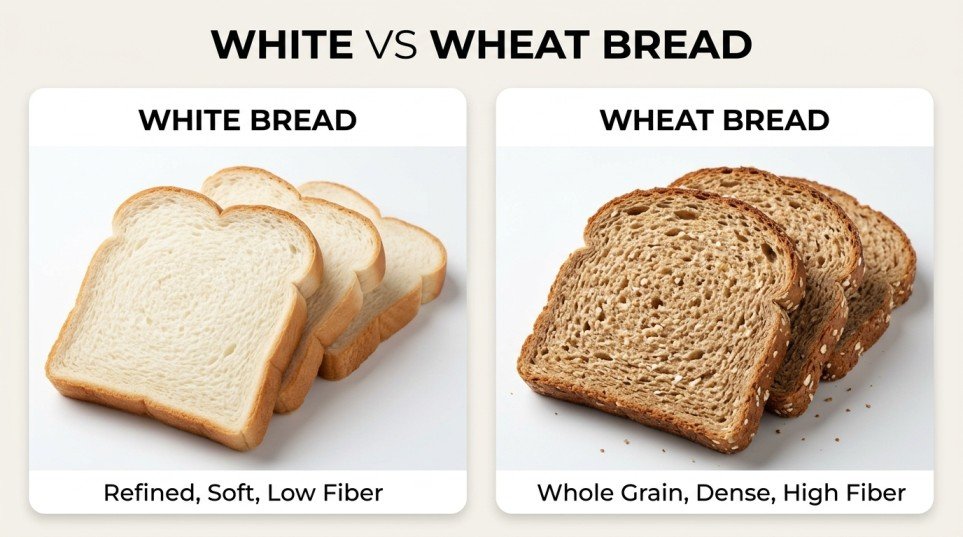
Quick Ans: The main difference between white or wheat bread is how the grain is processed. White bread is made from refined flour with the bran and germ removed, while wheat bread uses whole grains, keeping more fiber and nutrients. As a result, wheat bread is usually healthier, while white bread is softer and lighter in texture.
Many people ask about white or wheat when choosing bread for daily meals. Both types are common. Both are used for sandwiches, toast, and snacks. However, they are not the same.
White bread feels soft and smooth. Wheat bread feels denser and slightly nutty. Because of these differences, each type fits different tastes and health goals.
The confusion often comes from labels. Some breads say “wheat” but are not truly whole grain. Others look brown but still contain refined flour. Therefore, choosing the right bread can feel difficult.
Understanding white or wheat helps you make smarter food decisions. It also supports better nutrition and long term health.
In this guide, you will learn definitions, benefits, drawbacks, real world examples, and common mistakes. By the end, you will clearly know which bread suits your needs.
Quick Answer: White or Wheat
To understand white or wheat, focus on processing and nutrition.
| Feature | White Bread | Wheat Bread |
|---|---|---|
| Grain Type | Refined flour | Whole grain or partially whole |
| Fiber | Low | Higher |
| Texture | Soft and light | Dense and hearty |
| Nutrients | Fewer natural nutrients | More vitamins and minerals |
| Taste | Mild | Slightly nutty |
In simple terms, white bread is refined, while wheat bread is more natural and nutrient rich.
What Is White Bread?
White bread is made from refined wheat flour. During processing, the bran and germ are removed. Only the endosperm remains.
Because of this process, the bread becomes:
- Softer
- Lighter in color
- Smoother in texture
Common Uses of White Bread
White bread is widely used because of its texture and taste.
People often use it for:
- Sandwiches
- Toast
- Burgers
- French toast
Its mild flavor works well with many foods.
How White Bread Is Made
The process usually involves:
- Removing bran and germ from wheat grain
- Grinding the remaining part into fine flour
- Mixing with water, yeast, and other ingredients
- Baking into soft loaves
As a result, white bread becomes easy to chew and digest.
What Is Wheat Bread?
Wheat bread is made using whole wheat flour or partially whole grain flour. Unlike white bread, it keeps the bran and germ.
Because of this, wheat bread contains:
- More fiber
- More vitamins
- More minerals
Types of Wheat Bread
Not all wheat bread is the same. Some common types include:
- 100 percent whole wheat bread
- Multigrain bread
- Honey wheat bread
However, only 100 percent whole wheat offers full nutritional benefits.
How Wheat Bread Is Made
The process includes:
- Grinding whole wheat grains
- Keeping bran, germ, and endosperm
- Mixing with yeast and water
- Baking into dense loaves
Because the full grain is used, the texture becomes heavier and more filling.
Key Differences Between White or Wheat
Processing
The biggest difference in white or wheat is processing. White bread is refined, while wheat bread uses more of the whole grain.
Nutrition
Wheat bread contains more fiber and nutrients. White bread often loses nutrients during processing but may be enriched later.
Texture
White bread feels soft and airy. Wheat bread feels dense and slightly coarse.
Taste
White bread has a mild taste. Wheat bread has a richer, nuttier flavor.
Advantages and Disadvantages
Advantages of White Bread
White bread offers several benefits:
- Soft and easy to chew
- Mild flavor
- Good for quick energy
- Preferred by children
Disadvantages of White Bread
There are also drawbacks:
- Low fiber content
- Less filling
- Fewer natural nutrients
- Can cause quick blood sugar spikes
Advantages of Wheat Bread
Wheat bread provides important benefits:
- High fiber content
- More nutrients
- Keeps you full longer
- Supports digestion
Disadvantages of Wheat Bread
Some limitations exist:
- Denser texture
- Stronger flavor
- May not suit all tastes
Therefore, choosing between white or wheat depends on personal preference and health needs.
Nutritional Comparison
Here is a general comparison:
| Nutrient | White Bread | Wheat Bread |
|---|---|---|
| Fiber | Low | High |
| Protein | Moderate | Moderate |
| Vitamins | Added (enriched) | Natural and higher |
| Calories | Similar | Similar |
| Glycemic Index | Higher | Lower |
Because wheat bread has more fiber, it usually keeps blood sugar more stable.
Real World Examples
Breakfast Choice
Someone rushing in the morning may choose white toast because it is quick and soft. Another person may choose wheat toast for longer lasting energy.
Sandwich Making
White bread works well for light sandwiches. Wheat bread adds flavor and nutrition to heavier meals.
Fitness Goals
People trying to lose weight often choose wheat bread. Those needing quick energy might prefer white bread.
These examples show how white or wheat fits different lifestyles.
Regional and Global Usage
Western Countries
Both white and wheat bread are widely used. Health trends have increased demand for whole wheat options.
Developing Regions
White bread remains popular due to cost and availability. However, awareness of whole grains is growing.
Global Trends
Many people now prefer whole grain products. As a result, wheat bread continues to gain popularity worldwide.
Related Concepts and Comparisons
White Bread vs Whole Grain Bread
Whole grain bread includes all parts of the grain. White bread does not.
Wheat Bread vs Multigrain Bread
Multigrain bread contains multiple grains but is not always whole grain. Wheat bread may be healthier if fully whole wheat.
White vs Wheat vs Brown Bread
| Type | Processing | Fiber | Color |
|---|---|---|---|
| White | Refined | Low | Light |
| Wheat | Whole or partial | Higher | Brown |
| Brown Bread | May be colored | Varies | Brown |
Understanding labels helps avoid confusion in the white or wheat decision.
Common Mistakes About White or Wheat
Assuming All Wheat Bread Is Healthy
Some wheat breads contain refined flour. Always check labels for “100 percent whole wheat.”
Judging by Color
Brown color does not always mean whole grain. Some breads use coloring.
Ignoring Ingredients List
Ingredients reveal the truth. Whole wheat should be listed first.
Overeating Healthy Bread
Even wheat bread contains calories. Portion control still matters.
Avoiding these mistakes improves your choice between white or wheat.
Beginner to Advanced Nutrition Tips
Beginner Level
Start by replacing white bread with wheat bread for one meal a day.
Intermediate Level
Read labels carefully and choose whole grain options.
Advanced Level
Combine whole grain bread with balanced meals including protein and healthy fats.
These steps help improve long term dietary habits.
Step By Step Selection Scenario
Imagine you are shopping for bread.
If choosing white bread:
- Look for soft texture
- Check enrichment label
- Choose fresh loaf
- Store properly
If choosing wheat bread:
- Check for “100 percent whole wheat”
- Read ingredient list
- Look for high fiber content
- Avoid added sugars
Although both options are available, careful selection improves health outcomes.
Exercises With Answers
Exercise 1
Which type of bread has more fiber in the white or wheat comparison?
Answer: Wheat bread.
Exercise 2
Which bread is made from refined flour?
Answer: White bread.
Exercise 3
Which option keeps you full longer?
Answer: Wheat bread.
Exercise 4
Which bread has a softer texture?
Answer: White bread.
Exercise 5
True or False: All brown bread is whole wheat.
Answer: False.
When Should You Choose White or Wheat?
Choose white bread if you:
- Prefer soft texture
- Need quick energy
- Want mild flavor
Choose wheat bread if you:
- Want more fiber
- Aim for better nutrition
- Need longer lasting fullness
Your goals and taste preferences guide the choice between white or wheat.
FAQs About White or Wheat
What is the main difference between white or wheat bread?
White bread is made from refined flour, while wheat bread contains more of the whole grain and offers more nutrients.
Is wheat bread always healthier than white bread?
Usually yes, especially when it is 100 percent whole wheat. However, not all wheat breads are fully whole grain.
Which bread is better for weight loss, white or wheat?
Wheat bread is better because it contains more fiber and keeps you full longer.
Does white bread have any benefits?
Yes. It is easy to digest and provides quick energy.
How can I tell if bread is truly whole wheat?
Check the label for “100 percent whole wheat” and review the ingredient list.
Is brown bread the same as wheat bread?
Not always. Some brown bread is colored and may not be whole grain.
Which bread is better for digestion?
Wheat bread supports digestion due to higher fiber content.
Can I eat white bread daily?
Yes, but moderation is important due to lower nutritional value.
Does wheat bread taste different?
Yes. It has a slightly nutty and richer flavor compared to white bread.
Is wheat bread more filling than white bread?
Yes. Fiber content helps you feel full longer.
Conclusion
Understanding white or wheat helps you make better food choices every day. Although both types of bread are widely available, their nutritional value and effects on the body differ.
White bread is soft, light, and easy to eat. It works well for quick meals and simple recipes. However, it contains less fiber and fewer natural nutrients.
Wheat bread, especially whole wheat, offers more fiber, vitamins, and minerals. It supports digestion and keeps you full for longer periods.
Choosing between white or wheat depends on your goals. For better health, wheat bread is usually the stronger option. For taste and texture, white bread remains popular.
A balanced approach works best. Consider mixing both types based on your needs. With the right knowledge, you can confidently select the best bread for your lifestyle.
Discover More:-
- Coaches or Coach’s: Difference, Rules, and Easy Grammar Guide
- Strep or Tonsillitis: Key Differences, Symptoms, and Treatment Guide

Jennifer Collins is a professional grammar expert and language educator at gramtivo.com, specializing in English grammar, writing skills, and language improvement. She holds a Master’s degree in English Language and Literature from a recognized university in the United States. With years of teaching and content development experience, she is dedicated to helping learners improve their communication skills with clear and practical guidance.