
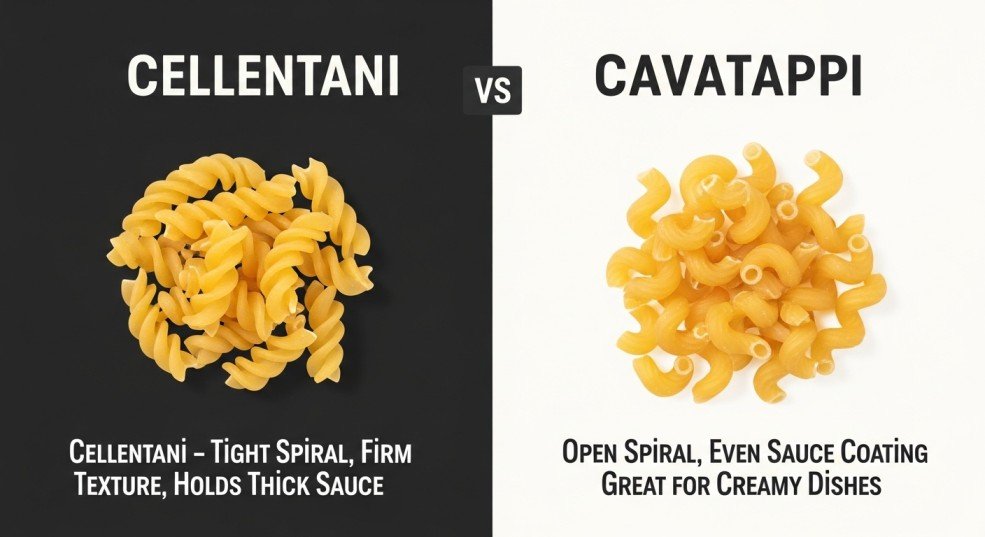
The main difference between cellentani vs cavatappi is shape and usage. Cellentani is a tightly twisted spiral pasta with deeper ridges, while cavatappi has a looser corkscrew shape with a hollow center. Both hold sauce well, but their texture and presentation differ slightly.
Many people compare cellentani vs cavatappi because both look like spiral pasta. Each one twists into a curved shape. Both also pair well with sauces, cheese, and baked dishes.
However, they are not exactly the same.
At first glance, the difference may seem small. Yet, when you cook and taste them, the texture and structure feel different. One has tighter curves. The other has a more open spiral. These details affect how sauce sticks and how the pasta feels when you eat it.
Confusion often happens in grocery stores. Some brands even use the names interchangeably. As a result, many people do not realize there is a difference at all.
Understanding cellentani vs cavatappi helps you choose the right pasta for your dish. It also improves your cooking results at home.
In this guide, you will learn definitions, differences, advantages, real world uses, mistakes, and helpful exercises. By the end, you will clearly know which pasta to use and when.
Quick Answer: Cellentani vs Cavatappi
To quickly understand cellentani vs cavatappi, focus on shape and structure.
| Feature | Cellentani | Cavatappi |
|---|---|---|
| Shape | Tight spiral | Loose corkscrew |
| Structure | More compact twists | More open curves |
| Texture | Slightly firmer bite | Slightly softer bite |
| Sauce Holding | Excellent | Excellent |
| Common Use | Creamy dishes | Mac and cheese, baked pasta |
In simple terms, cellentani is tighter, while cavatappi is more open and curved.
What Is Cellentani?
Cellentani is a spiral shaped pasta with tight twists and ridges. Its compact design allows it to hold thick sauces very well.
The name comes from a famous Italian singer, Adriano Celentano, whose energetic style inspired the pasta’s playful shape.
Typical Cellentani Features
Cellentani has several distinct characteristics:
- Tight spiral curves
- Ridged surface
- Hollow center
- Firm texture when cooked
Because of its structure, it traps sauce inside and outside the pasta.
Common Uses of Cellentani
Cooks often use cellentani for:
- Creamy pasta dishes
- Tomato based sauces
- Pasta salads
- Baked casseroles
Its shape makes it ideal for dishes where sauce coverage matters.
How It Is Made
The production process includes:
- Mixing durum wheat semolina with water
- Extruding dough through a spiral mold
- Cutting into short curved pieces
- Drying for storage
The tight spiral comes from the specific mold used during extrusion.
What Is Cavatappi?
Cavatappi is a corkscrew shaped pasta with a hollow center and gentle spiral. Compared to cellentani, it has wider curves and a more open structure.
The name “cavatappi” means “corkscrew” in Italian.
Typical Cavatappi Features
Cavatappi includes:
- Loose spiral shape
- Hollow tube structure
- Ridged or smooth surface
- Slightly softer bite
Because of its open design, sauces coat it evenly.
Common Uses of Cavatappi
Cavatappi works well in:
- Mac and cheese
- Cheesy baked pasta
- Pasta salads
- Light cream sauces
Its shape makes it popular in comfort food recipes.
How It Is Made
The process is similar to other pasta types:
- Prepare semolina dough
- Push through corkscrew shaped mold
- Cut into curved tubes
- Dry for packaging
The mold determines the final spiral shape.
Key Differences Between Cellentani vs Cavatappi
Shape
The most noticeable difference in cellentani vs cavatappi is shape. Cellentani has tighter spirals. Cavatappi features wider, looser curves.
Texture
Tighter twists give cellentani a firmer bite. Meanwhile, cavatappi feels slightly softer due to its open structure.
Sauce Interaction
Both hold sauce well. However, cellentani traps more sauce inside its tighter curves. In contrast, cavatappi allows sauce to coat the surface more evenly.
Visual Appeal
Cellentani looks more compact and dense. Cavatappi appears more open and decorative.
Advantages and Disadvantages
Cellentani Advantages
- Holds thick sauces well
- Firm texture
- Great for baked dishes
- Compact shape
Cellentani Disadvantages
- Slightly heavier feel
- Can clump if overcooked
Cavatappi Advantages
- Versatile and popular
- Perfect for cheese sauces
- Even sauce coating
- Attractive shape
Cavatappi Disadvantages
- Slightly softer texture
- Less compact than cellentani
Choosing between cellentani vs cavatappi depends on your dish and texture preference.
Nutritional Comparison
Both pasta types share similar ingredients, so nutrition is nearly the same.
| Nutrient | Cellentani | Cavatappi |
|---|---|---|
| Calories | Similar | Similar |
| Carbs | High | High |
| Protein | Moderate | Moderate |
| Fat | Low | Low |
Because both use durum wheat, there is little nutritional difference.
Real World Examples
Cooking Mac and Cheese
Cavatappi is often preferred for mac and cheese. Its open curves hold creamy cheese sauce evenly.
Making Pasta Salad
Cellentani works well because it holds dressing inside its tight spirals.
Baking Pasta
Both pasta types perform well in baked dishes. However, cellentani provides a firmer bite after baking.
Regional and Global Usage
In Italy
Both shapes exist, but naming can vary by region. Cavatappi is more widely recognized.
In the United States
Cavatappi is very popular in restaurants and packaged foods. Cellentani is also available but less common.
Globally
Both pasta types appear worldwide. However, branding and naming differences often create confusion.
Related Concepts and Comparisons
Cavatappi vs Elbow Macaroni
Elbow macaroni is smaller and curved. Cavatappi has a spiral shape with more texture.
Cellentani vs Fusilli
Fusilli is spiral shaped but usually solid, not hollow. Cellentani has a hollow tube structure.
Cellentani vs Cavatappi vs Fusilli
| Feature | Cellentani | Cavatappi | Fusilli |
|---|---|---|---|
| Shape | Tight spiral | Loose spiral | Twisted |
| Hollow | Yes | Yes | No |
| Texture | Firm | Medium | Light |
These comparisons help clarify the differences.
Common Mistakes About Cellentani vs Cavatappi
Thinking They Are Identical
Although similar, their shape and texture differ.
Using the Wrong Pasta for Sauce
Thick sauces work better with tighter shapes like cellentani. Lighter sauces pair well with cavatappi.
Overcooking
Overcooking removes texture. Both pasta types should be cooked al dente.
Ignoring Shape Impact
Pasta shape affects how sauce sticks. Choosing the wrong shape changes the dish.
Beginner to Advanced Cooking Tips
Beginner Level
Use cavatappi for simple cheese pasta. It is easy to cook and widely available.
Intermediate Level
Try cellentani with creamy or tomato sauces. Pay attention to cooking time.
Advanced Level
Experiment with texture balance. Combine sauces and toppings that match each pasta shape.
Step By Step Cooking Scenario
Imagine you want to cook a creamy pasta dish.
If you choose cavatappi:
- Boil pasta until al dente
- Drain and mix with cheese sauce
- Serve immediately
If you choose cellentani:
- Cook pasta slightly firm
- Combine with thick sauce
- Bake for extra texture
Both options work well, but the final result differs.
Exercises With Answers
Exercise 1
Which pasta has tighter spirals in the cellentani vs cavatappi comparison?
Answer: Cellentani.
Exercise 2
Which pasta is more commonly used in mac and cheese?
Answer: Cavatappi.
Exercise 3
Which pasta holds thick sauces better?
Answer: Cellentani.
Exercise 4
Which pasta has a more open spiral?
Answer: Cavatappi.
Exercise 5
True or False: Both pasta types have similar nutrition.
Answer: True.
When Should You Choose Cellentani vs Cavatappi?
Choose cellentani if you:
- Want firm texture
- Use thick sauces
- Plan baked dishes
Choose cavatappi if you:
- Prefer softer texture
- Make creamy pasta
- Need even sauce coating
Your choice depends on texture and recipe style.
FAQs About Cellentani vs Cavatappi
What is the main difference between cellentani vs cavatappi?
The main difference is shape. Cellentani has tighter spirals, while cavatappi has looser corkscrew curves.
Are cellentani and cavatappi the same pasta?
No. They are similar but differ in shape, texture, and sauce interaction.
Which is better for mac and cheese, cellentani or cavatappi?
Cavatappi is usually better because its shape holds cheese sauce evenly.
Can I substitute cavatappi for cellentani?
Yes. However, the texture and sauce distribution may change slightly.
Which pasta holds sauce better?
Both hold sauce well, but cellentani traps more sauce in its tighter spirals.
Is there a nutritional difference between cellentani vs cavatappi?
No major difference exists because both are made from similar ingredients.
Which pasta is firmer when cooked?
Cellentani is usually firmer due to its tighter structure.
Are both pasta types hollow?
Yes. Both have hollow centers that help hold sauce.
Which pasta looks more decorative?
Cavatappi often appears more decorative due to its open curves.
Can both be used in baked pasta dishes?
Yes. Both work well, but cellentani gives a firmer texture after baking.
Conclusion
Understanding cellentani vs cavatappi helps you choose the right pasta for your recipe. Although both share similar ingredients and spiral shapes, their structure creates different cooking results.
Cellentani features tight spirals and a firm bite, making it ideal for thick sauces and baked dishes. Cavatappi offers a looser corkscrew shape, which works perfectly with creamy sauces and comfort foods like mac and cheese.
Because both pasta types hold sauce well, the final choice depends on texture preference and cooking method. If you want a denser and firmer result, choose cellentani. If you prefer a softer and more evenly coated pasta, go with cavatappi.
By understanding these differences, you can improve your cooking and create better pasta dishes every time.
Discover More:-
- Waterpik vs Floss: Which Is Better for Gum Health and Plaque Removal?
- Goats vs Sheep: Key Differences, Farming Uses, Behavior, and Identification Guide

Jennifer Collins is a professional grammar expert and language educator at gramtivo.com, specializing in English grammar, writing skills, and language improvement. She holds a Master’s degree in English Language and Literature from a recognized university in the United States. With years of teaching and content development experience, she is dedicated to helping learners improve their communication skills with clear and practical guidance.


Pingback: Strep or Tonsillitis: Key Differences, Symptoms, and Treatment Guide