
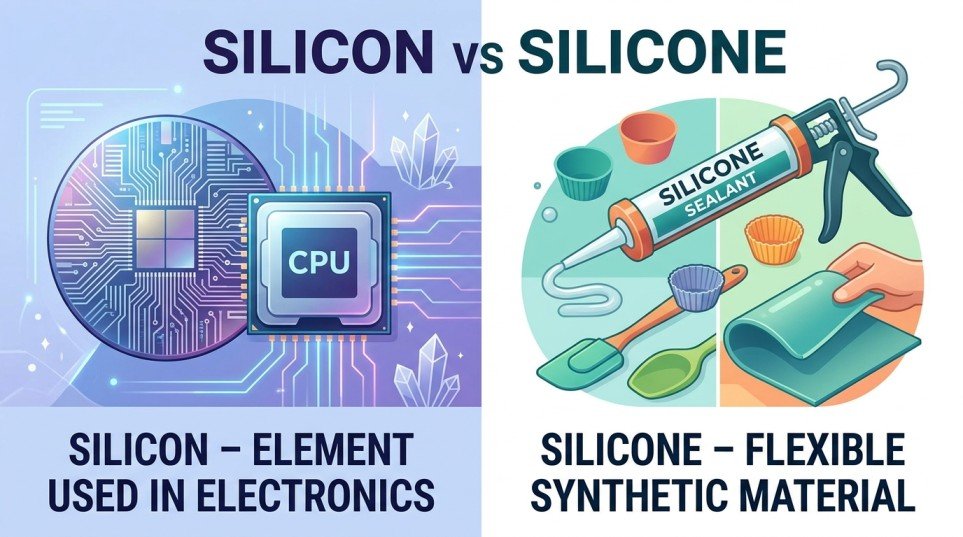
Quick Ans: The main difference between silicon or silicone is their composition and use. Silicon is a natural chemical element found in sand and used in electronics, while silicone is a man made material made from silicon and used in products like sealants, cookware, and medical devices.
Many people confuse silicon or silicone because the words look almost the same. However, their meanings are very different.
Silicon is an element from the periodic table. It plays a key role in technology, especially in computer chips and electronics. Silicone, on the other hand, is a synthetic material created using silicon along with oxygen, carbon, and hydrogen.
This small spelling difference often leads to big misunderstandings. For example, someone might say “silicone chips” when talking about computers, which is incorrect. Likewise, using “silicon sealant” instead of “silicone sealant” can cause confusion.
Understanding silicon or silicone is important for students, professionals, and everyday users. It helps you communicate clearly and choose the right material for the right purpose.
In this guide, you will learn definitions, uses, advantages, disadvantages, real world examples, and common mistakes. By the end, the difference will be simple and clear.
Quick Answer: Silicon or Silicone
To quickly understand silicon or silicone, focus on what each term represents.
| Feature | Silicon | Silicone |
|---|---|---|
| Type | Chemical element | Synthetic compound |
| Found in | Nature (sand, quartz) | Man made products |
| Main Use | Electronics and semiconductors | Sealants, rubber, cookware |
| Form | Hard and brittle | Flexible and rubber like |
| Industry | Technology | Construction, medical, kitchen |
In simple terms, silicon is an element, while silicone is a material made from that element.
What Is Silicon?
Silicon is a chemical element with the symbol Si. It is one of the most abundant elements on Earth and is commonly found in sand, quartz, and rocks.
It plays a vital role in modern technology.
Key Properties of Silicon
Silicon has several important characteristics:
- Hard and brittle
- Semi conductive
- Heat resistant
- Abundant in nature
Because of these properties, silicon is ideal for electronic components.
Common Uses of Silicon
Silicon is widely used in:
- Computer chips
- Smartphones
- Solar panels
- Microprocessors
- Semiconductors
For example, the term “Silicon Valley” refers to the technology industry built around silicon based electronics.
How Silicon Is Used
The process usually involves:
- Extracting silicon from sand
- Purifying it into high quality form
- Shaping it into wafers
- Using it in electronic circuits
As a result, silicon becomes the foundation of modern digital devices.
What Is Silicone?
Silicone is a synthetic material made from silicon combined with oxygen, carbon, and hydrogen. It can exist in many forms, including liquid, gel, and rubber.
Unlike silicon, silicone is flexible and widely used in everyday products.
Key Properties of Silicone
Silicone offers several useful features:
- Flexible and rubber like
- Heat resistant
- Waterproof
- Durable
- Non reactive
Because of these qualities, silicone is used in both industrial and household applications.
Common Uses of Silicone
Silicone appears in many products, such as:
- Sealants and adhesives
- Cooking utensils and bakeware
- Medical implants
- Waterproof coatings
- Personal care products
For instance, silicone baking molds are popular because they are heat resistant and easy to clean.
How Silicone Is Made
The production process includes:
- Extracting silicon from natural sources
- Combining it with oxygen and other elements
- Forming polymer chains
- Processing into desired shapes
Consequently, silicone becomes a versatile material used across industries.
Key Differences Between Silicon or Silicone
Composition
The main difference in silicon or silicone is composition. Silicon is a pure element. Silicone is a compound made from multiple elements.
Physical Form
Silicon is solid and brittle. Silicone is soft, flexible, and rubber like.
Usage
Silicon is used in electronics. Silicone is used in construction, healthcare, and kitchen products.
Industry
Technology industries rely on silicon. Consumer and industrial products often use silicone.
Advantages and Disadvantages
Advantages of Silicon
Silicon offers several benefits:
- Excellent semiconductor properties
- Abundant and cost effective
- High heat resistance
- Essential for electronics
Disadvantages of Silicon
Some limitations include:
- Brittle structure
- Limited flexibility
- Requires complex processing
Advantages of Silicone
Silicone provides many advantages:
- Flexible and durable
- Resistant to heat and water
- Safe for food and medical use
- Long lasting
Silicone Disadvantages
However, silicone also has drawbacks:
- More expensive than some plastics
- Not biodegradable
- Lower strength compared to metals
Choosing between silicon or silicone depends on the application.
Real World Examples
In Technology
Silicon powers computers, smartphones, and solar panels. Without it, modern electronics would not exist.
In Construction
Silicone sealants are used to fill gaps, prevent leaks, and protect surfaces from water.
In the Kitchen
Silicone bakeware and utensils are popular because they are heat resistant and easy to clean.
In Healthcare
Silicone is used in medical devices and implants due to its safety and flexibility.
These examples highlight how silicon or silicone serve completely different purposes.
Regional and Global Usage
Global Technology Industry
Silicon is used worldwide in electronics manufacturing. Countries with strong tech industries depend heavily on silicon.
Construction and Consumer Markets
Silicone products are used globally in homes, hospitals, and industries.
Everyday Language
Many people confuse the terms. However, professionals use them correctly based on context.
Therefore, understanding silicon or silicone improves communication across industries.
Related Concepts and Comparisons
Silicon vs Silica
Silica is a compound made from silicon and oxygen. It is commonly found in sand and glass.
Silicone vs Plastic
Silicone is more heat resistant and flexible than most plastics. However, plastics are often cheaper.
Silicon vs Silicone vs Silica
| Feature | Silicon | Silicone | Silica |
|---|---|---|---|
| Type | Element | Compound | Compound |
| Form | Solid | Flexible | Hard |
| Use | Electronics | Sealants, cookware | Glass, construction |
These comparisons help clarify the broader context of silicon or silicone.
Common Mistakes About Silicon or Silicone
Using the Wrong Term
People often say “silicone chips” when they mean “silicon chips.” This mistake is common in casual conversation.
Confusing Materials
Assuming both terms refer to the same substance leads to incorrect usage.
Spelling Errors
Even a small spelling difference changes the meaning completely.
Misunderstanding Applications
Using silicon instead of silicone in construction or cooking contexts can create confusion.
Avoiding these mistakes ensures clear communication.
Beginner to Advanced Tips
Beginner Level
Remember the basic rule. Silicon is for electronics. Silicone is for flexible materials.
Intermediate Level
Learn common product categories. Identify where each material is used in daily life.
Advanced Level
Understand chemical composition and industrial processes behind each material.
These steps help deepen your knowledge of silicon or silicone.
Step By Step Comparison Scenario
Imagine you need materials for two different tasks.
For building a computer:
- Use silicon wafers
- Create microchips
- Assemble circuits
For sealing a bathroom:
- Choose silicone sealant
- Apply along edges
- Let it cure
Although both materials sound similar, their applications are completely different.
Exercises With Answers
Exercise 1
Which term refers to a chemical element in the silicon or silicone comparison?
Answer: Silicon.
Exercise 2
Which material is flexible and rubber like?
Answer: Silicone.
Exercise 3
Which is used in computer chips?
Answer: Silicon.
Exercise 4
Which is commonly used as a sealant?
Answer: Silicone.
Exercise 5
True or False: Silicon and silicone are the same material.
Answer: False.
When Should You Use Silicon or Silicone?
Use silicon when you:
- Work with electronics
- Study chemistry
- Discuss semiconductors
Use silicone when you:
- Need sealants or adhesives
- Use kitchen tools
- Work with flexible materials
Choosing correctly ensures accurate communication and proper application.
FAQs About Silicon or Silicone
What is the main difference between silicon or silicone?
Silicon is a natural element, while silicone is a synthetic material made from silicon and other elements.
Is silicone made from silicon?
Yes. Silicone is created using silicon combined with oxygen and other elements.
Which is used in electronics, silicon or silicone?
Silicon is used in electronics because it acts as a semiconductor.
Can silicone conduct electricity like silicon?
No. Silicone does not have semiconductor properties.
Why do people confuse silicon and silicone?
The words look similar, but their meanings are very different.
Is silicone safe for cooking?
Yes. Food grade silicone is heat resistant and safe for kitchen use.
Is silicon found in nature?
Yes. Silicon is abundant in sand, rocks, and minerals.
Which is better for sealing, silicon or silicone?
Silicone is better for sealing because it is flexible and waterproof.
Are silicon and silicone interchangeable?
No. They serve completely different purposes.
Which is more flexible, silicon or silicone?
Silicone is flexible, while silicon is hard and brittle.
Conclusion
Understanding silicon or silicone is essential for clear communication and correct usage. Although the words look similar, they represent very different things.
Silicon is a natural chemical element used mainly in electronics. It forms the foundation of modern technology, including computers and smartphones.
Silicone, on the other hand, is a synthetic material made from silicon. It is flexible, durable, and widely used in everyday products such as sealants, cookware, and medical devices.
Choosing the right term depends on the context. Use silicon when discussing technology and semiconductors. Use silicone when referring to flexible materials and household products.
By learning the difference between silicon or silicone, you can avoid common mistakes and communicate more accurately in both professional and everyday situations.
Discover More:-
- Woke or Not: Meaning, Difference, and Real Wolf Usage Explained
- Veneers or Crowns: Differences, Benefits, and Which One to Choose

Lisa Thompson is a USA-based content writer and language specialist focused on grammar, writing improvement and digital publishing.
She holds a degree in English Language and Communication and has professional experience in educational and web content creation.
As the author of Gramtivo.Com, she aims to help readers improve their writing skills through clear and practical guidance.


Pingback: Rosacea or Lupus: Key Differences, Symptoms, and Diagnosis Guide
Pingback: Conex or Connex: Meaning, Differences, and Shipping Container Guide