
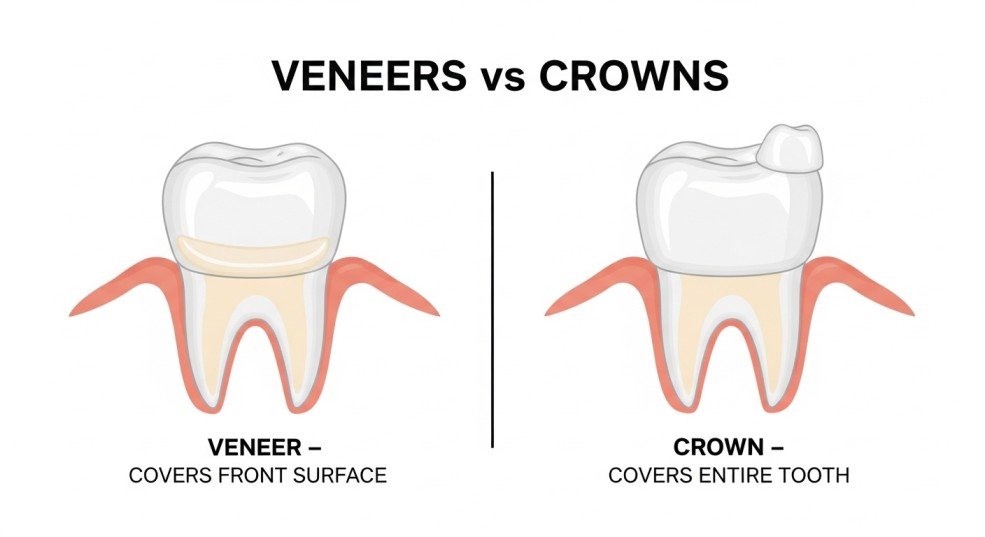
Quick Ans: The main difference between veneers or crowns is how much of the tooth they cover. Veneers are thin shells placed on the front surface for cosmetic improvement, while crowns cover the entire tooth to restore strength and function. Both improve appearance, but they serve different dental needs.
Many people search for veneers or crowns when they want to improve their smile. Both options fix damaged or unattractive teeth. Both can make teeth look brighter and more even. However, they are not the same.
Veneers focus mainly on appearance. Crowns restore both function and strength. Because of this, dentists recommend them for different situations.
Confusion often happens when patients hear both terms during a dental visit. The choice can feel difficult without clear information. Some people want cosmetic improvement only, while others need structural repair.
Choosing the wrong option may lead to unnecessary cost or less effective results. Therefore, understanding the difference between veneers or crowns is important before making a decision.
This guide explains everything in simple terms. You will learn definitions, advantages, disadvantages, real world examples, and common mistakes. By the end, you will clearly know which option suits your needs.
Quick Answer: Veneers or Crowns
To understand veneers or crowns, focus on coverage and purpose.
| Feature | Veneers | Crowns |
|---|---|---|
| Coverage | Front surface only | Entire tooth |
| Purpose | Cosmetic improvement | Strength and restoration |
| Thickness | Very thin | Thicker |
| Tooth Removal | Minimal | More extensive |
| Durability | Moderate | High |
In simple terms, veneers improve appearance, while crowns protect and rebuild teeth.
What Are Veneers?
Veneers are thin shells made from porcelain or composite material. Dentists bond them to the front surface of teeth. The goal is to improve the appearance of the smile.
They are often used to fix:
- Discolored teeth
- Minor chips
- Small gaps
- Slight misalignment
- Uneven shapes
Because veneers are thin, they require minimal removal of the natural tooth.
Types of Veneers
There are two main types:
- Porcelain veneers
- Composite veneers
Porcelain veneers last longer and resist stains better. Composite veneers cost less but may wear out faster.
How Veneers Are Applied
The process usually involves:
- Preparing the tooth by removing a small amount of enamel
- Taking impressions
- Creating custom veneers
- Bonding them to the tooth surface
As a result, the smile looks brighter and more uniform.
What Are Crowns?
A crown is a cap that covers the entire tooth. Dentists use crowns to restore damaged or weakened teeth.
Crowns are recommended for:
- Broken teeth
- Large cavities
- Root canal treated teeth
- Severely worn teeth
- Cracked teeth
Unlike veneers, crowns provide structural support.
Types of Crowns
Common crown materials include:
- Porcelain
- Ceramic
- Metal
- Porcelain fused to metal
Each material offers different strength and appearance.
How Crowns Are Applied
The crown procedure involves:
- Shaping the entire tooth
- Taking impressions
- Creating a custom crown
- Placing and cementing the crown
Because the tooth is fully covered, crowns offer strong protection.
Key Differences Between Veneers or Crowns
Coverage
The most important difference in veneers or crowns is coverage. Veneers cover only the front surface. Crowns cover the entire tooth.
Purpose
Veneers focus on cosmetic improvement. Crowns restore strength and function.
Tooth Preparation
Veneers require minimal enamel removal. Crowns require more reshaping of the tooth.
Durability
Crowns are generally stronger. Veneers are durable but less resistant to heavy pressure.
Advantages and Disadvantages
Veneers Advantages
- Improve appearance quickly
- Require minimal tooth removal
- Natural looking results
- Resistant to staining
Veneers Disadvantages
- Less durable than crowns
- Not suitable for severely damaged teeth
- Can chip under pressure
Crowns Advantages
- Strong and durable
- Protect damaged teeth
- Restore full function
- Long lasting
Crowns Disadvantages
- Require more tooth removal
- Higher cost in some cases
- Longer procedure time
Therefore, the choice between veneers or crowns depends on the condition of the tooth.
Real World Examples
Cosmetic Improvement
A person with stained or slightly chipped teeth may choose veneers. These improve appearance without major dental work.
Structural Damage
A patient with a cracked or weakened tooth usually needs a crown. The crown restores strength and prevents further damage.
Smile Makeover
Some patients combine both treatments. Dentists may use veneers for front teeth and crowns for damaged teeth.
These examples show how dentists decide between veneers or crowns.
Regional and Global Usage
Developed Countries
Veneers are popular for cosmetic dentistry. Many people choose them for smile enhancement.
Worldwide Dental Practice
Crowns are used globally because they serve both functional and restorative purposes.
Modern Trends
Cosmetic dentistry continues to grow. As a result, more patients consider veneers alongside crowns.
Related Concepts and Comparisons
Veneers vs Bonding
Bonding uses resin to fix small imperfections. Veneers last longer and provide better aesthetics.
Crowns vs Fillings
Fillings repair small cavities. Crowns are used when damage is too large for fillings.
Veneers or Crowns vs Implants
Implants replace missing teeth. Veneers and crowns improve existing teeth.
Common Mistakes About Veneers or Crowns
Choosing Based Only on Cost
Some people pick veneers because they seem cheaper. However, they may not work for damaged teeth.
Ignoring Tooth Condition
Healthy teeth may only need veneers. Damaged teeth require crowns.
Expecting Veneers to Fix Major Damage
Veneers cannot restore strength. Crowns are necessary for structural issues.
Poor Oral Hygiene
Both options require proper care. Neglect can reduce lifespan.
Avoiding these mistakes leads to better dental outcomes.
Beginner to Advanced Care Tips
Beginner Level
Brush and floss daily. Avoid hard foods that can damage dental work.
Intermediate Level
Use a soft toothbrush and non abrasive toothpaste. Visit the dentist regularly.
Advanced Level
Consider night guards if you grind your teeth. Follow professional cleaning schedules.
Proper care extends the life of both veneers and crowns.
Step By Step Decision Scenario
Imagine you have a dental issue.
If your teeth are healthy but stained:
- Consult a dentist
- Choose veneers
- Improve appearance
If your tooth is cracked or weak:
- Get dental evaluation
- Choose a crown
- Restore strength
This simple process helps decide between veneers or crowns.
Exercises With Answers
Exercise 1
Which option covers the entire tooth?
Answer: Crown.
Exercise 2
Which is mainly used for cosmetic improvement?
Answer: Veneers.
Exercise 3
Which requires more tooth reshaping?
Answer: Crown.
Exercise 4
Which option is thinner?
Answer: Veneers.
Exercise 5
True or False: Veneers are stronger than crowns.
Answer: False.
When Should You Choose Veneers or Crowns?
Choose veneers if you:
- Want cosmetic improvement
- Have healthy teeth
- Need minor corrections
Choose crowns if you:
- Have damaged or weak teeth
- Need strength and protection
- Require full restoration
Your dentist will guide the final decision.
FAQs About Veneers or Crowns
What is the main difference between veneers or crowns?
Veneers cover the front surface, while crowns cover the entire tooth.
Which lasts longer, veneers or crowns?
Crowns usually last longer because they are stronger.
Are veneers cheaper than crowns?
Costs vary, but veneers can be less expensive depending on materials.
Do veneers damage natural teeth?
Minimal enamel removal is required, but teeth remain mostly intact.
Are crowns painful to get?
The procedure involves numbing, so discomfort is minimal.
Can veneers fix broken teeth?
They can fix minor chips but not major damage.
Do crowns look natural?
Yes. Modern crowns match natural tooth color.
How long do veneers last?
Typically 10 to 15 years with proper care.
Can crowns fall off?
Rarely, but it can happen if cement weakens.
Which is better for front teeth, veneers or crowns?
Veneers are often preferred for cosmetic improvement of front teeth.
Conclusion
Understanding veneers or crowns helps you make informed dental decisions. Both options improve teeth, but they serve different purposes.
Veneers enhance appearance with minimal changes to the natural tooth. They are ideal for cosmetic improvements such as discoloration or small imperfections.
Crowns provide full coverage and strength. They protect damaged teeth and restore proper function.
Choosing the right option depends on your dental condition, goals, and professional advice. Cosmetic concerns usually point toward veneers. Structural damage often requires crowns.
A dentist can evaluate your teeth and recommend the best solution. With proper care, both veneers and crowns can last many years and improve your smile significantly.
Discover More:-
- Partnership vs LLC: Key Differences, Benefits, and Business Structure Guide
- Custodian vs Janitor: Key Differences, Roles, Duties, and Career Guide

Jennifer Collins is a professional grammar expert and language educator at gramtivo.com, specializing in English grammar, writing skills, and language improvement. She holds a Master’s degree in English Language and Literature from a recognized university in the United States. With years of teaching and content development experience, she is dedicated to helping learners improve their communication skills with clear and practical guidance.


Pingback: Cognisant or Cognizant: Difference, Meaning, and Correct Usage Guide
Pingback: Theodoros or Mestor: Meaning, Differences, and Name Comparison Guide
Pingback: Truth or Dare Game Guide: Rules, Examples, and Fun Ideas