
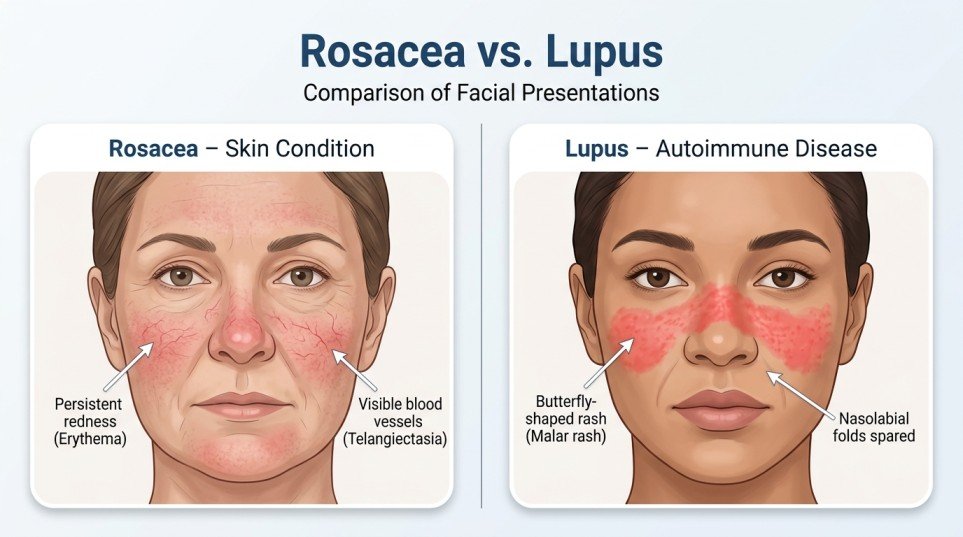
Quick Ans: The key difference between rosacea or lupus lies in their cause and severity. Rosacea is a chronic skin condition that mainly affects the face, causing redness and visible blood vessels. In contrast, lupus is an autoimmune disease that can affect the skin and internal organs, making it more serious and complex.
Many people search for rosacea or lupus when they notice redness on their face. Both conditions can cause similar skin changes. For example, redness across the cheeks and nose appears in both cases. Because of this overlap, confusion is common.
However, the two conditions are very different.
Rosacea mainly affects the skin. Lupus, on the other hand, is a systemic disease that can impact multiple organs. This difference is important because treatment and risks are not the same.
A person with mild facial redness may worry about a serious illness. At the same time, someone with lupus may mistake symptoms for a simple skin condition. Therefore, understanding the difference between rosacea or lupus helps people seek the right care.
This guide explains both conditions in simple terms. You will learn symptoms, causes, diagnosis, treatment options, and common mistakes. By the end, you will clearly understand how to tell them apart.
Quick Answer: Rosacea or Lupus
To quickly compare rosacea or lupus, focus on cause and impact.
| Feature | Rosacea | Lupus |
|---|---|---|
| Type | Skin condition | Autoimmune disease |
| Main Area | Face | Whole body |
| Severity | Usually mild to moderate | Can be serious |
| Cause | Unknown, triggers based | Immune system attack |
| Treatment | Skin care and medication | Long term medical care |
In simple terms, rosacea affects the skin, while lupus affects the whole body.
What Is Rosacea?
Rosacea is a long term skin condition that causes redness on the face. It often affects the cheeks, nose, chin, and forehead.
Symptoms may come and go. However, flare ups can become more frequent over time.
Common Symptoms of Rosacea
People with rosacea may experience:
- Facial redness
- Visible blood vessels
- Small bumps or pimples
- Burning or stinging sensation
- Sensitive skin
In some cases, the nose may become thickened over time.
Causes and Triggers
The exact cause is not fully known. However, several triggers can worsen symptoms:
- Sun exposure
- Hot drinks
- Spicy food
- Alcohol
- Stress
- Temperature changes
Because triggers vary, managing rosacea often requires lifestyle adjustments.
How Rosacea Is Treated
Treatment focuses on controlling symptoms.
Common options include:
- Topical creams
- Oral antibiotics
- Laser therapy
- Gentle skincare routines
Although rosacea cannot be cured, it can be managed effectively.
What Is Lupus?
Lupus is a chronic autoimmune disease. The immune system mistakenly attacks healthy tissues in the body.
Unlike rosacea, lupus can affect:
- Skin
- Joints
- Kidneys
- Heart
- Lungs
Types of Lupus
The most common type is Systemic Lupus Erythematosus, which affects multiple organs.
Other forms include:
- Cutaneous lupus (affects skin)
- Drug induced lupus
Common Symptoms of Lupus
Symptoms vary widely, but may include:
- Fatigue
- Joint pain
- Skin rashes
- Fever
- Hair loss
- Organ problems
A butterfly shaped rash across the cheeks and nose is a classic sign.
How Lupus Is Treated
Treatment depends on severity.
Doctors may prescribe:
- Anti inflammatory drugs
- Immune suppressants
- Steroids
- Lifestyle changes
Because lupus affects the whole body, long term medical care is essential.
Key Differences Between Rosacea or Lupus
Cause
Rosacea has unclear causes and is often triggered by environmental factors. Lupus results from an immune system problem.
Area Affected
Rosacea mainly affects facial skin. Lupus can impact many organs in the body.
Severity
Rosacea is usually not life threatening. Lupus can be serious and requires medical monitoring.
Symptoms
Both conditions may cause facial redness. However, lupus often includes fatigue, joint pain, and other systemic symptoms.
Advantages and Disadvantages
Rosacea Advantages
- Usually limited to the skin
- Manageable with treatment
- Less risk of severe complications
Rosacea Disadvantages
- Chronic condition
- Visible redness may affect confidence
- Flare ups can be unpredictable
Lupus Advantages
- Can be controlled with proper treatment
- Early diagnosis improves outcomes
Lupus Disadvantages
- Affects multiple organs
- Requires lifelong care
- Symptoms may vary widely
Understanding rosacea or lupus helps guide proper medical attention.
Real World Examples
Example 1
A person experiences facial redness after drinking hot coffee. The redness fades after a few hours. This pattern suggests rosacea.
Example 2
Another person has a persistent rash across the cheeks along with joint pain and fatigue. This combination may indicate lupus.
Example 3
A patient notices flare ups triggered by sunlight but no other body symptoms. This situation is more consistent with rosacea.
These examples show why symptoms beyond the skin matter in the rosacea or lupus comparison.
Regional and Global Usage
Global Prevalence
Rosacea is common worldwide, especially in people with lighter skin tones. Lupus affects people globally but is more common in women.
Awareness Differences
In some regions, rosacea may be mistaken for acne. Meanwhile, lupus may go undiagnosed due to its complex symptoms.
Healthcare Access
Early diagnosis depends on access to medical care. Therefore, awareness of rosacea or lupus is important in all regions.
Related Concepts and Comparisons
Rosacea vs Acne
Both conditions cause redness and bumps. However, acne includes blackheads and whiteheads, while rosacea does not.
Lupus vs Other Autoimmune Diseases
Lupus shares similarities with diseases like rheumatoid arthritis. However, lupus affects multiple organs more broadly.
Rosacea vs Lupus Rash
| Feature | Rosacea | Lupus Rash |
|---|---|---|
| Shape | Diffuse redness | Butterfly pattern |
| Duration | Flare ups | Can be persistent |
| Associated Symptoms | Skin only | Whole body symptoms |
This comparison helps clarify visual differences.
Common Mistakes About Rosacea or Lupus
Assuming All Redness Is Rosacea
Facial redness may have different causes. Lupus should be considered if other symptoms exist.
Ignoring Systemic Symptoms
Fatigue and joint pain are not typical of rosacea. These signs may indicate lupus.
Self Diagnosis
Trying to diagnose without medical advice can lead to confusion. Professional evaluation is important.
Delaying Medical Help
Early diagnosis improves outcomes, especially for lupus.
Avoiding these mistakes leads to better health decisions.
Beginner to Advanced Care Tips
Beginner Level
Use gentle skincare products. Avoid known triggers like heat and spicy food.
Intermediate Level
Track symptoms and identify patterns. Consult a doctor for persistent issues.
Advanced Level
Follow prescribed treatments carefully. Monitor long term symptoms with healthcare professionals.
Consistent care improves quality of life.
Step By Step Evaluation Scenario
Imagine noticing redness on your face.
First, check for triggers such as heat or food.
Next, observe if redness fades quickly.
Then, look for additional symptoms like fatigue or joint pain.
Finally, consult a doctor for proper diagnosis.
This process helps distinguish rosacea or lupus effectively.
Exercises With Answers
Exercise 1
Which condition mainly affects the skin in the rosacea or lupus comparison?
Answer: Rosacea.
Exercise 2
Which condition is an autoimmune disease?
Answer: Lupus.
Exercise 3
Which condition may affect internal organs?
Answer: Lupus.
Exercise 4
Which condition is triggered by environmental factors?
Answer: Rosacea.
Exercise 5
True or False: Rosacea can affect the kidneys.
Answer: False.
When Should You Consider Rosacea or Lupus?
Consider rosacea if you:
- Have facial redness triggered by heat or food
- Notice visible blood vessels
- Do not experience body wide symptoms
Consider lupus if you:
- Have persistent rash with fatigue
- Experience joint pain
- Notice symptoms affecting multiple body systems
Medical evaluation is essential for confirmation.
FAQs About Rosacea or Lupus
What is the main difference between rosacea or lupus?
Rosacea is a skin condition, while lupus is an autoimmune disease that can affect the whole body.
Can rosacea turn into lupus?
No. Rosacea and lupus are separate conditions with different causes.
How can I tell if my rash is rosacea or lupus?
Look for additional symptoms. Lupus often includes fatigue and joint pain, while rosacea is mainly skin related.
Is lupus more serious than rosacea?
Yes. Lupus can affect internal organs and requires long term medical care.
Can both conditions appear on the face?
Yes. Both may cause redness across the cheeks and nose.
Does rosacea cause pain?
It may cause burning or stinging, but not deep joint pain.
Can stress trigger rosacea or lupus?
Yes. Stress can worsen symptoms in both conditions.
Is there a cure for rosacea or lupus?
No cure exists, but both conditions can be managed with treatment.
Should I see a doctor for facial redness?
Yes. A proper diagnosis helps rule out serious conditions like lupus.
Can sunlight affect rosacea or lupus?
Yes. Sun exposure can trigger flare ups in both conditions.
Conclusion
Understanding rosacea or lupus is important for proper diagnosis and treatment. Although both conditions can cause facial redness, their impact on the body is very different.
Rosacea is a skin condition that mainly affects the face. It is usually manageable with lifestyle changes and medication. Lupus, in contrast, is an autoimmune disease that can affect multiple organs and requires long term care.
Recognizing additional symptoms is key. Facial redness alone may suggest rosacea, but fatigue, joint pain, or organ issues may point to lupus.
If you are unsure, always seek medical advice. Early diagnosis improves outcomes and prevents complications.
By learning the differences between rosacea or lupus, you can make informed decisions about your health and treatment options.
Discover More:-
- Silicon or Silicone: Key Differences, Uses, and Complete Guide
- Cognisant or Cognizant: Difference, Meaning, and Correct Usage Guide

Jennifer Collins is a professional grammar expert and language educator at gramtivo.com, specializing in English grammar, writing skills, and language improvement. She holds a Master’s degree in English Language and Literature from a recognized university in the United States. With years of teaching and content development experience, she is dedicated to helping learners improve their communication skills with clear and practical guidance.