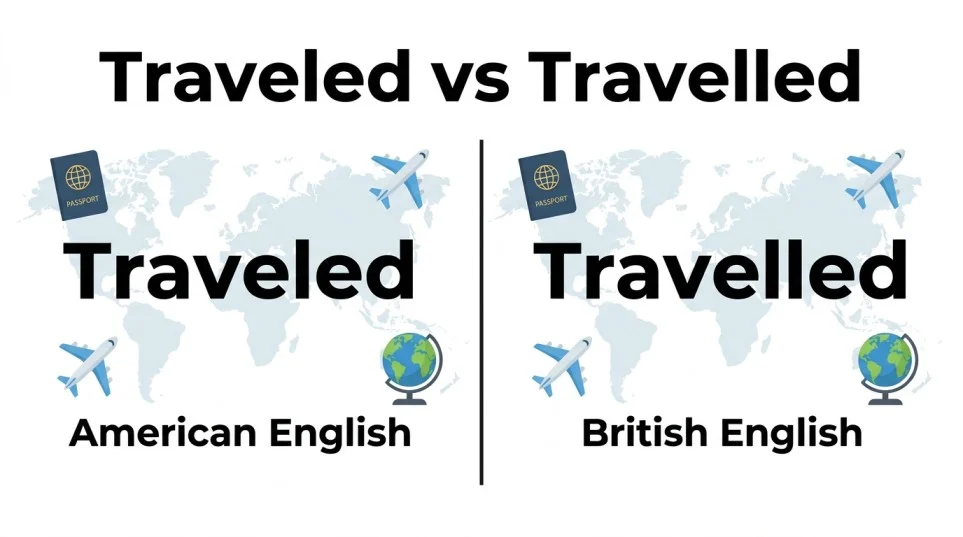
Quick Ans: Both traveled and travelled are correct spellings of the past tense of travel. The difference depends on the type of English you use. Traveled is preferred in American English, while travelled is the standard spelling in British English and many other English-speaking countries.
Many writers become confused when deciding between traveled or travelled. The words look almost identical. The only difference is the extra “l” in travelled. Despite this small change, the spelling choice often raises questions about grammar and correctness.
The good news is that both spellings are correct.
The challenge comes from regional differences in English. American English usually simplifies certain spellings. British English often keeps double consonants in words when adding suffixes. As a result, people from different countries learn different versions of the same word.
Understanding the difference between traveled or travelled is important for students, professionals, bloggers, content creators, and business writers. Using the wrong spelling for your audience may make your writing look inconsistent.
This guide explains when to use each spelling, why the difference exists, common mistakes, grammar rules, examples, exercises, and frequently asked questions. By the end, you will know exactly which version fits your writing.
Quick Answer: Traveled or Travelled
If you need a quick answer, use this table.
| English Style | Preferred Spelling |
|---|---|
| American English | Traveled |
| British English | Travelled |
| Canadian English | Usually Travelled |
| Australian English | Travelled |
| New Zealand English | Travelled |
In simple terms:
- Traveled = American English
- Travelled = British English and most international English varieties
Both words mean exactly the same thing.
What Does “Traveled” Mean?
Traveled is the American English past tense and past participle form of the verb travel.
It means someone went from one place to another.
Examples of Traveled
- She traveled across the United States last summer.
- We traveled by train instead of flying.
- He traveled to New York for a business meeting.
- They traveled around the country for six months.
In American publications, newspapers, schools, and businesses, traveled is the preferred spelling.
Why Americans Use Traveled
American English often removes extra letters when possible.
For example:
| Base Word | American Form |
|---|---|
| Travel | Traveled |
| Cancel | Canceled |
| Model | Modeled |
| Signal | Signaled |
This simplified spelling style became popular over time and remains standard in the United States.
What Does “Travelled” Mean?
Travelled is the British English past tense and past participle form of travel.
The meaning is identical to traveled.
Examples of Travelled
- She travelled across Europe by train.
- We travelled to London during the holidays.
- He travelled extensively for work.
- They travelled around Asia for a year.
British English publications almost always use travelled.
Why British English Uses Travelled
British spelling rules often double the final consonant before adding certain endings.
This pattern appears in many British English words.
Examples include:
| Base Word | British Form |
|---|---|
| Travel | Travelled |
| Cancel | Cancelled |
| Fuel | Fuelled |
| Label | Labelled |
Therefore, travelled follows a broader British spelling convention.
The Grammar Rule Behind Traveled or Travelled
Understanding the grammar rule helps explain why both spellings exist.
American English Rule
In American English, the final consonant is usually doubled only when the last syllable receives stress.
For example:
- Begin → Began → Beginning
- Admit → Admitted
- Prefer → Preferred
Since travel stresses the first syllable rather than the last syllable, American English does not double the “l.”
As a result:
- Travel → Traveled
British English Rule
British English often doubles the final “l” before adding endings such as:
- ed
- ing
- er
Therefore:
- Travel → Travelled
- Travel → Travelling
- Travel → Traveller
This creates the main difference in the traveled or travelled debate.
Key Differences Between Traveled or Travelled
Spelling
The most obvious difference is spelling.
- Traveled = one “l”
- Travelled = two “l”s
Geographic Usage
American writers prefer traveled.
British writers prefer travelled.
Meaning
There is no difference in meaning.
Pronunciation
Pronunciation remains exactly the same.
Grammar
Both function as:
- Past tense verbs
- Past participles
Therefore, grammar usage is identical.
Advantages and Disadvantages
Advantages of Using Traveled
- Matches American English standards
- Preferred by US publishers
- Common in American businesses
- Consistent with modern US style guides
Disadvantages of Using Traveled
- May appear incorrect to British readers
- Can seem inconsistent in British publications
Advantages of Using Travelled
- Matches British English standards
- Preferred in many international countries
- Aligns with traditional British spelling patterns
Disadvantages of Using Travelled
- May look unusual in American publications
- Can appear inconsistent in US-based content
The best choice depends on your audience.
Real World Examples
American Business Email
A US employee might write:
“I traveled to Chicago for the conference.”
This follows American spelling conventions.
British Business Email
A UK employee would likely write:
“I travelled to Manchester for the conference.”
This follows British English standards.
International Websites
Some international companies choose one spelling and use it consistently throughout their content.
Consistency matters more than the specific choice.
Regional and Global Usage
United States
American English strongly favors traveled.
Most newspapers, schools, and companies use this spelling.
United Kingdom
British English almost always uses travelled.
Educational institutions and publishers follow this standard.
Canada
Canadian English often follows British spelling traditions.
Therefore, travelled is generally more common.
Australia and New Zealand
Both countries typically use travelled.
International English
Many international organizations prefer British spelling standards. Consequently, travelled appears frequently outside the United States.
Related Concepts and Comparisons
Traveling vs Travelling
The same regional rule applies.
| American English | British English |
|---|---|
| Traveling | Travelling |
Traveler vs Traveller
Another variation follows the same pattern.
| American English | British English |
|---|---|
| Traveler | Traveller |
Canceled vs Cancelled
The spelling pattern also appears in other words.
| American English | British English |
|---|---|
| Canceled | Cancelled |
| Modeled | Modelled |
| Fueled | Fuelled |
Understanding these patterns makes traveled or travelled easier to remember.
Common Mistakes About Traveled or Travelled
Mixing Spellings in One Document
A common mistake is writing:
- Traveled in one paragraph
- Travelled in another paragraph
Choose one style and stay consistent.
Assuming One Version Is Wrong
Many people think only one spelling is correct.
In reality, both are accepted depending on the English variety.
Ignoring Your Audience
Writing for an American audience usually requires traveled.
Writing for a British audience generally requires travelled.
Forgetting Related Words
Writers sometimes change one word but forget related forms.
Examples:
- Traveled
- Traveling
- Traveler
or
- Travelled
- Travelling
- Traveller
Keep the style consistent throughout the document.
Beginner to Advanced Writing Tips
Beginner Level
Identify your audience before writing.
Intermediate Level
Follow the spelling style guide used by your company, school, or publisher.
Advanced Level
Create a style sheet for large projects. This helps maintain consistent spelling across articles, reports, and websites.
Consistency improves professionalism and readability.
Step By Step Usage Scenario
Imagine you are writing a travel blog.
If your audience is American:
- Use traveled
- Use traveling
- Use traveler
- Maintain American spelling throughout
If your audience is British:
- Use travelled
- Use travelling
- Use traveller
- Maintain British spelling throughout
Following one system prevents confusion.
Exercises With Answers
Exercise 1
Which spelling is preferred in American English?
Answer: Traveled.
Exercise 2
Which spelling is preferred in British English?
Answer: Travelled.
Exercise 3
Do traveled and travelled have different meanings?
Answer: No.
Exercise 4
Which spelling would a UK newspaper usually use?
Answer: Travelled.
Exercise 5
True or False: Traveled is grammatically incorrect.
Answer: False.
When Should You Use Traveled or Travelled?
Use traveled if:
- You write for American audiences
- You follow US style guides
- Your company uses American English
Use travelled if:
- You write for British audiences
- You follow UK spelling rules
- Your publication uses British English
The most important rule is consistency.
FAQs About Traveled or Travelled
Which is correct, traveled or travelled?
Both are correct. Traveled is American English, while travelled is British English.
Is travelled wrong in the United States?
Not technically. However, traveled is the preferred American spelling.
Is traveled wrong in the United Kingdom?
No. British readers understand it, but travelled is the standard spelling.
Why does British English use travelled?
British spelling rules often double the final “l” before adding endings such as “ed” and “ing.”
Why does American English use traveled?
American English simplifies many spellings and usually avoids doubling the final “l” in this word.
Do traveled and travelled mean different things?
No. Both words have exactly the same meaning.
Which spelling should I use in academic writing?
Use whichever version matches your institution’s style guide.
What about traveling and travelling?
The same rule applies. Traveling is American English, while travelling is British English.
Which spelling is better for SEO?
Use the spelling most common among your target audience.
Can I use both spellings in one article?
No. Choose one style and remain consistent throughout the document.
Conclusion
The question of traveled or travelled is not about right versus wrong. Instead, it is about regional spelling preferences.
American English uses traveled, traveling, and traveler. British English prefers travelled, travelling, and traveller. Despite the spelling difference, the meaning, pronunciation, and grammar remain the same.
Understanding your audience is the key to choosing the correct version. Writers targeting American readers should use traveled. Those writing for British, Australian, New Zealand, or many international audiences should use travelled.
Consistency matters more than the spelling itself. Once you choose a style, apply it throughout your document.
By following this approach, your writing will appear polished, professional, and appropriate for your readers.
Discover More:-
- Flyer or Flier: Which Spelling Is Correct and When to Use Each
- There or Their: Difference, Meaning, Examples, and Grammar Guide

Robert Mitchell is a U.S.-based writer at Gramtivo.Com who focuses on grammar, writing improvement, and language-related content. He holds a degree in English and Linguistics from a U.S. university. His work aims to help readers enhance their writing skills with clear and practical guidance.