
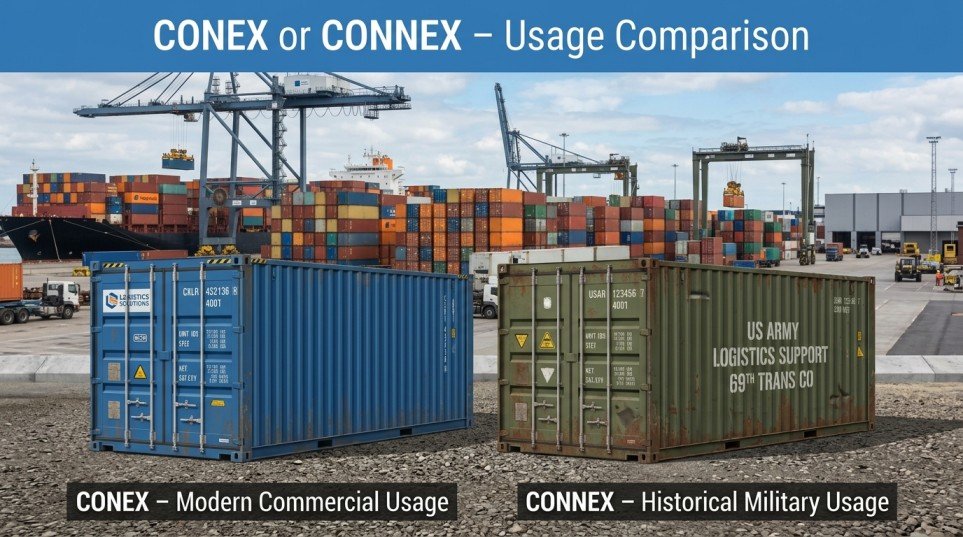
Quick Ans: The difference between conex or connex is mainly spelling and regional usage. Both words refer to shipping containers, especially steel cargo containers used for storage and transportation. “Conex” is the more common modern spelling, while “Connex” is often linked to older military terminology and historical usage.
Many people search for conex or connex because the two words look almost identical. Both appear in conversations about shipping containers, storage units, cargo transport, and construction projects. However, the spelling difference creates confusion.
Some people write “conex container.” Others use “connex box.” In many cases, both refer to the same thing.
The confusion becomes more common in industries like logistics, construction, military storage, and container housing. Buyers often wonder whether the words describe different products or simply different spellings.
In reality, the meaning is nearly the same. The variation mostly comes from history, regional preference, and military language.
Understanding conex or connex helps you communicate clearly when buying containers, searching online, or discussing storage solutions. It also prevents misunderstandings in shipping and construction industries.
This guide explains the terms in simple language. You will learn definitions, history, real world uses, comparisons, common mistakes, and practical examples.
Quick Answer: Conex or Connex
To quickly understand conex or connex, focus on spelling history and usage.
| Feature | Conex | Connex |
|---|---|---|
| Meaning | Shipping container | Shipping container |
| Common Usage | Modern commercial term | Older military term |
| Industry Popularity | More common today | Less common today |
| Product Difference | None | None |
| Purpose | Storage and transport | Storage and transport |
In simple terms, conex and connex usually mean the same thing.
What Does Conex Mean?
The word conex commonly refers to a steel shipping container used for transporting cargo or storing materials.
These containers are widely used in:
- Shipping industries
- Construction sites
- Military operations
- Storage businesses
- Container homes
Most conex containers are made from strong steel and designed to withstand harsh weather and heavy transportation.
Common Conex Container Sizes
Typical sizes include:
- 10 foot containers
- 20 foot containers
- 40 foot containers
Because of their durability, conex containers are popular for long term storage.
Main Uses of Conex Containers
People use conex containers for many purposes, including:
- Shipping goods internationally
- Storing tools and equipment
- Building offices
- Creating mobile shops
- Constructing container homes
As a result, the term “conex” has become very common in modern industries.
What Does Connex Mean?
The term connex refers to the same type of shipping container. However, this spelling is older and more strongly associated with military terminology.
Historically, the word came from “Container Express,” which later became shortened into “CONEX.”
Over time, different spellings developed, including “connex.”
Military Connection
The military often used conex or connex containers for transporting:
- Supplies
- Weapons
- Equipment
- Food
- Medical materials
Because military communication relied heavily on abbreviations, the word became widely recognized.
Modern Usage
Today, “connex” still appears in:
- Military discussions
- Older industry documents
- Regional business names
However, “conex” is generally more common in modern commercial markets.
History of Conex or Connex
Understanding the history of conex or connex helps explain why both spellings exist.
Origin of the Term
The original CONEX system was developed by the United States military during the Korean War. The name stood for “Container Express.”
The system improved cargo transportation by using reusable steel containers.
Growth in Commercial Shipping
After military success, commercial industries adopted similar containers for global trade.
Over time:
- “CONEX” became “conex”
- Some people continued using “connex”
- Both spellings spread across industries
Consequently, both words remain in use today.
Key Differences Between Conex or Connex
Spelling
The clearest difference is spelling.
- Conex uses one “n”
- Connex uses two “n” letters
Popularity
Modern businesses more commonly use “conex.” Meanwhile, “connex” appears more often in military or older terminology.
Meaning
There is usually no product difference between the two terms.
Search Trends
Online searches show “conex container” is more popular than “connex container.”
Therefore, businesses often prefer the “conex” spelling for marketing purposes.
Advantages and Disadvantages of Conex Containers
Advantages
Conex containers provide several benefits:
- Strong steel construction
- Weather resistance
- Portable storage solution
- Long lifespan
- Secure locking systems
Because of these advantages, many industries rely on shipping containers daily.
Disadvantages
Some drawbacks also exist:
- Heavy weight
- Delivery costs
- Potential rust over time
- Limited insulation without modifications
Despite these disadvantages, conex containers remain highly practical.
Real World Examples
Construction Sites
Construction companies often place conex containers on job sites for tool storage and secure equipment protection.
Retail Businesses
Some businesses convert containers into pop up shops or cafes.
Residential Housing
Container homes have become increasingly popular. People use modified conex containers for affordable housing projects.
Military Operations
Military bases continue using conex or connex units for transporting supplies around the world.
These examples show the wide range of applications for shipping containers.
Regional and Global Usage
United States
In the United States, “conex container” is the more common commercial term.
Military Communities
Military personnel may still use “connex” because of historical terminology.
International Shipping
Global shipping companies usually focus on standard shipping container terminology rather than spelling variations.
Online Searches
Search engines show higher search volume for “conex” compared to “connex.”
As a result, many container sellers optimize websites using the “conex” spelling.
Related Concepts and Comparisons
Conex vs Shipping Container
A conex container is essentially a shipping container. The terms are often interchangeable.
Conex vs Storage Container
Storage containers may include shipping containers, but some storage units are not designed for overseas transport.
Dry Container vs Refrigerated Container
| Type | Purpose |
|---|---|
| Dry Container | General cargo storage |
| Refrigerated Container | Temperature controlled goods |
Understanding these related terms helps clarify the broader shipping container industry.
Common Mistakes About Conex or Connex
Assuming They Are Different Products
Many people believe conex and connex describe separate container types. In reality, both usually refer to the same steel shipping container.
Using Incorrect Container Sizes
Choosing the wrong size creates storage problems. Always measure space requirements carefully.
Ignoring Delivery Access
Large containers require enough space for truck delivery and placement.
Forgetting Local Regulations
Some cities require permits for long term container placement.
Avoiding these mistakes saves time and money.
Beginner to Advanced Container Tips
Beginner Level
Start by identifying the container size you need.
Intermediate Level
Inspect containers carefully for rust, leaks, and structural damage before purchase.
Advanced Level
Consider modifications such as:
- Insulation
- Electrical systems
- Windows and doors
- Climate control
These upgrades improve functionality for storage or living purposes.
Step By Step Buying Scenario
Imagine you need extra storage space.
If you buy a conex container:
- Measure available land
- Choose container size
- Arrange delivery access
- Inspect container condition
- Prepare foundation area
Following these steps helps avoid common problems.
Exercises With Answers
Exercise 1
Which spelling is more common in modern commercial use?
Answer: Conex.
Exercise 2
What does the original term CONEX stand for?
Answer: Container Express.
Exercise 3
Are conex and connex different products?
Answer: Usually no.
Exercise 4
Which industry helped popularize the term?
Answer: The military.
Exercise 5
True or False: Conex containers are commonly made from steel.
Answer: True.
When Should You Use Conex or Connex?
Use “conex” if you:
- Write commercial listings
- Search online marketplaces
- Discuss modern shipping containers
Use “connex” if you:
- Reference historical military terminology
- Follow older industry naming conventions
In most situations, both spellings are understood correctly.
FAQs About Conex or Connex
What is the difference between conex or connex?
The difference is mainly spelling. Both terms usually refer to steel shipping containers.
Is conex the same as connex?
Yes. In most industries, the two words mean the same type of cargo container.
Why do people say connex instead of conex?
“Connex” comes from older military and historical usage of the term.
What does CONEX originally mean?
The term originally stood for “Container Express.”
Which spelling is more common today?
“Conex” is more common in modern commercial use and online searches.
Are conex containers waterproof?
Most conex containers are weather resistant and designed to protect cargo from rain and harsh conditions.
Can conex containers be used for homes?
Yes. Many people convert shipping containers into homes, offices, and retail spaces.
How long do conex containers last?
With proper maintenance, they can last several decades.
Do conex containers rust?
Yes. Steel containers can develop rust over time, especially in humid climates.
Are conex containers secure?
Yes. Most containers include strong steel doors and locking systems for security.
Conclusion
Understanding conex or connex is simpler than many people expect. Both words usually describe the same type of steel shipping container used for storage and transportation.
The main difference comes from spelling and historical usage. “Conex” is more common in modern commercial industries, while “connex” often appears in military or older terminology.
These containers play important roles in shipping, construction, storage, and even modern housing projects. Strong steel construction, portability, and durability make them highly practical for many applications.
When buying or searching online, using the term “conex container” often produces better results because it is more widely recognized today. However, both spellings remain understandable in most industries.
By understanding the background of conex or connex, you can communicate more confidently in logistics, storage, and construction discussions.
Discover More:-
- Silicon or Silicone: Key Differences, Uses, and Complete Guide
- Gardner or Gardener: Correct Spelling, Meaning, and Usage Guide

Lisa Thompson is a USA-based content writer and language specialist focused on grammar, writing improvement and digital publishing.
She holds a degree in English Language and Communication and has professional experience in educational and web content creation.
As the author of Gramtivo.Com, she aims to help readers improve their writing skills through clear and practical guidance.