
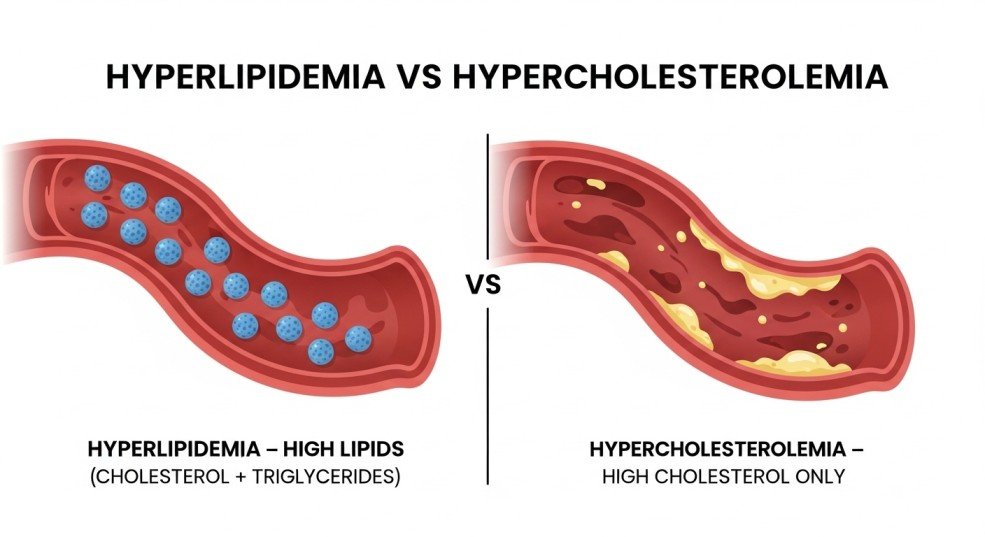
Quick Ans: The key difference between hyperlipidemia vs hypercholesterolemia is scope. Hyperlipidemia refers to high levels of all types of fats (lipids) in the blood, including cholesterol and triglycerides. In contrast, hypercholesterolemia specifically means high cholesterol levels, especially low density lipoprotein cholesterol.
Many people feel confused about hyperlipidemia vs hypercholesterolemia because both terms relate to fats in the blood. Doctors use them often. Lab reports may mention one or both. However, they do not mean exactly the same thing.
Hyperlipidemia is a broad term. It includes all elevated blood lipids. Hypercholesterolemia is more specific. It focuses only on cholesterol levels.
This difference matters in diagnosis and treatment. For example, a person may have high triglycerides but normal cholesterol. That condition fits hyperlipidemia but not hypercholesterolemia.
Understanding the difference helps you read lab reports correctly. It also helps you follow medical advice more clearly. Moreover, it supports better decisions about diet, exercise, and medication.
In this guide, you will learn definitions, causes, symptoms, risks, treatments, examples, and common mistakes. By the end, the difference between hyperlipidemia vs hypercholesterolemia will be clear and practical.
Quick Answer: Hyperlipidemia vs Hypercholesterolemia
To quickly understand hyperlipidemia vs hypercholesterolemia, focus on what each term includes.
| Feature | Hyperlipidemia | Hypercholesterolemia |
|---|---|---|
| Meaning | High levels of lipids in blood | High cholesterol levels |
| Includes | Cholesterol + triglycerides | Cholesterol only |
| Scope | Broad condition | Specific condition |
| Common Tests | Lipid panel | Cholesterol levels |
| Risk | Heart disease, stroke | Heart disease |
In simple terms, hyperlipidemia includes many fats, while hypercholesterolemia focuses on cholesterol only.
What Is Hyperlipidemia?
Hyperlipidemia means high levels of lipids in the bloodstream. Lipids include several types of fats that circulate in the blood.
These include:
- Cholesterol
- Triglycerides
- Low density lipoprotein (LDL)
- High density lipoprotein (HDL)
When one or more of these become elevated, the condition is called hyperlipidemia.
Types of Lipids Involved
Different lipids play different roles:
- LDL cholesterol is often called “bad cholesterol”
- HDL cholesterol is known as “good cholesterol”
- Triglycerides store energy
An imbalance among these lipids increases health risks.
Causes of Hyperlipidemia
Several factors can lead to hyperlipidemia:
- Poor diet high in saturated fats
- Lack of physical activity
- Obesity
- Smoking
- Diabetes
- Genetic conditions
Because many factors contribute, management often requires lifestyle changes.
Symptoms
Hyperlipidemia usually shows no clear symptoms. Most people discover it through blood tests.
However, in severe cases, signs may include:
- Fat deposits under the skin
- Pancreatitis in extreme triglyceride levels
What Is Hypercholesterolemia?
Hypercholesterolemia refers specifically to high cholesterol levels in the blood. It is a type of hyperlipidemia but focuses only on cholesterol.
Types of Cholesterol
Cholesterol includes:
- LDL cholesterol, which increases plaque buildup
- HDL cholesterol, which helps remove excess cholesterol
High LDL levels are the main concern in hypercholesterolemia.
Causes of Hypercholesterolemia
Causes often include:
- Diet high in saturated and trans fats
- Genetic conditions such as familial hypercholesterolemia
- Lack of exercise
- Obesity
In some cases, genetics play a major role.
Symptoms
Like hyperlipidemia, hypercholesterolemia often has no symptoms. Therefore, regular testing is important.
In severe genetic cases, visible signs such as fatty deposits around the eyes may appear.
Key Differences Between Hyperlipidemia vs Hypercholesterolemia
Scope
The biggest difference in hyperlipidemia vs hypercholesterolemia is scope. Hyperlipidemia covers all blood lipids. Hypercholesterolemia focuses only on cholesterol.
Lipid Types
Hyperlipidemia includes cholesterol and triglycerides. Hypercholesterolemia involves cholesterol only.
Diagnosis
Doctors diagnose hyperlipidemia using a full lipid panel. Hypercholesterolemia is identified when cholesterol levels alone are high.
Clinical Importance
Both conditions increase cardiovascular risk. However, treatment may differ depending on which lipids are elevated.
Advantages and Disadvantages of Understanding Each Term
Benefits of Understanding Hyperlipidemia
- Provides a complete view of blood fats
- Helps identify multiple risk factors
- Supports comprehensive treatment
Limitations
- May feel complex for beginners
- Requires detailed lab analysis
Benefits of Understanding Hypercholesterolemia
- Focuses on a key risk factor
- Easier to track cholesterol levels
- Common in routine health checks
Limitations
- Does not include triglyceride issues
- May overlook broader lipid problems
Therefore, both terms are useful in different contexts.
Risk Factors and Health Impact
Both conditions increase the risk of serious diseases.
Common risks include:
- Heart disease
- Stroke
- Atherosclerosis
High LDL cholesterol leads to plaque buildup in arteries. Elevated triglycerides can also contribute to cardiovascular problems.
Because of these risks, early detection is essential.
Real World Examples
Example 1
A patient has high triglycerides but normal cholesterol. This condition is hyperlipidemia but not hypercholesterolemia.
Example 2
Another patient shows high LDL cholesterol but normal triglycerides. This case fits both hypercholesterolemia and hyperlipidemia.
Example 3
A routine checkup reveals slightly elevated cholesterol levels. The doctor diagnoses mild hypercholesterolemia and recommends diet changes.
These scenarios clarify the difference in real life.
Regional and Global Trends
Developed Countries
High fat diets and sedentary lifestyles increase both conditions. Therefore, screening programs are common.
Developing Countries
Urbanization has increased cases of hyperlipidemia and hypercholesterolemia. Dietary changes play a major role.
Global Health Perspective
Worldwide, cardiovascular disease remains a leading cause of death. Managing blood lipids is a key prevention strategy.
Related Concepts and Comparisons
LDL vs HDL
LDL carries cholesterol to tissues and may cause plaque buildup. HDL helps remove cholesterol from the bloodstream.
Triglycerides vs Cholesterol
Triglycerides store energy, while cholesterol supports cell structure and hormone production.
Hyperlipidemia vs Dyslipidemia
Dyslipidemia refers to abnormal lipid levels, including both high and low values. Hyperlipidemia specifically refers to elevated lipid levels.
Common Mistakes About Hyperlipidemia vs Hypercholesterolemia
Using Terms Interchangeably
Many people think both terms mean the same thing. However, hypercholesterolemia is only one part of hyperlipidemia.
Ignoring Triglycerides
Some focus only on cholesterol. High triglycerides also pose serious risks.
Skipping Regular Testing
Since both conditions lack symptoms, skipping tests can delay diagnosis.
Assuming Diet Is the Only Cause
Lifestyle matters, but genetics can also play a major role.
Avoiding these mistakes improves health awareness.
Beginner to Advanced Management Tips
Beginner Level
Start with simple lifestyle changes:
- Eat balanced meals
- Reduce saturated fats
- Increase physical activity
Intermediate Level
Track lipid levels regularly. Work with a healthcare provider for monitoring.
Advanced Level
Use medications if prescribed, such as statins. Manage underlying conditions like diabetes or obesity.
A combined approach delivers the best results.
Step By Step Health Scenario
Imagine you receive a lipid panel report.
If triglycerides and cholesterol are both high:
- The condition is hyperlipidemia
- Treatment may target multiple lipid types
If only cholesterol is high:
- The condition is hypercholesterolemia
- Treatment may focus on lowering LDL
Understanding these steps helps interpret medical results correctly.
Exercises With Answers
Exercise 1
Which condition includes triglycerides in hyperlipidemia vs hypercholesterolemia?
Answer: Hyperlipidemia.
Exercise 2
Which condition focuses only on cholesterol?
Answer: Hypercholesterolemia.
Exercise 3
Which condition is broader?
Answer: Hyperlipidemia.
Exercise 4
True or False: Hypercholesterolemia includes all blood lipids.
Answer: False.
Exercise 5
Which test is used to measure both conditions?
Answer: Lipid panel.
When Should You Be Concerned?
You should pay attention if:
- Blood tests show high lipid levels
- You have a family history of heart disease
- You live a sedentary lifestyle
- Your diet is high in unhealthy fats
Early action helps prevent complications.
FAQs About Hyperlipidemia vs Hypercholesterolemia
What is the main difference between hyperlipidemia vs hypercholesterolemia?
Hyperlipidemia includes all elevated blood lipids, while hypercholesterolemia refers only to high cholesterol levels.
Is hypercholesterolemia a type of hyperlipidemia?
Yes. Hypercholesterolemia is a specific form of hyperlipidemia focused on cholesterol.
Which is more serious, hyperlipidemia or hypercholesterolemia?
Both can be serious. The risk depends on which lipids are elevated and how high they are.
Can you have hyperlipidemia without high cholesterol?
Yes. High triglycerides alone can cause hyperlipidemia.
Do both conditions require treatment?
Yes. Lifestyle changes and sometimes medication are needed.
How are these conditions diagnosed?
Doctors use a lipid panel blood test to measure cholesterol and triglycerides.
Are there symptoms of hyperlipidemia or hypercholesterolemia?
Most cases have no symptoms. Regular testing is important.
Can diet control both conditions?
Yes. A healthy diet can improve lipid levels.
Do genetics affect these conditions?
Yes. Some people inherit high cholesterol levels.
Can exercise help reduce lipid levels?
Yes. Regular physical activity improves overall lipid balance.
Conclusion
Understanding hyperlipidemia vs hypercholesterolemia is essential for managing health and preventing disease. Although the terms sound similar, they describe different conditions.
Hyperlipidemia is a broad term that includes all types of elevated blood lipids. Hypercholesterolemia is more specific and refers only to high cholesterol levels.
This distinction matters when interpreting lab results and planning treatment. Some people may have high triglycerides without high cholesterol. Others may have high LDL cholesterol as the main issue.
Lifestyle changes such as healthy eating, regular exercise, and weight management play a major role in controlling both conditions. Medical treatment may also be necessary in some cases.
By understanding the difference between hyperlipidemia vs hypercholesterolemia, you can take informed steps toward better cardiovascular health and long term well being.
Discover More:-
- George vs George: Meaning, Examples, and Clear Comparison Guide
- Near vs Farsighted: Key Differences, Symptoms, and Treatment Guide

Robert Mitchell is a U.S.-based writer at Gramtivo.Com who focuses on grammar, writing improvement, and language-related content. He holds a degree in English and Linguistics from a U.S. university. His work aims to help readers enhance their writing skills with clear and practical guidance.


Pingback: Woke or Not: Meaning, Difference, and Real Wolf Usage Explained