
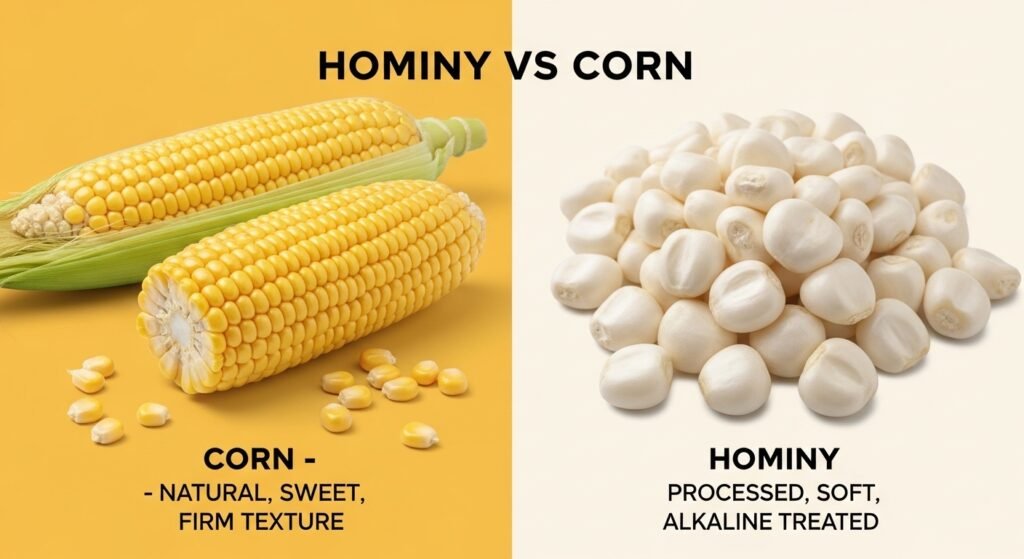
Quick Ans: The main difference between hominy vs corn is how each is processed. Corn is a natural grain harvested from maize plants, while hominy is corn that has been treated with an alkaline solution to remove the hull and soften the kernels. As a result, hominy has a different texture, flavor, and nutritional profile compared to regular corn.
Many people search for hominy vs corn because the two look similar but taste different. Both come from the same plant. Both appear in many dishes around the world. However, they are not the same.
Corn is a whole grain that grows on a cob. Hominy, on the other hand, is corn that has gone through a special process called nixtamalization. This process changes the texture and flavor.
At first glance, hominy may look like large, puffy corn kernels. Because of this, people often assume they are identical. In reality, the processing step makes a big difference.
For example, corn tastes sweet and crisp. Hominy tastes softer and slightly nutty. Corn works well in salads and snacks. Hominy is often used in soups and traditional dishes.
Understanding hominy vs corn helps you cook better meals and choose the right ingredient. It also helps when following recipes or exploring global cuisines.
In this guide, you will learn definitions, advantages, disadvantages, real world uses, common mistakes, and more. By the end, the difference will be clear.
Quick Answer: Hominy vs Corn
To quickly understand hominy vs corn, focus on processing and texture.
| Feature | Corn | Hominy |
|---|---|---|
| Form | Natural whole grain | Processed corn |
| Processing | None | Treated with alkaline solution |
| Texture | Firm and crisp | Soft and chewy |
| Flavor | Sweet | Mild and slightly nutty |
| Common Uses | Salads, grilling, snacks | Soups, stews, traditional dishes |
In simple terms, corn is raw and natural, while hominy is processed and softer.
What Is Corn?
Corn is a cereal grain that comes from the maize plant. It is one of the most widely grown crops in the world.
Corn appears in many forms, such as:
- Fresh corn on the cob
- Frozen kernels
- Canned corn
- Cornmeal
- Popcorn
Because of its natural sweetness, corn is used in a wide range of recipes.
Common Types of Corn
Different types of corn serve different purposes:
- Sweet corn for eating fresh
- Field corn for animal feed and processed foods
- Flint corn for decoration and grinding
- Popcorn for popping
Each type varies in texture and use.
Common Uses of Corn
Corn is very versatile in cooking:
- Grilled or boiled on the cob
- Added to salads
- Used in soups
- Turned into flour or meal
- Used for snacks like popcorn
Because it is easy to prepare, corn is popular in everyday meals.
What Is Hominy?
Hominy is corn that has been treated with an alkaline solution, usually limewater or lye. This process removes the outer hull and changes the kernel.
The process is called nixtamalization.
As a result, the kernels become:
- Larger
- Softer
- Easier to digest
- More flavorful
Hominy is a key ingredient in many traditional dishes.
Common Forms of Hominy
Hominy is available in different forms:
- Dried hominy
- Canned hominy
- Ground hominy (used for masa)
Ground hominy is used to make foods like tortillas and tamales.
Common Uses of Hominy
Hominy appears in many dishes, especially in Latin American cuisine:
- Soups such as pozole
- Stews
- Side dishes
- Masa for tortillas
Because of its soft texture, hominy works well in slow cooked meals.
Key Differences Between Hominy vs Corn
Processing
The biggest difference in hominy vs corn is processing. Corn is natural. Hominy goes through nixtamalization.
Texture
Corn is firm and slightly crunchy. Hominy is soft and chewy.
Flavor
Corn has a sweet taste. Hominy has a mild, slightly earthy flavor.
Appearance
Corn kernels are smaller and smooth. Hominy kernels are larger and puffed.
Nutritional Change
Processing increases nutrient availability in hominy, especially certain vitamins.
Advantages and Disadvantages
Advantages of Corn
Corn offers several benefits:
- Naturally sweet flavor
- Easy to cook
- Widely available
- Works in many dishes
Disadvantages of Corn
Some limitations include:
- Less digestible than hominy
- Lower mineral availability
- Can dry out if overcooked
Advantages of Hominy
Hominy has unique benefits:
- Softer texture
- Easier digestion
- Enhanced nutrient absorption
- Ideal for soups and stews
Hominy Disadvantages
However, it also has drawbacks:
- Requires processing
- Less sweet flavor
- Not as widely used in all cuisines
Choosing between hominy vs corn depends on the recipe and taste preference.
Nutritional Comparison
Here is a general comparison:
| Nutrient | Corn | Hominy |
|---|---|---|
| Calories | Moderate | Moderate |
| Fiber | Moderate | Slightly lower |
| Calcium | Low | Higher (due to processing) |
| Digestibility | Lower | Higher |
Because of nixtamalization, hominy provides better mineral absorption.
Real World Examples
Cooking at Home
If you want a fresh, sweet side dish, corn works best. For soups and traditional meals, hominy is a better choice.
Restaurant Dishes
Many Latin dishes use hominy. Corn appears more often in salads, sides, and grilled dishes.
Grocery Shopping
Corn is available in many forms. Hominy is usually found canned or dried.
These examples show how hominy vs corn depends on usage.
Regional and Global Usage
North America
Corn is widely used in everyday meals. Hominy appears in traditional dishes like pozole.
Latin America
Hominy plays a major role in cooking. Masa made from hominy is essential for tortillas.
Global Use
Corn is used worldwide in many cuisines. Hominy is more specific to certain regions.
Therefore, cultural traditions influence the hominy vs corn choice.
Related Concepts and Comparisons
Hominy vs Grits
Grits come from ground hominy. They have a smooth texture when cooked.
Corn vs Maize
Corn and maize refer to the same plant, though maize is the scientific term.
Hominy vs Cornmeal
Cornmeal is ground dried corn. Hominy is whole kernels that have been processed.
| Product | Form | Use |
|---|---|---|
| Corn | Whole kernel | General cooking |
| Hominy | Processed kernel | Soups and masa |
| Cornmeal | Ground corn | Baking |
These comparisons clarify how hominy vs corn fits into a broader context.
Common Mistakes About Hominy vs Corn
Assuming They Are the Same
Many people think hominy is just large corn. The processing step makes it different.
Using the Wrong Ingredient
Recipes that require hominy will not taste the same if you use corn instead.
Ignoring Texture Differences
Corn stays firm when cooked. Hominy becomes soft and chewy.
Skipping Proper Preparation
Dried hominy requires soaking and cooking before use.
Avoiding these mistakes improves cooking results.
Beginner to Advanced Cooking Tips
Beginner Level
Start with canned hominy for convenience. Use fresh or frozen corn for simple recipes.
Intermediate Level
Try making soups or stews using hominy. Experiment with grilled corn dishes.
Advanced Level
Make masa from scratch using hominy. Explore traditional recipes like pozole or tamales.
As skills grow, you can use both ingredients more creatively.
Step By Step Cooking Scenario
Imagine you are preparing a meal.
If you use corn:
- Boil or grill the kernels
- Season lightly
- Serve as a side dish
If you use hominy:
- Rinse canned hominy
- Add to soup or stew
- Cook until flavors blend
Although both come from the same source, the cooking method differs.
Exercises With Answers
Exercise 1
Which ingredient is processed in the hominy vs corn comparison?
Answer: Hominy.
Exercise 2
Which ingredient is naturally sweet?
Answer: Corn.
Exercise 3
Which one is softer after cooking?
Answer: Hominy.
Exercise 4
Which is commonly used in soups like pozole?
Answer: Hominy.
Exercise 5
True or False: Hominy is raw corn.
Answer: False.
When Should You Choose Hominy vs Corn?
Choose corn if you:
- Want a sweet flavor
- Need a quick side dish
- Prefer firm texture
Choose hominy if you:
- Are making soups or stews
- Want softer texture
- Need traditional flavor
Your recipe and taste preference guide the choice.
FAQs About Hominy vs Corn
What is the main difference between hominy vs corn?
The main difference is processing. Hominy is corn treated with an alkaline solution, while corn is a natural grain.
Is hominy just large corn?
No. In the hominy vs corn comparison, hominy is processed corn with a different texture and flavor.
Which is healthier, hominy or corn?
Both are nutritious, but hominy may offer better mineral absorption due to processing.
Does hominy taste like corn?
It tastes milder and less sweet than corn.
Can I substitute corn for hominy?
You can, but the texture and flavor will differ.
Why is hominy used in traditional dishes?
It provides a soft texture and unique flavor important in recipes like pozole.
Is hominy easier to digest than corn?
Yes. The processing improves digestibility.
What is nixtamalization?
It is the process of treating corn with an alkaline solution to make hominy.
Is canned hominy ready to eat?
Yes. It is already cooked and only needs reheating.
Can hominy be ground into flour?
Yes. Ground hominy is used to make masa for tortillas.
Conclusion
Understanding hominy vs corn helps you choose the right ingredient for your meals. Although both come from the same plant, the processing step creates important differences.
Corn is natural, sweet, and firm. It works well in simple dishes and side meals. Hominy is processed, softer, and more suitable for soups and traditional recipes.
Texture, flavor, and cooking method all change after processing. Therefore, substituting one for the other may affect the final dish.
If you want freshness and sweetness, choose corn. If you need softness and traditional flavor, choose hominy.
By learning the difference between hominy vs corn, you can cook with confidence and improve your recipes.
Discover More:-
- Near vs Farsighted: Key Differences, Symptoms, and Treatment Guide
- George vs George: Meaning, Examples, and Clear Comparison Guide

Robert Mitchell is a U.S.-based writer at Gramtivo.Com who focuses on grammar, writing improvement, and language-related content. He holds a degree in English and Linguistics from a U.S. university. His work aims to help readers enhance their writing skills with clear and practical guidance.


Pingback: Length or Girth: Differences, Uses, and Measurement Guide
Pingback: Charleston or Savannah: Which City Is Better for Travel?