
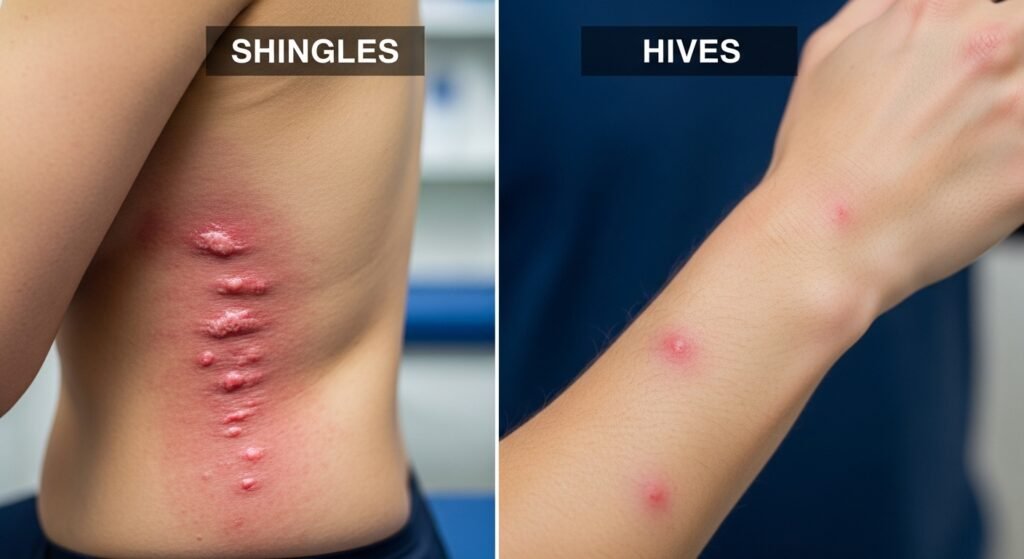
Quick Ans: The main difference between shingles vs hives is their cause and appearance. Shingles is a viral infection that creates a painful, blistering rash on one side of the body, while hives are raised, itchy welts caused by an allergic reaction or trigger. Although both affect the skin, they differ in symptoms, duration, and treatment.
Many people search for shingles vs hives because both conditions involve skin rashes. At first glance, they may look similar. Both can appear suddenly. Both may cause discomfort. However, they are not the same condition.
Shingles comes from a virus that stays in the body after chickenpox. Hives, on the other hand, usually happen due to allergies, stress, or other triggers. Because of this, their causes and treatments are very different.
Confusion often leads to delayed treatment. For example, someone may think they have a simple allergic reaction when they actually have shingles. In contrast, some people worry about shingles when they only have hives.
Understanding the difference between shingles vs hives helps you respond correctly. It also helps you know when to seek medical care.
This guide explains both conditions clearly. You will learn symptoms, causes, treatments, real life examples, and common mistakes. By the end, you will be able to tell them apart with confidence.
Quick Answer: Shingles vs Hives
To quickly understand shingles vs hives, focus on cause and symptoms.
| Feature | Shingles | Hives |
|---|---|---|
| Cause | Viral infection | Allergic reaction or trigger |
| Appearance | Blisters in a band | Raised red welts |
| Pain or Itch | Painful and burning | Very itchy |
| Location | Usually one side of body | Anywhere on body |
| Duration | Weeks | Hours to days |
In simple terms, shingles causes pain and blisters, while hives cause itching and welts.
What Is Shingles?
Shingles is a viral infection caused by the same virus that causes chickenpox, known as the varicella zoster virus. After a person recovers from chickenpox, the virus remains inactive in the body. Later in life, it can reactivate as shingles.
Key Symptoms of Shingles
Symptoms usually develop in stages:
- Tingling or burning sensation
- Pain in a specific area
- Red rash that appears in a line or band
- Fluid filled blisters
- Crusting after blisters heal
Unlike many rashes, shingles usually affects only one side of the body.
Where Shingles Appears
Shingles often appears on:
- Chest
- Back
- Face
- Around one eye
Because it follows nerve paths, the rash forms in a narrow area.
How Shingles Develops
The condition progresses step by step:
- Pain or tingling begins
- Rash appears in a localized area
- Blisters form and fill with fluid
- Blisters burst and crust over
- Healing occurs over several weeks
Pain may continue even after the rash heals.
What Are Hives?
Hives, also known as urticaria, are a skin reaction that causes raised, red, and itchy welts. They can appear suddenly and disappear just as quickly.
Common Causes of Hives
Hives can result from many triggers:
- Food allergies
- Medications
- Insect bites
- Stress
- Heat or cold
- Infections
Because triggers vary, identifying the cause may take time.
Symptoms of Hives
Hives usually include:
- Raised red or skin colored bumps
- Intense itching
- Swelling
- Changing shape or location
Unlike shingles, hives can appear anywhere on the body and may move around.
Types of Hives
There are two main types:
- Acute hives lasting less than six weeks
- Chronic hives lasting more than six weeks
Acute hives are more common and often linked to specific triggers.
Key Differences Between Shingles vs Hives
Cause
The main difference in shingles vs hives is the cause. Shingles results from a viral infection. Hives result from allergic or environmental triggers.
Pain vs Itch
Shingles causes pain, burning, or tingling. Hives mainly cause itching.
Appearance
Shingles forms fluid filled blisters in a band pattern. Hives appear as raised welts that may change shape.
Location
Shingles usually appears on one side of the body. Hives can appear anywhere and often move around.
Duration
Shingles can last several weeks. Hives often resolve within hours or days.
Advantages and Disadvantages (Understanding Each Condition)
Shingles Considerations
- Requires medical attention
- May cause long lasting nerve pain
- Often needs antiviral treatment
- Can lead to complications if untreated
Hives Considerations
- Usually temporary
- Often manageable with antihistamines
- May recur if trigger remains
- Rarely serious unless linked to severe allergy
Understanding these points helps manage expectations for each condition.
Real World Examples
Example 1: Sudden Itching After Food
A person eats seafood and develops itchy red welts across the body. The rash moves and fades within hours. This is likely hives.
Example 2: Painful Rash on One Side
Another person feels burning pain on one side of the chest. A blistering rash appears in the same area. This pattern suggests shingles.
Example 3: Stress Trigger
Someone under stress develops temporary itchy patches. The patches disappear after a few hours. This situation often indicates hives.
These examples show how shingles vs hives differ in real life.
Regional and Global Usage
Global Occurrence
Both shingles and hives occur worldwide. However, shingles is more common in older adults.
Age Factors
Hives can affect people of any age. Shingles appears more often in individuals over 50.
Healthcare Awareness
Awareness varies by region. In many countries, vaccines help reduce shingles risk.
Understanding these patterns improves early recognition.
Related Concepts and Comparisons
Shingles vs Chickenpox
Both come from the same virus. Chickenpox occurs first, while shingles appears later when the virus reactivates.
Hives vs Rash
Hives are a specific type of rash caused by triggers. Not all rashes are hives.
Shingles vs Hives vs Allergic Rash
| Condition | Cause | Symptom | Duration |
|---|---|---|---|
| Shingles | Virus | Painful blisters | Weeks |
| Hives | Allergy or trigger | Itchy welts | Hours to days |
| Allergic Rash | Irritant or allergen | Red irritation | Varies |
These comparisons help clarify the broader topic.
Common Mistakes About Shingles vs Hives
Assuming All Rashes Are Allergies
Not every rash is caused by allergies. Shingles requires medical treatment.
Ignoring Pain Symptoms
Pain is a key sign of shingles. Many people overlook this difference.
Delaying Medical Care
Waiting too long to treat shingles can lead to complications.
Misusing Medications
Using allergy medicine for shingles will not treat the viral infection.
Avoiding these mistakes helps ensure proper care.
Beginner to Advanced Care Tips
Beginner Level
- Keep skin clean
- Avoid scratching
- Monitor symptoms
Intermediate Level
- Use antihistamines for hives
- Apply soothing lotions
- Rest and stay hydrated
Advanced Level
- Seek antiviral treatment for shingles
- Identify triggers for recurring hives
- Consult a doctor for persistent symptoms
Proper care depends on correct diagnosis.
Step By Step Identification Scenario
Imagine you notice a skin rash.
If it is hives:
- Rash appears suddenly
- Intense itching begins
- Welts change shape or location
- Rash fades within hours
If it is shingles:
- Pain or tingling starts
- Rash appears in one area
- Blisters form
- Rash lasts for weeks
These steps help distinguish shingles vs hives clearly.
Exercises With Answers
Exercise 1
Which condition is caused by a virus in the shingles vs hives comparison?
Answer: Shingles.
Exercise 2
Which condition causes intense itching?
Answer: Hives.
Exercise 3
Which condition forms blisters in a band pattern?
Answer: Shingles.
Exercise 4
Which condition can move around the body?
Answer: Hives.
Exercise 5
True or False: Hives usually last for several weeks.
Answer: False.
When Should You Choose Medical Help?
Seek medical help if you suspect shingles because early treatment reduces complications.
Consult a doctor for hives if:
- Symptoms last several days
- Swelling affects breathing
- The cause is unclear
Prompt care improves outcomes.
FAQs About Shingles vs Hives
What is the main difference between shingles vs hives?
Shingles is a viral infection with painful blisters, while hives are itchy welts caused by allergic reactions or triggers.
Can shingles be mistaken for hives?
Yes. However, shingles usually involves pain and a localized rash, while hives are itchy and spread across the body.
Are hives dangerous?
Most cases are mild. Severe allergic reactions, however, may require urgent care.
Is shingles contagious like hives?
Shingles can spread the virus to people who never had chickenpox. Hives are not contagious.
How long do hives last compared to shingles?
Hives often last hours to days. Shingles can last several weeks.
Can stress cause shingles or hives?
Stress can trigger hives. It may also weaken the immune system, increasing shingles risk.
Do shingles always hurt?
Yes. Pain or burning is a key symptom of shingles.
Can antihistamines treat shingles?
No. Antihistamines help hives, not viral infections like shingles.
Should I see a doctor for shingles vs hives?
Yes for shingles. For hives, see a doctor if symptoms are severe or persistent.
Can both conditions happen at the same time?
It is rare but possible. A medical professional can confirm the diagnosis.
Conclusion
Understanding shingles vs hives is important for proper care and treatment. While both conditions affect the skin, they differ in cause, symptoms, and duration.
Shingles results from a viral infection and causes painful blisters in a specific area. Early medical treatment is essential to reduce complications. Hives, on the other hand, are usually caused by allergic reactions and lead to itchy welts that may appear and disappear quickly.
Recognizing the key differences helps you act quickly. Pain and localized rash often point to shingles. Itching and shifting welts usually indicate hives.
If symptoms seem severe or unclear, seeking medical advice is the best step. Early diagnosis leads to better outcomes and faster relief.
By understanding the difference between shingles vs hives, you can make informed decisions and protect your health.
Discover More:-
- Goats vs Sheep: Key Differences, Farming Uses, Behavior, and Identification Guide
- Yeti vs Bigfoot: Key Differences, Origins, Sightings, and Myths Explained

Lisa Thompson is a USA-based content writer and language specialist focused on grammar, writing improvement and digital publishing.
She holds a degree in English Language and Communication and has professional experience in educational and web content creation.
As the author of Gramtivo.Com, she aims to help readers improve their writing skills through clear and practical guidance.


Pingback: Convertor or Converter: Which Spelling Is Correct and Why It Matters