
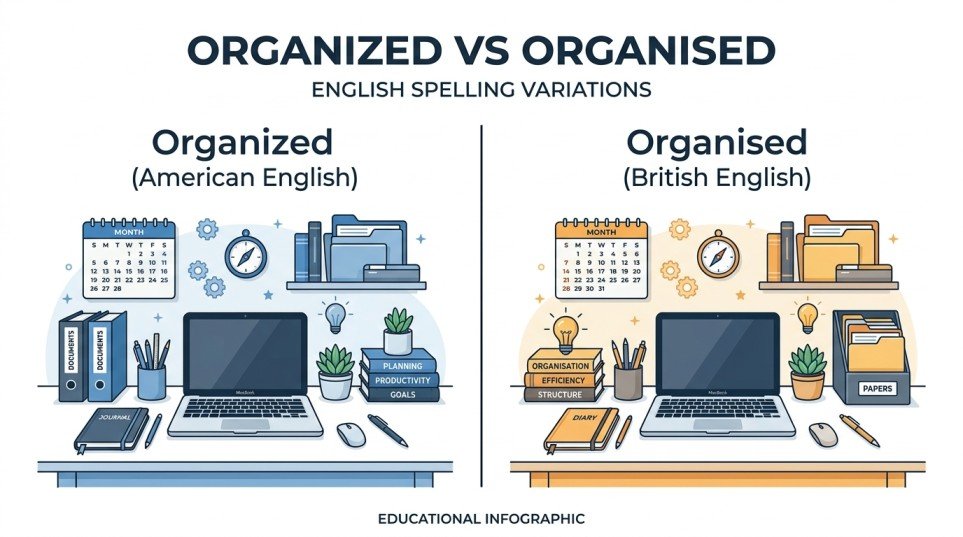
Quick Ans: The difference between organized or organised is based on regional spelling. “Organized” is used in American English, while “organised” is used in British English and many other countries. Both words have the same meaning and are equally correct depending on your audience.
Many writers wonder about organized or organised when creating content, emails, or academic work. The words look almost identical. The meaning is exactly the same. However, the spelling changes depending on where you are writing.
This difference often confuses students, professionals, and even experienced writers. Some people worry they are making a mistake. Others mix both spellings in one document without noticing.
In reality, the choice depends on the type of English you are using. American English prefers “organized.” British English prefers “organised.” Therefore, both are correct, but consistency matters.
Understanding organized or organised helps improve writing clarity and professionalism. It also helps when writing for international audiences or following style guides.
In this guide, you will learn the differences, usage rules, examples, common mistakes, and practical exercises. By the end, you will know exactly which spelling to use in any situation.
Quick Answer: Organized or Organised
The simplest way to understand organized or organised is by location.
| Spelling | Region | Usage |
|---|---|---|
| Organized | United States | American English |
| Organised | United Kingdom, Australia, others | British English |
In short, both spellings are correct. The only difference is regional preference.
What Does “Organized” Mean?
“Organized” is the American English spelling of the word. It means arranging things in a structured, orderly, or systematic way.
Common Uses of Organized
The word appears in many contexts, such as:
- Keeping a clean workspace
- Planning events
- Managing tasks efficiently
- Structuring information
Example Sentences
Here are a few examples using “organized”:
- She is very organized at work.
- The files are well organized.
- He organized the meeting quickly.
Where It Is Used
“Organized” is standard in:
- United States
- American publications
- U.S. based businesses
If you are writing for an American audience, this is the preferred spelling.
What Does “Organised” Mean?
“Organised” is the British English spelling of the same word. The meaning remains identical.
Common Uses of Organised
The word is used in similar contexts:
- Arranging items neatly
- Planning events
- Structuring systems
- Managing tasks
Example Sentences
Here are some examples:
- She is very organised at work.
- The documents are well organised.
- He organised the event successfully.
Where It Is Used
“Organised” is common in:
- United Kingdom
- Australia
- New Zealand
- Many Commonwealth countries
If your audience follows British English, this spelling is correct.
Key Differences Between Organized or Organised
Spelling Variation
The main difference in organized or organised is the letter choice:
- “Organized” uses “z”
- “Organised” uses “s”
Meaning
There is no difference in meaning. Both words describe order and structure.
Pronunciation
Pronunciation remains the same in most accents.
Usage Context
The choice depends on regional writing standards and style guides.
Advantages and Disadvantages
Using “Organized”
Advantages:
- Preferred in American English
- Common in global business communication
- Widely used in online content
Disadvantages:
- May appear incorrect in British contexts
Using “Organised”
Advantages:
- Standard in British English
- Preferred in academic writing in many countries
- Matches UK style guides
Disadvantages:
- May seem unusual in American writing
Therefore, the choice in organized or organised depends on audience expectations.
Real World Examples
Business Writing
A company in the United States will use “organized” in reports and emails. Meanwhile, a company in the United Kingdom will use “organised.”
Academic Writing
Universities often follow specific style guides. Some require American spelling, while others prefer British spelling.
Online Content
Websites targeting global audiences may choose one style and remain consistent throughout.
These examples show how context affects the choice between organized or organised.
Regional and Global Usage
United States
American English strongly prefers “organized.” Most publications and schools follow this rule.
United Kingdom
British English uses “organised.” This applies to education, media, and official documents.
International Usage
Many countries follow British English, especially in education systems. However, American spelling is also widely understood worldwide.
As a result, both versions appear globally, depending on context.
Related Concepts and Comparisons
Other Words Like Organized or Organised
Many English words follow the same pattern:
| American English | British English |
|---|---|
| Realize | Realise |
| Recognize | Recognise |
| Analyze | Analyse |
| Organize | Organise |
Why This Difference Exists
The variation comes from historical spelling reforms. American English simplified many words by using “z” instead of “s.”
Understanding these patterns helps you apply the rule to similar words.
Common Mistakes About Organized or Organised
Mixing Both Spellings
Using both versions in one document creates inconsistency. Always choose one style.
Ignoring Audience
Writing for a British audience with American spelling can look unprofessional.
Assuming One Is Wrong
Both spellings are correct. The difference is regional, not grammatical.
Forgetting Style Guides
Academic and professional writing often requires specific spelling rules.
Avoiding these mistakes improves clarity and credibility.
Beginner to Advanced Writing Tips
Beginner Level
Choose one spelling style and stick with it.
Intermediate Level
Match your spelling to your audience or region.
Advanced Level
Follow official style guides such as:
- Academic standards
- Company guidelines
- Publication rules
Consistency is the key to professional writing.
Step By Step Usage Scenario
Imagine you are writing an article.
If your audience is American:
- Use “organized”
- Apply “z” spelling throughout
- Follow U.S. style rules
If your audience is British:
- Use “organised”
- Apply “s” spelling consistently
- Follow UK style guidelines
Choosing the correct version ensures clarity and professionalism.
Exercises With Answers
Exercise 1
Which spelling is used in American English?
Answer: Organized.
Exercise 2
Which spelling is used in British English?
Answer: Organised.
Exercise 3
True or False: Organized and organised have different meanings.
Answer: False.
Exercise 4
Which spelling should you use for a UK audience?
Answer: Organised.
Exercise 5
Which spelling uses the letter “z”?
Answer: Organized.
When Should You Choose Organized or Organised?
Choose “organized” if you:
- Write for an American audience
- Follow U.S. style guides
- Work with U.S. based companies
Choose “organised” if you:
- Write for a British or Commonwealth audience
- Follow UK spelling rules
- Work in international academic settings
Your audience determines the correct choice.
FAQs About Organized or Organised
What is the difference between organized or organised?
The difference is spelling. “Organized” is American English, while “organised” is British English.
Which is correct, organized or organised?
Both are correct. The choice depends on the region and writing style.
Is organized used in the UK?
It may appear, but “organised” is the standard British spelling.
Can I use both spellings in one document?
No. You should stay consistent with one style.
Why does American English use “z”?
American English simplified spelling during language reforms.
Is organised wrong in the US?
It is understood but considered non standard in American writing.
Which spelling is better for SEO?
Both work, but you should match your target audience.
Do style guides prefer one spelling?
Yes. Different style guides require either American or British spelling.
Is there a pronunciation difference?
No. Both words are pronounced the same.
Are there other words like organized or organised?
Yes. Words like realize and realise follow the same pattern.
Conclusion
Understanding organized or organised is simple once you know the rule. The difference is not about meaning. It is about regional spelling.
“Organized” belongs to American English. “Organised” belongs to British English and many other countries. Both forms are correct, but consistency is essential.
Writers should always consider their audience. Using the expected spelling improves clarity and professionalism. It also ensures your content aligns with style guides and reader expectations.
For global audiences, either spelling works if used consistently. However, matching regional standards is always the best approach.
By applying these guidelines, you can confidently choose between organized or organised in any writing situation.
Discover More:-
- Anual or Annual: Correct Spelling, Meaning, and Usage Guide
- Coaches or Coach’s: Difference, Rules, and Easy Grammar Guide

Lisa Thompson is a USA-based content writer and language specialist focused on grammar, writing improvement and digital publishing.
She holds a degree in English Language and Communication and has professional experience in educational and web content creation.
As the author of Gramtivo.Com, she aims to help readers improve their writing skills through clear and practical guidance.