
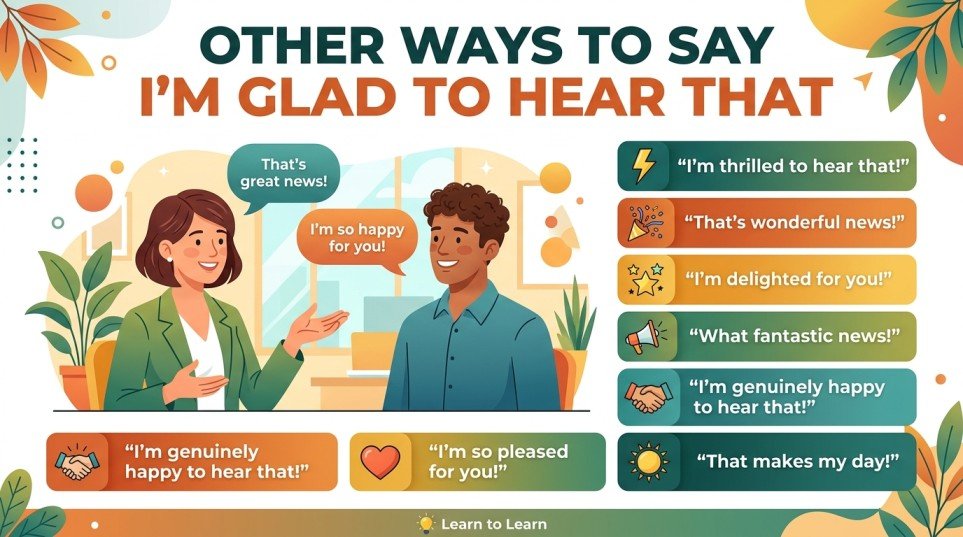
Quick Answer: You can replace I’m glad to hear that with more natural alternatives like: that’s wonderful to hear, I’m happy for you, that’s great news, I’m pleased to hear that, awesome news.
The phrase “I’m glad to hear that” is commonly used to respond positively to good news. It shows happiness, support, and emotional connection during conversations.
Although the phrase is polite and useful, using it repeatedly can make your English sound repetitive. Native speakers often choose different expressions depending on whether the situation is casual, emotional, or professional.
Learning alternatives to “I’m glad to hear that” helps you sound more fluent and expressive. It also improves your ability to adjust tone naturally and helps you express excitement in English more confidently.
Quick Categories Section
Formal alternatives to “I’m glad to hear that”
- I’m pleased to hear that
- That is wonderful news
- I’m delighted to hear that
- That’s very encouraging
Pro Tip: Use these in workplace emails or respectful conversations.
Casual alternatives
- That’s awesome
- Great to hear
- Nice
- That’s amazing
Pro Tip: These work best in friendly conversations and text messages.
Professional alternatives
- I’m happy to hear that
- That’s excellent news
- I appreciate the update
- I’m pleased things worked out
Pro Tip: Keep your tone warm but professional in business communication.
Informal expressions
- Sweet
- That rocks
- Love to hear that
- Fantastic
Pro Tip: Avoid slang expressions in formal situations.
“Positive responses make your English sound more natural and engaging.”
Common Mistakes
- Using overly casual phrases in professional settings
Example: “That rocks!” in a business email sounds unprofessional. - Repeating the same phrase too often
Example: Saying “I’m glad to hear that” in every conversation. - Using too much excitement for small news
Example: “That’s incredible!” for minor updates can feel unnatural. - Ignoring emotional tone
Example: Giving a flat response to emotional good news. - Choosing the wrong level of formality
Example: Using slang with clients or managers.
What Does “I’m Glad to Hear That” Mean?
It means you feel happy or pleased after hearing someone’s news or update.
Grammatically, it is a statement expressing emotional reaction.
Example Sentence:
I’m glad to hear that your interview went well.
When to Use “I’m Glad to Hear That”
- When someone shares good news
- In supportive conversations
- During workplace communication
- In both spoken and written English
Spoken vs Written: Common in both
Formal vs Informal: Neutral and polite
Is It Professional or Polite to Say “I’m Glad to Hear That”?
Polite? ✔️ Yes
Professional? ✔️ Yes
Business Example:
“I’m glad to hear that the project was completed successfully.”
Pros and Cons of Using “I’m Glad to Hear That”
Pros
- Polite and respectful
- Widely understood
- Professional-friendly
- Easy to use
Cons
- Can sound repetitive
- Lacks emotional variety
- Slightly generic
- Less expressive in casual conversations
“Using varied reactions makes conversations sound more authentic.”
Other Ways to Say “I’m Glad to Hear That” (With Examples)
These alternatives will help you sound more fluent, confident, and natural in different situations.
Use them according to tone, context, and audience.
1. Phrase: That’s wonderful to hear
Meaning: The news is very positive.
Explanation: Warm and enthusiastic response.
Example Sentence: That’s wonderful to hear about your promotion.
Best Use: supportive talk
Worst Use: negative situations
Tone: warm, positive
Context Variability: casual / professional
2. Phrase: I’m happy for you
Meaning: You feel pleased about someone’s success.
Explanation: Personal and emotional.
Example Sentence: I’m happy for you and your family.
Best Use: emotional support
Worst Use: formal reports
Tone: caring, warm
Context Variability: spoken / casual
3. Phrase: That’s great news
Meaning: The update is very positive.
Explanation: Common and versatile expression.
Example Sentence: That’s great news about the job offer.
Best Use: general use
Worst Use: very formal writing
Tone: positive, friendly
Context Variability: casual / professional
4. Phrase: I’m pleased to hear that
Meaning: You feel satisfied or happy about the news.
Explanation: More formal than the original phrase.
Example Sentence: I’m pleased to hear that everything went smoothly.
Best Use: workplace
Worst Use: slang context
Tone: professional, polite
Context Variability: professional / written
5. Phrase: Awesome news
Meaning: The news is exciting and impressive.
Explanation: Informal and energetic expression.
Example Sentence: Awesome news, congratulations.
Best Use: friends
Worst Use: business email
Tone: excited, informal
Context Variability: casual
“Fluent English comes from knowing how to match tone with emotion.”
6. Phrase: That’s amazing
Meaning: The news is impressive or exciting.
Explanation: Shows strong enthusiasm.
Example Sentence: That’s amazing, you must be thrilled.
Best Use: exciting updates
Worst Use: formal writing
Tone: enthusiastic, warm
Context Variability: casual
7. Phrase: I’m delighted to hear that
Meaning: You feel great pleasure about the news.
Explanation: Formal and expressive.
Example Sentence: I’m delighted to hear that your recovery is going well.
Best Use: professional tone
Worst Use: slang conversations
Tone: formal, warm
Context Variability: professional
8. Phrase: Great to hear
Meaning: Positive reaction to information.
Explanation: Short and natural expression.
Example Sentence: Great to hear everything worked out.
Best Use: everyday use
Worst Use: serious formal writing
Tone: friendly, casual
Context Variability: spoken
9. Phrase: That made my day
Meaning: The news brought happiness.
Explanation: Emotional and personal response.
Example Sentence: That made my day, honestly.
Best Use: emotional talk
Worst Use: workplace email
Tone: heartfelt, warm
Context Variability: casual
10. Phrase: I’m thrilled to hear that
Meaning: You feel extremely excited about the news.
Explanation: Strong emotional enthusiasm.
Example Sentence: I’m thrilled to hear that you got accepted.
Best Use: major achievements
Worst Use: small updates
Tone: excited, expressive
Context Variability: casual / professional
11. Phrase: Fantastic news
Meaning: Extremely good news.
Explanation: Energetic positive reaction.
Example Sentence: Fantastic news about your new business.
Best Use: celebrations
Worst Use: formal reports
Tone: upbeat, positive
Context Variability: casual
12. Phrase: That’s encouraging
Meaning: The news gives hope or confidence.
Explanation: Common in professional settings.
Example Sentence: That’s encouraging to hear.
Best Use: workplace
Worst Use: emotional excitement
Tone: professional, supportive
Context Variability: professional
13. Phrase: Love to hear that
Meaning: You strongly enjoy hearing the news.
Explanation: Modern informal expression.
Example Sentence: Love to hear that, seriously.
Best Use: casual chats
Worst Use: formal email
Tone: casual, enthusiastic
Context Variability: spoken
14. Phrase: That’s excellent news
Meaning: The information is highly positive.
Explanation: Professional and polished.
Example Sentence: That’s excellent news for the entire team.
Best Use: business communication
Worst Use: slang context
Tone: professional, positive
Context Variability: professional
15. Phrase: I’m so happy to hear that
Meaning: Strong emotional happiness.
Explanation: Warm and sincere response.
Example Sentence: I’m so happy to hear that you’re feeling better.
Best Use: emotional support
Worst Use: formal reports
Tone: warm, caring
Context Variability: spoken / casual
“The right reaction phrase can instantly make conversations feel more genuine.”
16. Phrase: That’s really good to hear
Meaning: The update is positively received.
Explanation: Neutral and versatile.
Example Sentence: That’s really good to hear after all the stress.
Best Use: general use
Worst Use: highly formal writing
Tone: friendly, calm
Context Variability: casual / professional
17. Phrase: I’m glad things worked out
Meaning: Happy about a positive outcome.
Explanation: Common after challenges.
Example Sentence: I’m glad things worked out for you.
Best Use: supportive conversations
Worst Use: formal reports
Tone: supportive, warm
Context Variability: casual
18. Phrase: That’s lovely to hear
Meaning: The news feels pleasant and heartwarming.
Explanation: Gentle and friendly expression.
Example Sentence: That’s lovely to hear about your family.
Best Use: personal updates
Worst Use: corporate settings
Tone: warm, soft
Context Variability: casual
19. Phrase: I’m excited for you
Meaning: Sharing excitement about someone’s success.
Explanation: Energetic emotional support.
Example Sentence: I’m excited for you and your new journey.
Best Use: achievements
Worst Use: formal writing
Tone: enthusiastic, supportive
Context Variability: casual
20. Phrase: That sounds wonderful
Meaning: The situation sounds very positive.
Explanation: Polite and expressive.
Example Sentence: That sounds wonderful, congratulations.
Best Use: friendly replies
Worst Use: strict formal writing
Tone: positive, warm
Context Variability: casual / professional
21. Phrase: What great news
Meaning: The update is highly positive.
Explanation: Short and expressive.
Example Sentence: What great news for your family.
Best Use: celebrations
Worst Use: formal documents
Tone: cheerful, excited
Context Variability: spoken
22. Phrase: I appreciate the update
Meaning: Thankful for receiving the information.
Explanation: Professional and polite.
Example Sentence: I appreciate the update and I’m glad everything is resolved.
Best Use: workplace
Worst Use: emotional conversations
Tone: professional, respectful
Context Variability: professional
23. Phrase: That’s music to my ears
Meaning: The news is especially pleasing.
Explanation: Idiomatic expression.
Example Sentence: That’s music to my ears after all the delays.
Best Use: informal talk
Worst Use: formal communication
Tone: expressive, informal
Context Variability: casual
24. Phrase: Brilliant news
Meaning: Extremely positive information.
Explanation: Common in British English.
Example Sentence: Brilliant news about your exam results.
Best Use: celebrations
Worst Use: formal reports
Tone: upbeat, friendly
Context Variability: casual
25. Phrase: I couldn’t be happier for you
Meaning: Very strong happiness for someone.
Explanation: Emotional and sincere.
Example Sentence: I couldn’t be happier for you right now.
Best Use: emotional moments
Worst Use: workplace email
Tone: heartfelt, emotional
Context Variability: casual
26. Phrase: That’s such good news
Meaning: The information is very positive.
Explanation: Natural conversational phrase.
Example Sentence: That’s such good news to hear today.
Best Use: everyday use
Worst Use: strict formal writing
Tone: friendly, positive
Context Variability: spoken
27. Phrase: I’m relieved to hear that
Meaning: The news removes worry or stress.
Explanation: Used after concern or uncertainty.
Example Sentence: I’m relieved to hear that you’re okay.
Best Use: stressful situations
Worst Use: celebrations
Tone: caring, sincere
Context Variability: casual / professional
28. Phrase: That’s terrific
Meaning: The news is excellent.
Explanation: Positive and energetic expression.
Example Sentence: That’s terrific news for the team.
Best Use: positive updates
Worst Use: formal legal writing
Tone: upbeat, enthusiastic
Context Variability: casual
29. Phrase: I’m pleased things are improving
Meaning: Happy about positive progress.
Explanation: Supportive professional tone.
Example Sentence: I’m pleased things are improving for you.
Best Use: workplace support
Worst Use: slang conversations
Tone: supportive, professional
Context Variability: professional
30. Phrase: That’s the best news I’ve heard today
Meaning: The news is extremely positive.
Explanation: Strong enthusiastic response.
Example Sentence: That’s the best news I’ve heard today.
Best Use: exciting updates
Worst Use: formal reports
Tone: enthusiastic, emotional
Context Variability: casual
“Natural English is not just about grammar—it’s about choosing the right emotional tone.”
Mini Quiz / Self-Check
1. Which phrase is best for professional communication?
A. Love to hear that
B. That’s excellent news
C. Awesome news
Answer: B
2. Which expression is most informal?
A. I’m delighted to hear that
B. That’s encouraging
C. Awesome news
Answer: C
3. Which phrase works best after stressful news improves?
A. I’m relieved to hear that
B. Brilliant news
C. Sweet
Answer: A
Comparison Table: Top Alternatives
| Phrase | Tone | Best Use |
|---|---|---|
| That’s wonderful to hear | Warm | Supportive talk |
| I’m happy for you | Emotional | Personal success |
| That’s great news | Neutral | General use |
| I’m pleased to hear that | Professional | Workplace |
| Awesome news | Informal | Friends |
| That’s amazing | Enthusiastic | Exciting updates |
| I’m delighted to hear that | Formal | Respectful communication |
| Great to hear | Casual | Everyday conversations |
| That’s excellent news | Professional | Business communication |
| I’m thrilled to hear that | Excited | Major achievements |
FAQs
1. What are the best alternatives to “I’m glad to hear that”?
Popular choices include that’s wonderful to hear, I’m happy for you, and that’s great news.
2. Is “I’m glad to hear that” professional?
Yes, it is polite and appropriate in professional communication.
3. What is a more formal way to say “I’m glad to hear that”?
Use I’m pleased to hear that or I’m delighted to hear that.
4. What informal expressions in English can replace this phrase?
Informal options include awesome news and love to hear that.
5. Why should I learn alternatives to “I’m glad to hear that”?
Learning different expressions improves fluency, emotional tone, and conversational confidence.
Conclusion
Learning different other ways to say “I’m glad to hear that” helps you sound more expressive, natural, and fluent in English conversations. It also improves your ability to respond appropriately in both casual and professional settings.
Practice these phrases regularly and pay attention to tone and context. The more variety you use, the more confident and engaging your English will become.
CTA: Which alternative will you start using today?
Discover More:-
- Other Ways to Say Sorry to Keep You Waiting (30+ Examples)
- Other Ways to Say Have a Great Rest of Your Week (30+ Examples)

Jennifer Collins is a professional grammar expert and language educator at gramtivo.com, specializing in English grammar, writing skills, and language improvement. She holds a Master’s degree in English Language and Literature from a recognized university in the United States. With years of teaching and content development experience, she is dedicated to helping learners improve their communication skills with clear and practical guidance.