
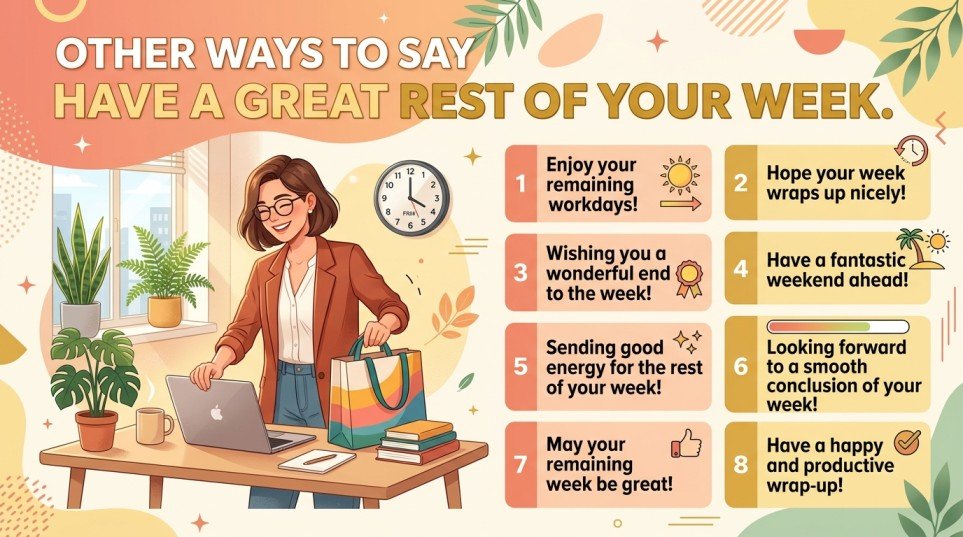
Quick Answer: Instead of saying have a great rest of your week, you can say: enjoy the rest of your week, have a wonderful week ahead, hope your week goes well, take care this week, wishing you a productive week.
The phrase “have a great rest of your week” is commonly used to wish someone well for the remaining days of the week. It sounds friendly, supportive, and positive in both personal and professional conversations.
Although it’s a useful phrase, repeating it too often can make your communication sound predictable. Native English speakers usually vary their expressions depending on the situation and tone.
Learning alternatives to “have a great rest of your week” helps you sound more fluent and natural. It also improves your tone in emails, conversations, and workplace communication while helping you express excitement in English more effectively.
Quick Categories Section
Formal alternatives to “have a great rest of your week”
- Wishing you a pleasant remainder of the week
- Have a productive week ahead
- Wishing you continued success this week
- Enjoy the remainder of your week
Pro Tip: Use these in professional emails and formal communication.
Casual alternatives
- Enjoy the rest of your week
- Have an awesome week
- Hope your week goes well
- Take care this week
Pro Tip: Great for friends, classmates, and relaxed conversations.
Professional alternatives
- Wishing you a successful week ahead
- Have a wonderful remainder of the week
- Hope the rest of your week goes smoothly
- Wishing you a productive rest of the week
Pro Tip: Keep your tone warm but professional in workplace settings.
Informal expressions
- Have a good one this week
- Enjoy your week
- Make the most of your week
- Have a fantastic week ahead
Pro Tip: Avoid overly informal phrases in formal business emails.
“Professional English becomes stronger when you vary common expressions.”
Common Mistakes
- Using overly casual language in professional emails
Example: “Have an awesome week” may sound too informal in business communication. - Repeating the same phrase too often
Example: Ending every email with “have a great rest of your week.” - Using phrases that sound unnatural
Example: “Enjoy your remaining weekdays” sounds awkward. - Ignoring the relationship with the listener
Example: Very warm expressions may sound strange with clients. - Choosing the wrong tone
Example: “Take it easy” may feel too relaxed in formal communication.
What Does “Have a Great Rest of Your Week” Mean?
It means wishing someone a pleasant, successful, or enjoyable remainder of the week.
Grammatically, it’s an imperative expression used as a polite closing remark.
Example Sentence:
Thanks again for your help. Have a great rest of your week.
When to Use “Have a Great Rest of Your Week”
- At the end of emails
- In workplace communication
- During casual conversations
- When saying goodbye midweek
Spoken vs Written: Common in both
Formal vs Informal: Neutral and flexible
Is It Professional or Polite to Say “Have a Great Rest of Your Week”?
Polite? ✔️ Yes
Professional? ✔️ Yes
Business Example:
“Thank you for the update. Have a great rest of your week.”
Pros and Cons of Using “Have a Great Rest of Your Week”
Pros
- Friendly and positive
- Suitable for work communication
- Easy to understand
- Natural sounding
Cons
- Can become repetitive
- Slightly generic
- Not very creative
- Less personal in some contexts
“Small wording changes can make your emails sound more polished and engaging.”
Other Ways to Say “Have a Great Rest of Your Week” (With Examples)
These alternatives will help you sound more fluent, confident, and natural in different situations.
Use them according to tone, audience, and context.
1. Phrase: Enjoy the rest of your week
Meaning: Wishing someone a pleasant remaining week.
Explanation: Natural and widely used.
Example Sentence: Enjoy the rest of your week and take care.
Best Use: general use
Worst Use: very formal writing
Tone: friendly, warm
Context Variability: casual / professional
2. Phrase: Have a wonderful week ahead
Meaning: Hoping the upcoming days are enjoyable.
Explanation: Slightly warm and encouraging.
Example Sentence: Have a wonderful week ahead.
Best Use: positive emails
Worst Use: urgent messages
Tone: positive, cheerful
Context Variability: professional / spoken
3. Phrase: Hope your week goes well
Meaning: Wishing success and comfort.
Explanation: Friendly and conversational.
Example Sentence: Hope your week goes well from here.
Best Use: everyday use
Worst Use: formal letters
Tone: casual, kind
Context Variability: casual
4. Phrase: Wishing you a productive week
Meaning: Hoping someone accomplishes their goals.
Explanation: Professional and supportive.
Example Sentence: Wishing you a productive week ahead.
Best Use: workplace
Worst Use: vacation context
Tone: professional, encouraging
Context Variability: professional
5. Phrase: Have a pleasant remainder of the week
Meaning: Wishing someone a pleasant rest of the week.
Explanation: Formal alternative.
Example Sentence: Have a pleasant remainder of the week.
Best Use: formal emails
Worst Use: casual chat
Tone: formal, polite
Context Variability: professional
“Using varied expressions helps your English sound more natural and confident.”
6. Phrase: Take care this week
Meaning: Wishing someone well-being.
Explanation: Warm and caring expression.
Example Sentence: Take care this week and stay safe.
Best Use: personal messages
Worst Use: corporate writing
Tone: caring, warm
Context Variability: casual
7. Phrase: Have a successful week ahead
Meaning: Wishing achievement and progress.
Explanation: Motivational and professional.
Example Sentence: Have a successful week ahead.
Best Use: workplace
Worst Use: casual slang
Tone: professional, positive
Context Variability: professional
8. Phrase: Enjoy your week
Meaning: Hope the week is enjoyable.
Explanation: Short and simple.
Example Sentence: Enjoy your week and relax when you can.
Best Use: casual use
Worst Use: highly formal emails
Tone: friendly, casual
Context Variability: spoken / casual
9. Phrase: Wishing you a smooth rest of the week
Meaning: Hoping everything goes easily.
Explanation: Professional reassurance.
Example Sentence: Wishing you a smooth rest of the week.
Best Use: office communication
Worst Use: party context
Tone: calm, professional
Context Variability: professional
10. Phrase: Have an awesome week
Meaning: Wishing an exciting and enjoyable week.
Explanation: Informal and energetic.
Example Sentence: Have an awesome week ahead.
Best Use: friends
Worst Use: formal business emails
Tone: energetic, casual
Context Variability: casual
11. Phrase: Hope the rest of your week is amazing
Meaning: Wishing positivity for upcoming days.
Explanation: Enthusiastic and uplifting.
Example Sentence: Hope the rest of your week is amazing.
Best Use: friendly messages
Worst Use: strict formal writing
Tone: cheerful, expressive
Context Variability: casual
12. Phrase: Have a fantastic rest of the week
Meaning: Wishing an excellent week ahead.
Explanation: More enthusiastic variation.
Example Sentence: Have a fantastic rest of the week.
Best Use: positive conversations
Worst Use: serious situations
Tone: upbeat, warm
Context Variability: casual / professional
13. Phrase: Wishing you a relaxing week
Meaning: Hoping someone experiences less stress.
Explanation: Focuses on calmness and balance.
Example Sentence: Wishing you a relaxing week ahead.
Best Use: stressful periods
Worst Use: highly competitive settings
Tone: calm, thoughtful
Context Variability: professional
14. Phrase: Hope you have a great week ahead
Meaning: Wishing someone a positive week.
Explanation: Natural and versatile.
Example Sentence: Hope you have a great week ahead.
Best Use: general communication
Worst Use: repetitive use
Tone: friendly, positive
Context Variability: casual / professional
15. Phrase: Make the most of your week
Meaning: Encourage someone to use their time well.
Explanation: Motivational expression.
Example Sentence: Make the most of your week.
Best Use: encouragement
Worst Use: formal reports
Tone: motivational, upbeat
Context Variability: casual
“Fluent communication comes from flexibility, not repetition.”
16. Phrase: Have a lovely week ahead
Meaning: Wishing someone a pleasant week.
Explanation: Warm and polite.
Example Sentence: Have a lovely week ahead.
Best Use: personal emails
Worst Use: formal business reports
Tone: warm, gentle
Context Variability: casual / professional
17. Phrase: Enjoy what’s left of your week
Meaning: Appreciate the remaining days.
Explanation: Casual and conversational.
Example Sentence: Enjoy what’s left of your week.
Best Use: casual talk
Worst Use: formal communication
Tone: relaxed, friendly
Context Variability: casual
18. Phrase: Hope your week stays positive
Meaning: Wishing continued positivity.
Explanation: Encouraging tone.
Example Sentence: Hope your week stays positive and productive.
Best Use: workplace
Worst Use: slang context
Tone: positive, supportive
Context Variability: professional
19. Phrase: Wishing you a rewarding week
Meaning: Hoping the week feels meaningful.
Explanation: Professional and motivational.
Example Sentence: Wishing you a rewarding week ahead.
Best Use: career context
Worst Use: casual slang
Tone: professional, inspiring
Context Variability: professional
20. Phrase: Have a cheerful week ahead
Meaning: Wishing happiness during the week.
Explanation: Positive and uplifting.
Example Sentence: Have a cheerful week ahead.
Best Use: friendly communication
Worst Use: serious situations
Tone: cheerful, bright
Context Variability: casual
21. Phrase: Wishing you continued success this week
Meaning: Hoping ongoing progress continues.
Explanation: Formal and supportive.
Example Sentence: Wishing you continued success this week.
Best Use: workplace
Worst Use: casual chat
Tone: formal, encouraging
Context Variability: professional
22. Phrase: Have a rewarding rest of the week
Meaning: Hoping remaining days feel valuable.
Explanation: Professional and polished.
Example Sentence: Have a rewarding rest of the week.
Best Use: office communication
Worst Use: slang context
Tone: professional, thoughtful
Context Variability: professional
23. Phrase: Stay positive this week
Meaning: Encouraging optimism.
Explanation: Motivational and supportive.
Example Sentence: Stay positive this week and keep going.
Best Use: encouragement
Worst Use: formal writing
Tone: supportive, casual
Context Variability: spoken
24. Phrase: Hope everything goes smoothly this week
Meaning: Wishing an easy and stress-free week.
Explanation: Common professional phrase.
Example Sentence: Hope everything goes smoothly this week.
Best Use: work settings
Worst Use: casual slang
Tone: calm, professional
Context Variability: professional
25. Phrase: Have a beautiful week ahead
Meaning: Wishing someone a pleasant week.
Explanation: Emotional and expressive.
Example Sentence: Have a beautiful week ahead.
Best Use: personal messages
Worst Use: formal corporate emails
Tone: warm, expressive
Context Variability: casual
26. Phrase: Hope your week turns out great
Meaning: Wishing a positive outcome.
Explanation: Conversational and friendly.
Example Sentence: Hope your week turns out great.
Best Use: everyday talk
Worst Use: highly formal communication
Tone: casual, optimistic
Context Variability: casual
27. Phrase: Enjoy the remainder of your week
Meaning: Enjoy the remaining days.
Explanation: Slightly formal variation.
Example Sentence: Enjoy the remainder of your week.
Best Use: professional emails
Worst Use: very casual speech
Tone: professional, polite
Context Variability: professional
28. Phrase: Have a fulfilling week ahead
Meaning: Wishing meaningful experiences.
Explanation: Thoughtful and professional.
Example Sentence: Have a fulfilling week ahead.
Best Use: motivational communication
Worst Use: casual slang
Tone: thoughtful, professional
Context Variability: professional
29. Phrase: Hope you enjoy the rest of your week
Meaning: Wishing someone happiness for upcoming days.
Explanation: Natural and versatile.
Example Sentence: Hope you enjoy the rest of your week.
Best Use: general communication
Worst Use: repetitive use
Tone: friendly, neutral
Context Variability: casual / professional
30. Phrase: Wishing you a fantastic week ahead
Meaning: Hoping for an excellent upcoming week.
Explanation: Enthusiastic and positive.
Example Sentence: Wishing you a fantastic week ahead.
Best Use: uplifting messages
Worst Use: serious formal documents
Tone: upbeat, warm
Context Variability: casual / professional
“The right closing phrase can make your message feel more thoughtful and memorable.”
Mini Quiz / Self-Check
1. Which phrase is best for professional communication?
A. Have an awesome week
B. Wishing you a productive week
C. Enjoy what’s left of your week
Answer: B
2. Which phrase sounds most informal?
A. Have a pleasant remainder of the week
B. Wishing you continued success this week
C. Have an awesome week
Answer: C
3. Which phrase is best for a supportive tone?
A. Stay positive this week
B. Enjoy the remainder of your week
C. Have a productive week
Answer: A
Comparison Table: Top Alternatives
| Phrase | Tone | Best Use |
|---|---|---|
| Enjoy the rest of your week | Friendly | General use |
| Have a wonderful week ahead | Positive | Emails |
| Wishing you a productive week | Professional | Workplace |
| Take care this week | Caring | Personal messages |
| Have a pleasant remainder of the week | Formal | Business emails |
| Have a successful week ahead | Motivational | Work |
| Enjoy your week | Casual | Everyday talk |
| Wishing you a smooth rest of the week | Professional | Office communication |
| Have a fantastic rest of the week | Warm | Friendly conversations |
| Hope everything goes smoothly this week | Professional | Workplace |
FAQs
1. What are the best alternatives to “have a great rest of your week”?
Popular choices include enjoy the rest of your week, have a wonderful week ahead, and wishing you a productive week.
2. Is “have a great rest of your week” professional?
Yes, it is polite and commonly used in professional communication.
3. What should I say in a business email instead?
Try wishing you a productive week or enjoy the remainder of your week.
4. Can I use informal expressions in English at work?
Only in relaxed workplace environments.
5. Why learn other ways to say “have a great rest of your week”?
It improves fluency, tone variety, and professional communication skills.
Conclusion
Learning different other ways to say “have a great rest of your week” helps you sound more fluent, natural, and engaging in conversations and emails. It also allows you to adjust your tone depending on the situation.
Practice these alternatives regularly and pay attention to context. Over time, your English communication will sound more polished and professional.
CTA: Which phrase will you start using this week?
Discover More:-

Jennifer Collins is a professional grammar expert and language educator at gramtivo.com, specializing in English grammar, writing skills, and language improvement. She holds a Master’s degree in English Language and Literature from a recognized university in the United States. With years of teaching and content development experience, she is dedicated to helping learners improve their communication skills with clear and practical guidance.