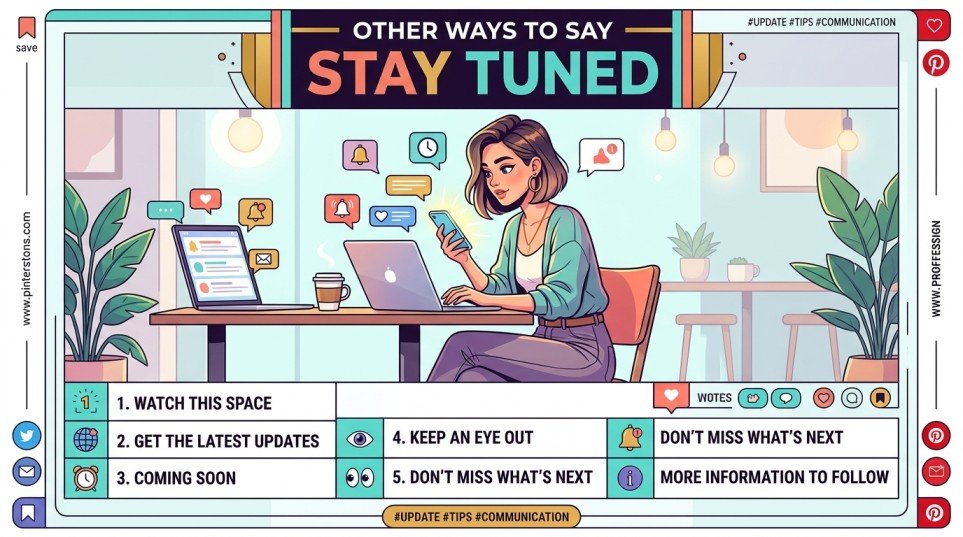
Quick Answer: You can replace stay tuned with more engaging and natural phrases like: keep an eye out, more updates coming soon, don’t miss it, watch this space, check back soon.
The phrase “stay tuned” is commonly used to tell someone to wait for more information, updates, or announcements. It originally came from television and radio broadcasting but is now widely used in emails, marketing, social media, and everyday English.
Although the phrase is popular, repeating it too often can sound generic. Native English speakers often use different expressions depending on tone, audience, and context.
Learning alternatives to “stay tuned” helps you sound more natural, professional, and engaging. It also improves your ability to express excitement in English and use more effective communication in professional and casual situations.
Quick Categories Section
Formal alternatives to “stay tuned”
- Further updates will follow
- More information will be shared soon
- Please await further details
- Additional announcements are coming soon
Pro Tip: Use these in professional emails, announcements, and business communication.
Casual alternatives
- Keep an eye out
- Don’t miss it
- Check back soon
- More coming soon
Pro Tip: These work well in friendly conversations and social media posts.
Professional alternatives
- We’ll keep you updated
- More details to follow
- Updates will be provided shortly
- Stay informed
Pro Tip: Keep your wording clear and concise in workplace communication.
Informal expressions
- Watch this space
- Big things are coming
- Hang tight
- You’ll see soon
Pro Tip: Avoid highly informal phrases in serious professional settings.
“The right phrase can make your message sound more engaging and professional.”
Common Mistakes
- Overusing “stay tuned” repeatedly
Example: Using it in every social media post sounds repetitive. - Using informal phrases in formal communication
Example: “Hang tight” in a business email sounds too casual. - Creating vague messaging
Example: Saying “stay tuned” without context confuses readers. - Using overly dramatic wording professionally
Example: “Big things are coming” may sound unprofessional in corporate communication. - Not matching tone with audience
Example: Using formal language in casual marketing posts may feel stiff.
What Does “Stay Tuned” Mean?
It means wait for more information, updates, or announcements.
Grammatically, it’s an imperative phrase used to encourage continued attention.
Example Sentence:
Stay tuned for tomorrow’s announcement.
When to Use “Stay Tuned”
- Before announcements or updates
- In marketing campaigns
- During presentations or broadcasts
- In social media captions and emails
Spoken vs Written: Common in both
Formal vs Informal: Neutral but slightly casual
Is It Professional or Polite to Say “Stay Tuned”?
Polite? ✔️ Yes
Professional? ✔️ Sometimes
Business Example:
“Stay tuned for additional updates regarding the project timeline.”
Pros and Cons of Using “Stay Tuned”
Pros
- Short and memorable
- Widely understood
- Builds anticipation
- Friendly tone
Cons
- Overused
- Slightly casual
- Lacks originality
- Can sound vague
“Strong communication keeps people interested without sounding repetitive.”
Other Ways to Say “Stay Tuned” (With Examples)
These alternatives will help you sound more fluent, engaging, and natural in different situations.
Use them based on tone, audience, and context.
1. Phrase: Keep an eye out
Meaning: Watch for upcoming information.
Explanation: Friendly and commonly used.
Example Sentence: Keep an eye out for our next update.
Best Use: social media
Worst Use: legal writing
Tone: casual, engaging
Context Variability: casual / spoken
2. Phrase: More updates coming soon
Meaning: Additional information will arrive shortly.
Explanation: Clear and direct.
Example Sentence: More updates coming soon, so stay connected.
Best Use: announcements
Worst Use: casual chat
Tone: informative, friendly
Context Variability: professional / casual
3. Phrase: Don’t miss it
Meaning: Something important is coming.
Explanation: Creates excitement and urgency.
Example Sentence: Don’t miss it next Friday.
Best Use: promotions
Worst Use: formal reports
Tone: exciting, energetic
Context Variability: marketing / spoken
4. Phrase: Watch this space
Meaning: More information will appear here soon.
Explanation: Common in announcements and online content.
Example Sentence: Watch this space for exciting news.
Best Use: social media
Worst Use: formal writing
Tone: modern, engaging
Context Variability: casual / marketing
5. Phrase: Check back soon
Meaning: Return later for updates.
Explanation: Friendly and straightforward.
Example Sentence: Check back soon for more details.
Best Use: websites
Worst Use: speeches
Tone: casual, clear
Context Variability: online / spoken
“Fluent English comes from choosing phrases that fit the moment.”
6. Phrase: We’ll keep you updated
Meaning: Information will continue to be shared.
Explanation: Professional and reassuring.
Example Sentence: We’ll keep you updated throughout the process.
Best Use: workplace
Worst Use: slang context
Tone: professional, supportive
Context Variability: professional
7. Phrase: More details to follow
Meaning: Additional information is coming later.
Explanation: Common in formal communication.
Example Sentence: More details to follow next week.
Best Use: business emails
Worst Use: casual chat
Tone: formal, professional
Context Variability: professional / written
8. Phrase: Stay informed
Meaning: Continue paying attention to updates.
Explanation: Professional and concise.
Example Sentence: Stay informed by subscribing to our newsletter.
Best Use: business communication
Worst Use: playful marketing
Tone: professional, informative
Context Variability: professional
9. Phrase: Hang tight
Meaning: Wait patiently.
Explanation: Informal and conversational.
Example Sentence: Hang tight, we’ll share more soon.
Best Use: casual updates
Worst Use: formal email
Tone: relaxed, informal
Context Variability: casual
10. Phrase: Big things are coming
Meaning: Exciting developments are ahead.
Explanation: Popular marketing phrase.
Example Sentence: Big things are coming this month.
Best Use: promotions
Worst Use: corporate reports
Tone: exciting, dramatic
Context Variability: marketing
11. Phrase: More coming soon
Meaning: Additional content is on the way.
Explanation: Short and versatile.
Example Sentence: More coming soon, so stay connected.
Best Use: social media
Worst Use: formal announcements
Tone: casual, upbeat
Context Variability: online
12. Phrase: You’ll hear from us soon
Meaning: More communication is coming.
Explanation: Personal and professional.
Example Sentence: You’ll hear from us soon regarding your application.
Best Use: workplace
Worst Use: advertisements
Tone: polite, professional
Context Variability: professional
13. Phrase: Await further updates
Meaning: Wait for more information.
Explanation: Formal and direct.
Example Sentence: Please await further updates from our team.
Best Use: formal communication
Worst Use: casual speech
Tone: formal, serious
Context Variability: professional
14. Phrase: There’s more to come
Meaning: Additional information or content is coming.
Explanation: Encouraging and engaging.
Example Sentence: There’s more to come later this week.
Best Use: presentations
Worst Use: legal writing
Tone: positive, engaging
Context Variability: casual / marketing
15. Phrase: Keep watching
Meaning: Continue paying attention.
Explanation: Common in video content.
Example Sentence: Keep watching for the final reveal.
Best Use: video content
Worst Use: professional email
Tone: engaging, energetic
Context Variability: spoken / marketing
16. Phrase: Updates are on the way
Meaning: Information will arrive soon.
Explanation: Professional and clear.
Example Sentence: Updates are on the way regarding the launch.
Best Use: workplace
Worst Use: casual slang
Tone: professional, reassuring
Context Variability: professional
17. Phrase: Stay connected
Meaning: Continue following for updates.
Explanation: Popular in digital communication.
Example Sentence: Stay connected for future announcements.
Best Use: social media
Worst Use: strict formal writing
Tone: modern, engaging
Context Variability: marketing / casual
18. Phrase: Keep following along
Meaning: Continue paying attention.
Explanation: Friendly and conversational.
Example Sentence: Keep following along for new updates.
Best Use: blogs
Worst Use: legal notices
Tone: casual, warm
Context Variability: online
19. Phrase: More information is coming soon
Meaning: Additional details will arrive shortly.
Explanation: Direct and informative.
Example Sentence: More information is coming soon about the event.
Best Use: announcements
Worst Use: casual jokes
Tone: neutral, informative
Context Variability: professional / casual
20. Phrase: Be on the lookout
Meaning: Watch carefully for something upcoming.
Explanation: Creates anticipation.
Example Sentence: Be on the lookout for our next release.
Best Use: promotions
Worst Use: formal letters
Tone: exciting, engaging
Context Variability: marketing
“The best professional reaction phrases are clear, natural, and audience-focused.”
21. Phrase: We’ll share more soon
Meaning: Additional details will come later.
Explanation: Friendly and professional.
Example Sentence: We’ll share more soon about the project.
Best Use: workplace
Worst Use: dramatic marketing
Tone: calm, professional
Context Variability: professional
22. Phrase: Stay posted
Meaning: Continue following updates.
Explanation: Informal alternative.
Example Sentence: Stay posted for future news.
Best Use: social media
Worst Use: formal email
Tone: casual, modern
Context Variability: casual
23. Phrase: Exciting news is coming soon
Meaning: Something important is approaching.
Explanation: Builds anticipation.
Example Sentence: Exciting news is coming soon.
Best Use: marketing
Worst Use: official reports
Tone: enthusiastic, upbeat
Context Variability: marketing
24. Phrase: Keep checking in
Meaning: Return regularly for updates.
Explanation: Encourages ongoing attention.
Example Sentence: Keep checking in for more announcements.
Best Use: websites
Worst Use: formal speeches
Tone: friendly, engaging
Context Variability: casual / online
25. Phrase: Additional details will be shared soon
Meaning: More information is forthcoming.
Explanation: Professional and polished.
Example Sentence: Additional details will be shared soon.
Best Use: business communication
Worst Use: casual chat
Tone: formal, professional
Context Variability: professional
26. Phrase: More announcements are coming
Meaning: More updates will follow.
Explanation: Common in promotional messaging.
Example Sentence: More announcements are coming next week.
Best Use: events
Worst Use: legal documents
Tone: exciting, informative
Context Variability: marketing
27. Phrase: Stay alert for updates
Meaning: Be ready for new information.
Explanation: Strong and direct wording.
Example Sentence: Stay alert for updates from our team.
Best Use: urgent notices
Worst Use: casual jokes
Tone: direct, professional
Context Variability: professional
28. Phrase: Keep your eyes open
Meaning: Watch carefully for upcoming news.
Explanation: Informal and conversational.
Example Sentence: Keep your eyes open for our next launch.
Best Use: casual marketing
Worst Use: formal reports
Tone: casual, energetic
Context Variability: casual
29. Phrase: More surprises ahead
Meaning: Exciting things are still coming.
Explanation: Creates excitement and curiosity.
Example Sentence: More surprises ahead this season.
Best Use: entertainment
Worst Use: business email
Tone: playful, exciting
Context Variability: marketing / casual
30. Phrase: We’re just getting started
Meaning: More developments are still to come.
Explanation: Motivational and energetic.
Example Sentence: We’re just getting started, so stay connected.
Best Use: campaigns
Worst Use: formal documentation
Tone: energetic, inspiring
Context Variability: marketing / spoken
“Using varied expressions makes your English sound more natural and engaging.”
Mini Quiz / Self-Check
1. Which phrase is best for a professional email?
A. Hang tight
B. More details to follow
C. Big things are coming
Answer: B
2. Which phrase is most informal?
A. Stay informed
B. Hang tight
C. Additional details will be shared soon
Answer: B
3. Which phrase works best for marketing content?
A. More surprises ahead
B. Await further updates
C. Stay informed
Answer: A
Comparison Table: Top Alternatives
| Phrase | Tone | Best Use |
|---|---|---|
| Keep an eye out | Casual | Social media |
| More updates coming soon | Neutral | Announcements |
| Don’t miss it | Exciting | Promotions |
| Watch this space | Modern | Online content |
| Check back soon | Casual | Websites |
| We’ll keep you updated | Professional | Workplace |
| More details to follow | Formal | Business emails |
| Stay informed | Professional | Newsletters |
| Hang tight | Informal | Casual updates |
| Big things are coming | Dramatic | Marketing |
FAQs
1. What are the best alternatives to “stay tuned”?
Popular options include keep an eye out, check back soon, and more updates coming soon.
2. Is “stay tuned” professional?
Yes, but it can sound slightly casual depending on the context.
3. What should I say instead in professional emails?
Use phrases like more details to follow or we’ll keep you updated.
4. Can I use informal expressions in business communication?
Only in relaxed workplaces; otherwise, choose more professional reaction phrases.
5. Why learn other ways to say “stay tuned”?
It improves fluency, variety, and audience engagement.
Conclusion
Using different other ways to say “stay tuned” helps you sound more engaging, fluent, and professional. It also allows you to adapt your tone for marketing, workplace communication, and casual conversations.
Practice these phrases regularly and choose expressions that match your audience and purpose. Over time, your English will sound more polished and natural.
CTA: Which alternative will you start using today?
Discover More:-
- Other Ways to Say I Was Wondering (25+ Examples)
- Other Ways to Say Thank You for Your Interest (30+ Examples)

Robert Mitchell is a U.S.-based writer at Gramtivo.Com who focuses on grammar, writing improvement, and language-related content. He holds a degree in English and Linguistics from a U.S. university. His work aims to help readers enhance their writing skills with clear and practical guidance.