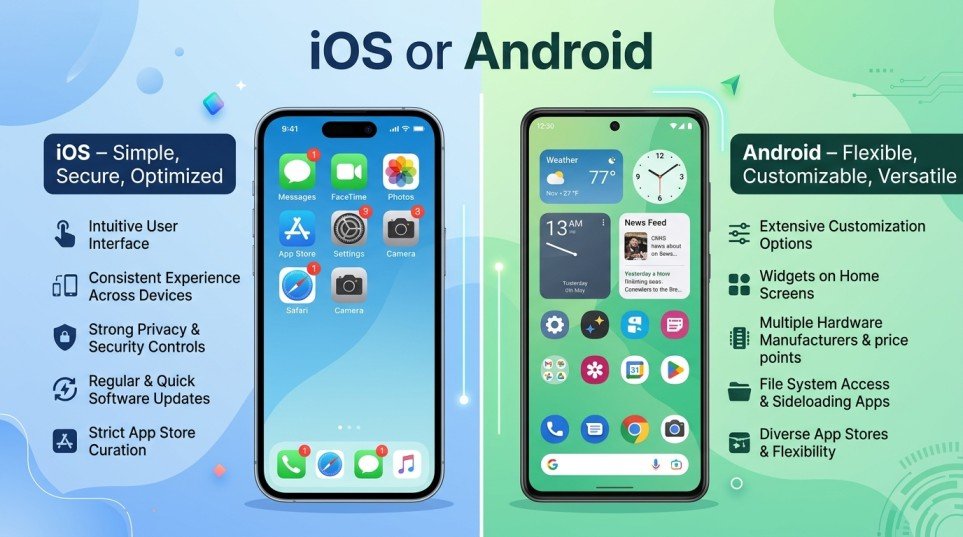
Quick Ans: The biggest difference between iOS or Android is customization, device variety, and ecosystem. iOS is known for simplicity, security, and smooth integration with Apple devices, while Android offers greater flexibility, customization, and a wider range of smartphones at different prices. Both systems are powerful, but the better choice depends on your needs and budget.
Many smartphone buyers compare iOS or Android before choosing a new device. Both operating systems dominate the mobile market. Both support apps, games, messaging, cameras, and internet browsing. However, the user experience can feel very different.
Some people prefer the clean and simple design of iOS. Others enjoy the freedom and customization that Android provides. The decision becomes even harder because both systems improve every year.
A student may want affordability and flexibility. Meanwhile, a business professional may prioritize security and device stability. Gamers, photographers, and content creators also have different needs.
Because smartphones are used daily, choosing the right operating system matters. The wrong choice can lead to frustration, compatibility issues, or unnecessary expenses.
This complete guide explains everything about iOS or Android. You will learn key differences, advantages, disadvantages, real world examples, security comparisons, common mistakes, and practical exercises. By the end, you will understand which platform fits your lifestyle best.
Quick Answer: iOS or Android
The simplest way to compare iOS or Android is by flexibility and ecosystem.
| Feature | iOS | Android |
|---|---|---|
| Developer | Apple | |
| Customization | Limited | Extensive |
| Device Variety | Apple only | Many brands |
| Security | Very strong | Strong but varies |
| Price Range | Usually premium | Budget to premium |
| App Store | Apple App Store | Google Play Store |
In simple terms:
- iOS focuses on simplicity and stability.
- Android focuses on customization and flexibility.
What Is iOS?
iOS is the mobile operating system created by Apple. It powers devices such as the iPhone.
Apple controls both the hardware and software. Because of this, iOS devices usually work smoothly together.
Common Features of iOS
iOS includes several important features:
- Clean user interface
- Strong privacy controls
- Fast software updates
- Tight ecosystem integration
- Optimized app performance
Many users appreciate the consistent experience across Apple products.
Devices That Use iOS
iOS runs on:
- iPhone
- Some Apple mobile devices
- Apple ecosystem products
Unlike Android, iOS is exclusive to Apple hardware.
How iOS Works
Apple designs the operating system specifically for its own devices. As a result, hardware and software communicate efficiently. This creates smooth animations, stable apps, and long term software support.
What Is Android?
Android is a mobile operating system developed by Google. Unlike iOS, Android is used by many smartphone manufacturers.
Popular Android brands include:
- Samsung
- Xiaomi
- OnePlus
- Google Pixel devices
Common Features of Android
Android offers many flexible features:
- Home screen customization
- Widgets
- Expandable storage on some devices
- Wider hardware variety
- Flexible app management
Because many manufacturers use Android, buyers have more choices.
Devices That Use Android
Android powers:
- Budget smartphones
- Mid range phones
- Premium flagship devices
- Foldable phones
- Gaming phones
This variety makes Android accessible to many users.
How Android Works
Google develops the Android operating system, but manufacturers customize it for their devices. Consequently, the user experience can vary between brands.
Key Differences Between iOS or Android
Customization
Android offers much more customization. Users can change launchers, widgets, themes, and default apps.
iOS allows customization too, but the options remain more limited.
Device Variety
Apple only sells a few iPhone models each year. Android, however, appears on hundreds of devices from different brands.
User Interface
iOS provides a clean and consistent interface. Android interfaces vary depending on the manufacturer.
App Ecosystem
Both systems support millions of apps. However, developers sometimes release apps earlier on iOS because Apple devices are easier to optimize.
Software Updates
Apple controls updates directly. Therefore, iPhones usually receive updates faster and longer.
Android updates depend on the manufacturer. Some brands update quickly, while others lag behind.
Advantages and Disadvantages
iOS Advantages
iOS offers several major strengths:
- Excellent security
- Smooth performance
- Long software support
- Easy integration with Apple devices
- High quality apps
iOS Disadvantages
Some drawbacks also exist:
- Limited customization
- Higher device prices
- Less hardware variety
- Restricted file management
Android Advantages
Android provides many benefits:
- Greater customization
- Wide price range
- Large hardware selection
- Expandable storage on some devices
- Flexible settings
Android Disadvantages
Android also has weaknesses:
- Inconsistent update schedules
- More software variation between brands
- Some devices include unwanted apps
- Security quality varies by manufacturer
Therefore, the best choice in iOS or Android depends on personal priorities.
Security Comparison
iOS Security
Apple emphasizes privacy and security heavily. Strict app review policies reduce harmful software risks.
Key iOS security features include:
- App permission controls
- Encrypted messaging
- Regular updates
- Secure Face ID system
Android Security
Android security has improved greatly over the years. Google Play Protect scans apps for threats automatically.
Strong Android security depends on:
- Timely updates
- Trusted app downloads
- Secure device settings
Premium Android phones often provide excellent protection.
Performance Comparison
iOS Performance
Because Apple designs both hardware and software, iPhones often deliver smooth performance even with smaller hardware specifications.
Android Performance
Performance varies depending on the device. Premium Android phones can match or exceed iPhones in speed and gaming performance.
Budget Android phones, however, may feel slower over time.
Real World Examples
Student Usage
Students often choose Android because affordable devices are widely available.
Business Professionals
Many professionals prefer iPhones because of strong security and stable software support.
Mobile Gamers
High end Android gaming phones provide advanced cooling systems and high refresh rate displays. Meanwhile, iPhones also perform extremely well in gaming.
Content Creators
Social media apps often receive optimization earlier on iOS. As a result, creators sometimes prefer iPhones for video and photography.
These examples show how the iOS or Android decision depends on user needs.
Regional and Global Usage
North America
iPhones dominate many parts of North America, especially among younger users.
Asia
Android leads strongly in many Asian markets because of affordable device availability.
Europe
Both platforms maintain large user bases across Europe.
Global Market
Worldwide, Android holds the larger market share due to the huge number of manufacturers and price ranges.
Related Concepts and Comparisons
iOS vs macOS
iOS powers mobile devices like iPhones. macOS powers Apple computers such as MacBooks.
Android vs Windows
Android is a mobile operating system, while Windows focuses mainly on desktop and laptop computers.
iOS or Android vs HarmonyOS
HarmonyOS is another operating system developed by Huawei. However, iOS and Android remain the dominant platforms globally.
Common Mistakes About iOS or Android
Assuming All Android Phones Are Cheap
Android includes both budget and premium flagship devices.
Thinking iPhones Never Lag
Older iPhones can slow down over time, especially with aging batteries.
Ignoring Ecosystem Compatibility
Switching between Apple and Android ecosystems can create compatibility challenges.
Installing Apps From Unknown Sources
Android allows app sideloading. However, downloading apps from unsafe sources increases security risks.
Avoiding these mistakes helps users choose and maintain smartphones more effectively.
Beginner to Advanced Smartphone Tips
Beginner Level
Choose a device with enough storage and battery life for daily tasks.
Intermediate Level
Learn cloud backup systems and app permissions.
Advanced Level
Explore advanced features such as:
- Automation shortcuts
- Developer settings
- Mobile productivity tools
- Cross device syncing
These features can improve the smartphone experience significantly.
Step By Step Buying Scenario
Imagine buying a new smartphone.
If you choose iOS:
- Select an iPhone model
- Sign into Apple account
- Download apps from App Store
- Sync with Apple ecosystem devices
If you choose Android:
- Compare brands and price ranges
- Select preferred manufacturer
- Customize home screen and settings
- Download apps from Google Play Store
Although both systems perform similar tasks, the setup experience differs.
Exercises With Answers
Exercise 1
Which company develops iOS?
Answer: Apple.
Exercise 2
Which operating system offers more customization?
Answer: Android.
Exercise 3
Which platform typically receives updates faster?
Answer: iOS.
Exercise 4
Which operating system appears on more brands?
Answer: Android.
Exercise 5
True or False: Android phones only exist in budget categories.
Answer: False.
When Should You Choose iOS or Android?
Choose iOS if you:
- Want long software support
- Prefer simplicity and stability
- Use other Apple devices
- Prioritize privacy and security
Choose Android if you:
- Want more customization
- Need wider price options
- Prefer flexible settings
- Enjoy experimenting with features
Your lifestyle, budget, and ecosystem preference should guide the final decision.
FAQs About iOS or Android
What is the main difference between iOS or Android?
The main difference is ecosystem and flexibility. iOS focuses on simplicity and security, while Android emphasizes customization and device variety.
Is iOS safer than Android?
iOS generally provides tighter security because Apple controls both hardware and software. However, premium Android devices also offer strong protection.
Which is cheaper, iOS or Android?
Android offers more affordable options because many manufacturers produce Android devices at different price levels.
Can Android do more customization than iOS?
Yes. Android allows greater control over themes, widgets, launchers, and settings.
Which operating system is better for gaming?
Both perform well. High end Android phones and modern iPhones provide excellent gaming experiences.
Does iOS receive updates longer than Android?
Yes. Apple usually supports iPhones with software updates for many years.
Can I transfer data between iOS and Android?
Yes. Most brands provide transfer tools for moving contacts, photos, and apps.
Which system is easier for beginners?
Many beginners find iOS easier because of its consistent interface and simpler settings.
Do Android phones last as long as iPhones?
Premium Android devices can last many years, especially when supported with regular updates.
Which is better for productivity, iOS or Android?
Both are strong for productivity. The better choice depends on preferred apps and ecosystem integration.
Conclusion
Understanding iOS or Android helps smartphone buyers make smarter decisions. Both operating systems offer powerful features, excellent apps, and modern mobile experiences. However, they focus on different strengths.
iOS delivers simplicity, stability, long term updates, and deep integration with Apple products. Users who value security and smooth performance often prefer this platform.
Android provides flexibility, customization, wider hardware choices, and multiple price ranges. People who enjoy personalization and device variety often choose Android.
Neither system is perfect for everyone. The ideal choice depends on budget, ecosystem preference, and daily usage needs.
Students may prefer affordable Android phones. Professionals may value the consistency of iPhones. Gamers, photographers, and casual users each benefit differently from both platforms.
By understanding the full comparison of iOS or Android, you can confidently select the operating system that fits your lifestyle best.
Discover More:-

Robert Mitchell is a U.S.-based writer at Gramtivo.Com who focuses on grammar, writing improvement, and language-related content. He holds a degree in English and Linguistics from a U.S. university. His work aims to help readers enhance their writing skills with clear and practical guidance.