
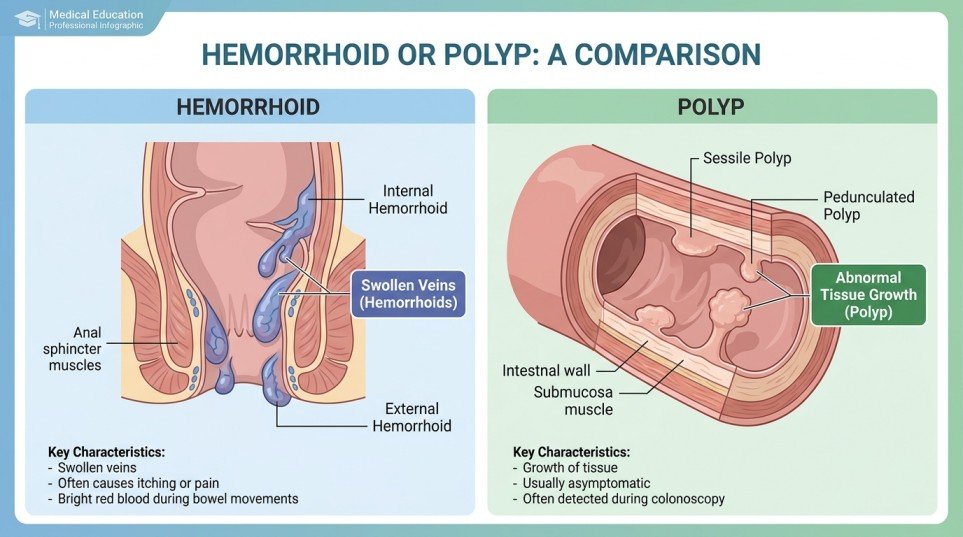
Quick Ans: The main difference between a hemorrhoid or polyp is the type of tissue involved. Hemorrhoids are swollen veins in the rectum or anus, while polyps are abnormal tissue growths inside the colon or rectum. Although both can cause rectal bleeding, their causes, risks, and treatments are very different.
Many people become worried when they notice symptoms like rectal bleeding, pain, or discomfort. At that moment, a common question appears: is it a hemorrhoid or polyp?
The confusion is understandable because both conditions can affect the rectal area. In some cases, they even produce similar symptoms. However, the two problems are not the same.
Hemorrhoids are swollen blood vessels. Polyps are tissue growths that form inside the colon or rectum. Most hemorrhoids are harmless and treatable at home. Polyps, on the other hand, may sometimes develop into colorectal cancer if left untreated.
Because of this difference, understanding the signs becomes very important. Early identification can help people seek the correct medical care and avoid unnecessary fear.
This guide explains the difference between hemorrhoid or polyp in simple language. You will learn symptoms, causes, treatment options, real world examples, common mistakes, and prevention tips.
Quick Answer: Hemorrhoid or Polyp
The easiest way to understand hemorrhoid or polyp is to compare their structure and risk level.
| Feature | Hemorrhoid | Polyp |
|---|---|---|
| Type | Swollen vein | Tissue growth |
| Location | Anus or lower rectum | Colon or rectum |
| Pain | Often painful | Usually painless |
| Bleeding | Bright red blood | May cause hidden or visible blood |
| Cancer Risk | No cancer risk | Some polyps may become cancerous |
In simple terms, hemorrhoids are swollen veins while polyps are abnormal growths.
What Is a Hemorrhoid?
A hemorrhoid is a swollen vein located in the rectum or around the anus. These veins become enlarged due to pressure in the lower rectal area.
Hemorrhoids are extremely common. Many adults experience them at some point in life.
Types of Hemorrhoids
Doctors usually divide hemorrhoids into two main categories:
- Internal hemorrhoids
- External hemorrhoids
Internal hemorrhoids develop inside the rectum. External hemorrhoids form under the skin around the anus.
Common Symptoms of Hemorrhoids
Symptoms may include:
- Bright red bleeding during bowel movements
- Itching around the anus
- Pain or discomfort
- Swelling
- A lump near the anus
Pain is more common with external hemorrhoids.
Common Causes of Hemorrhoids
Several factors increase pressure in rectal veins:
- Chronic constipation
- Straining during bowel movements
- Pregnancy
- Sitting for long periods
- Obesity
- Low fiber diet
Because these factors are common, hemorrhoids affect millions of people worldwide.
What Is a Polyp?
A polyp is an abnormal growth of tissue inside the colon or rectum. Polyps vary in size and shape.
Some polyps remain harmless for life. Others may slowly develop into cancer over time.
Types of Polyps
Several types exist, including:
- Adenomatous polyps
- Hyperplastic polyps
- Serrated polyps
Doctors pay close attention to adenomatous polyps because they carry a higher cancer risk.
Common Symptoms of Polyps
Many polyps cause no symptoms at all. However, some people experience:
- Rectal bleeding
- Blood in stool
- Changes in bowel habits
- Abdominal discomfort
- Fatigue from blood loss
Unlike hemorrhoids, polyps usually do not cause pain.
Causes and Risk Factors
Risk increases due to:
- Age over 45
- Family history of colon cancer
- Smoking
- Obesity
- Poor diet
- Inflammatory bowel disease
Regular colon screening becomes important because polyps often remain silent.
Key Differences Between Hemorrhoid or Polyp
Structure
The biggest difference between hemorrhoid or polyp involves tissue type.
Hemorrhoids are swollen veins. Polyps are tissue growths.
Pain Level
Hemorrhoids often cause pain, itching, or burning. Polyps usually remain painless.
Cancer Risk
Hemorrhoids do not become cancerous. Some polyps may eventually turn into colorectal cancer.
Detection
Doctors often identify hemorrhoids through physical examination. Polyps usually require colonoscopy for diagnosis.
Location
Hemorrhoids mainly affect the anus and lower rectum. Polyps develop deeper inside the colon or rectum.
Advantages and Disadvantages of Early Detection
Benefits of Identifying Hemorrhoids Early
Early treatment may:
- Reduce pain quickly
- Prevent worsening symptoms
- Improve bowel comfort
- Avoid complications
Risks of Ignoring Polyps
Delaying diagnosis may allow certain polyps to grow larger or become cancerous.
Challenges in Self Diagnosis
Many people assume bleeding automatically means hemorrhoids. Unfortunately, this assumption may delay important medical testing.
Therefore, proper evaluation matters when symptoms continue.
Real World Examples
Example 1: Hemorrhoids
A person experiences pain and bright red bleeding after constipation. The doctor diagnoses external hemorrhoids caused by straining.
Example 2: Polyps
Another patient notices mild bleeding but no pain. A colonoscopy later reveals colon polyps requiring removal.
Example 3: Misunderstanding Symptoms
Some individuals treat themselves for hemorrhoids for months. Later, testing discovers polyps instead.
These examples show why understanding hemorrhoid or polyp matters.
Regional and Global Usage
Worldwide Hemorrhoid Cases
Hemorrhoids are common globally because modern lifestyles often involve sitting for long periods and low fiber diets.
Colon Cancer Screening Programs
Many countries now encourage colonoscopy screening after age 45. These programs help doctors detect polyps early.
Healthcare Awareness
Medical awareness campaigns increasingly teach people not to ignore rectal bleeding.
Consequently, more individuals now seek testing sooner.
Related Concepts and Comparisons
Hemorrhoid vs Colon Cancer
Hemorrhoids involve swollen veins. Colon cancer involves abnormal cell growth that may spread.
Polyp vs Tumor
Not every polyp is cancerous. Some tumors, however, can become malignant.
Hemorrhoid or Polyp vs Anal Fissure
An anal fissure is a small tear in anal tissue. It often causes sharp pain during bowel movements.
| Condition | Main Feature | Pain Level | Cancer Risk |
|---|---|---|---|
| Hemorrhoid | Swollen vein | Often painful | No |
| Polyp | Tissue growth | Usually painless | Possible |
| Anal Fissure | Tissue tear | Sharp pain | No |
Understanding related conditions improves symptom awareness.
Common Mistakes About Hemorrhoid or Polyp
Assuming All Bleeding Comes From Hemorrhoids
Many people ignore symptoms because they think bleeding is harmless. However, persistent bleeding requires medical attention.
Delaying Colonoscopy
Fear or embarrassment causes some individuals to postpone screening. This delay may increase health risks.
Self Treating Without Diagnosis
Over the counter creams may help hemorrhoids but will not remove polyps.
Ignoring Family History
Family history strongly affects colon cancer risk. Therefore, screening recommendations may begin earlier for some people.
Avoiding these mistakes improves long term health outcomes.
Beginner to Advanced Prevention Tips
Beginner Level
Simple lifestyle changes can reduce hemorrhoid risk:
- Drink more water
- Eat fiber rich foods
- Avoid straining during bowel movements
Intermediate Level
Regular exercise and healthy weight management improve digestive health.
Advanced Level
Adults over 45 should discuss colonoscopy screening with healthcare providers. Earlier testing may be necessary with strong family history.
Preventive care remains one of the best strategies for both conditions.
Step By Step Diagnostic Scenario
Imagine someone notices rectal bleeding.
If the cause is hemorrhoids:
- Bleeding appears bright red
- Pain or itching may occur
- Symptoms often worsen after straining
- Physical examination may confirm diagnosis
If the cause is polyps:
- Bleeding may be mild or hidden
- Pain usually does not occur
- Colonoscopy identifies growths
- Doctors may remove polyps during testing
Although symptoms overlap, medical evaluation helps determine the real cause.
Exercises With Answers
Exercise 1
Which condition involves swollen veins?
Answer: Hemorrhoids.
Exercise 2
Which condition may become cancerous?
Answer: Some polyps.
Exercise 3
Which condition usually causes pain?
Answer: Hemorrhoids.
Exercise 4
What test commonly detects polyps?
Answer: Colonoscopy.
Exercise 5
True or False: All polyps become cancer.
Answer: False.
When Should You See a Doctor?
Seek medical care if you experience:
- Persistent rectal bleeding
- Unexplained weight loss
- Changes in bowel habits
- Severe pain
- Ongoing fatigue
Medical evaluation becomes especially important after age 45 or with family history of colorectal cancer.
FAQs About Hemorrhoid or Polyp
What is the main difference between hemorrhoid or polyp?
Hemorrhoids are swollen veins, while polyps are abnormal tissue growths inside the colon or rectum.
Can hemorrhoids turn into polyps?
No. Hemorrhoids and polyps are different medical conditions.
Are polyps more dangerous than hemorrhoids?
Yes. Some polyps may become cancerous if not removed.
Do polyps cause pain like hemorrhoids?
Usually not. Polyps are often painless.
Can hemorrhoids bleed?
Yes. Bright red bleeding during bowel movements is common with hemorrhoids.
How are polyps diagnosed?
Doctors usually detect polyps through colonoscopy.
Can young adults get colon polyps?
Yes. Although risk increases with age, younger adults can also develop polyps.
Does rectal bleeding always mean hemorrhoids?
No. Bleeding may result from polyps, fissures, infections, or other conditions.
Can diet help prevent hemorrhoids?
Yes. Fiber rich foods and hydration help reduce constipation and straining.
Should I ignore mild rectal bleeding?
No. Persistent or unexplained bleeding should always be evaluated by a healthcare professional.
Conclusion
Understanding hemorrhoid or polyp is important because the two conditions differ greatly in cause, symptoms, and health risks. Hemorrhoids involve swollen veins that commonly cause pain, itching, and bright red bleeding. Polyps are abnormal tissue growths that often remain painless but may carry cancer risk.
Although symptoms sometimes overlap, medical testing helps determine the correct diagnosis. Ignoring bleeding or relying only on self treatment can delay important care.
Healthy habits such as high fiber diets, hydration, exercise, and regular screenings support long term digestive health. Adults over 45 should especially discuss colon cancer screening with healthcare providers.
Most importantly, do not assume all rectal bleeding comes from hemorrhoids. Early evaluation improves outcomes and provides peace of mind.
Discover More:-

Lisa Thompson is a USA-based content writer and language specialist focused on grammar, writing improvement and digital publishing.
She holds a degree in English Language and Communication and has professional experience in educational and web content creation.
As the author of Gramtivo.Com, she aims to help readers improve their writing skills through clear and practical guidance.