
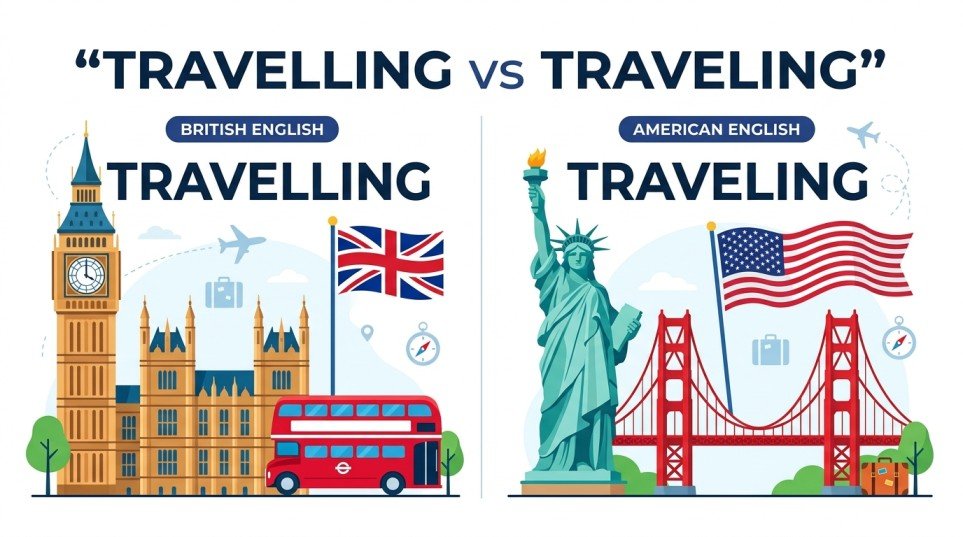
Quick Ans: The difference between travelling or traveling comes down to regional spelling preferences. Travelling is the standard spelling in British English, while traveling is the preferred spelling in American English. Both words have the same meaning and are considered correct depending on the audience and location.
Many writers, students, and professionals wonder whether they should use travelling or traveling. The words look almost identical. Their meaning is exactly the same. However, the spelling differs by region.
This confusion appears frequently in emails, blog posts, academic writing, and business communication. Someone following British English may write “travelling,” while another person using American English may prefer “traveling.” As a result, people often question which version is correct.
The good news is that both spellings are acceptable. The key is understanding when and where to use each one.
Knowing the difference helps improve writing accuracy. It also ensures consistency across documents, websites, and professional content. Whether you are preparing a school assignment, writing a travel article, or creating marketing content, choosing the right spelling matters.
This guide explains everything about travelling or traveling, including definitions, grammar rules, regional usage, examples, common mistakes, exercises, and frequently asked questions.
Quick Answer: Travelling or Traveling
The short answer is simple.
| Version | Region |
|---|---|
| Travelling | British English |
| Traveling | American English |
Both words mean moving from one place to another.
For example:
- British English: She is travelling to London next week.
- American English: She is traveling to New York next week.
Therefore, neither spelling is wrong. The correct choice depends on the style guide you follow.
What Does Travelling or Traveling Mean?
The words travelling and traveling are present participle and gerund forms of the verb travel.
They describe the act of going from one location to another.
Examples include:
- Traveling for business
- Travelling during holidays
- Traveling across Europe
- Travelling by train
In every case, the meaning remains unchanged regardless of spelling.
Simple Definition
Travelling or traveling means:
- Moving between places
- Taking a journey
- Exploring new destinations
- Going from one location to another
Because the meaning stays the same, the difference is purely a spelling variation.
Why Are There Two Spellings?
The difference between travelling or traveling comes from British and American spelling conventions.
British English often doubles the final consonant before adding a suffix.
Examples include:
| British English | American English |
|---|---|
| Travelling | Traveling |
| Traveller | Traveler |
| Cancelled | Canceled |
| Labelling | Labeling |
American English usually simplifies the spelling by using a single consonant.
As a result, many words appear different depending on the region.
Historical Background
Language evolved differently in the United Kingdom and the United States.
American dictionaries, especially those influenced by lexicographer Noah Webster, promoted simplified spellings. Meanwhile, British English retained many traditional forms.
Consequently, modern English contains variations like travelling or traveling.
Grammar Rules Behind Travelling or Traveling
Understanding the grammar rule makes the spelling difference easier to remember.
British English Rule
In British English, the final “l” is typically doubled when adding endings such as:
- ing
- ed
- er
Examples:
- Travel → Travelling
- Travel → Travelled
- Travel → Traveller
American English Rule
American English usually doubles the final consonant only when the stress falls on the last syllable.
Since the stress in travel falls on the first syllable, American English keeps a single “l.”
Examples:
- Travel → Traveling
- Travel → Traveled
- Travel → Traveler
Therefore, the spelling difference follows a broader pattern found throughout English.
Key Differences Between Travelling or Traveling
Regional Preference
The most important difference is location.
- Britain prefers travelling.
- America prefers traveling.
Meaning
No difference exists in meaning.
Both versions refer to the act of making a journey.
Pronunciation
Pronunciation remains identical.
Whether written as travelling or traveling, the word sounds the same when spoken.
Professional Usage
Companies often choose one spelling based on their audience.
For example:
- UK travel agencies commonly use travelling.
- US travel companies usually use traveling.
Consistency matters more than the choice itself.
Advantages and Disadvantages
Advantages of Using Travelling
- Matches British English standards
- Preferred in the UK, Australia, and many Commonwealth countries
- Suitable for British academic writing
Disadvantages of Using Travelling
- May appear unusual to American readers
- Can seem inconsistent in US publications
Advantages of Using Traveling
- Matches American English standards
- Preferred in the United States
- Common in American business writing
Disadvantages of Using Traveling
- May appear incorrect in British style guides
- Could create inconsistency in UK publications
Therefore, audience expectations should guide your decision.
Real World Examples
Academic Writing
A university in the United Kingdom may require:
Students travelling abroad must complete additional forms.
An American university may write:
Students traveling abroad must complete additional forms.
Business Communication
A UK company could say:
Our employees are travelling internationally this month.
A US company might write:
Our employees are traveling internationally this month.
Travel Blogs
Bloggers often choose spelling based on their target audience.
For example, a British travel blog may consistently use travelling. Meanwhile, an American travel website may use traveling.
Regional and Global Usage
United Kingdom
British English strongly favors travelling.
This spelling appears in newspapers, books, schools, and government documents.
United States
American English overwhelmingly prefers traveling.
Most US publications follow this version.
Canada
Canadian English often follows British spelling rules. However, both forms appear in Canadian writing.
Australia and New Zealand
Travelling is generally the preferred spelling.
International English
Global organizations sometimes choose one version for consistency across all content.
As a result, style guides become more important than geography in some cases.
Related Concepts and Comparisons
Traveller vs Traveler
The same regional rule applies.
| British English | American English |
|---|---|
| Traveller | Traveler |
Travelled vs Traveled
Again, spelling depends on location.
| British English | American English |
|---|---|
| Travelled | Traveled |
Travelling vs Journeying
Although both words involve movement, they are not identical.
- Travelling refers broadly to moving between places.
- Journeying often emphasizes a specific trip or experience.
Understanding these related words helps clarify the broader topic of travelling or traveling.
Common Mistakes About Travelling or Traveling
Mixing Both Spellings
Some writers use travelling in one paragraph and traveling in another.
This creates inconsistency.
Choose one version and use it throughout the document.
Assuming One Is Wrong
Both spellings are correct.
The choice depends on the English variant being used.
Ignoring Style Guides
Academic institutions and businesses often require a specific spelling.
Always check the relevant style guide before publishing.
Using Auto Correct Without Verification
Word processors may automatically change spellings.
Review the document carefully to ensure consistency.
Avoiding these mistakes improves professionalism and readability.
Beginner to Advanced Writing Tips
Beginner Level
Identify whether your audience uses British or American English.
Then use the matching spelling consistently.
Intermediate Level
Follow a recognized style guide such as:
- APA
- MLA
- Chicago
- Oxford
Consistency becomes increasingly important in professional writing.
Advanced Level
Develop a content style guide for your organization.
This ensures all writers use the same spelling conventions across websites, reports, and marketing materials.
Step By Step Usage Scenario
Imagine you are writing a travel article.
If your audience is American:
- Use traveling
- Use traveler
- Use traveled
- Maintain American spelling throughout
If your audience is British:
- Use travelling
- Use traveller
- Use travelled
- Maintain British spelling throughout
Following one system prevents confusion.
Exercises With Answers
Exercise 1
Which spelling is preferred in American English?
Answer: Traveling.
Exercise 2
Which spelling is preferred in British English?
Answer: Travelling.
Exercise 3
Do travelling and traveling have different meanings?
Answer: No.
Exercise 4
Which spelling would most UK newspapers use?
Answer: Travelling.
Exercise 5
True or False: Traveling is incorrect.
Answer: False.
When Should You Use Travelling or Traveling?
Use travelling when:
- Writing for a British audience
- Following UK style guides
- Creating content for Australia or New Zealand
Use traveling when:
- Writing for an American audience
- Following US style guides
- Producing content for US businesses
The most important rule is consistency.
FAQs About Travelling or Traveling
Which is correct, travelling or traveling?
Both are correct. Travelling is British English, while traveling is American English.
Is travelling a misspelling of traveling?
No. Travelling is the standard spelling in British English.
Why does British English use travelling?
British spelling rules typically double the final “l” when adding suffixes such as “ing.”
Why does American English use traveling?
American English simplifies many spellings and usually keeps a single “l” in traveling.
Do travelling and traveling mean the same thing?
Yes. Both words describe the act of moving from one place to another.
Which spelling should I use in a blog post?
Use the version that matches your target audience and maintain consistency.
Is travelling used in Australia?
Yes. Australian English generally follows British spelling conventions.
Should I mix travelling and traveling in the same article?
No. Choose one spelling style and use it throughout the document.
What is the noun form of travelling or traveling?
The noun form is usually travel.
Which spelling is better for SEO?
Neither is universally better. Use the spelling that matches your audience’s location and search behavior.
Conclusion
The debate over travelling or traveling is not about right versus wrong. Instead, it is about regional spelling preferences. British English uses travelling, while American English uses traveling.
Both words carry the same meaning. Pronunciation remains identical. Grammar rules explain the spelling difference, and each version follows established language conventions.
Writers should focus on audience expectations. A British publication will typically prefer travelling. An American publication will almost always use traveling.
Consistency matters more than the choice itself. Once you select a spelling style, use it throughout your document, website, or project.
By understanding the difference between travelling or traveling, you can write with greater confidence, maintain professional standards, and communicate more effectively with readers around the world.
Discover More:-
- Yuca vs Yucca: Differences, Uses, Benefits, and Complete Guide
- Exception vs Acception: Meaning, Differences, and Correct Usage Guide

Lisa Thompson is a USA-based content writer and language specialist focused on grammar, writing improvement and digital publishing.
She holds a degree in English Language and Communication and has professional experience in educational and web content creation.
As the author of Gramtivo.Com, she aims to help readers improve their writing skills through clear and practical guidance.