
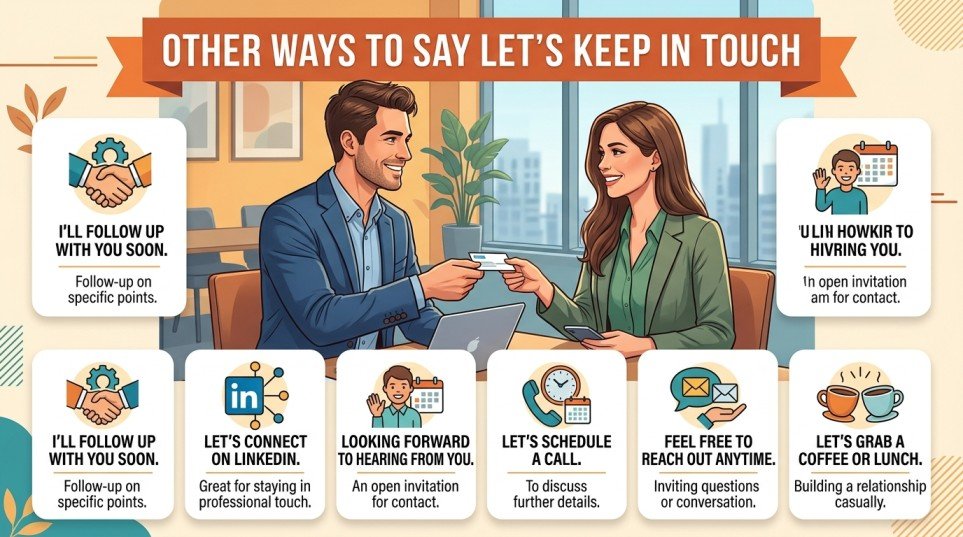
Quick Answer: Instead of saying let’s keep in touch, you can say: stay connected, keep me updated, let’s stay in contact, don’t be a stranger, stay in touch.
The phrase “let’s keep in touch” is commonly used when ending conversations, meetings, or relationships on a positive note. It expresses the desire to continue communication in the future.
Although it’s a useful phrase, repeating it too often can make your English sound predictable. Native speakers use many different expressions depending on tone, relationship, and situation.
Learning alternatives to “let’s keep in touch” helps you sound more natural and fluent. It also improves your ability to communicate professionally, socially, and confidently while helping you express excitement in English and maintain strong relationships.
Quick Categories Section
Formal alternatives to “let’s keep in touch”
- Let us remain in contact
- Please stay connected
- I look forward to future communication
- Let’s stay in correspondence
Pro Tip: Use these in professional emails or networking situations.
Casual alternatives
- Stay in touch
- Don’t be a stranger
- Keep me posted
- Talk soon
Pro Tip: Great for friends, classmates, and relaxed conversations.
Professional alternatives
- Let’s stay connected
- Please keep me updated
- I’d be happy to stay in contact
- Feel free to reach out anytime
Pro Tip: Keep your tone warm but professional in workplace communication.
Informal expressions
- Hit me up sometime
- Catch you later
- Keep me in the loop
- We should talk again soon
Pro Tip: Avoid these in formal business settings.
“The right closing phrase leaves a lasting impression.”
Common Mistakes
- Using informal phrases in business emails
Example: “Hit me up sometime” sounds unprofessional in corporate communication. - Sounding too vague
Example: Saying “let’s keep in touch” without genuine intent. - Overusing the same phrase
Example: Repeating it in every networking conversation. - Using overly formal language with friends
Example: “Let us remain in contact” sounds unnatural casually. - Ignoring tone and context
Example: “Catch you later” during a formal interview follow-up.
What Does “Let’s Keep in Touch” Mean?
It means maintaining communication or continuing contact in the future.
Grammatically, it is an imperative phrase used to encourage ongoing communication.
Example Sentence:
It was great meeting you. Let’s keep in touch.
When to Use “Let’s Keep in Touch”
- After networking events
- At the end of conversations
- When changing jobs or schools
- After meeting someone new
- In spoken and written English
Spoken vs Written: Common in both
Formal vs Informal: Neutral but slightly informal
Is It Professional or Polite to Say “Let’s Keep in Touch”?
Polite? ✔️ Yes
Professional? ✔️ Yes (in most cases)
Business Example:
“It was wonderful working with you. Let’s keep in touch regarding future opportunities.”
Pros and Cons of Using “Let’s Keep in Touch”
Pros
- Friendly and positive
- Commonly understood
- Suitable for many situations
- Encourages future communication
Cons
- Slightly overused
- Can sound generic
- Sometimes lacks sincerity
- Limited emotional variety
“Professional English sounds better when your phrases feel intentional.”
Other Ways to Say “Let’s Keep in Touch” (With Examples)
These alternatives will help you sound more fluent, confident, and natural in different situations.
Use them based on tone, audience, and context.
1. Phrase: Stay in touch
Meaning: Continue communicating in the future.
Explanation: The most direct alternative.
Example Sentence: Stay in touch after your move.
Best Use: general use
Worst Use: strict formal writing
Tone: friendly, neutral
Context Variability: casual / professional
2. Phrase: Let’s stay connected
Meaning: Continue maintaining communication.
Explanation: Common in professional networking.
Example Sentence: Let’s stay connected on LinkedIn.
Best Use: networking
Worst Use: very casual slang
Tone: professional, warm
Context Variability: professional / spoken
3. Phrase: Keep me updated
Meaning: Continue sharing information.
Explanation: Useful when following progress or plans.
Example Sentence: Keep me updated about your project.
Best Use: workplace
Worst Use: emotional conversations
Tone: professional, supportive
Context Variability: professional
4. Phrase: Don’t be a stranger
Meaning: Continue contacting me.
Explanation: Warm and informal expression.
Example Sentence: Don’t be a stranger after graduation.
Best Use: friends
Worst Use: business emails
Tone: casual, affectionate
Context Variability: casual
5. Phrase: Talk soon
Meaning: We will speak again soon.
Explanation: Short and natural closing phrase.
Example Sentence: Thanks again. Talk soon!
Best Use: everyday use
Worst Use: formal reports
Tone: relaxed, friendly
Context Variability: spoken / written
“Small wording changes can make your English sound more fluent instantly.”
6. Phrase: Keep me posted
Meaning: Continue informing me about updates.
Explanation: Common in workplace communication.
Example Sentence: Keep me posted on the results.
Best Use: projects
Worst Use: emotional support
Tone: casual, professional
Context Variability: workplace / spoken
7. Phrase: Feel free to reach out anytime
Meaning: You can contact me whenever needed.
Explanation: Professional and welcoming.
Example Sentence: Feel free to reach out anytime if you need help.
Best Use: professional emails
Worst Use: slang talk
Tone: professional, supportive
Context Variability: professional
8. Phrase: Let’s stay in contact
Meaning: Maintain communication.
Explanation: Slightly more formal wording.
Example Sentence: Let’s stay in contact after the conference.
Best Use: networking
Worst Use: casual jokes
Tone: formal, friendly
Context Variability: professional
9. Phrase: We should catch up sometime
Meaning: Meet or talk again later.
Explanation: Friendly and conversational.
Example Sentence: We should catch up sometime over coffee.
Best Use: friends
Worst Use: formal business context
Tone: warm, casual
Context Variability: casual
10. Phrase: I’d love to hear from you
Meaning: I welcome future communication.
Explanation: Warm and personal expression.
Example Sentence: I’d love to hear from you again.
Best Use: personal communication
Worst Use: strict corporate tone
Tone: warm, sincere
Context Variability: spoken / written
11. Phrase: Let’s reconnect soon
Meaning: Resume communication later.
Explanation: Common after long gaps.
Example Sentence: Let’s reconnect soon and discuss ideas.
Best Use: networking
Worst Use: slang context
Tone: professional, positive
Context Variability: professional
12. Phrase: Stay connected
Meaning: Maintain ongoing communication.
Explanation: Short and modern phrase.
Example Sentence: Stay connected while you’re abroad.
Best Use: social media
Worst Use: formal documents
Tone: friendly, modern
Context Variability: casual / professional
13. Phrase: Keep in contact
Meaning: Continue communicating regularly.
Explanation: Similar to the original phrase.
Example Sentence: Let’s keep in contact after this project ends.
Best Use: work relationships
Worst Use: slang
Tone: neutral, polite
Context Variability: professional
14. Phrase: Hit me up sometime
Meaning: Contact me later.
Explanation: Informal and conversational.
Example Sentence: Hit me up sometime this week.
Best Use: close friends
Worst Use: formal email
Tone: informal, relaxed
Context Variability: casual
15. Phrase: We’ll talk again soon
Meaning: Future communication is expected.
Explanation: Positive and reassuring.
Example Sentence: I’m sure we’ll talk again soon.
Best Use: personal conversation
Worst Use: formal announcements
Tone: warm, friendly
Context Variability: spoken
“Fluent speakers choose phrases that match both tone and relationship.”
16. Phrase: Keep me in the loop
Meaning: Continue sharing updates.
Explanation: Common in workplaces.
Example Sentence: Keep me in the loop about any changes.
Best Use: teamwork
Worst Use: emotional contexts
Tone: professional, conversational
Context Variability: workplace
17. Phrase: Let’s stay in correspondence
Meaning: Continue exchanging messages.
Explanation: Formal and traditional wording.
Example Sentence: Let’s stay in correspondence regarding future plans.
Best Use: formal communication
Worst Use: casual speech
Tone: formal, professional
Context Variability: written
18. Phrase: Reach out anytime
Meaning: Contact me whenever you want.
Explanation: Friendly and open invitation.
Example Sentence: Reach out anytime if you need advice.
Best Use: support
Worst Use: legal writing
Tone: warm, supportive
Context Variability: professional / casual
19. Phrase: Let’s stay close
Meaning: Maintain a close relationship.
Explanation: More emotional and personal.
Example Sentence: Let’s stay close even after college.
Best Use: friendships
Worst Use: workplace communication
Tone: affectionate, sincere
Context Variability: casual
20. Phrase: We should stay connected
Meaning: Keep communicating in the future.
Explanation: Common in networking.
Example Sentence: We should stay connected professionally.
Best Use: LinkedIn networking
Worst Use: jokes
Tone: professional, friendly
Context Variability: professional
21. Phrase: Keep me informed
Meaning: Continue providing updates.
Explanation: Slightly formal alternative.
Example Sentence: Please keep me informed about developments.
Best Use: business communication
Worst Use: casual chats
Tone: formal, professional
Context Variability: professional
22. Phrase: Let’s touch base soon
Meaning: Communicate again shortly.
Explanation: Common workplace phrase.
Example Sentence: Let’s touch base soon about the proposal.
Best Use: office communication
Worst Use: close friendships
Tone: professional, conversational
Context Variability: workplace
23. Phrase: Catch you later
Meaning: We’ll talk again later.
Explanation: Informal farewell expression.
Example Sentence: Catch you later, take care.
Best Use: casual talk
Worst Use: formal communication
Tone: informal, relaxed
Context Variability: spoken
24. Phrase: We should talk again soon
Meaning: Suggests future conversation.
Explanation: Friendly and open-ended.
Example Sentence: We should talk again soon about your plans.
Best Use: personal conversations
Worst Use: formal letters
Tone: warm, casual
Context Variability: spoken
25. Phrase: Keep in touch with me
Meaning: Continue contacting me personally.
Explanation: Direct and clear.
Example Sentence: Keep in touch with me while traveling.
Best Use: personal relationships
Worst Use: stiff business writing
Tone: friendly, sincere
Context Variability: casual
26. Phrase: Let me know how things go
Meaning: Share future updates.
Explanation: Encourages continued communication.
Example Sentence: Let me know how things go at your new job.
Best Use: supportive conversations
Worst Use: formal contracts
Tone: supportive, conversational
Context Variability: casual / professional
27. Phrase: Keep the communication going
Meaning: Continue regular contact.
Explanation: Motivational and professional.
Example Sentence: Let’s keep the communication going after the event.
Best Use: teamwork
Worst Use: personal emotions
Tone: professional, positive
Context Variability: workplace
28. Phrase: Stay reachable
Meaning: Remain available for communication.
Explanation: More practical and professional.
Example Sentence: Stay reachable during your travels.
Best Use: work situations
Worst Use: emotional context
Tone: professional, direct
Context Variability: professional
29. Phrase: I hope we stay connected
Meaning: Desire for future communication.
Explanation: More sincere and emotional.
Example Sentence: I hope we stay connected after this course.
Best Use: meaningful relationships
Worst Use: strict business tone
Tone: sincere, warm
Context Variability: spoken / written
30. Phrase: Keep checking in
Meaning: Continue contacting regularly.
Explanation: Encourages ongoing communication.
Example Sentence: Keep checking in while you’re away.
Best Use: friendships
Worst Use: formal documents
Tone: casual, caring
Context Variability: casual
“The right phrase can strengthen both professional and personal relationships.”
Mini Quiz / Self-Check
1. Which phrase works best in professional networking?
A. Hit me up sometime
B. Let’s stay connected
C. Catch you later
Answer: B
2. Which phrase is most informal?
A. Let’s stay in correspondence
B. Hit me up sometime
C. Keep me informed
Answer: B
3. Which phrase is best for workplace communication?
A. Keep me in the loop
B. Don’t be a stranger
C. Catch you later
Answer: A
Comparison Table: Top Alternatives
| Phrase | Tone | Best Use |
|---|---|---|
| Stay in touch | Neutral | General communication |
| Let’s stay connected | Professional | Networking |
| Keep me updated | Professional | Workplace |
| Don’t be a stranger | Casual | Friendships |
| Talk soon | Friendly | Everyday use |
| Keep me posted | Conversational | Projects |
| Reach out anytime | Professional | Supportive emails |
| Let’s reconnect soon | Professional | Networking |
| We should catch up sometime | Casual | Friends |
| Let’s touch base soon | Professional | Office communication |
FAQs
1. What are the best alternatives to “let’s keep in touch”?
Popular alternatives include stay connected, talk soon, and keep me updated.
2. Is “let’s keep in touch” professional?
Yes, it is polite and commonly used in professional networking.
3. What phrase should I use in business emails?
Use phrases like let’s stay connected or feel free to reach out anytime.
4. Which alternatives are informal?
Informal expressions include hit me up sometime and catch you later.
5. Why learn other ways to say “let’s keep in touch”?
It improves fluency, communication variety, and tone awareness.
Conclusion
Using different other ways to say “let’s keep in touch” helps your English sound more fluent, natural, and engaging. It also allows you to adjust your tone depending on whether the situation is casual, personal, or professional.
Practice these expressions regularly and notice how native speakers use them in conversations and emails. Over time, your communication skills will become more polished and confident.
CTA: Which phrase will you start using in your conversations today?
Discover More:-
- Other Ways to Say Please Take Your Time (30+ Examples)
- Other Ways to Say I Appreciate It (30+ Examples)

Lisa Thompson is a USA-based content writer and language specialist focused on grammar, writing improvement and digital publishing.
She holds a degree in English Language and Communication and has professional experience in educational and web content creation.
As the author of Gramtivo.Com, she aims to help readers improve their writing skills through clear and practical guidance.