
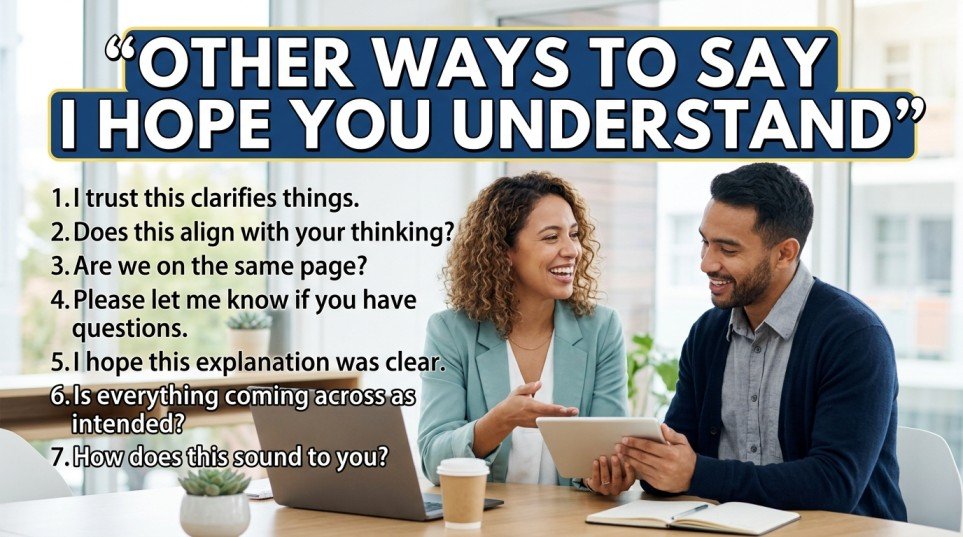
Quick Answer: Instead of saying I hope you understand, you can use thank you for your understanding, I appreciate your patience, I trust this makes sense, I hope this is clear, thank you for bearing with me.
The phrase “I hope you understand” is commonly used when explaining a situation, setting expectations, or delivering information that may inconvenience someone. It helps soften messages and encourages empathy from the listener or reader.
Although the phrase is useful, repeating it too often can make your communication sound repetitive. In professional settings, some alternatives can sound more confident, polite, and customer-focused.
Learning alternatives to “I hope you understand” helps you sound more natural, professional, and fluent. It also improves your ability to adjust your tone in different situations and helps you express excitement in English, empathy, or professionalism more effectively.
Quick Categories Section
Formal alternatives to “I hope you understand”
- I trust you understand
- I hope this is acceptable
- I appreciate your consideration
- Thank you for your understanding
Pro Tip: These phrases work well in business emails and formal correspondence.
Casual alternatives
- Hope that makes sense
- You get what I mean
- I hope that’s okay
- Hope you see where I’m coming from
Pro Tip: Use these with friends, family, and informal conversations.
Professional alternatives
- Thank you for your understanding
- I appreciate your patience
- I trust this clarifies the matter
- I appreciate your cooperation
Pro Tip: Professional alternatives often sound more confident than “I hope you understand.”
Informal expressions
- You know what I mean
- I’m sure you get it
- Hope that helps explain things
- I think you understand
Pro Tip: Avoid these in formal workplace communication.
“The most professional communicators thank people for understanding instead of asking for it.”
Common Mistakes
- Overusing the phrase in emails
Example: Ending every email with “I hope you understand.” - Sounding defensive
Example: “I hope you understand why I had no choice.” - Using it after delivering bad news repeatedly
Example: Multiple apologies followed by “I hope you understand.” - Choosing an informal alternative in professional writing
Example: “You know what I mean” in a client email. - Using it when clarification is needed
Example: Saying “I hope you understand” instead of explaining clearly.
What Does “I Hope You Understand” Mean?
It means you want someone to recognize, accept, or empathize with your situation, explanation, or decision.
Grammatically, it is a complete sentence using the verb hope to express a desired outcome.
Example Sentence:
I hope you understand why we need to postpone the meeting.
When to Use “I Hope You Understand”
- Explaining a delay
- Sharing difficult news
- Setting boundaries
- Clarifying decisions
- Requesting patience or cooperation
Spoken vs Written: Common in both forms
Formal vs Informal: Neutral but often softened in professional communication
Is It Professional or Polite to Say “I Hope You Understand”?
Polite? ✔️ Yes
Professional? ❌ Not always
In professional communication, phrases like “thank you for your understanding” often sound stronger and more confident.
Business Example:
“Due to scheduling conflicts, the event has been postponed. Thank you for your understanding.”
Pros and Cons of Using “I Hope You Understand”
Pros
- Polite and respectful
- Easy to understand
- Widely accepted
- Softens difficult messages
Cons
- Can sound repetitive
- Less confident in business communication
- May seem defensive
- Overused in customer service messages
“Professional communication often focuses on appreciation rather than expectation.”
Other Ways to Say “I Hope You Understand” (With Examples)
These alternatives will help you sound more fluent, confident, and natural in different situations.
Use them according to tone, context, and audience to improve your communication skills.
1. Phrase: Thank you for your understanding
Meaning: Expresses gratitude for someone’s patience or acceptance.
Explanation: One of the most professional alternatives.
Example Sentence: Thank you for your understanding while we resolve this issue.
Best Use: business emails
Worst Use: casual jokes
Tone: professional, polite
Context Variability: professional / written
2. Phrase: I appreciate your patience
Meaning: Thanks someone for waiting or being patient.
Explanation: Common in customer service and workplace communication.
Example Sentence: I appreciate your patience during this process.
Best Use: workplace updates
Worst Use: casual chats
Tone: professional, grateful
Context Variability: professional
3. Phrase: I trust you understand
Meaning: Shows confidence that the person understands.
Explanation: More formal than the original phrase.
Example Sentence: I trust you understand the reasons behind this decision.
Best Use: formal writing
Worst Use: friendly banter
Tone: formal, confident
Context Variability: professional / written
4. Phrase: I hope this is clear
Meaning: You want your explanation to be understood.
Explanation: Focuses on clarity rather than agreement.
Example Sentence: I hope this is clear and answers your questions.
Best Use: explanations
Worst Use: emotional discussions
Tone: neutral, helpful
Context Variability: spoken / written
5. Phrase: Thank you for bearing with me
Meaning: Thanks someone for their patience.
Explanation: Friendly and appreciative.
Example Sentence: Thank you for bearing with me while I sort this out.
Best Use: delays
Worst Use: formal reports
Tone: warm, appreciative
Context Variability: professional / spoken
“A simple thank-you often sounds stronger than asking for understanding.”
6. Phrase: I appreciate your cooperation
Meaning: Thanks someone for working with you.
Explanation: Frequently used in business communication.
Example Sentence: I appreciate your cooperation during this transition.
Best Use: workplace
Worst Use: casual chat
Tone: professional, respectful
Context Variability: professional
7. Phrase: I trust this makes sense
Meaning: You believe your explanation is understandable.
Explanation: Formal and confident.
Example Sentence: I trust this makes sense given the circumstances.
Best Use: formal emails
Worst Use: slang contexts
Tone: confident, formal
Context Variability: professional
8. Phrase: I hope that makes sense
Meaning: You want your explanation to be understood.
Explanation: Common in everyday speech.
Example Sentence: I hope that makes sense after my explanation.
Best Use: everyday use
Worst Use: legal writing
Tone: friendly, conversational
Context Variability: casual / spoken
9. Phrase: I appreciate your understanding
Meaning: Thanks someone for being understanding.
Explanation: Professional and polite.
Example Sentence: I appreciate your understanding regarding the delay.
Best Use: workplace
Worst Use: informal jokes
Tone: professional, courteous
Context Variability: professional
10. Phrase: Thank you for your patience
Meaning: Appreciation for waiting.
Explanation: Common customer-service phrase.
Example Sentence: Thank you for your patience while we investigate.
Best Use: service communication
Worst Use: casual texting
Tone: professional, respectful
Context Variability: professional
11. Phrase: I hope you can appreciate
Meaning: You want someone to recognize your perspective.
Explanation: Encourages empathy.
Example Sentence: I hope you can appreciate the challenges involved.
Best Use: explanations
Worst Use: casual slang
Tone: respectful, thoughtful
Context Variability: spoken / professional
12. Phrase: I trust this clarifies the matter
Meaning: You believe your explanation resolved confusion.
Explanation: Formal and business-friendly.
Example Sentence: I trust this clarifies the matter.
Best Use: formal emails
Worst Use: casual conversation
Tone: formal, professional
Context Variability: written
13. Phrase: I hope that’s okay
Meaning: You seek acceptance of a decision or request.
Explanation: Friendly and approachable.
Example Sentence: I’ll arrive a bit later; I hope that’s okay.
Best Use: personal requests
Worst Use: formal announcements
Tone: casual, polite
Context Variability: spoken
14. Phrase: Hope you see where I’m coming from
Meaning: You want someone to understand your perspective.
Explanation: Informal and conversational.
Example Sentence: I hope you see where I’m coming from on this issue.
Best Use: discussions
Worst Use: formal letters
Tone: friendly, personal
Context Variability: casual
15. Phrase: I trust you’ll understand
Meaning: Confidence that someone will understand later.
Explanation: Useful for future situations.
Example Sentence: I trust you’ll understand our decision.
Best Use: formal communication
Worst Use: casual jokes
Tone: professional, confident
Context Variability: professional
“Choosing the right alternative can make difficult messages easier to receive.”
16. Phrase: I hope this helps explain things
Meaning: Clarifies a situation.
Explanation: Friendly explanatory phrase.
Example Sentence: I hope this helps explain things.
Best Use: clarification
Worst Use: legal documents
Tone: helpful, warm
Context Variability: spoken / written
17. Phrase: I appreciate your flexibility
Meaning: Thanks someone for adapting.
Explanation: Great for schedule changes.
Example Sentence: I appreciate your flexibility regarding the new timeline.
Best Use: workplace
Worst Use: casual slang
Tone: professional, appreciative
Context Variability: professional
18. Phrase: Thank you for being understanding
Meaning: Appreciation for empathy.
Explanation: Warm and personal.
Example Sentence: Thank you for being understanding during this situation.
Best Use: personal messages
Worst Use: legal notices
Tone: warm, sincere
Context Variability: spoken / written
19. Phrase: I hope you can see my point
Meaning: Understanding your perspective.
Explanation: Useful in discussions.
Example Sentence: I hope you can see my point here.
Best Use: debates
Worst Use: formal reports
Tone: respectful, conversational
Context Variability: casual
20. Phrase: I trust that this explanation is sufficient
Meaning: Confidence in your explanation.
Explanation: Highly formal alternative.
Example Sentence: I trust that this explanation is sufficient.
Best Use: official communication
Worst Use: casual talk
Tone: formal, authoritative
Context Variability: written
21. Phrase: I appreciate your consideration
Meaning: Thanks someone for thoughtfully reviewing your situation.
Explanation: Formal and respectful.
Example Sentence: I appreciate your consideration in this matter.
Best Use: formal requests
Worst Use: casual texts
Tone: professional, courteous
Context Variability: professional
22. Phrase: I hope you agree
Meaning: You want acceptance of your viewpoint.
Explanation: Direct but polite.
Example Sentence: I hope you agree with this approach.
Best Use: discussions
Worst Use: customer complaints
Tone: polite, direct
Context Variability: spoken / written
23. Phrase: I hope this answers your concerns
Meaning: Addresses questions or doubts.
Explanation: Useful in customer communication.
Example Sentence: I hope this answers your concerns completely.
Best Use: support responses
Worst Use: casual chat
Tone: helpful, professional
Context Variability: professional
24. Phrase: I appreciate your support
Meaning: Thanks someone for backing you.
Explanation: Warm and appreciative.
Example Sentence: I appreciate your support during this transition.
Best Use: teamwork
Worst Use: casual jokes
Tone: grateful, professional
Context Variability: workplace
25. Phrase: I trust this explanation helps
Meaning: Confidence that clarification was useful.
Explanation: Formal yet approachable.
Example Sentence: I trust this explanation helps clarify the issue.
Best Use: business communication
Worst Use: informal texting
Tone: professional, clear
Context Variability: written
26. Phrase: I hope this works for you
Meaning: Seeking acceptance of a proposal.
Explanation: Common in scheduling and planning.
Example Sentence: I hope this works for you and your team.
Best Use: scheduling
Worst Use: formal reports
Tone: polite, cooperative
Context Variability: professional / spoken
27. Phrase: I’m sure you understand
Meaning: Assumes understanding.
Explanation: Can sound confident but should be used carefully.
Example Sentence: I’m sure you understand the situation.
Best Use: familiar relationships
Worst Use: sensitive issues
Tone: confident, casual
Context Variability: spoken
28. Phrase: I hope you can understand my position
Meaning: Requests empathy.
Explanation: Useful in difficult conversations.
Example Sentence: I hope you can understand my position on this matter.
Best Use: conflict resolution
Worst Use: quick updates
Tone: respectful, sincere
Context Variability: spoken / professional
29. Phrase: I trust that you appreciate the circumstances
Meaning: Recognition of a difficult situation.
Explanation: Formal and diplomatic.
Example Sentence: I trust that you appreciate the circumstances involved.
Best Use: official communication
Worst Use: casual speech
Tone: formal, diplomatic
Context Variability: professional
30. Phrase: Thank you for your cooperation and understanding
Meaning: Appreciation for support and patience.
Explanation: One of the most professional alternatives.
Example Sentence: Thank you for your cooperation and understanding during this process.
Best Use: workplace communication
Worst Use: casual conversations
Tone: professional, appreciative
Context Variability: professional / written
“The right tone makes your English sound professional and confident.”
Mini Quiz / Self-Check
1. Which phrase is best for a professional email?
A. Hope you see where I’m coming from
B. Thank you for your understanding
C. You know what I mean
Answer: B
2. Which phrase is most informal?
A. I trust this clarifies the matter
B. I appreciate your cooperation
C. Hope that makes sense
Answer: C
3. Which alternative sounds most professional?
A. Thank you for your cooperation and understanding
B. I’m sure you understand
C. You get what I mean
Answer: A
Comparison Table: Top Alternatives
| Phrase | Tone | Best Use |
|---|---|---|
| Thank you for your understanding | Professional | Business emails |
| I appreciate your patience | Professional | Delays |
| I trust you understand | Formal | Official communication |
| I hope this is clear | Neutral | Explanations |
| Thank you for bearing with me | Friendly | Waiting periods |
| I appreciate your cooperation | Professional | Workplace |
| I trust this clarifies the matter | Formal | Business writing |
| I appreciate your understanding | Professional | Customer service |
| Thank you for your patience | Professional | Support messages |
| Thank you for your cooperation and understanding | Professional | Formal communication |
FAQs
1. What are the best alternatives to “I hope you understand”?
Some of the best alternatives include thank you for your understanding, I appreciate your patience, and I trust you understand.
2. Is “I hope you understand” professional?
It is polite, but professional communication often benefits from stronger alternatives like thank you for your understanding.
3. What should I say instead of “I hope you understand” in an email?
Use I appreciate your patience or thank you for your cooperation.
4. Why do businesses prefer “thank you for your understanding”?
It sounds more confident and appreciative than asking someone to understand.
5. Can “I hope you understand” sound passive?
Yes. In some situations, it may sound uncertain or defensive compared to more professional reaction phrases.
Conclusion
Learning other ways to say “I hope you understand” helps you communicate with greater confidence, professionalism, and fluency. Different situations require different tones, and having multiple alternatives allows you to choose the most appropriate response.
Practice these phrases in emails, conversations, and workplace communication. As your vocabulary grows, your English will sound more polished, natural, and effective.
CTA: Which alternative do you use most often? Try replacing it with a new phrase this week.
Discover More:-
- Other Ways to Say Thank You for Following Up (30+ Examples)
- Other Ways to Say How Can I Help You (30+ Examples)

Jennifer Collins is a professional grammar expert and language educator at gramtivo.com, specializing in English grammar, writing skills, and language improvement. She holds a Master’s degree in English Language and Literature from a recognized university in the United States. With years of teaching and content development experience, she is dedicated to helping learners improve their communication skills with clear and practical guidance.