
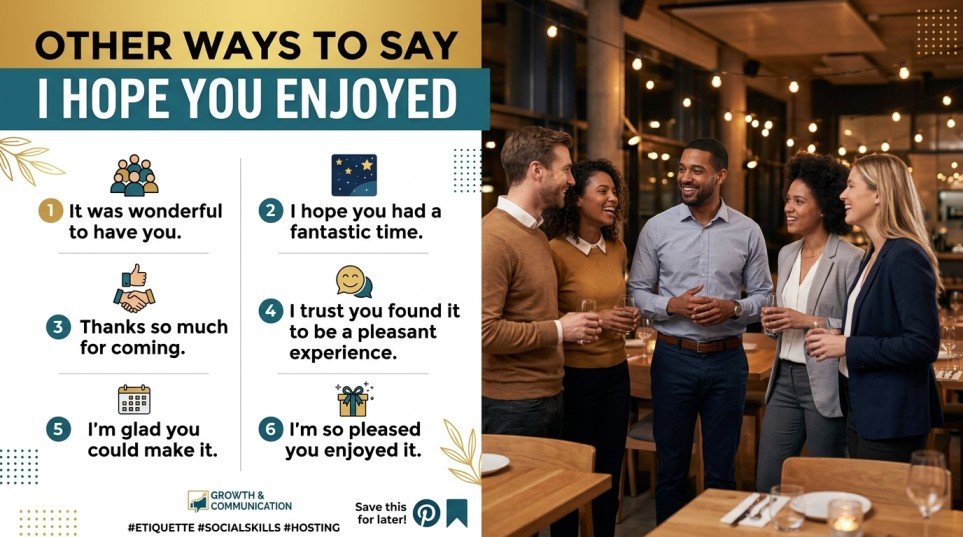
Quick Answer: Instead of saying I hope you enjoyed, you can say: I hope you had a great time, I trust you enjoyed it, hope it was enjoyable, I hope you liked it, hope you had fun.
The phrase “I hope you enjoyed” is commonly used after an event, activity, meal, presentation, trip, or experience. It expresses care, politeness, and interest in someone’s experience.
Although it’s a useful phrase, using it too often can sound repetitive. Native English speakers usually vary their expressions depending on the tone, audience, and situation.
Learning alternatives to “I hope you enjoyed” helps you sound more fluent and natural. It also improves your ability to adapt your tone in casual, social, and professional communication while helping you express excitement in English more effectively.
Quick Categories Section
Formal alternatives to “I hope you enjoyed”
- I trust you enjoyed it
- I hope the experience was pleasant
- I hope you found it enjoyable
- I hope everything met your expectations
Pro Tip: Use these in professional emails, presentations, or customer communication.
Casual alternatives
- Hope you had fun
- Hope you liked it
- Hope you had a great time
- Did you enjoy it?
Pro Tip: Great for friendly conversations and social settings.
Professional alternatives
- I hope you found it valuable
- I trust the event was enjoyable
- I hope you had a productive time
- I hope the session was beneficial
Pro Tip: Choose polished wording in workplace communication.
Informal expressions
- Hope it was awesome
- Bet you loved it
- Hope you had a blast
- Hope it was great
Pro Tip: Avoid overly informal phrases in formal settings.
“The phrases you choose can make your English sound more polished and thoughtful.”
Common Mistakes
- Using the same phrase repeatedly
Example: Saying “I hope you enjoyed” in every email sounds repetitive. - Using overly casual expressions professionally
Example: “Hope you had a blast” in a formal client email. - Choosing the wrong tone
Example: “Hope it was awesome” after a serious business seminar. - Forgetting context
Example: Asking “Did you enjoy it?” after a stressful meeting. - Sounding too formal in casual situations
Example: “I trust the experience was satisfactory” with friends.
What Does “I Hope You Enjoyed” Mean?
It means you hope someone had a pleasant or satisfying experience.
Grammatically, it combines a hopeful expression with the past tense verb enjoyed.
Example Sentence:
I hope you enjoyed the concert last night.
When to Use “I Hope You Enjoyed”
- After events or gatherings
- Following meals, presentations, or trips
- In customer service communication
- In spoken and written English
Spoken vs Written: Frequently used in both
Formal vs Informal: Neutral but adaptable
Is It Professional or Polite to Say “I Hope You Enjoyed”?
Polite? ✔️ Yes
Professional? ✔️ Yes (depending on context)
Business Example:
“We appreciate your attendance and hope you enjoyed the workshop.”
Pros and Cons of Using “I Hope You Enjoyed”
Pros
- Polite and friendly
- Widely understood
- Works in many contexts
- Easy to use
Cons
- Can sound repetitive
- Slightly generic
- Limited emotional variety
- Less engaging in professional writing
“Natural English comes from using a variety of expressions, not repeating the same one.”
Other Ways to Say “I Hope You Enjoyed” (With Examples)
These alternatives will help you sound more fluent, confident, and natural in different situations.
Use them according to tone, audience, and context.
1. Phrase: Hope you had a great time
Meaning: Wishing they had an enjoyable experience.
Explanation: Friendly and versatile expression.
Example Sentence: Hope you had a great time at the party.
Best Use: social events
Worst Use: serious situations
Tone: warm, casual
Context Variability: casual / spoken
2. Phrase: I trust you enjoyed it
Meaning: Believing the experience was enjoyable.
Explanation: More formal and polished.
Example Sentence: I trust you enjoyed the conference.
Best Use: workplace
Worst Use: casual slang
Tone: formal, professional
Context Variability: professional / written
3. Phrase: Hope you liked it
Meaning: Hoping someone found it pleasant.
Explanation: Simple and common expression.
Example Sentence: Hope you liked the gift.
Best Use: everyday use
Worst Use: formal presentations
Tone: friendly, casual
Context Variability: casual / spoken
4. Phrase: I hope it was enjoyable
Meaning: Hoping the experience brought pleasure.
Explanation: Slightly formal alternative.
Example Sentence: I hope the event was enjoyable.
Best Use: professional tone
Worst Use: slang context
Tone: polite, neutral
Context Variability: professional
5. Phrase: Hope you had fun
Meaning: Wishing someone enjoyed themselves.
Explanation: Very casual and cheerful.
Example Sentence: Hope you had fun on your trip.
Best Use: friends
Worst Use: business email
Tone: cheerful, casual
Context Variability: casual
“The right phrase can make your communication sound more thoughtful and engaging.”
6. Phrase: I hope you found it valuable
Meaning: Hoping the experience was useful.
Explanation: Common in professional settings.
Example Sentence: I hope you found the seminar valuable.
Best Use: workplace
Worst Use: casual parties
Tone: professional, respectful
Context Variability: professional
7. Phrase: Hope it was great
Meaning: Wishing the experience was excellent.
Explanation: Informal and flexible.
Example Sentence: Hope it was great.
Best Use: quick messages
Worst Use: formal writing
Tone: relaxed, friendly
Context Variability: casual
8. Phrase: I hope everything went well
Meaning: Hoping the experience was successful.
Explanation: Broader than “enjoyed.”
Example Sentence: I hope everything went well at the event.
Best Use: general use
Worst Use: slang context
Tone: polite, supportive
Context Variability: casual / professional
9. Phrase: Hope you enjoyed yourself
Meaning: Hoping someone had a good time.
Explanation: Natural conversational phrase.
Example Sentence: Hope you enjoyed yourself at dinner.
Best Use: gatherings
Worst Use: formal reports
Tone: warm, conversational
Context Variability: casual
10. Phrase: I hope the experience was pleasant
Meaning: Hoping the situation felt positive.
Explanation: Formal and refined wording.
Example Sentence: I hope the experience was pleasant for you.
Best Use: customer service
Worst Use: casual chat
Tone: formal, polite
Context Variability: professional
11. Phrase: Hope you had a blast
Meaning: Wishing someone had lots of fun.
Explanation: Informal and energetic expression.
Example Sentence: Hope you had a blast at the concert.
Best Use: friends
Worst Use: formal communication
Tone: energetic, informal
Context Variability: casual
12. Phrase: I hope it met your expectations
Meaning: Hoping the experience was satisfactory.
Explanation: Professional and thoughtful.
Example Sentence: I hope the workshop met your expectations.
Best Use: business context
Worst Use: casual parties
Tone: professional, polished
Context Variability: professional
13. Phrase: Hope you had an amazing time
Meaning: Wishing someone had an excellent experience.
Explanation: Enthusiastic alternative.
Example Sentence: Hope you had an amazing time on vacation.
Best Use: personal messages
Worst Use: serious meetings
Tone: enthusiastic, warm
Context Variability: casual
14. Phrase: I hope you appreciated it
Meaning: Hoping someone valued the experience.
Explanation: More formal and specific.
Example Sentence: I hope you appreciated the presentation.
Best Use: professional settings
Worst Use: casual slang
Tone: formal, respectful
Context Variability: professional
15. Phrase: Hope it was worth it
Meaning: Wishing the experience justified the effort.
Explanation: Casual and conversational.
Example Sentence: Hope the long trip was worth it.
Best Use: everyday talk
Worst Use: formal writing
Tone: conversational, casual
Context Variability: spoken
“Fluent speakers choose phrases that match both the moment and the audience.”
16. Phrase: I hope you had a memorable experience
Meaning: Wishing the event was unforgettable.
Explanation: Warm and expressive phrase.
Example Sentence: I hope you had a memorable experience abroad.
Best Use: travel context
Worst Use: quick chat
Tone: thoughtful, warm
Context Variability: professional / casual
17. Phrase: Hope you enjoyed every minute
Meaning: Wishing full enjoyment.
Explanation: Friendly and enthusiastic.
Example Sentence: Hope you enjoyed every minute of the show.
Best Use: entertainment
Worst Use: formal reports
Tone: expressive, cheerful
Context Variability: casual
18. Phrase: I hope you had a pleasant time
Meaning: Hoping someone had a comfortable experience.
Explanation: Neutral and polite alternative.
Example Sentence: I hope you had a pleasant time with us.
Best Use: hospitality
Worst Use: slang settings
Tone: polite, warm
Context Variability: professional
19. Phrase: Hope the event was enjoyable
Meaning: Wishing the event was pleasant.
Explanation: Professional and flexible.
Example Sentence: Hope the event was enjoyable for everyone.
Best Use: workplace events
Worst Use: personal jokes
Tone: neutral, professional
Context Variability: professional
20. Phrase: I hope you got something out of it
Meaning: Hoping the experience was beneficial.
Explanation: Useful after learning events.
Example Sentence: I hope you got something out of the workshop.
Best Use: seminars
Worst Use: parties
Tone: conversational, professional
Context Variability: professional
21. Phrase: Hope you loved it
Meaning: Wishing strong enjoyment.
Explanation: Emotional and enthusiastic.
Example Sentence: Hope you loved the surprise gift.
Best Use: personal messages
Worst Use: formal emails
Tone: warm, expressive
Context Variability: casual
22. Phrase: I hope the session was beneficial
Meaning: Hoping the session was useful.
Explanation: Common professional wording.
Example Sentence: I hope the session was beneficial for your team.
Best Use: workplace training
Worst Use: social events
Tone: formal, professional
Context Variability: professional
23. Phrase: Hope it lived up to your expectations
Meaning: Wishing the experience matched hopes.
Explanation: Thoughtful and engaging phrase.
Example Sentence: Hope the trip lived up to your expectations.
Best Use: travel
Worst Use: quick greetings
Tone: thoughtful, conversational
Context Variability: casual / professional
24. Phrase: I hope you had an enjoyable evening
Meaning: Wishing someone had a pleasant night.
Explanation: Polite and refined.
Example Sentence: I hope you had an enjoyable evening.
Best Use: formal gatherings
Worst Use: slang contexts
Tone: elegant, polite
Context Variability: professional
25. Phrase: Hope you made great memories
Meaning: Wishing meaningful experiences.
Explanation: Emotional and friendly wording.
Example Sentence: Hope you made great memories on your trip.
Best Use: vacations
Worst Use: workplace meetings
Tone: warm, sentimental
Context Variability: casual
26. Phrase: I hope you were satisfied
Meaning: Hoping expectations were met.
Explanation: Common in customer service.
Example Sentence: I hope you were satisfied with the service.
Best Use: business communication
Worst Use: casual chat
Tone: professional, polite
Context Variability: professional
27. Phrase: Hope it turned out well
Meaning: Wishing the result was positive.
Explanation: Flexible and supportive.
Example Sentence: Hope the celebration turned out well.
Best Use: general use
Worst Use: slang situations
Tone: supportive, friendly
Context Variability: casual / professional
28. Phrase: I hope you had a wonderful experience
Meaning: Wishing excellent enjoyment.
Explanation: Warm and polished expression.
Example Sentence: I hope you had a wonderful experience with us.
Best Use: hospitality
Worst Use: casual jokes
Tone: warm, professional
Context Variability: professional
29. Phrase: Hope you had the best time
Meaning: Wishing maximum enjoyment.
Explanation: Casual and enthusiastic phrase.
Example Sentence: Hope you had the best time at the festival.
Best Use: friends
Worst Use: formal communication
Tone: enthusiastic, casual
Context Variability: casual
30. Phrase: I hope it brought you joy
Meaning: Wishing the experience made someone happy.
Explanation: Emotional and thoughtful wording.
Example Sentence: I hope the gift brought you joy.
Best Use: meaningful moments
Worst Use: formal reports
Tone: heartfelt, warm
Context Variability: casual / written
“Expanding your vocabulary helps your English sound more natural and expressive.”
Mini Quiz / Self-Check
1. Best phrase for a professional seminar?
A. Hope you had a blast
B. I hope you found it valuable
C. Hope you loved it
Answer: B
2. Which phrase is the most informal?
A. I trust you enjoyed it
B. Hope you had a blast
C. I hope the experience was pleasant
Answer: B
3. Which phrase fits customer service communication best?
A. Hope it was awesome
B. I hope you were satisfied
C. Hope you had fun
Answer: B
Comparison Table: Top Alternatives
| Phrase | Tone | Best Use |
|---|---|---|
| Hope you had a great time | Casual | Social events |
| I trust you enjoyed it | Formal | Workplace |
| Hope you liked it | Friendly | Everyday use |
| I hope it was enjoyable | Professional | Events |
| Hope you had fun | Casual | Friends |
| I hope you found it valuable | Professional | Seminars |
| Hope you enjoyed yourself | Warm | Gatherings |
| I hope it met your expectations | Professional | Business |
| Hope you had an amazing time | Enthusiastic | Vacations |
| I hope you were satisfied | Professional | Customer service |
FAQs
1. What are the best alternatives to “I hope you enjoyed”?
Popular alternatives include hope you had a great time, I trust you enjoyed it, and hope you had fun.
2. Is “I hope you enjoyed” professional?
Yes, it works well in professional and customer communication when used appropriately.
3. What can I say instead in a formal email?
Use phrases like I trust you enjoyed it or I hope you found it valuable.
4. Are informal expressions in English suitable for work?
Only in relaxed workplaces; otherwise, choose professional reaction phrases.
5. Why should I learn other ways to say “I hope you enjoyed”?
It improves fluency, tone variation, and communication confidence.
Conclusion
Learning different other ways to say “I hope you enjoyed” helps you communicate more naturally and effectively. It also improves your ability to match tone with context in both casual and professional settings.
Practice these phrases regularly and pay attention to tone awareness. Over time, your English will sound more fluent, polished, and expressive.
CTA: Which phrase will you try first? Use one in your next conversation or email.
Discover More:-
- Other Ways to Say Please Take Your Time (30+ Examples)
- Other Ways to Say Thank You for Your Concern (30+ Examples)

Robert Mitchell is a U.S.-based writer at Gramtivo.Com who focuses on grammar, writing improvement, and language-related content. He holds a degree in English and Linguistics from a U.S. university. His work aims to help readers enhance their writing skills with clear and practical guidance.