
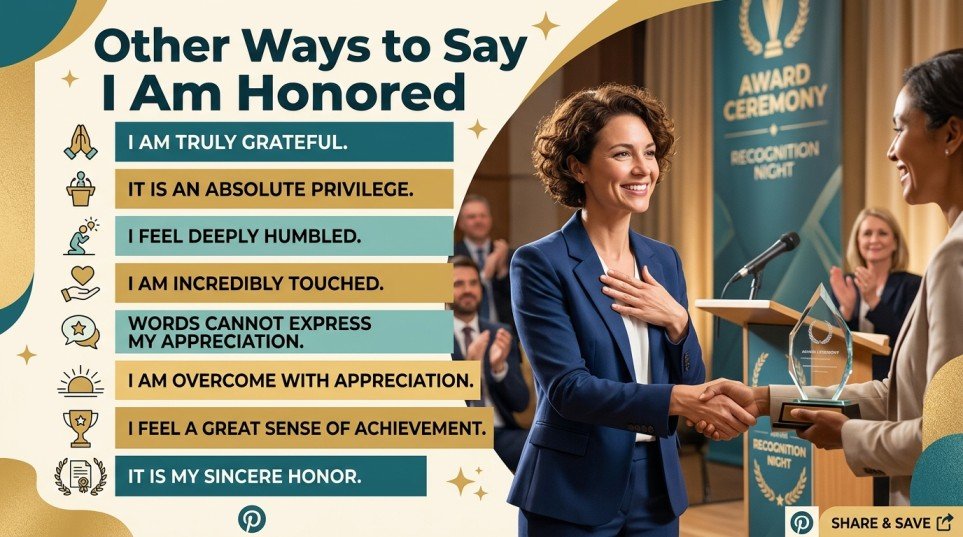
Quick Answer: Instead of saying I am honored, you can say I’m grateful, I’m deeply appreciative, it’s a privilege, I’m humbled, I’m delighted by this recognition.
The phrase “I am honored” is commonly used to express gratitude, appreciation, and humility when receiving recognition, an invitation, an opportunity, or an award.
While it is a respectful and professional expression, using the same phrase repeatedly can make your communication sound repetitive. Native English speakers often use a variety of alternatives depending on the situation and level of formality.
Learning alternatives to “I am honored” helps you sound more fluent and natural. It also strengthens your professional communication skills and expands your ability to express excitement in English with sincerity and confidence.
Quick Categories Section
Formal alternatives to “I am honored”
- It is a privilege
- I am deeply grateful
- I am sincerely appreciative
- I feel privileged
Pro Tip: These expressions work well in speeches, award ceremonies, and formal correspondence.
Casual alternatives
- I’m really touched
- I’m so grateful
- This means a lot to me
- I truly appreciate it
Pro Tip: Use these when speaking with friends, family, or supportive colleagues.
Professional alternatives
- I appreciate this opportunity
- I’m grateful for the recognition
- I value this acknowledgment
- I’m delighted to be considered
Pro Tip: Professional settings often favor gratitude over strong emotional language.
Informal expressions
- I’m blown away
- I can’t thank you enough
- I’m beyond grateful
- This made my day
Pro Tip: Save these for personal conversations rather than formal business communication.
“The right expression of gratitude can make you sound both confident and humble.”
Common Mistakes
1. Using overly emotional language in professional settings
Example: “I’m freaking out with happiness” during a business award speech.
2. Repeating “I am honored” too often
Example: Using it multiple times in the same email.
3. Sounding insincere
Example: “I’m honored” without any additional appreciation.
4. Choosing a phrase that doesn’t match the situation
Example: “I’m blown away” in a formal board meeting.
5. Overstating minor achievements
Example: Saying “I am deeply honored” for a routine task assignment.
What Does “I Am Honored” Mean?
The phrase “I am honored” means that you feel proud, grateful, and respected because of something someone has done for you or offered you.
Grammatically, it is an adjective phrase describing your emotional response to recognition or appreciation.
Example Sentence:
I am honored to receive this award from such a respected organization.
When to Use “I Am Honored”
- Receiving an award
- Accepting an invitation
- Being recognized publicly
- Joining a prestigious organization
- Giving a speech
- Receiving positive acknowledgment
Spoken vs Written: Common in both
Formal vs Informal: Generally formal and professional
Is It Professional or Polite to Say “I Am Honored”?
Polite? ✔️ Yes
Professional? ✔️ Yes
Business Example:
“I am honored to be selected as the project lead and appreciate the trust placed in me.”
Pros and Cons of Using “I Am Honored”
Pros
- Professional and respectful
- Shows gratitude
- Widely understood
- Appropriate for formal occasions
Cons
- Can sound repetitive
- Sometimes overly formal
- May feel exaggerated in minor situations
- Limited conversational variety
“Expressing appreciation thoughtfully leaves a lasting impression.”
Other Ways to Say “I Am Honored” (With Examples)
These alternatives will help you sound more fluent, confident, and natural in different situations.
Use them according to tone, context, and audience to express gratitude, appreciation, or recognition.
1. Phrase: I’m grateful
Meaning: I appreciate what I have received.
Explanation: A versatile expression of gratitude.
Example Sentence: I’m grateful for the opportunity to work with this team.
Best Use: professional settings
Worst Use: major awards
Tone: appreciative, sincere
Context Variability: casual / professional / spoken
2. Phrase: I’m humbled
Meaning: I feel modest and grateful because of the recognition.
Explanation: Common in speeches and public acknowledgments.
Example Sentence: I’m humbled by your kind words.
Best Use: recognition events
Worst Use: casual chat
Tone: humble, respectful
Context Variability: professional / spoken
3. Phrase: It’s a privilege
Meaning: The opportunity is special and valuable.
Explanation: Professional and formal.
Example Sentence: It’s a privilege to serve in this role.
Best Use: speeches
Worst Use: informal texting
Tone: formal, respectful
Context Variability: professional / written
4. Phrase: I deeply appreciate this
Meaning: I value this greatly.
Explanation: Strong gratitude without sounding overly formal.
Example Sentence: I deeply appreciate this recognition.
Best Use: workplace
Worst Use: casual jokes
Tone: sincere, warm
Context Variability: professional / spoken
5. Phrase: This means a lot to me
Meaning: The recognition is personally important.
Explanation: Warm and emotional.
Example Sentence: This means a lot to me, thank you.
Best Use: personal messages
Worst Use: formal reports
Tone: heartfelt, genuine
Context Variability: casual / spoken
“Gratitude sounds most powerful when it feels authentic.”
6. Phrase: I’m sincerely appreciative
Meaning: I genuinely appreciate it.
Explanation: Formal and professional.
Example Sentence: I’m sincerely appreciative of this opportunity.
Best Use: formal emails
Worst Use: casual conversations
Tone: professional, respectful
Context Variability: professional / written
7. Phrase: I’m touched
Meaning: I feel emotionally moved.
Explanation: Expresses heartfelt appreciation.
Example Sentence: I’m touched by your generosity.
Best Use: personal recognition
Worst Use: corporate reports
Tone: emotional, warm
Context Variability: casual / spoken
8. Phrase: I feel privileged
Meaning: I feel fortunate and honored.
Explanation: Similar to “I am honored” but more varied.
Example Sentence: I feel privileged to be part of this project.
Best Use: professional recognition
Worst Use: casual texting
Tone: respectful, grateful
Context Variability: professional
9. Phrase: I’m delighted
Meaning: I am very pleased.
Explanation: Positive and polished.
Example Sentence: I’m delighted to accept this invitation.
Best Use: invitations
Worst Use: serious condolences
Tone: positive, professional
Context Variability: professional / written
10. Phrase: I’m thankful
Meaning: I feel gratitude.
Explanation: Simple and natural alternative.
Example Sentence: I’m thankful for your support.
Best Use: general use
Worst Use: prestigious awards
Tone: warm, appreciative
Context Variability: casual / professional
11. Phrase: I’m beyond grateful
Meaning: Extremely grateful.
Explanation: Strong emotional appreciation.
Example Sentence: I’m beyond grateful for this opportunity.
Best Use: personal recognition
Worst Use: formal contracts
Tone: emotional, enthusiastic
Context Variability: casual / spoken
12. Phrase: I truly appreciate it
Meaning: I genuinely value it.
Explanation: Professional and versatile.
Example Sentence: I truly appreciate your trust.
Best Use: workplace
Worst Use: award speeches
Tone: sincere, professional
Context Variability: professional / spoken
13. Phrase: I’m honored beyond words
Meaning: Words cannot fully express my gratitude.
Explanation: Strong emotional response.
Example Sentence: I’m honored beyond words to receive this recognition.
Best Use: award ceremonies
Worst Use: routine tasks
Tone: heartfelt, formal
Context Variability: professional
14. Phrase: I’m deeply grateful
Meaning: Very thankful.
Explanation: Formal and sincere.
Example Sentence: I’m deeply grateful for your support.
Best Use: speeches
Worst Use: casual banter
Tone: respectful, appreciative
Context Variability: professional
15. Phrase: I’m pleased to accept
Meaning: Happy to receive or accept something.
Explanation: Common in formal settings.
Example Sentence: I’m pleased to accept this award.
Best Use: formal events
Worst Use: casual chats
Tone: professional, positive
Context Variability: professional
“Professional gratitude is most effective when it combines humility with confidence.”
16. Phrase: I value this recognition
Meaning: The acknowledgment is important to me.
Explanation: Professional and respectful.
Example Sentence: I value this recognition from my peers.
Best Use: workplace awards
Worst Use: casual talk
Tone: professional, appreciative
Context Variability: professional
17. Phrase: I’m fortunate to receive this
Meaning: I feel lucky and grateful.
Explanation: Highlights appreciation and humility.
Example Sentence: I’m fortunate to receive this opportunity.
Best Use: speeches
Worst Use: everyday tasks
Tone: humble, grateful
Context Variability: professional
18. Phrase: I’m grateful for the recognition
Meaning: Thankful for being acknowledged.
Explanation: Common in business settings.
Example Sentence: I’m grateful for the recognition and support.
Best Use: workplace
Worst Use: casual slang
Tone: professional, sincere
Context Variability: professional
19. Phrase: I’m appreciative of this opportunity
Meaning: Thankful for being given a chance.
Explanation: Polished and professional.
Example Sentence: I’m appreciative of this opportunity to contribute.
Best Use: interviews
Worst Use: informal texts
Tone: respectful, professional
Context Variability: professional
20. Phrase: This is truly meaningful to me
Meaning: It has personal significance.
Explanation: Emotional but appropriate.
Example Sentence: This is truly meaningful to me.
Best Use: personal recognition
Worst Use: routine meetings
Tone: heartfelt, sincere
Context Variability: casual / professional
21. Phrase: I’m delighted by this recognition
Meaning: I am very pleased and grateful for being acknowledged.
Explanation: A polished expression often used in professional and formal settings.
Example Sentence: I’m delighted by this recognition and thankful for everyone’s support.
Best Use: award acceptance
Worst Use: casual texting
Tone: appreciative, professional
Context Variability: professional / written / spoken
22. Phrase: I’m thankful for this opportunity
Meaning: I appreciate being given this chance.
Explanation: Highlights gratitude for a role, project, or invitation.
Example Sentence: I’m thankful for this opportunity to contribute to the team.
Best Use: workplace communication
Worst Use: minor favors
Tone: grateful, professional
Context Variability: professional / spoken / written
23. Phrase: I’m genuinely grateful
Meaning: I sincerely appreciate what I have received.
Explanation: Emphasizes authenticity and heartfelt gratitude.
Example Sentence: I’m genuinely grateful for your trust and encouragement.
Best Use: personal recognition
Worst Use: sarcastic contexts
Tone: sincere, warm
Context Variability: casual / professional / spoken
24. Phrase: I cherish this acknowledgment
Meaning: I highly value and treasure the recognition.
Explanation: A thoughtful phrase that expresses deep appreciation.
Example Sentence: I cherish this acknowledgment and the support behind it.
Best Use: formal speeches
Worst Use: routine meetings
Tone: respectful, heartfelt
Context Variability: professional / written
25. Phrase: I’m proud to be recognized
Meaning: I feel honored and pleased to receive recognition.
Explanation: Balances gratitude with confidence.
Example Sentence: I’m proud to be recognized alongside such talented individuals.
Best Use: awards and achievements
Worst Use: modest situations
Tone: confident, appreciative
Context Variability: professional / spoken
“Recognition feels more meaningful when gratitude is expressed with sincerity.”
26. Phrase: I consider this a great honor
Meaning: I regard this recognition as highly significant.
Explanation: A formal alternative often used in speeches and ceremonies.
Example Sentence: I consider this a great honor and responsibility.
Best Use: official events
Worst Use: casual conversation
Tone: formal, respectful
Context Variability: professional / written
27. Phrase: I’m grateful beyond measure
Meaning: My gratitude is extremely strong.
Explanation: An emotional expression of deep appreciation.
Example Sentence: I’m grateful beyond measure for your kindness and support.
Best Use: heartfelt messages
Worst Use: business reports
Tone: emotional, sincere
Context Variability: casual / spoken
28. Phrase: I’m sincerely thankful
Meaning: I genuinely appreciate what has been done for me.
Explanation: Professional and straightforward.
Example Sentence: I’m sincerely thankful for this opportunity and recognition.
Best Use: professional emails
Worst Use: humorous situations
Tone: respectful, appreciative
Context Variability: professional / written
29. Phrase: I’m honored to be considered
Meaning: I appreciate being selected or nominated.
Explanation: Common when discussing opportunities or nominations.
Example Sentence: I’m honored to be considered for this leadership position.
Best Use: nominations
Worst Use: casual favors
Tone: professional, humble
Context Variability: professional / spoken
30. Phrase: I cannot express my gratitude enough
Meaning: Words are insufficient to describe my appreciation.
Explanation: Strong expression of heartfelt thanks and recognition.
Example Sentence: I cannot express my gratitude enough for your unwavering support.
Best Use: emotional acknowledgments
Worst Use: routine workplace updates
Tone: heartfelt, appreciative
Context Variability: casual / professional / spoken
“A varied gratitude vocabulary helps you sound more genuine, professional, and fluent in English.”
Mini Quiz / Self-Check
1. Which phrase is best for an award acceptance speech?
A. I’m blown away
B. I’m honored beyond words
C. This made my day
Answer: B
2. Which phrase is most professional?
A. I value this recognition
B. I’m beyond grateful
C. This made my day
Answer: A
3. Which expression is most informal?
A. It’s a privilege
B. I’m blown away
C. I’m sincerely appreciative
Answer: B
4. Which phrase emphasizes humility?
A. I’m humbled
B. I’m delighted
Answer: A
Comparison Table: Top Alternatives
| Phrase | Tone | Best Use |
|---|---|---|
| I’m grateful | Neutral | General appreciation |
| I’m humbled | Respectful | Recognition |
| It’s a privilege | Formal | Speeches |
| I deeply appreciate this | Professional | Workplace |
| This means a lot to me | Warm | Personal situations |
| I’m sincerely appreciative | Formal | Business communication |
| I feel privileged | Professional | Career opportunities |
| I’m delighted | Positive | Invitations |
| I’m deeply grateful | Respectful | Recognition |
| I value this recognition | Professional | Awards |
FAQs
What are the best alternatives to “I am honored”?
Popular alternatives include I’m grateful, I’m humbled, it’s a privilege, and I deeply appreciate this.
Is “I am honored” professional?
Yes. It is widely accepted in professional speeches, emails, and formal acknowledgments.
What is a more formal way to say “I am honored”?
You can say it is a privilege or I am sincerely appreciative.
Can I use “I’m humbled” instead of “I am honored”?
Yes. It often conveys a stronger sense of humility and gratitude.
Why learn other ways to say “I am honored”?
Learning alternatives improves fluency, prevents repetition, and strengthens professional communication.
Conclusion
Learning other ways to say “I am honored” allows you to express gratitude with greater precision and confidence. Different situations call for different tones, and having multiple options helps you communicate more naturally.
Practice these expressions regularly and pay attention to context. The more alternatives you know, the more professional, fluent, and authentic your English will sound.
CTA: Which alternative do you like most? Start using it in your next email, speech, or conversation.
Discover More:-
- Other Ways to Say I Look Forward to the Interview (30+ Examples)
- Other Ways to Say Happy to Be Part of the Team (30+ Examples)

Robert Mitchell is a U.S.-based writer at Gramtivo.Com who focuses on grammar, writing improvement, and language-related content. He holds a degree in English and Linguistics from a U.S. university. His work aims to help readers enhance their writing skills with clear and practical guidance.