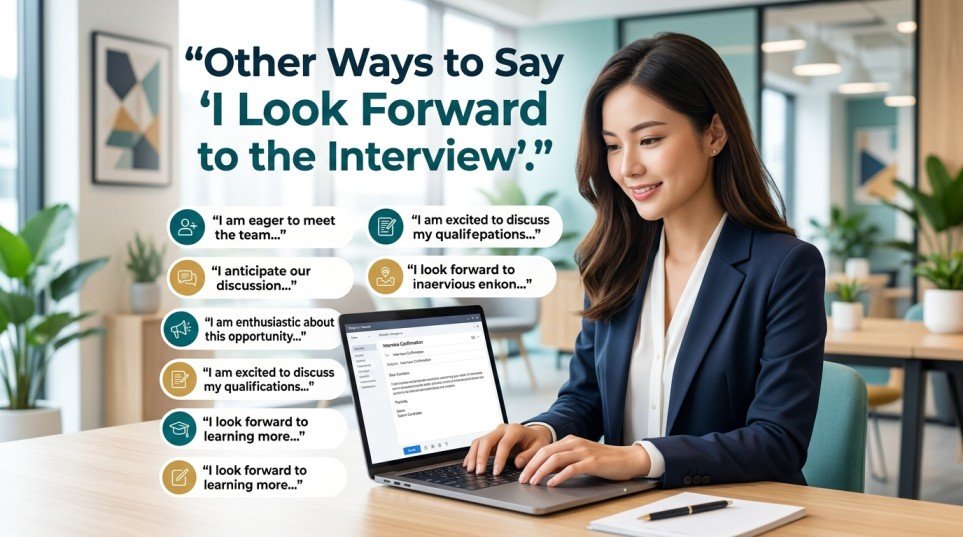
Quick Answer: Instead of saying I look forward to the interview, you can say: I’m excited to speak with you, I appreciate the opportunity to interview, I look forward to our conversation, I’m eager to discuss the role, I’m delighted to be considered.
The phrase “I look forward to the interview” is commonly used in job applications, interview confirmations, and professional correspondence. It expresses enthusiasm and appreciation while maintaining a professional tone.
Although the phrase is perfectly acceptable, using it repeatedly can make your communication sound generic. Recruiters and hiring managers often receive hundreds of similar messages, so varying your language can help you stand out.
Learning alternatives to “I look forward to the interview” helps you sound more polished and confident. It also improves your professional writing skills and gives you more flexibility when communicating with employers.
Quick Categories Section
Formal alternatives to “I look forward to the interview”
- I anticipate our discussion
- I look forward to meeting with you
- I welcome the opportunity to discuss my qualifications
- I appreciate the opportunity to interview
Pro Tip: Use these phrases in formal emails and interview confirmations.
Casual alternatives
- Excited to chat soon
- Looking forward to talking with you
- Can’t wait to learn more
- Happy to connect
Pro Tip: These work best in relaxed company cultures and networking conversations.
Professional alternatives
- I look forward to discussing the position
- I am eager to learn more about the role
- I appreciate your consideration
- I look forward to our conversation
Pro Tip: These options strike the perfect balance between enthusiasm and professionalism.
Informal expressions
- Excited to connect
- Looking forward to chatting
- Happy to speak soon
- Can’t wait to meet
Pro Tip: Avoid these in highly formal industries such as law, finance, or government.
“A well-written interview response demonstrates professionalism before the interview even begins.”
Common Mistakes
- Sounding overly enthusiastic
Example: “I literally can’t wait for the interview!”
- Using casual language in formal emails
Example: “Can’t wait to chat!”
- Repeating the same phrase in every email
Example: Using “I look forward to the interview” repeatedly.
- Sounding robotic
Example: “I hereby look forward to participating in the interview process.”
- Being too vague
Example: “Looking forward to it.”
What Does “I Look Forward to the Interview” Mean?
The phrase means you are pleased and enthusiastic about attending an upcoming interview.
It expresses anticipation while remaining professional and respectful.
Example Sentence:
I look forward to the interview and discussing how my experience aligns with the position.
When to Use “I Look Forward to the Interview”
- Interview confirmation emails
- Responses to interview invitations
- Follow-up messages
- Professional correspondence with recruiters
- Networking opportunities
Spoken vs Written: Primarily written
Formal vs Informal: Professional and semi-formal
Is It Professional or Polite to Say “I Look Forward to the Interview”?
Polite? ✔️ Yes
Professional? ✔️ Yes
Business Example:
Thank you for the invitation. I look forward to the interview and discussing how I can contribute to your team.
Pros and Cons of Using “I Look Forward to the Interview”
Pros
- Professional and polite
- Widely accepted
- Easy to understand
- Appropriate in most industries
Cons
- Frequently overused
- Can sound generic
- Lacks personality
- May not showcase enthusiasm strongly
“Small changes in wording can make your application sound more memorable.”
Other Ways to Say “I Look Forward to the Interview” (With Examples)
These alternatives will help you sound more fluent, confident, and professional in job-related communication.
Use them according to the company culture, industry, and level of formality.
1. Phrase: I’m excited to speak with you
Meaning: You are enthusiastic about the conversation.
Explanation: Shows genuine interest while remaining professional.
Example Sentence: I’m excited to speak with you about the opportunity.
Best Use: modern companies
Worst Use: legal correspondence
Tone: enthusiastic, professional
Context Variability: professional / spoken
2. Phrase: I appreciate the opportunity to interview
Meaning: You are grateful for the chance.
Explanation: Demonstrates professionalism and appreciation.
Example Sentence: I appreciate the opportunity to interview for this position.
Best Use: formal email
Worst Use: casual chat
Tone: respectful, professional
Context Variability: professional / written
3. Phrase: I look forward to our conversation
Meaning: You anticipate the discussion positively.
Explanation: Sounds more natural than mentioning the interview directly.
Example Sentence: I look forward to our conversation next week.
Best Use: interview confirmation
Worst Use: casual messaging
Tone: professional, warm
Context Variability: professional / written
4. Phrase: I’m eager to discuss the role
Meaning: You want to learn and share information.
Explanation: Shows enthusiasm without sounding overly excited.
Example Sentence: I’m eager to discuss the role and its responsibilities.
Best Use: recruiter email
Worst Use: informal texts
Tone: motivated, professional
Context Variability: professional
5. Phrase: I’m delighted to be considered
Meaning: You are pleased to be a candidate.
Explanation: Expresses gratitude and excitement.
Example Sentence: I’m delighted to be considered for this opportunity.
Best Use: formal response
Worst Use: casual workplace chat
Tone: appreciative, formal
Context Variability: professional
“Professional enthusiasm helps you stand out without sounding desperate.”
6. Phrase: I look forward to meeting with you
Meaning: You anticipate the meeting.
Explanation: A classic professional alternative.
Example Sentence: I look forward to meeting with you on Thursday.
Best Use: interview scheduling
Worst Use: casual networking
Tone: professional, courteous
Context Variability: professional
7. Phrase: I welcome the opportunity to discuss my qualifications
Meaning: You are happy to explain your experience.
Explanation: Highly professional wording.
Example Sentence: I welcome the opportunity to discuss my qualifications further.
Best Use: formal industries
Worst Use: casual startups
Tone: formal, confident
Context Variability: professional
8. Phrase: I’m looking forward to learning more about the position
Meaning: You want additional information.
Explanation: Focuses on curiosity and interest.
Example Sentence: I’m looking forward to learning more about the position.
Best Use: first interview
Worst Use: final-stage offer discussion
Tone: interested, professional
Context Variability: professional
9. Phrase: I appreciate your consideration
Meaning: You are thankful for the opportunity.
Explanation: Professional and respectful.
Example Sentence: I appreciate your consideration and look forward to speaking with you.
Best Use: email closing
Worst Use: informal chats
Tone: respectful, professional
Context Variability: written
10. Phrase: I’m enthusiastic about discussing this opportunity
Meaning: You are excited about the role.
Explanation: Demonstrates strong interest.
Example Sentence: I’m enthusiastic about discussing this opportunity further.
Best Use: interview confirmation
Worst Use: highly conservative industries
Tone: positive, professional
Context Variability: professional
11. Phrase: I anticipate our discussion
Meaning: You expect the meeting positively.
Explanation: More formal alternative.
Example Sentence: I anticipate our discussion and appreciate the opportunity.
Best Use: executive roles
Worst Use: casual communication
Tone: formal, polished
Context Variability: professional
12. Phrase: I’m grateful for the opportunity to speak with you
Meaning: You value the chance to interview.
Explanation: Shows appreciation and humility.
Example Sentence: I’m grateful for the opportunity to speak with you.
Best Use: formal interviews
Worst Use: casual networking
Tone: grateful, professional
Context Variability: written
13. Phrase: I’m pleased to have the opportunity to interview
Meaning: You are happy to participate.
Explanation: Formal and respectful.
Example Sentence: I’m pleased to have the opportunity to interview with your team.
Best Use: traditional companies
Worst Use: casual startups
Tone: formal, positive
Context Variability: professional
14. Phrase: I’m excited to discuss how I can contribute
Meaning: You are eager to add value.
Explanation: Focuses on helping the company.
Example Sentence: I’m excited to discuss how I can contribute to your organization.
Best Use: job interviews
Worst Use: informal chats
Tone: confident, positive
Context Variability: professional
15. Phrase: I look forward to connecting with you
Meaning: You anticipate meeting professionally.
Explanation: Common in modern workplaces.
Example Sentence: I look forward to connecting with you soon.
Best Use: virtual interviews
Worst Use: legal documents
Tone: friendly, professional
Context Variability: professional
“Confidence sounds strongest when paired with professionalism.”
16. Phrase: I’m happy to discuss my experience
Meaning: You are willing to share your background.
Explanation: Highlights readiness and confidence.
Example Sentence: I’m happy to discuss my experience in greater detail.
Best Use: recruiter emails
Worst Use: casual texts
Tone: positive, professional
Context Variability: professional
17. Phrase: I’m looking forward to speaking further
Meaning: You anticipate continued discussion.
Explanation: Useful after initial contact.
Example Sentence: I’m looking forward to speaking further about the role.
Best Use: follow-up emails
Worst Use: casual networking
Tone: professional, warm
Context Variability: professional
18. Phrase: I’m eager to learn more about your team
Meaning: You are interested in the company culture.
Explanation: Shows engagement beyond the job description.
Example Sentence: I’m eager to learn more about your team and goals.
Best Use: first interviews
Worst Use: offer negotiations
Tone: curious, professional
Context Variability: professional
19. Phrase: I appreciate the chance to discuss this role
Meaning: You value the opportunity.
Explanation: Combines gratitude and professionalism.
Example Sentence: I appreciate the chance to discuss this role with you.
Best Use: formal emails
Worst Use: informal chats
Tone: respectful, professional
Context Variability: written
20. Phrase: I’m excited about the upcoming interview
Meaning: You are enthusiastic about the meeting.
Explanation: Direct and positive.
Example Sentence: I’m excited about the upcoming interview and conversation.
Best Use: modern workplaces
Worst Use: highly formal sectors
Tone: enthusiastic, positive
Context Variability: professional
21. Phrase: I look forward to discussing my background
Meaning: You anticipate sharing your qualifications.
Explanation: Keeps the focus on your experience.
Example Sentence: I look forward to discussing my background with you.
Best Use: interview confirmations
Worst Use: casual settings
Tone: professional, confident
Context Variability: professional
22. Phrase: I’m honored to have this opportunity
Meaning: You feel privileged to be considered.
Explanation: Suitable for prestigious opportunities.
Example Sentence: I’m honored to have this opportunity to interview.
Best Use: competitive positions
Worst Use: casual companies
Tone: respectful, appreciative
Context Variability: professional
23. Phrase: I’m looking forward to exploring the opportunity further
Meaning: You want to learn more about the role.
Explanation: Sounds thoughtful and professional.
Example Sentence: I’m looking forward to exploring the opportunity further.
Best Use: early-stage interviews
Worst Use: final offer stage
Tone: professional, interested
Context Variability: professional
24. Phrase: I’m pleased to continue the hiring process
Meaning: You are happy to move forward.
Explanation: Useful after advancing to the next stage.
Example Sentence: I’m pleased to continue the hiring process with your team.
Best Use: later interview rounds
Worst Use: first contact
Tone: professional, positive
Context Variability: professional
25. Phrase: I look forward to sharing more about my qualifications
Meaning: You anticipate discussing your skills.
Explanation: Focuses on your strengths.
Example Sentence: I look forward to sharing more about my qualifications.
Best Use: interview scheduling
Worst Use: casual conversations
Tone: confident, professional
Context Variability: professional
26. Phrase: I’m thrilled to have the opportunity to speak with you
Meaning: You are highly excited about the interview.
Explanation: Strong enthusiasm while remaining professional.
Example Sentence: I’m thrilled to have the opportunity to speak with you.
Best Use: dream jobs
Worst Use: conservative industries
Tone: enthusiastic, appreciative
Context Variability: professional
27. Phrase: I’m looking forward to exchanging ideas
Meaning: You anticipate a meaningful discussion.
Explanation: Positions the interview as a two-way conversation.
Example Sentence: I’m looking forward to exchanging ideas with your team.
Best Use: collaborative roles
Worst Use: entry-level applications
Tone: professional, engaging
Context Variability: professional
28. Phrase: I’m excited to learn more about the organization
Meaning: You want to understand the company better.
Explanation: Demonstrates genuine interest.
Example Sentence: I’m excited to learn more about the organization.
Best Use: company-focused roles
Worst Use: salary discussions
Tone: interested, positive
Context Variability: professional
29. Phrase: I welcome the chance to speak with your team
Meaning: You appreciate the opportunity.
Explanation: Professional and polished wording.
Example Sentence: I welcome the chance to speak with your team.
Best Use: formal industries
Worst Use: casual environments
Tone: formal, professional
Context Variability: professional
30. Phrase: I’m eager to continue the conversation
Meaning: You want to move forward in the process.
Explanation: Excellent after previous interactions.
Example Sentence: I’m eager to continue the conversation regarding the position.
Best Use: follow-up stages
Worst Use: initial cold outreach
Tone: motivated, professional
Context Variability: professional / written
“The strongest interview emails combine professionalism, gratitude, and genuine enthusiasm.”
Mini Quiz / Self-Check
1. Which phrase is best for a formal interview confirmation email?
A. Can’t wait to chat
B. I welcome the opportunity to discuss my qualifications
C. Excited to connect
Answer: B
2. Which phrase sounds most professional?
A. I appreciate the opportunity to interview
B. Can’t wait to meet
C. Happy to chat
Answer: A
3. Which phrase is best for a startup culture?
A. I anticipate our discussion
B. I’m excited to speak with you
C. I hereby welcome the opportunity
Answer: B
Comparison Table: Top Alternatives
| Phrase | Tone | Best Use |
|---|---|---|
| I’m excited to speak with you | Enthusiastic | Modern companies |
| I appreciate the opportunity to interview | Professional | Formal emails |
| I look forward to our conversation | Warm | Interview confirmations |
| I’m eager to discuss the role | Motivated | Recruiter emails |
| I’m delighted to be considered | Appreciative | Formal responses |
| I look forward to meeting with you | Professional | Scheduling interviews |
| I welcome the opportunity to discuss my qualifications | Formal | Corporate roles |
| I appreciate your consideration | Respectful | Email closings |
| I’m excited to discuss how I can contribute | Confident | Job interviews |
| I look forward to connecting with you | Friendly | Virtual interviews |
FAQs
1. What can I say instead of “I look forward to the interview”?
You can use phrases like I’m excited to speak with you, I appreciate the opportunity to interview, or I’m eager to discuss the role.
2. Is “I look forward to the interview” professional?
Yes. It is one of the most professional and widely accepted phrases for interview-related communication.
3. What is a more formal alternative?
A more formal option is I welcome the opportunity to discuss my qualifications.
4. How can I sound more enthusiastic in an interview email?
Try phrases such as I’m excited to discuss how I can contribute or I’m thrilled to have the opportunity to speak with you.
5. Should I always mention looking forward to the interview?
While not required, expressing anticipation and appreciation creates a positive professional impression.
Conclusion
Learning other ways to say “I look forward to the interview” can make your job application emails sound more polished, engaging, and professional. Different situations call for different levels of enthusiasm, formality, and confidence.
Practice these alternatives regularly and choose the one that best matches the company culture and communication style. The right phrase can help you leave a strong impression before the interview even begins.
CTA: Which alternative would you use in your next interview email? Try one from this list today.
Discover More:-
- Other Ways to Say I Will Keep You Updated (30+ Examples)
- Other Ways to Say Thank You for the Confirmation (30+ Examples)
Robert Mitchell is a U.S.-based writer at Gramtivo.Com who focuses on grammar, writing improvement, and language-related content. He holds a degree in English and Linguistics from a U.S. university. His work aims to help readers enhance their writing skills with clear and practical guidance.