
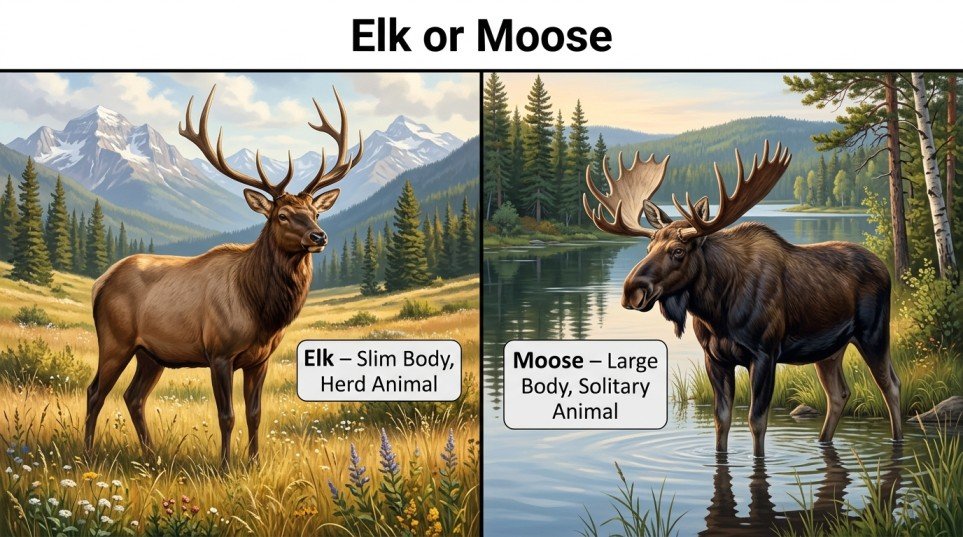
Quick Ans: The main difference between elk or moose is size, appearance, and habitat. Moose are much larger with broad paddle shaped antlers and long legs, while elk are smaller, slimmer, and have pointed antlers. Although both belong to the deer family, they live differently and behave differently in the wild.
Many people search for elk or moose because the two animals can look similar at first glance. Both are large mammals. Both have antlers and live in forests or mountain regions.
However, they are very different animals.
A moose is much larger and heavier. Elk are faster and often travel in groups. Moose usually live alone and prefer wetlands or colder forests. Because of these differences, wildlife viewers, hunters, hikers, and nature lovers often want to know how to identify them correctly.
Confusion becomes common in places where both animals live near each other. Some people mistake a young moose for an elk. Others confuse antler shapes or body size.
Understanding elk or moose helps people identify wildlife safely and accurately. It also improves knowledge about habitats, behavior, diet, and conservation.
This guide explains everything clearly. You will learn key differences, physical features, habitats, advantages and disadvantages of each species, real world examples, common mistakes, and practical exercises.
Quick Answer: Elk or Moose
The easiest way to understand elk or moose is to compare size and antlers.
| Feature | Elk | Moose |
|---|---|---|
| Size | Large | Much larger |
| Antlers | Long and pointed | Broad and paddle shaped |
| Body Shape | Slimmer | Heavy and bulky |
| Social Behavior | Herd animal | Mostly solitary |
| Habitat | Mountains and forests | Wetlands and cold forests |
In simple terms, moose are larger and heavier, while elk are slimmer and more social.
What Is an Elk?
An elk is a large member of the deer family found mainly in North America and parts of Asia. Elk are known for their speed, strong bodies, and impressive antlers.
Male elk are called bulls. Female elk are called cows.
Physical Features of Elk
Several features make elk easier to recognize:
- Light brown body
- Dark neck
- Pointed antlers
- Slim legs
- Cream colored rump patch
Compared to moose, elk look more athletic and lighter.
Elk Size
Adult elk usually weigh:
- Males: 700 to 1,100 pounds
- Females: 500 to 600 pounds
Although large, elk are still much smaller than moose.
Elk Behavior
Elk are social animals. They often travel in herds, especially during winter.
During mating season, male elk make loud bugling sounds to attract females and warn rivals. This sound is one of the most famous wildlife calls in North America.
Where Elk Live
Elk commonly live in:
- Mountain forests
- Grasslands
- National parks
- Open woodland areas
They prefer areas with both trees and open feeding space.
What Is a Moose?
A moose is the largest member of the deer family. Moose are famous for their huge bodies, long legs, and wide antlers.
Male moose are called bulls. Female moose are called cows.
Physical Features of Moose
Moose have several unique characteristics:
- Massive body
- Long legs
- Dark brown fur
- Hanging nose
- Broad paddle shaped antlers
These features make moose appear much heavier and taller than elk.
Moose Size
Adult moose often weigh:
- Males: 1,200 to 1,600 pounds
- Females: 800 to 1,300 pounds
Some moose can weigh even more in colder regions.
Moose Behavior
Unlike elk, moose usually live alone. They are quiet animals and spend much of their time feeding near water.
Moose can also become aggressive if threatened, especially mothers protecting calves.
Where Moose Live
Moose commonly live in:
- Cold forests
- Wetlands
- Lakeside regions
- Northern climates
They enjoy areas with water because aquatic plants are an important food source.
Key Differences Between Elk or Moose
Size
The biggest difference between elk or moose is body size. Moose are much larger and taller.
Antlers
Elk antlers are narrow and pointed. Moose antlers are broad and shaped like paddles.
Body Shape
Elk have slimmer bodies built for speed. Moose look bulky with long legs and large shoulders.
Social Habits
Elk travel in herds. Moose usually stay alone except during mating season.
Habitat
Elk prefer open forests and grasslands. Moose favor wetlands and colder forest regions.
Advantages and Disadvantages
Elk Advantages
Elk have several survival strengths:
- Faster movement
- Strong herd protection
- Better endurance over long distances
- Adaptable to different environments
Elk Disadvantages
Some weaknesses also exist:
- Smaller body compared to moose
- More vulnerable to predators in open areas
- Competition during mating season
Moose Advantages
Moose possess major physical advantages:
- Massive body size
- Strong defense against predators
- Excellent swimming ability
- Ability to survive harsh winters
Moose Disadvantages
Moose also face challenges:
- Slower movement
- Heat sensitivity
- Solitary lifestyle reduces group protection
These differences shape how each animal survives in the wild.
Real World Examples
National Parks
Visitors to national parks often see elk grazing in groups. Moose sightings usually happen near lakes or wetlands.
Wildlife Photography
Photographers prefer elk during mating season because of their dramatic bugling behavior. Moose attract attention because of their giant size and antlers.
Road Safety
Moose create more danger on roads because of their height and weight. Vehicle collisions with moose can be extremely serious.
These examples show why understanding elk or moose matters in real life.
Regional and Global Usage
North America
Both animals live across North America. Elk are common in western mountain regions, while moose appear more often in northern forests.
Europe and Asia
Moose also live in Europe and Asia. In many European countries, moose are called elk, which creates confusion.
Cold Climate Regions
Moose thrive in colder climates because thick fur helps them survive winter temperatures.
Regional naming differences often confuse people researching elk or moose online.
Related Concepts and Comparisons
Elk vs Deer
Elk are much larger than common deer and have stronger antlers.
Moose vs Deer
Moose are the largest members of the deer family.
Elk vs Moose vs Deer
| Feature | Elk | Moose | Deer |
|---|---|---|---|
| Size | Large | Very large | Smaller |
| Antlers | Pointed | Paddle shaped | Smaller branches |
| Habitat | Forests and mountains | Wetlands and forests | Various habitats |
| Social Behavior | Herds | Solitary | Small groups |
Understanding these related animals helps clarify the elk or moose comparison.
Common Mistakes About Elk or Moose
Confusing Antlers
Many people focus only on size. Antler shape actually provides one of the easiest identification clues.
Ignoring Habitat
Wetland sightings are more likely moose. Open grassland groups are usually elk.
Assuming Both Animals Travel in Herds
Elk often move in groups. Moose generally prefer solitude.
Underestimating Moose Danger
Moose may appear calm, but they can become aggressive if threatened.
Avoiding these mistakes improves wildlife safety and identification skills.
Beginner to Advanced Wildlife Tips
Beginner Level
Learn basic body shapes and antler differences first.
Intermediate Level
Study animal tracks, feeding habits, and seasonal behavior.
Advanced Level
Observe migration patterns, mating behavior, and habitat adaptation.
These skills help wildlife enthusiasts identify elk or moose more confidently.
Step By Step Identification Scenario
Imagine seeing a large animal near a forest lake.
If the animal has:
- Broad paddle shaped antlers
- Long legs
- Dark bulky body
- Solitary behavior
It is likely a moose.
If the animal has:
- Narrow pointed antlers
- Slimmer body
- Group behavior
- Lighter coloring
It is probably an elk.
Careful observation makes wildlife identification easier.
Exercises With Answers
Exercise 1
Which animal is larger in the elk or moose comparison?
Answer: Moose.
Exercise 2
Which animal usually travels in herds?
Answer: Elk.
Exercise 3
Which animal has paddle shaped antlers?
Answer: Moose.
Exercise 4
Which species commonly lives near wetlands?
Answer: Moose.
Exercise 5
True or False: Elk are usually solitary animals.
Answer: False.
When Should You Learn Elk or Moose Differences?
Learning the difference helps if you:
- Visit wildlife parks
- Enjoy hiking or camping
- Study animals
- Practice wildlife photography
- Travel in mountain or forest regions
Accurate identification also improves outdoor safety.
FAQs About Elk or Moose
What is the biggest difference between elk or moose?
The biggest difference is size. Moose are much larger and have paddle shaped antlers.
Which animal is more aggressive, elk or moose?
Moose can become more dangerous when threatened, especially mothers protecting calves.
Are elk and moose in the same family?
Yes. Both belong to the deer family.
Which animal is taller, elk or moose?
Moose are taller because of their long legs and massive body structure.
Do elk travel in groups?
Yes. Elk usually move in herds, especially during winter.
Can moose swim?
Yes. Moose are excellent swimmers and often feed on aquatic plants.
Which animal has paddle shaped antlers?
Moose have broad paddle shaped antlers.
Where are elk commonly found?
Elk commonly live in mountain forests and grasslands.
Why are moose dangerous on roads?
Their height and heavy body make vehicle collisions very serious.
Do elk and moose eat the same food?
Both eat plants, but moose consume more aquatic vegetation.
Conclusion
Understanding elk or moose becomes easier when focusing on body size, antlers, habitat, and behavior. Although both belong to the deer family, they differ greatly in appearance and lifestyle.
Elk are slimmer, faster, and more social. They often live in herds and prefer forests mixed with open grasslands. Moose, on the other hand, are much larger and usually live alone near wetlands and colder forests.
Antler shape also helps identify them quickly. Elk have pointed antlers, while moose display broad paddle shaped antlers.
Learning these differences improves wildlife observation, outdoor safety, and nature education. Whether you are hiking, traveling, photographing wildlife, or simply curious, understanding elk or moose helps you appreciate these impressive animals more accurately.
Discover More:-
- Alternately vs Alternatively: Meaning, Differences, and Correct Usage Guide
- Outter or Outer: Correct Spelling, Meaning, and Grammar Guide

Jennifer Collins is a professional grammar expert and language educator at gramtivo.com, specializing in English grammar, writing skills, and language improvement. She holds a Master’s degree in English Language and Literature from a recognized university in the United States. With years of teaching and content development experience, she is dedicated to helping learners improve their communication skills with clear and practical guidance.