
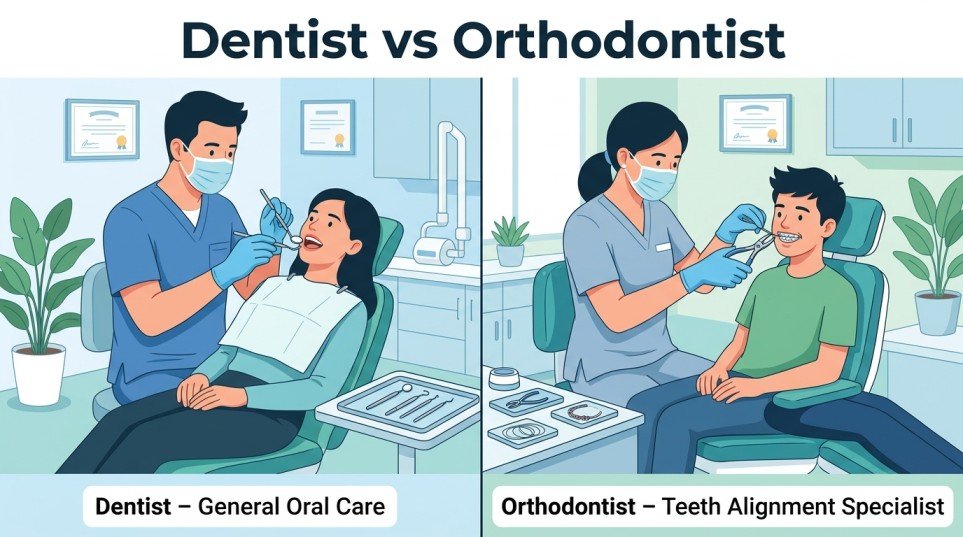
Quick Ans: The main difference between a dentist or orthodontist is the type of dental care they provide. A dentist focuses on overall oral health, including cleanings, fillings, and gum care, while an orthodontist specializes in correcting teeth alignment and bite problems using braces, aligners, and other treatments.
Many people feel confused when choosing between a dentist or orthodontist. Both work with teeth and oral health. Both help patients improve their smiles. However, their training and daily work are very different.
A dentist handles general dental care. This includes cleaning teeth, treating cavities, and checking gum health. An orthodontist, on the other hand, focuses on straightening teeth and correcting jaw alignment.
The confusion usually happens because orthodontists are also dentists first. After dental school, they complete additional years of specialized orthodontic training. As a result, they treat more complex alignment and bite problems.
Understanding the difference between dentist or orthodontist helps patients choose the right professional for their needs. It also prevents wasted time and unnecessary appointments.
This guide explains everything clearly. You will learn definitions, treatments, advantages, disadvantages, examples, common mistakes, and practical exercises. By the end, you will know exactly when to visit a dentist and when to see an orthodontist.
Quick Answer: Dentist or Orthodontist
The easiest way to understand dentist or orthodontist is to focus on treatment type.
| Feature | Dentist | Orthodontist |
|---|---|---|
| Main Focus | General oral health | Teeth and jaw alignment |
| Common Treatments | Fillings, cleanings, crowns | Braces, aligners, retainers |
| Training | Dental school | Dental school plus orthodontic specialty |
| Patients | All dental needs | Alignment and bite correction |
| Visit Frequency | Regular checkups | Ongoing treatment visits |
In simple terms, a dentist treats overall oral health, while an orthodontist straightens teeth and corrects bite issues.
What Is a Dentist?
A dentist is a healthcare professional who diagnoses and treats general oral health problems. Dentists help prevent tooth decay, gum disease, and other dental conditions.
Most people visit a dentist regularly for routine care.
Common Dentist Services
Dentists provide many treatments, including:
- Teeth cleaning
- Cavity fillings
- Root canals
- Tooth extractions
- Crowns and bridges
- Gum disease treatment
- Oral exams
Because dentists focus on prevention, they help patients maintain long term oral health.
Where Dentists Work
Dentists commonly work in:
- Private dental clinics
- Hospitals
- Community health centers
- Cosmetic dental offices
Some dentists also specialize further in areas like pediatric dentistry or oral surgery.
Dentist Education and Training
Becoming a dentist requires several educational steps.
- Complete undergraduate education
- Attend dental school
- Earn dental degree
- Pass licensing exams
After graduation, dentists can begin practicing general dentistry.
What Is an Orthodontist?
An orthodontist is a dental specialist who focuses on correcting teeth positioning and jaw alignment. Every orthodontist starts as a dentist before completing additional specialty training.
Orthodontists mainly treat issues related to:
- Crooked teeth
- Overbite
- Underbite
- Crowded teeth
- Jaw alignment problems
Their goal is to improve both appearance and bite function.
Common Orthodontic Treatments
Orthodontists provide treatments such as:
- Metal braces
- Ceramic braces
- Clear aligners
- Retainers
- Jaw correction devices
These treatments gradually move teeth into proper positions.
How Orthodontists Are Trained
Orthodontists complete extra years of education after dental school.
The typical path includes:
- Undergraduate education
- Dental school
- Orthodontic residency program
- Licensing and certification
Because of this advanced training, orthodontists handle complex alignment problems.
Key Differences Between Dentist or Orthodontist
Main Area of Focus
The biggest difference between dentist or orthodontist involves specialization.
Dentists care for general oral health. Orthodontists specifically correct alignment and bite problems.
Type of Treatment
Dentists usually perform preventive and restorative care. Orthodontists focus on moving teeth and adjusting jaw position.
Training Length
Orthodontists receive additional specialized education after dental school. Dentists complete general dental training only.
Equipment Used
Dentists use tools for cleaning, drilling, and repairing teeth. Orthodontists use braces, wires, aligners, and bite correction devices.
Visit Frequency
Patients visit dentists every six months for checkups. Orthodontic patients may require monthly adjustments during treatment.
Advantages and Disadvantages
Dentist Advantages
General dentists provide several important benefits:
- Complete oral health care
- Preventive treatment
- Early disease detection
- Routine cleanings and exams
Dentist Disadvantages
Some limitations exist:
- Limited orthodontic specialization
- May refer complex alignment cases
- Not focused on jaw correction
Orthodontist Advantages
Orthodontists offer specialized expertise:
- Advanced alignment correction
- Bite improvement
- Specialized braces knowledge
- Long term teeth positioning solutions
Orthodontist Disadvantages
Orthodontic treatment may involve:
- Higher costs
- Longer treatment periods
- Frequent appointments
Therefore, choosing between dentist or orthodontist depends on the dental issue involved.
Real World Examples
Routine Dental Care
If someone needs a cleaning or cavity filling, a dentist is the correct professional.
Crooked Teeth
A patient with crowded or uneven teeth should visit an orthodontist.
Jaw Alignment Problems
Orthodontists treat overbites, underbites, and jaw positioning issues.
Emergency Tooth Pain
Severe tooth pain usually requires immediate dental treatment from a dentist rather than an orthodontist.
These examples help clarify when each specialist is needed.
Regional and Global Usage
General Dental Care Worldwide
Dentists are available in nearly every healthcare system around the world. Routine oral care remains essential everywhere.
Orthodontic Treatment Growth
Orthodontic treatment has become increasingly popular globally. Many adults now seek braces and aligners for cosmetic and health reasons.
Urban and Rural Differences
Large cities often have more orthodontic specialists. Rural areas may rely more heavily on general dentists for basic dental services.
As healthcare access improves, orthodontic care continues expanding worldwide.
Related Concepts and Comparisons
Dentist vs Orthodontist vs Oral Surgeon
| Professional | Main Focus |
|---|---|
| Dentist | General oral care |
| Orthodontist | Teeth alignment |
| Oral Surgeon | Surgical dental procedures |
Dentist vs Cosmetic Dentist
Cosmetic dentists improve smile appearance through whitening, veneers, and aesthetic treatments. Orthodontists focus on alignment and bite correction.
Orthodontist vs Invisalign Provider
Some dentists offer aligners like Invisalign. However, orthodontists usually handle more complex alignment cases.
These comparisons make the dentist or orthodontist distinction easier to understand.
Common Mistakes About Dentist or Orthodontist
Assuming They Perform the Same Work
Dentists and orthodontists share some knowledge, but their specialties differ significantly.
Visiting an Orthodontist for Cavities
Orthodontists do not typically treat tooth decay or gum disease.
Ignoring Bite Problems
Misaligned bites can cause chewing problems and jaw discomfort. Orthodontic treatment may prevent future complications.
Delaying Orthodontic Treatment
Waiting too long can sometimes worsen alignment issues. Early evaluation often improves results.
Avoiding these mistakes helps patients receive proper care sooner.
Beginner to Advanced Treatment Tips
Beginner Level
Visit a dentist regularly for cleanings and exams. Good oral hygiene prevents many problems.
Intermediate Level
Ask your dentist about alignment concerns if teeth appear crowded or uneven.
Advanced Level
Discuss long term treatment plans with an orthodontist for complex bite or jaw correction issues.
Consistent care improves both dental health and smile appearance.
Step By Step Treatment Scenario
Imagine a patient notices crooked teeth and occasional tooth pain.
The treatment process may look like this:
- Visit dentist for oral exam
- Treat cavities or gum problems first
- Receive referral to orthodontist
- Begin braces or aligner treatment
- Attend regular orthodontic adjustments
This example shows how dentists and orthodontists often work together.
Exercises With Answers
Exercise 1
Which professional handles routine teeth cleaning?
Answer: Dentist.
Exercise 2
Who specializes in braces and aligners?
Answer: Orthodontist.
Exercise 3
Which specialist treats overbite problems?
Answer: Orthodontist.
Exercise 4
Who usually detects cavities first?
Answer: Dentist.
Exercise 5
True or False: Every orthodontist is first trained as a dentist.
Answer: True.
When Should You Choose Dentist or Orthodontist?
Choose a dentist if you:
- Need regular cleanings
- Have tooth pain
- Need fillings or crowns
- Want preventive care
Choose an orthodontist if you:
- Have crooked teeth
- Need braces or aligners
- Experience bite issues
- Want jaw alignment correction
In many cases, both professionals work together to improve oral health.
FAQs About Dentist or Orthodontist
What is the main difference between dentist or orthodontist?
A dentist provides general oral care, while an orthodontist specializes in teeth and jaw alignment.
Can a dentist provide braces?
Some dentists offer braces or aligners, but orthodontists have advanced specialty training in alignment treatment.
Do I need a referral to see an orthodontist?
Usually no. However, many patients first visit a dentist for evaluation.
Which is better for crooked teeth, dentist or orthodontist?
Orthodontists are the best specialists for correcting crooked teeth and bite issues.
Do orthodontists clean teeth?
Orthodontists focus mainly on alignment treatment. Regular cleanings are usually performed by dentists.
Are orthodontists more expensive than dentists?
Orthodontic treatments often cost more because they involve long term specialized care.
Can adults visit orthodontists?
Yes. Many adults now receive braces or clear aligners.
How long does orthodontic treatment take?
Treatment may last from several months to a few years depending on the case.
Should children see an orthodontist early?
Early evaluations help detect jaw and alignment problems before they worsen.
Can a dentist fix bite problems?
Minor issues may be addressed by dentists, but complex bite correction usually requires an orthodontist.
Conclusion
Understanding dentist or orthodontist helps patients make better healthcare decisions. Although both professionals care for oral health, their responsibilities differ significantly.
Dentists focus on general dental care such as cleanings, fillings, gum health, and preventive treatment. Regular visits help maintain strong teeth and healthy gums.
Orthodontists specialize in correcting crooked teeth and bite alignment issues. Their advanced training allows them to manage braces, aligners, and complex jaw correction treatments.
The right choice depends on your dental needs. Tooth pain, cavities, and cleanings usually require a dentist. Crooked teeth and bite problems often require orthodontic treatment.
In many situations, dentists and orthodontists work together to improve both oral health and smile appearance. Understanding their roles makes it easier to choose the proper care and maintain long term dental health.
Discover More:-

Lisa Thompson is a USA-based content writer and language specialist focused on grammar, writing improvement and digital publishing.
She holds a degree in English Language and Communication and has professional experience in educational and web content creation.
As the author of Gramtivo.Com, she aims to help readers improve their writing skills through clear and practical guidance.