
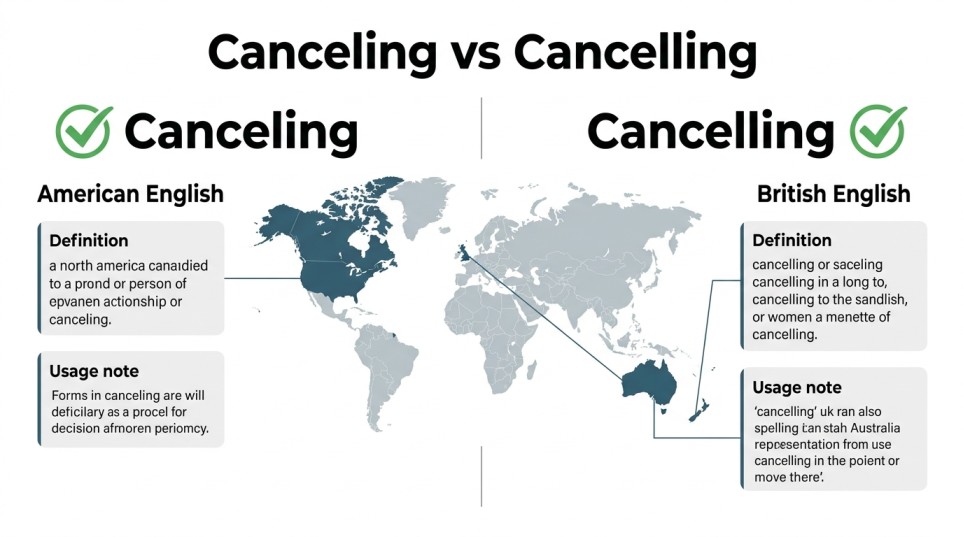
Quick Ans: The difference between canceling or cancelling comes down to regional spelling rules. Canceling is the preferred spelling in American English, while cancelling is the standard spelling in British English, Canadian English, Australian English, and many other English-speaking regions. Both forms are correct when used in the appropriate language variety.
Many writers wonder whether they should use canceling or cancelling. The two words look almost identical. The only difference is the extra “l” in one spelling. Because both versions appear in books, websites, emails, and business documents, confusion is common.
The good news is that both spellings are correct.
The choice depends on the type of English you are using. American English typically favors shorter spellings in many words. British English often doubles certain consonants before adding suffixes. As a result, one region writes canceling, while another writes cancelling.
This difference matters in professional writing, academic work, business communication, and content creation. Using the wrong spelling for your audience can make writing appear inconsistent.
Understanding canceling or cancelling helps you write with confidence. In this guide, you will learn the correct usage, spelling rules, regional preferences, common mistakes, examples, exercises, and practical tips.
Quick Answer: Canceling or Cancelling
If you need a quick answer, use the spelling that matches your audience.
| English Variant | Preferred Spelling |
|---|---|
| American English | Canceling |
| British English | Cancelling |
| Canadian English | Cancelling |
| Australian English | Cancelling |
| New Zealand English | Cancelling |
In short:
- Canceling = American English
- Cancelling = British and Commonwealth English
Both spellings mean exactly the same thing.
What Does Canceling Mean?
Canceling is the American English present participle and gerund form of the verb cancel.
The word means:
- To stop something from happening
- To call off an event
- To end an agreement
- To revoke a plan or reservation
Examples of Canceling
American English examples include:
- We are canceling the meeting tomorrow.
- She is canceling her subscription.
- The airline is canceling several flights.
- They discussed canceling the event due to weather.
In each sentence, canceling refers to stopping or ending something.
What Does Cancelling Mean?
Cancelling has the same meaning as canceling. The difference is purely regional.
British English and many other forms of English prefer doubling the final “l” before adding the suffix “-ing.”
Examples of Cancelling
British English examples include:
- We are cancelling the meeting tomorrow.
- She is cancelling her membership.
- The airline is cancelling flights because of storms.
- They considered cancelling the concert.
The meaning remains identical. Only the spelling changes.
Why Are There Two Spellings?
The difference between canceling or cancelling comes from spelling conventions in different English dialects.
American English often simplifies words by using fewer letters. British English tends to preserve traditional spelling patterns.
Because of these different approaches, several words have regional variations.
Similar Examples
| American English | British English |
|---|---|
| Traveling | Travelling |
| Labeled | Labelled |
| Modeling | Modelling |
| Signaling | Signalling |
| Canceling | Cancelling |
Therefore, the spelling difference follows a broader pattern rather than a special rule for the word “cancel.”
The Grammar Rule Behind Canceling or Cancelling
Understanding the rule makes the difference easier to remember.
In British English, verbs ending in “l” often double the final consonant before adding endings such as:
- -ing
- -ed
- -er
Examples include:
- Travel → Travelling
- Signal → Signalling
- Cancel → Cancelling
American English usually avoids doubling the final “l” in these situations.
Examples include:
- Travel → Traveling
- Signal → Signaling
- Cancel → Canceling
As a result, both spellings follow consistent regional grammar patterns.
Key Differences Between Canceling or Cancelling
Meaning
There is no difference in meaning.
Pronunciation
Pronunciation remains exactly the same.
Grammar
Both forms function identically in sentences.
Regional Preference
This is the only real difference.
| Feature | Canceling | Cancelling |
|---|---|---|
| Meaning | Same | Same |
| Pronunciation | Same | Same |
| Grammar Function | Same | Same |
| American English | Preferred | Less common |
| British English | Less common | Preferred |
Advantages and Disadvantages
Advantages of Using Canceling
- Matches American English standards
- Preferred in most U.S. publications
- Common in American business writing
- Consistent with American style guides
Disadvantages of Using Canceling
- May appear incorrect to British readers
- Less common outside the United States
Advantages of Using Cancelling
- Standard in British English
- Common across many English-speaking countries
- Matches Commonwealth style guides
- Familiar to international audiences
Disadvantages of Using Cancelling
- May seem inconsistent in American documents
- Not preferred by many U.S. publishers
The best choice depends on your audience rather than personal preference.
Real World Examples
Business Emails
An American company may write:
“We are canceling tomorrow’s meeting.”
A British company may write:
“We are cancelling tomorrow’s meeting.”
Both messages are correct.
Academic Writing
Universities often require consistency.
If you are using American English throughout a paper, use canceling. If you are writing in British English, use cancelling.
Website Content
Businesses serving U.S. customers usually choose canceling.
Companies targeting UK audiences generally choose cancelling.
Consistency matters more than choosing one version over the other.
Regional and Global Usage
United States
American English overwhelmingly prefers canceling.
United Kingdom
British English almost always uses cancelling.
Canada
Canadian English generally favors cancelling, although American influence sometimes appears.
Australia and New Zealand
Both countries strongly prefer cancelling.
International Business
Global companies often select one style guide and apply it consistently across all content.
Therefore, audience location should guide your choice between canceling or cancelling.
Related Concepts and Comparisons
Canceled vs Cancelled
This follows the same pattern.
| American English | British English |
|---|---|
| Canceled | Cancelled |
Cancelation vs Cancellation
Another spelling variation exists.
| American English | British English |
|---|---|
| Cancelation | Cancellation |
However, even in American English, cancellation is often more common than cancelation.
Traveling vs Travelling
The same regional spelling rule applies.
American English uses:
- Traveling
- Canceling
British English uses:
- Travelling
- Cancelling
Learning one pattern makes the others easier to remember.
Common Mistakes About Canceling or Cancelling
Mixing Styles in the Same Document
Some writers switch between spellings.
Example:
- We are canceling the meeting.
- They are cancelling the event.
This creates inconsistency.
Assuming One Version Is Wrong
Both spellings are correct. The issue is regional preference, not correctness.
Ignoring Audience Expectations
American readers expect American spelling. British readers usually expect British spelling.
Relying Only on Spell Check
Spell check tools often follow regional settings. Therefore, always verify which language setting your document uses.
Avoiding these mistakes improves professionalism and clarity.
Beginner to Advanced Writing Tips
Beginner Level
Choose either American or British English and stay consistent.
Intermediate Level
Learn common spelling differences between the two language variants.
Advanced Level
Adapt spelling to your audience and publication requirements.
Professional writers often switch styles depending on client needs.
For example, a content writer may use canceling for a U.S. company and cancelling for a UK business.
Step By Step Decision Scenario
Imagine you are writing a blog post.
If your audience is primarily American:
- Use American English
- Write canceling
- Use related American spellings
- Maintain consistency
If your audience is primarily British:
- Use British English
- Write cancelling
- Follow British spelling conventions
- Stay consistent throughout
This simple approach prevents confusion.
Exercises With Answers
Exercise 1
Which spelling is preferred in American English?
Answer: Canceling.
Exercise 2
Which spelling is preferred in British English?
Answer: Cancelling.
Exercise 3
True or False: Both spellings have the same meaning.
Answer: True.
Exercise 4
Which sentence uses American English?
A. We are cancelling the trip.
B. We are canceling the trip.
Answer: B.
Exercise 5
Which sentence uses British English?
A. We are cancelling the event.
B. We are canceling the event.
Answer: A.
When Should You Use Canceling or Cancelling?
Use canceling when:
- Writing for American audiences
- Following U.S. style guides
- Creating American business content
Use cancelling when:
- Writing for British readers
- Following UK publishing standards
- Producing content for Commonwealth countries
Matching the spelling to the audience creates a more professional impression.
FAQs About Canceling or Cancelling
What is the difference between canceling or cancelling?
The only difference is regional spelling. American English uses canceling, while British English uses cancelling.
Is canceling or cancelling correct?
Both spellings are correct when used in the appropriate regional variety of English.
Why does British English use cancelling?
British spelling rules often double the final “l” before adding suffixes such as “-ing.”
Why does American English use canceling?
American English generally simplifies spellings by avoiding unnecessary doubled consonants.
Which spelling should I use in the United States?
Use canceling because it matches standard American English.
Which spelling should I use in the United Kingdom?
Use cancelling because it follows British English conventions.
Do canceling and cancelling have different meanings?
No. Both words mean stopping, ending, or calling off something.
Is cancelling more common worldwide?
Many English-speaking countries use cancelling, but canceling remains standard in the United States.
Can I use both spellings in one article?
No. Consistency is important. Choose one spelling style and use it throughout the document.
Does pronunciation change between canceling and cancelling?
No. Both spellings are pronounced exactly the same way.
Conclusion
The debate over canceling or cancelling is not about right versus wrong. Instead, it is about choosing the correct spelling for your audience.
American English prefers canceling, while British English, Canadian English, Australian English, and many other English varieties prefer cancelling. The meaning, pronunciation, and grammatical function remain identical.
Writers often make mistakes by mixing both spellings within the same document. Fortunately, this issue is easy to avoid. Select one language style before you begin writing and apply it consistently throughout your content.
For business communication, academic writing, marketing materials, and website content, matching your audience’s spelling expectations creates a more professional appearance. Consistency also improves readability and credibility.
By understanding the difference between canceling or cancelling, you can write confidently and choose the spelling that best fits your readers.
Discover More:-
- Swifty or Swiftie: Which Spelling Is Correct for Taylor Swift Fans?
- Smash or Pass Meaning: Origins, Rules, Examples, and Social Media Impac

Robert Mitchell is a U.S.-based writer at Gramtivo.Com who focuses on grammar, writing improvement, and language-related content. He holds a degree in English and Linguistics from a U.S. university. His work aims to help readers enhance their writing skills with clear and practical guidance.