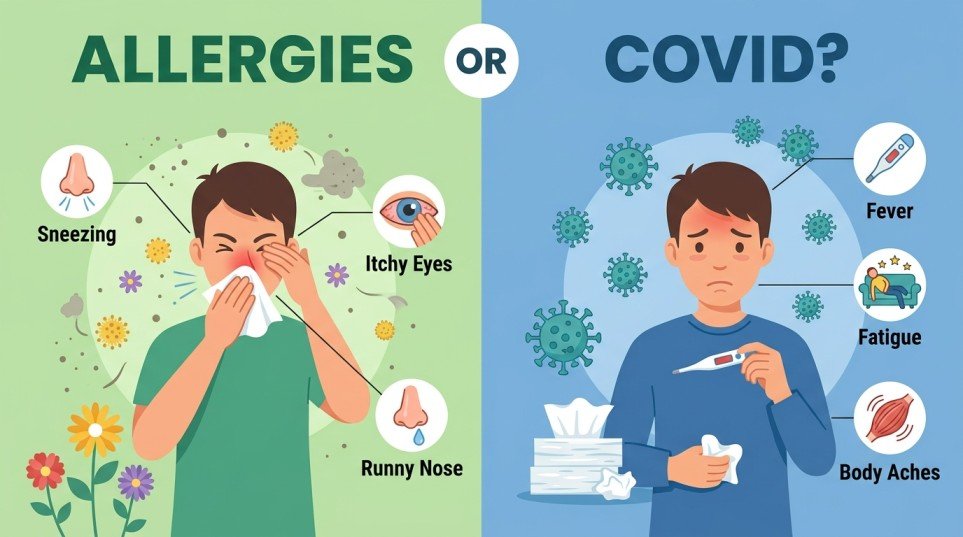
Quick Ans: The main difference between allergies or COVID is the cause of symptoms. Allergies happen when the immune system reacts to triggers like pollen, dust, or pet dander, while COVID is a viral infection caused by the coronavirus. Although some symptoms overlap, key signs such as fever, body aches, and sudden illness are more common with COVID than with seasonal allergies.
Many people wonder whether they are dealing with allergies or COVID when symptoms like sneezing, congestion, or a runny nose appear. The confusion is understandable because both conditions can affect the nose, throat, and respiratory system.
During allergy season, millions of people experience symptoms that look similar to those caused by viral infections. At the same time, COVID can begin with mild signs that are easy to mistake for allergies. As a result, many individuals are unsure whether they should rest at home, take allergy medication, or get tested.
Understanding the difference is important for both personal health and public safety. A person with allergies may not be contagious, while someone with COVID can spread the virus to others. Therefore, recognizing the warning signs helps people make better decisions about work, school, travel, and medical care.
This guide explains the differences between allergies or COVID in simple language. You will learn symptoms, causes, advantages and disadvantages of symptom monitoring methods, real world examples, common mistakes, exercises, and frequently asked questions.
Quick Answer: Allergies or COVID
The easiest way to distinguish allergies or COVID is by looking at the symptoms and how they develop.
| Feature | Allergies | COVID |
|---|---|---|
| Cause | Immune reaction to allergens | Viral infection |
| Fever | Rare | Common |
| Sneezing | Common | Sometimes |
| Itchy Eyes | Common | Rare |
| Body Aches | Rare | Common |
| Loss of Taste or Smell | Uncommon | Possible |
| Contagious | No | Yes |
| Seasonal Pattern | Often seasonal | Can occur anytime |
In simple terms, itchy eyes and sneezing usually point toward allergies, while fever and body aches often suggest COVID.
What Are Allergies?
Allergies occur when the immune system reacts to substances that are normally harmless. These substances are called allergens.
Common allergens include:
- Pollen
- Dust mites
- Pet dander
- Mold spores
- Certain foods
When the body encounters an allergen, it releases chemicals such as histamine. Consequently, symptoms begin to appear.
Common Allergy Symptoms
People with allergies may experience:
- Sneezing
- Runny nose
- Nasal congestion
- Itchy eyes
- Watery eyes
- Itchy throat
Symptoms often develop shortly after exposure to an allergen.
How Allergies Affect Daily Life
Allergies can make people feel uncomfortable and tired. However, they generally do not cause serious infections. Most allergy symptoms improve when the trigger is removed or medication is used.
What Is COVID?
COVID is a respiratory illness caused by the coronavirus known as SARS-CoV-2.
Unlike allergies, COVID results from infection rather than environmental exposure. The virus spreads through respiratory droplets and close contact with infected individuals.
Common COVID Symptoms
Symptoms may include:
- Fever
- Cough
- Sore throat
- Fatigue
- Body aches
- Headache
- Congestion
- Loss of taste or smell
Not everyone experiences the same symptoms. Some individuals develop mild illness, while others become seriously sick.
How COVID Spreads
COVID can spread through:
- Coughing
- Sneezing
- Talking
- Close contact
- Airborne particles in enclosed spaces
Therefore, identifying COVID quickly is important for protecting others.
Key Differences Between Allergies or COVID
Cause
The most important difference between allergies or COVID is the underlying cause.
Allergies result from immune reactions to allergens. COVID develops after viral infection.
Fever
Fever is uncommon with allergies. On the other hand, fever is one of the more recognizable symptoms of COVID.
Itchy Eyes
Allergies frequently cause itchy and watery eyes. COVID rarely produces this symptom.
Body Aches
Body aches often occur with COVID. In contrast, allergies generally do not cause widespread muscle pain.
Contagiousness
Allergies cannot spread from person to person. COVID, however, is contagious.
Symptom Comparison Table
The following table highlights common signs when comparing allergies or COVID.
| Symptom | Allergies | COVID |
|---|---|---|
| Sneezing | Common | Sometimes |
| Runny Nose | Common | Possible |
| Fever | Rare | Common |
| Cough | Sometimes | Common |
| Itchy Eyes | Common | Rare |
| Fatigue | Mild | Common |
| Body Aches | Rare | Common |
| Sore Throat | Possible | Common |
| Loss of Taste | Rare | Possible |
Looking at several symptoms together provides a clearer picture than focusing on a single symptom.
Advantages and Disadvantages of Symptom Monitoring
Advantages
Monitoring symptoms can help people:
- Notice changes quickly
- Seek care when needed
- Reduce unnecessary worry
- Track recovery progress
Disadvantages
Symptom monitoring has limitations:
- Symptoms can overlap
- Mild COVID may resemble allergies
- Self diagnosis may be inaccurate
- Testing may still be necessary
Therefore, symptom observation should be combined with medical advice when uncertainty exists.
Real World Examples
Example One
A person develops sneezing, itchy eyes, and a runny nose after mowing the lawn.
This situation strongly suggests allergies because symptoms appeared after exposure to pollen.
Example Two
Someone suddenly develops fever, fatigue, and body aches.
These signs are more consistent with COVID than allergies.
Example Three
A student experiences congestion and a mild sore throat during spring.
Because both allergies and viral infections can cause these symptoms, additional factors such as fever, exposure history, and testing may help determine the cause.
Regional and Global Usage
Seasonal Allergies Around the World
Many regions experience allergy seasons linked to local plants and weather conditions. Spring and fall often bring increased pollen levels.
COVID Worldwide
COVID has affected countries across the globe. Cases can occur throughout the year rather than during a specific season.
Why Location Matters
Environmental conditions influence allergy symptoms. Viral outbreaks, meanwhile, depend more on community transmission patterns.
As a result, local conditions can affect whether symptoms are more likely related to allergies or COVID.
Related Concepts and Comparisons
Allergies vs Common Cold
A cold usually develops because of a virus. Allergies occur because of immune reactions to allergens.
COVID vs Flu
Both illnesses can cause fever, fatigue, and body aches. However, they are caused by different viruses.
Allergies vs Sinus Infection
Allergies often trigger sneezing and itching. Sinus infections may produce facial pressure and thick mucus.
Allergies vs COVID vs Cold
| Feature | Allergies | COVID | Common Cold |
|---|---|---|---|
| Fever | Rare | Common | Rare |
| Itchy Eyes | Common | Rare | Rare |
| Sneezing | Common | Common | Common |
| Body Aches | Rare | Common | Mild |
| Contagious | No | Yes | Yes |
Understanding these comparisons helps clarify the broader discussion around allergies or COVID.
Common Mistakes About Allergies or COVID
Assuming Sneezing Means Allergies
Sneezing is common with allergies, but some people with COVID also sneeze.
Ignoring Fever
Many individuals overlook a mild fever. However, fever is an important clue that may point toward infection.
Self Diagnosing Too Quickly
Symptoms can overlap. Therefore, relying on assumptions may lead to mistakes.
Forgetting About Exposure History
Recent contact with someone who has COVID may increase the likelihood of infection.
Avoiding Testing
Testing remains useful when symptoms are unclear or exposure has occurred.
Beginner to Advanced Symptom Assessment Tips
Beginner Level
Pay attention to obvious symptoms such as:
- Itchy eyes
- Fever
- Sneezing
- Body aches
Intermediate Level
Track symptom duration and severity. Also, consider recent exposure to allergens or sick individuals.
Advanced Level
Monitor symptom patterns, environmental triggers, and test results. Additionally, discuss concerns with a healthcare professional when symptoms persist.
Step By Step Evaluation Scenario
Imagine you wake up with congestion and a runny nose.
If symptoms include:
- Itchy eyes
- Frequent sneezing
- No fever
Allergies may be more likely.
If symptoms include:
- Fever
- Body aches
- Fatigue
- Recent exposure to illness
COVID becomes a stronger possibility.
Because overlap exists, testing may provide additional clarity when uncertainty remains.
Exercises With Answers
Exercise 1
Which condition is caused by allergens?
Answer: Allergies.
Exercise 2
Which condition is contagious?
Answer: COVID.
Exercise 3
What symptom is more common with allergies than COVID?
Answer: Itchy eyes.
Exercise 4
Which condition commonly causes fever?
Answer: COVID.
Exercise 5
True or False: Allergies can spread from one person to another.
Answer: False.
When Should You Consider Testing?
Testing may be helpful if you:
- Develop fever
- Experience body aches
- Have known exposure to COVID
- Notice worsening symptoms
- Need confirmation before travel or work
Although allergies can mimic some symptoms, testing can provide greater confidence when the cause is unclear.
FAQs About Allergies or COVID
How can I tell if I have allergies or COVID?
Look for symptom patterns. Itchy eyes and sneezing often suggest allergies, while fever and body aches are more common with COVID.
Can allergies feel like COVID?
Yes. Congestion, coughing, and runny nose may occur with both conditions.
Do allergies cause fever?
No. Allergies rarely cause fever, which is why fever often points toward infection rather than allergies.
Can COVID cause sneezing?
Yes. Some people with COVID experience sneezing, although it is more commonly associated with allergies.
Are itchy eyes a sign of COVID?
Itchy eyes are much more common with allergies than COVID.
Should I get tested if I am unsure whether it is allergies or COVID?
Testing can help when symptoms overlap or when recent exposure has occurred.
Can allergies cause loss of taste or smell?
Severe congestion may affect smell temporarily, but sudden loss of smell is often associated with viral illness.
How long do allergy symptoms last?
Symptoms may continue as long as exposure to the allergen continues.
Can COVID symptoms start mildly?
Yes. Some people experience very mild symptoms at the beginning of infection.
What is the biggest clue in the allergies or COVID comparison?
Fever, body aches, and contagiousness often point toward COVID, while itchy eyes and allergen exposure usually suggest allergies.
Conclusion
Understanding allergies or COVID can help people respond appropriately when symptoms appear. Although both conditions may cause congestion, coughing, or a runny nose, important differences exist.
Allergies result from immune reactions to environmental triggers such as pollen, dust, or pet dander. COVID develops after infection with a contagious virus. Because of this distinction, symptoms such as itchy eyes and sneezing are more closely linked to allergies, whereas fever, body aches, and fatigue are more commonly associated with COVID.
Paying attention to symptom patterns can provide useful clues. Exposure history, seasonal factors, and testing may also help identify the cause. Nevertheless, symptoms sometimes overlap, making certainty difficult without additional evaluation.
When in doubt, monitor symptoms carefully and seek professional medical guidance if concerns persist. Understanding the differences between allergies or COVID allows you to make informed decisions that support both your health and the well-being of those around you.
Discover More:-
- Forty or Fourty: Which Spelling Is Correct and Why?
- Led or Lead: Difference, Meaning, Grammar Rules, and Examples

Jennifer Collins is a professional grammar expert and language educator at gramtivo.com, specializing in English grammar, writing skills, and language improvement. She holds a Master’s degree in English Language and Literature from a recognized university in the United States. With years of teaching and content development experience, she is dedicated to helping learners improve their communication skills with clear and practical guidance.