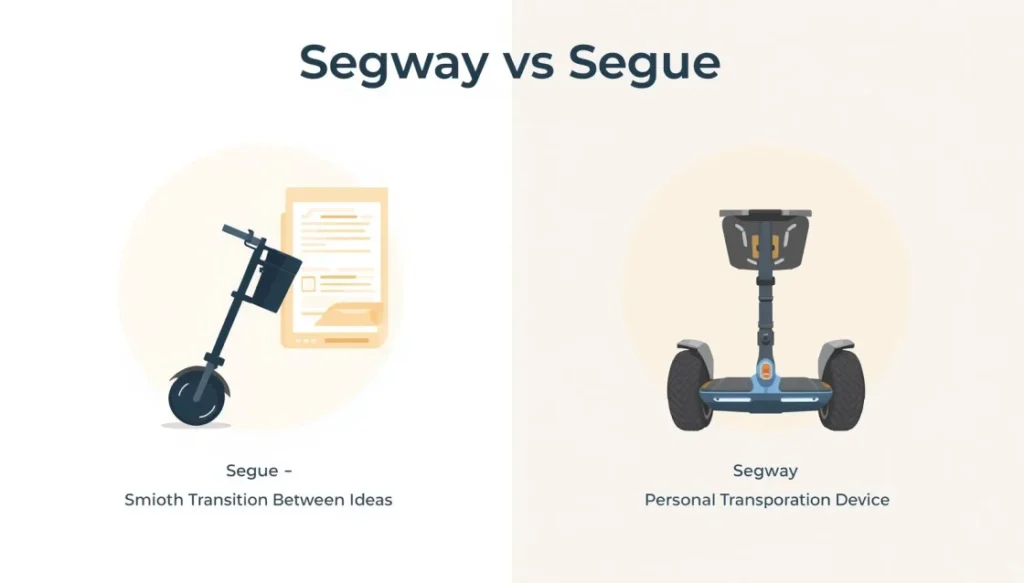
Quick Ans: The difference between segway or segue is simple but important. Segue is a word that means a smooth transition from one topic, activity, or section to another, while Segway is a brand name for a two wheeled self balancing personal transportation device. Although they sound the same, they have completely different meanings and uses.
Many people get confused about segway or segue because the words sound identical when spoken. You may hear someone say, “That is a good segway into the next topic,” and wonder whether the spelling is correct.
In most cases, it is not.
The confusion happens because segue is commonly used in conversations, presentations, writing, and public speaking. Meanwhile, Segway became widely known as a popular personal transportation device. Since both words are pronounced the same way, many writers accidentally use one when they mean the other.
Understanding the difference matters. Using the wrong spelling can make professional writing look careless. It can also create confusion in business communication, academic work, marketing content, and everyday conversations.
Fortunately, the distinction is easy to learn. Once you understand the meaning of each word and see a few examples, you will know exactly when to use segue and when to use Segway.
This guide covers definitions, examples, common mistakes, practical exercises, and frequently asked questions to help you master segway or segue once and for all.
Quick Answer: Segway or Segue
The easiest way to remember segway or segue is to focus on meaning.
| Word | Meaning | Usage |
|---|---|---|
| Segue | A smooth transition | Writing, speaking, presentations |
| Segway | A transportation device brand | Personal mobility and transportation |
For example:
- Correct: “Let me segue into the next topic.”
- Correct: “He rode a Segway around the city.”
In short, segue is a transition, while Segway is a vehicle.
What Does Segue Mean?
The word segue refers to a smooth transition from one thing to another. It is commonly used in writing, speaking, music, broadcasting, and presentations.
When someone moves naturally from one subject to the next, they are making a segue.
Common Uses of Segue
You may see segue used in situations such as:
- Business presentations
- Public speeches
- Articles and blogs
- Podcasts
- Television programs
- Academic discussions
Examples of Segue in Sentences
Consider these examples:
- The speaker used a joke to segue into the main presentation.
- This paragraph will segue into the next section.
- The conversation segued from sports to business.
Each example shows a smooth shift between topics.
Segue as a Verb
Most often, segue functions as a verb.
Examples include:
- Let’s segue into today’s agenda.
- The teacher segued into a discussion about history.
- She smoothly segued from one topic to another.
Because it describes movement between ideas, segue is very common in communication.
What Does Segway Mean?
Segway is a trademarked brand name. It refers to a self balancing personal transportation device invented for short distance travel.
The device allows users to stand on a platform while controlling movement through body positioning.
Common Characteristics of a Segway
A Segway typically includes:
- Two wheels
- Self balancing technology
- Electric motor
- Handlebar steering system
- Rechargeable battery
These features make it useful for transportation and guided tours.
Common Uses of Segways
People use Segways for:
- City tours
- Security patrols
- Campus transportation
- Warehouse operations
- Recreational riding
Unlike segue, which is a language term, Segway refers to a physical product.
Examples of Segway in Sentences
Here are several examples:
- The tourists rented a Segway during the city tour.
- Security officers patrol the mall on Segways.
- She learned how to ride a Segway in less than an hour.
Each sentence refers to the transportation device.
Key Differences Between Segway or Segue
Meaning
The biggest difference involves definition.
Segue means a transition.
Segway refers to a transportation device.
Part of Speech
Segue often functions as a verb or noun.
Segway is usually a proper noun because it represents a brand name.
Usage Context
Segue appears in communication and writing.
Segway appears in transportation and mobility discussions.
Capitalization
Segue is usually lowercase.
Segway begins with a capital letter because it is a brand name.
Comparison Table: Segway or Segue
| Feature | Segue | Segway |
|---|---|---|
| Meaning | Smooth transition | Personal transporter |
| Category | Language term | Brand name |
| Used In | Writing and speaking | Transportation |
| Capitalized | Usually no | Yes |
| Physical Object | No | Yes |
This table highlights the most important distinctions.
Advantages and Disadvantages
Advantages of Using Segue Correctly
Using segue properly offers several benefits:
- Improves professional writing
- Enhances communication clarity
- Prevents grammatical mistakes
- Strengthens presentations
Disadvantages of Misusing Segue
Incorrect usage can:
- Reduce credibility
- Confuse readers
- Create editing issues
- Make content appear less professional
Advantages of Understanding Segway
Knowing the correct meaning of Segway:
- Improves vocabulary
- Prevents spelling confusion
- Helps distinguish between brand names and common words
Disadvantages of Confusing Segway With Segue
Mixing the terms may:
- Cause misunderstandings
- Create writing errors
- Lead to professional embarrassment
Therefore, understanding segway or segue improves communication accuracy.
Real World Examples
Business Presentation
A manager might say:
“Now let me segue into our quarterly results.”
In this situation, segue is correct because the speaker is transitioning between topics.
Tourist Activity
A visitor might say:
“We rented Segways to explore downtown.”
Here, Segways refers to the transportation devices.
Podcast Hosting
Podcast hosts frequently use segue when moving between segments.
For example:
“That discussion provides a perfect segue into our next topic.”
Security Operations
Many security teams use Segways to move quickly through large facilities.
These examples demonstrate how context determines the correct word.
Regional and Global Usage
English Speaking Countries
The distinction between segway or segue exists throughout English speaking regions including:
- United States
- Canada
- United Kingdom
- Australia
- New Zealand
Professional Writing
Editors worldwide consistently use segue when discussing transitions.
Transportation Industry
The name Segway is recognized internationally as a mobility brand.
As a result, both words appear globally but in very different contexts.
Related Concepts and Comparisons
Transition vs Segue
A transition is a general movement from one thing to another.
A segue is a specific type of smooth transition.
Segway vs Scooter
A Segway uses self balancing technology.
A scooter usually requires different steering and balancing methods.
Segway or Segue vs Transition
| Term | Meaning |
|---|---|
| Segue | Smooth transition |
| Transition | General movement between subjects |
| Segway | Transportation device |
Learning these related terms makes the distinction even clearer.
Common Mistakes About Segway or Segue
Using Segway in Writing
One of the most common mistakes is writing:
“Let me segway into the next point.”
This is incorrect.
The correct sentence is:
“Let me segue into the next point.”
Capitalizing Segue
Some writers incorrectly capitalize segue.
Unless it begins a sentence, it should remain lowercase.
Using Segue as a Vehicle
A segue is not a transportation device.
Whenever you refer to the vehicle, use Segway.
Assuming Sound Determines Spelling
Because the words sound identical, many people choose the wrong spelling.
Always focus on meaning rather than pronunciation.
Beginner to Advanced Learning Tips
Beginner Level
Remember this phrase:
- Segue = transition
- Segway = vehicle
This simple rule solves most confusion.
Intermediate Level
Practice identifying the context before choosing a spelling.
Ask yourself:
- Am I talking about communication?
- Am I talking about transportation?
Advanced Level
Review professional articles and speeches. Notice how writers use segue to connect ideas naturally.
Consistent exposure improves long term accuracy.
Step By Step Usage Scenario
Imagine you are giving a presentation.
First, discuss company performance.
Next, move into marketing results.
You could say:
“That analysis provides a natural segue into our marketing strategy.”
Now imagine visiting a tourist destination.
You rent an electric transportation device.
In that case, you would say:
“We explored the city on a Segway.”
The situation determines the correct word.
Exercises With Answers
Exercise 1
Which word means a smooth transition?
Answer: Segue.
Exercise 2
Which word refers to a transportation device?
Answer: Segway.
Exercise 3
Choose the correct sentence:
A. Let me segway into the next topic.
B. Let me segue into the next topic.
Answer: B.
Exercise 4
Which spelling is correct?
“We rented a ____ for the tour.”
Answer: Segway.
Exercise 5
True or False: Segway and segue have the same meaning.
Answer: False.
When Should You Use Segway or Segue?
Use segue when you:
- Move between ideas
- Transition between topics
- Write articles or speeches
- Connect sections of a presentation
Use Segway when you:
- Discuss transportation devices
- Describe personal mobility equipment
- Refer to the brand or vehicle
Remembering the context will help you choose correctly every time.
FAQs About Segway or Segue
What is the difference between segway or segue?
Segue means a smooth transition between ideas, while Segway is a personal transportation device.
Is “segway into the next topic” correct?
No. The correct phrase is “segue into the next topic.”
Why do people confuse segway or segue?
The words sound exactly the same when spoken, which leads to spelling mistakes.
Is segue a noun or a verb?
Segue can function as both a noun and a verb depending on the sentence.
Is Segway a brand name?
Yes. Segway is a trademarked brand known for self balancing transportation devices.
How do you pronounce segue?
Segue is pronounced the same way as Segway.
Can segue be used in business writing?
Yes. It is commonly used in reports, presentations, and professional communication.
What is a good segue in writing?
A good segue smoothly connects one idea or section to the next.
Should Segway always be capitalized?
Yes. Since it is a brand name, Segway should be capitalized.
How can I remember the difference between segway or segue?
Think of segue as a transition between ideas and Segway as a machine with wheels.
Conclusion
Understanding segway or segue is easier once you focus on meaning rather than pronunciation. Although both words sound identical, they belong to completely different categories.
Segue refers to a smooth transition between topics, ideas, or activities. Writers, speakers, teachers, and presenters use it regularly to connect information naturally.
Segway, by contrast, is a brand name for a self balancing transportation device. It belongs to discussions about mobility, travel, and personal transportation.
Confusing these terms is common because they are pronounced the same way. However, choosing the correct spelling improves professionalism and communication accuracy.
Whenever you write, ask yourself a simple question. Are you transitioning between ideas, or are you talking about a vehicle? The answer will immediately tell you whether to use segue or Segway.
By applying this rule consistently, you can avoid one of the most common English spelling mistakes and communicate with greater confidence.
Discover More:-
- Upwork or Fiverr: Which Freelance Platform Is Better for You?
- TheraBreath vs Listerine: Differences, Ingredients, Benefits, and Best Mouthwash Guide

Robert Mitchell is a U.S.-based writer at Gramtivo.Com who focuses on grammar, writing improvement, and language-related content. He holds a degree in English and Linguistics from a U.S. university. His work aims to help readers enhance their writing skills with clear and practical guidance.