
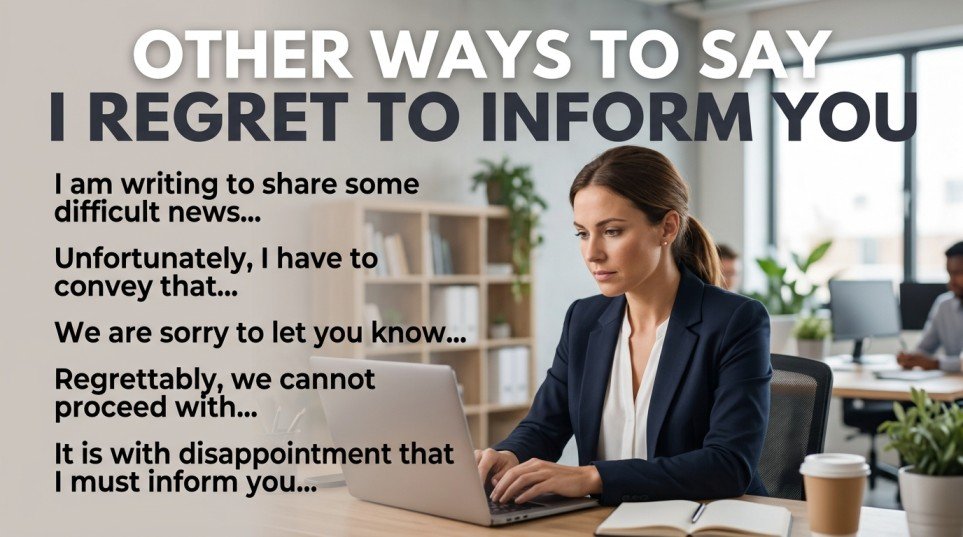
Quick Answer: Instead of saying I regret to inform you, you can say: unfortunately, I’m sorry to say, we regret to notify you, I hate to tell you, sadly.
The phrase “I regret to inform you” is commonly used to deliver bad news in a polite and respectful way. It often appears in professional emails, formal letters, and serious conversations.
Although the phrase is grammatically correct and widely understood, it can sound overly formal or emotionally distant when overused.
Learning alternatives to “I regret to inform you” helps you sound more natural, empathetic, and fluent. It also improves your tone in professional communication and helps you express excitement in English and emotions more appropriately in different contexts.
Quick Categories Section
Formal alternatives to “I regret to inform you”
- We regret to notify you
- Unfortunately, we must inform you
- It is with regret that I inform you
- I am sorry to advise you
Pro Tip: Use these in formal emails, business communication, or official notices.
Casual alternatives
- I’m sorry to say
- Hate to tell you this
- Sadly
- Bad news
Pro Tip: Keep casual phrases warm and respectful when delivering negative information.
Professional alternatives
- Unfortunately
- I’m afraid that
- We were unable to
- I wanted to let you know
Pro Tip: In professional settings, clarity and empathy matter equally.
Informal expressions
- Tough luck
- Not great news
- Things didn’t work out
- Sorry, but no
Pro Tip: Avoid overly casual phrases in sensitive or serious situations.
“The way you deliver bad news can shape how your message is received.”
Common Mistakes
- Sounding too cold or robotic
Example: “I regret to inform you” without empathy may sound harsh. - Using overly casual language in serious situations
Example: “Bad news, buddy” in professional communication. - Being too indirect
Example: Hiding the main message with excessive wording. - Using dramatic wording unnecessarily
Example: Making minor issues sound severe. - Ignoring tone and audience
Example: Using formal phrases with close friends.
What Does “I Regret to Inform You” Mean?
It means you are politely delivering unpleasant or disappointing news.
Grammatically, it is a formal expression commonly used in written English.
Example Sentence:
I regret to inform you that your application was unsuccessful.
When to Use “I Regret to Inform You”
- Delivering bad news professionally
- Rejecting applications or requests
- Formal written communication
- Serious conversations
Spoken vs Written: More common in writing
Formal vs Informal: Highly formal
Is It Professional or Polite to Say “I Regret to Inform You”?
Polite? ✔️ Yes
Professional? ✔️ Yes
Business Example:
“We regret to inform you that the position has been filled.”
Pros and Cons of Using “I Regret to Inform You”
Pros
- Very professional
- Polite tone
- Clear meaning
- Widely recognized
Cons
- Sounds overly formal
- Emotionally distant
- Can feel stiff
- Often overused in emails
“Professional English is not just about grammar—it’s also about tone.”
Other Ways to Say “I Regret to Inform You” (With Examples)
These alternatives will help you sound more fluent, empathetic, and natural in different situations.
Use them based on tone, audience, and context.
1. Phrase: Unfortunately
Meaning: Something negative has happened.
Explanation: Direct but professional.
Example Sentence: Unfortunately, your request was not approved.
Best Use: workplace
Worst Use: emotional support
Tone: professional, neutral
Context Variability: professional / written
2. Phrase: I’m sorry to say
Meaning: Delivering bad news politely.
Explanation: Softer and more conversational.
Example Sentence: I’m sorry to say that we cannot continue the project.
Best Use: spoken conversation
Worst Use: legal notice
Tone: empathetic, polite
Context Variability: spoken / professional
3. Phrase: We regret to notify you
Meaning: Formal notification of bad news.
Explanation: Common in official communication.
Example Sentence: We regret to notify you that your application was declined.
Best Use: formal email
Worst Use: casual chat
Tone: formal, professional
Context Variability: professional / written
4. Phrase: I’m afraid that
Meaning: Introducing disappointing news politely.
Explanation: Common in spoken and written English.
Example Sentence: I’m afraid that the event has been canceled.
Best Use: workplace
Worst Use: dramatic situations
Tone: polite, gentle
Context Variability: spoken / professional
5. Phrase: Sadly
Meaning: Something unfortunate occurred.
Explanation: Emotional but concise.
Example Sentence: Sadly, we won’t be able to attend.
Best Use: personal message
Worst Use: strict formal writing
Tone: emotional, sincere
Context Variability: casual / spoken
“A softer phrase can make difficult conversations easier.”
6. Phrase: I hate to tell you this
Meaning: Delivering unpleasant news reluctantly.
Explanation: Conversational and empathetic.
Example Sentence: I hate to tell you this, but the tickets are sold out.
Best Use: personal talk
Worst Use: official letter
Tone: informal, caring
Context Variability: spoken
7. Phrase: We were unable to
Meaning: Something could not be completed.
Explanation: Professional and indirect.
Example Sentence: We were unable to approve your request.
Best Use: business communication
Worst Use: emotional context
Tone: professional, neutral
Context Variability: professional
8. Phrase: I wanted to let you know
Meaning: Preparing someone for information.
Explanation: Softer transition into bad news.
Example Sentence: I wanted to let you know that the meeting has been postponed.
Best Use: workplace
Worst Use: urgent warning
Tone: calm, professional
Context Variability: professional / spoken
9. Phrase: Bad news
Meaning: Introducing negative information.
Explanation: Informal and direct.
Example Sentence: Bad news—we missed the deadline.
Best Use: casual talk
Worst Use: formal email
Tone: informal, direct
Context Variability: casual
10. Phrase: It pains me to say
Meaning: The speaker feels emotional discomfort.
Explanation: Dramatic but sincere.
Example Sentence: It pains me to say that we must close the business.
Best Use: emotional situations
Worst Use: casual conversation
Tone: emotional, serious
Context Variability: spoken / formal
11. Phrase: Regrettably
Meaning: Unfortunately or sadly.
Explanation: Formal alternative.
Example Sentence: Regrettably, the event has been canceled.
Best Use: formal writing
Worst Use: casual chat
Tone: formal, polished
Context Variability: professional
12. Phrase: We’re sorry to inform you
Meaning: Delivering bad news politely.
Explanation: Common in customer service.
Example Sentence: We’re sorry to inform you that your order was delayed.
Best Use: business communication
Worst Use: casual speech
Tone: polite, professional
Context Variability: professional
13. Phrase: Things didn’t work out
Meaning: A situation failed or ended unsuccessfully.
Explanation: Casual and softer.
Example Sentence: Unfortunately, things didn’t work out as planned.
Best Use: personal conversation
Worst Use: formal notice
Tone: casual, empathetic
Context Variability: spoken
14. Phrase: We cannot proceed
Meaning: The process cannot continue.
Explanation: Professional and clear.
Example Sentence: We cannot proceed with your request at this time.
Best Use: formal workplace
Worst Use: casual talk
Tone: direct, professional
Context Variability: professional
15. Phrase: I have some unfortunate news
Meaning: Introducing bad news politely.
Explanation: Gentle and clear.
Example Sentence: I have some unfortunate news regarding the project.
Best Use: workplace
Worst Use: joking context
Tone: serious, polite
Context Variability: professional / spoken
“Tone awareness is one of the most important communication skills.”
16. Phrase: Sorry, but no
Meaning: Refusing or rejecting something.
Explanation: Brief and informal.
Example Sentence: Sorry, but no, we can’t approve that.
Best Use: casual situations
Worst Use: official email
Tone: direct, informal
Context Variability: casual
17. Phrase: We must decline
Meaning: Formally refusing something.
Explanation: Professional and concise.
Example Sentence: We must decline your proposal at this time.
Best Use: formal business
Worst Use: casual speech
Tone: formal, professional
Context Variability: professional
18. Phrase: It didn’t work out
Meaning: Something failed or ended unsuccessfully.
Explanation: Casual and natural.
Example Sentence: Unfortunately, it didn’t work out.
Best Use: friendly conversation
Worst Use: legal writing
Tone: casual, sympathetic
Context Variability: spoken
19. Phrase: We’re unable to accommodate your request
Meaning: A request cannot be fulfilled.
Explanation: Professional and polite.
Example Sentence: We’re unable to accommodate your request at this time.
Best Use: customer service
Worst Use: casual talk
Tone: formal, respectful
Context Variability: professional
20. Phrase: I’m disappointed to say
Meaning: The speaker feels disappointed.
Explanation: Adds emotional sincerity.
Example Sentence: I’m disappointed to say that the launch was postponed.
Best Use: emotional workplace
Worst Use: humor
Tone: sincere, professional
Context Variability: spoken / written
21. Phrase: We have to let you know
Meaning: Necessary delivery of information.
Explanation: Softer transition phrase.
Example Sentence: We have to let you know that changes are coming.
Best Use: workplace
Worst Use: urgent emergency
Tone: neutral, calm
Context Variability: professional
22. Phrase: Tough luck
Meaning: Unfortunate situation.
Explanation: Very informal expression.
Example Sentence: Tough luck, the tickets sold out fast.
Best Use: close friends
Worst Use: serious matters
Tone: informal, blunt
Context Variability: casual
23. Phrase: Sadly, we cannot
Meaning: Polite refusal.
Explanation: Gentle and concise.
Example Sentence: Sadly, we cannot offer refunds.
Best Use: customer service
Worst Use: casual jokes
Tone: polite, professional
Context Variability: professional
24. Phrase: We regret that
Meaning: Expressing regret formally.
Explanation: Common in official notices.
Example Sentence: We regret that your application was unsuccessful.
Best Use: formal writing
Worst Use: casual speech
Tone: formal, respectful
Context Variability: professional
25. Phrase: I wish I had better news
Meaning: Speaker feels sympathy.
Explanation: Warm and empathetic.
Example Sentence: I wish I had better news about the results.
Best Use: personal support
Worst Use: legal communication
Tone: caring, emotional
Context Variability: spoken
26. Phrase: This may disappoint you
Meaning: Preparing someone emotionally.
Explanation: Soft introduction to bad news.
Example Sentence: This may disappoint you, but the event is canceled.
Best Use: sensitive discussions
Worst Use: casual banter
Tone: gentle, considerate
Context Variability: spoken / professional
27. Phrase: We’re sorry, but
Meaning: Beginning a polite negative statement.
Explanation: Common in professional English.
Example Sentence: We’re sorry, but your request was denied.
Best Use: workplace
Worst Use: emotional comfort
Tone: professional, polite
Context Variability: professional
28. Phrase: It’s unfortunate that
Meaning: Something negative occurred.
Explanation: Formal and neutral.
Example Sentence: It’s unfortunate that the schedule changed.
Best Use: business communication
Worst Use: jokes
Tone: formal, calm
Context Variability: professional
29. Phrase: I don’t have good news
Meaning: Preparing someone for disappointment.
Explanation: Conversational and direct.
Example Sentence: I don’t have good news about the interview.
Best Use: spoken talk
Worst Use: legal documents
Tone: honest, sympathetic
Context Variability: spoken
30. Phrase: We’re disappointed to inform you
Meaning: Delivering disappointing news professionally.
Explanation: Professional yet empathetic.
Example Sentence: We’re disappointed to inform you that the event has been canceled.
Best Use: official communication
Worst Use: casual chat
Tone: professional, empathetic
Context Variability: professional / written
“Clear communication becomes powerful when empathy and professionalism work together.”
Mini Quiz / Self-Check
1. Which phrase is most professional?
A. Tough luck
B. We regret to notify you
C. Bad news
Answer: B
2. Which phrase sounds most casual?
A. Regrettably
B. Tough luck
C. We cannot proceed
Answer: B
3. Which phrase is best for customer service?
A. We’re unable to accommodate your request
B. Bad news
C. Hate to tell you this
Answer: A
Comparison Table: Top Alternatives
| Phrase | Tone | Best Use |
|---|---|---|
| Unfortunately | Professional | Workplace |
| I’m sorry to say | Warm | Spoken English |
| We regret to notify you | Formal | Official emails |
| I’m afraid that | Polite | Business communication |
| Sadly | Emotional | Personal messages |
| We were unable to | Professional | Customer service |
| Regrettably | Formal | Written English |
| I wish I had better news | Empathetic | Sensitive talks |
| We cannot proceed | Direct | Formal workplace |
| We’re disappointed to inform you | Professional | Official notices |
FAQs
1. What are the best alternatives to “I regret to inform you”?
Top choices include unfortunately, I’m sorry to say, and we regret to notify you.
2. Is “I regret to inform you” too formal?
Yes, it can sound overly formal in casual or friendly conversations.
3. What should I say instead in professional emails?
Use phrases like unfortunately or we were unable to.
4. Are informal expressions appropriate for serious bad news?
Usually not. Serious situations require empathy and professionalism.
5. Why learn alternatives to “I regret to inform you”?
It improves tone, communication skills, and English fluency.
Conclusion
Using different other ways to say “I regret to inform you” helps you communicate bad news more naturally and effectively. The right phrase can make your message sound clearer, kinder, and more professional.
Practice these alternatives regularly and pay attention to tone. Over time, your English communication will become more confident, empathetic, and polished.
CTA: Try replacing overly formal phrases with more natural alternatives in your next email or conversation.
Discover More:-
- Other Ways to Say Thank You for Following Up (30+ Examples)
- Other Ways to Say How Can I Help You (30+ Examples)

Robert Mitchell is a U.S.-based writer at Gramtivo.Com who focuses on grammar, writing improvement, and language-related content. He holds a degree in English and Linguistics from a U.S. university. His work aims to help readers enhance their writing skills with clear and practical guidance.