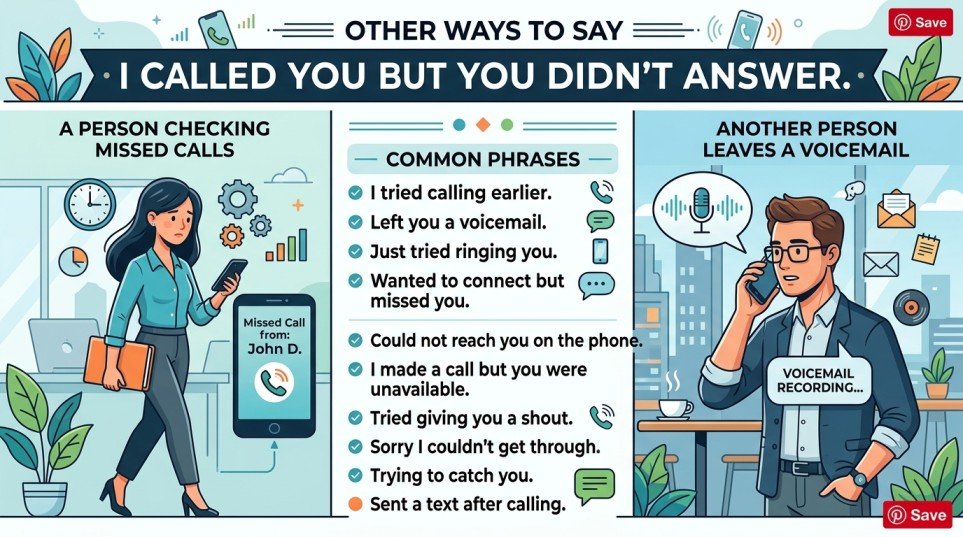
Quick Answer: Instead of saying I called you but you didn’t answer, you can say: I tried reaching you, I couldn’t get through, I gave you a call earlier, I attempted to contact you, I missed you on the phone.
The phrase “I called you but you didn’t answer” is commonly used when someone does not pick up a phone call. It’s direct, clear, and useful in both personal and professional communication.
However, using the exact same wording repeatedly can sound blunt or repetitive. Native speakers often use softer, more professional, or more casual alternatives depending on the situation.
Learning alternatives to “I called you but you didn’t answer” improves fluency and helps you sound more natural. It also helps you adjust tone in workplace conversations, friendly chats, and polite follow-ups while learning how to express excitement in English and communicate professionally.
Quick Categories Section
Formal alternatives to “I called you but you didn’t answer”
- I attempted to contact you
- I tried reaching you earlier
- I was unable to get through
- I called but couldn’t connect
Pro Tip: Use these in business emails or professional follow-ups.
Casual alternatives
- I tried calling you
- I gave you a ring
- I called earlier
- I missed you on the phone
Pro Tip: These sound natural in everyday conversations.
Professional alternatives
- I attempted to reach you
- I couldn’t get through to you
- I contacted you earlier
- I tried reaching out by phone
Pro Tip: Keep your wording polite and neutral in workplace communication.
Informal expressions
- You didn’t pick up
- I blew up your phone
- You missed my call
- I couldn’t catch you
Pro Tip: Avoid slang expressions in formal settings.
“The right wording can make even simple communication sound more professional.”
Common Mistakes
- Sounding too accusatory
Example: “Why didn’t you answer my call?” may sound aggressive. - Using overly casual slang at work
Example: “I blew up your phone” is inappropriate professionally. - Repeating the same phrase too often
Example: Using “I called you but you didn’t answer” in every follow-up. - Ignoring tone in professional emails
Example: “You ignored my call” sounds rude. - Being too vague
Example: “I tried” without mentioning contact method.
What Does “I Called You but You Didn’t Answer” Mean?
It means you attempted to contact someone by phone, but they did not respond to the call.
Grammatically, it combines a past action (called) with a contrasting result (didn’t answer).
Example Sentence:
I called you but you didn’t answer, so I left a voicemail.
When to Use “I Called You but You Didn’t Answer”
- During follow-up conversations
- In personal communication
- In workplace communication
- When leaving messages or emails
Spoken vs Written: Common in both
Formal vs Informal: Neutral but slightly direct
Is It Professional or Polite to Say “I Called You but You Didn’t Answer”?
Polite? ✔️ Yes
Professional? ❌ No (in most cases)
Business Example:
“I tried reaching you earlier regarding the meeting.”
Pros and Cons of Using “I Called You but You Didn’t Answer”
Pros
- Clear meaning
- Simple wording
- Common usage
- Easy to understand
Cons
- Can sound accusatory
- Slightly blunt
- Overused
- Less professional in emails
“Professional English often sounds softer and more tactful.”
Other Ways to Say “I Called You but You Didn’t Answer” (With Examples)
These alternatives will help you sound more fluent, confident, and natural in different situations.
Use them according to tone, context, and audience.
1. Phrase: I tried reaching you
Meaning: You attempted to contact someone.
Explanation: Softer and more professional wording.
Example Sentence: I tried reaching you earlier this afternoon.
Best Use: workplace follow-up
Worst Use: slang context
Tone: professional, polite
Context Variability: professional / written
2. Phrase: I couldn’t get through
Meaning: The call was unanswered or unavailable.
Explanation: Common in spoken and professional English.
Example Sentence: I couldn’t get through when I called.
Best Use: general use
Worst Use: emotional argument
Tone: neutral, calm
Context Variability: casual / professional
3. Phrase: I gave you a call earlier
Meaning: You called previously.
Explanation: Friendly and natural wording.
Example Sentence: I gave you a call earlier about the project.
Best Use: casual follow-up
Worst Use: urgent warning
Tone: friendly, neutral
Context Variability: spoken / professional
4. Phrase: I attempted to contact you
Meaning: You tried communicating formally.
Explanation: Very professional alternative.
Example Sentence: I attempted to contact you regarding the update.
Best Use: formal email
Worst Use: casual chat
Tone: formal, professional
Context Variability: professional / written
5. Phrase: I missed you on the phone
Meaning: You could not connect by phone.
Explanation: Softer and friendlier tone.
Example Sentence: I missed you on the phone earlier.
Best Use: friendly talk
Worst Use: legal context
Tone: warm, casual
Context Variability: spoken
“Changing small phrases can instantly improve your communication style.”
6. Phrase: I tried calling you
Meaning: You attempted a phone call.
Explanation: Simple and widely used.
Example Sentence: I tried calling you this morning.
Best Use: everyday use
Worst Use: formal writing
Tone: neutral, friendly
Context Variability: casual / spoken
7. Phrase: I wasn’t able to reach you
Meaning: Contact was unsuccessful.
Explanation: Polite professional tone.
Example Sentence: I wasn’t able to reach you earlier.
Best Use: business communication
Worst Use: slang
Tone: polite, professional
Context Variability: professional
8. Phrase: You missed my call
Meaning: The person did not answer.
Explanation: Direct but common expression.
Example Sentence: You missed my call a few minutes ago.
Best Use: texting
Worst Use: formal email
Tone: direct, casual
Context Variability: casual
9. Phrase: I called earlier but couldn’t connect
Meaning: The call did not go through successfully.
Explanation: Professional and polite wording.
Example Sentence: I called earlier but couldn’t connect with you.
Best Use: workplace
Worst Use: casual slang
Tone: professional, calm
Context Variability: professional
10. Phrase: I reached out by phone
Meaning: You contacted someone through a call.
Explanation: Common professional expression.
Example Sentence: I reached out by phone regarding the report.
Best Use: workplace
Worst Use: informal chat
Tone: formal, professional
Context Variability: professional / written
11. Phrase: I rang you earlier
Meaning: You called someone earlier.
Explanation: Common in British English.
Example Sentence: I rang you earlier today.
Best Use: British English
Worst Use: formal email
Tone: casual, natural
Context Variability: spoken
12. Phrase: I wasn’t able to get in touch
Meaning: Communication did not happen.
Explanation: Softer and more formal.
Example Sentence: I wasn’t able to get in touch yesterday.
Best Use: business communication
Worst Use: slang context
Tone: professional, polite
Context Variability: professional
13. Phrase: I left you a call
Meaning: You attempted a phone call.
Explanation: Less common but understandable phrase.
Example Sentence: I left you a call earlier today.
Best Use: casual talk
Worst Use: formal writing
Tone: casual, neutral
Context Variability: spoken
14. Phrase: I tried reaching out
Meaning: You attempted communication.
Explanation: Broader and softer expression.
Example Sentence: I tried reaching out this morning.
Best Use: workplace
Worst Use: very casual texting
Tone: professional, polite
Context Variability: professional / spoken
15. Phrase: I couldn’t reach you by phone
Meaning: Phone contact failed.
Explanation: Clear and professional wording.
Example Sentence: I couldn’t reach you by phone earlier.
Best Use: formal communication
Worst Use: casual slang
Tone: professional, neutral
Context Variability: written / spoken
“Professional phrases sound less blaming and more respectful.”
16. Phrase: I tried to get hold of you
Meaning: You attempted to contact someone.
Explanation: Common in British English.
Example Sentence: I tried to get hold of you yesterday.
Best Use: casual conversation
Worst Use: legal writing
Tone: natural, casual
Context Variability: spoken
17. Phrase: I attempted to reach you by phone
Meaning: Formal phone contact attempt.
Explanation: Polished business wording.
Example Sentence: I attempted to reach you by phone this afternoon.
Best Use: professional email
Worst Use: friendly texting
Tone: formal, professional
Context Variability: professional
18. Phrase: I called but got no response
Meaning: Nobody answered the call.
Explanation: Neutral and direct.
Example Sentence: I called but got no response earlier.
Best Use: general use
Worst Use: emotional context
Tone: neutral, calm
Context Variability: professional / spoken
19. Phrase: I couldn’t catch you earlier
Meaning: You were unavailable.
Explanation: Casual and friendly expression.
Example Sentence: I couldn’t catch you earlier today.
Best Use: casual talk
Worst Use: formal communication
Tone: relaxed, friendly
Context Variability: casual
20. Phrase: I gave you a ring
Meaning: You called someone.
Explanation: Informal British expression.
Example Sentence: I gave you a ring this morning.
Best Use: casual conversation
Worst Use: business email
Tone: informal, friendly
Context Variability: spoken
21. Phrase: I reached your voicemail
Meaning: The call went to voicemail.
Explanation: Specific phone situation.
Example Sentence: I reached your voicemail earlier.
Best Use: follow-up
Worst Use: emotional argument
Tone: neutral, informative
Context Variability: spoken / professional
22. Phrase: I couldn’t connect with you
Meaning: Communication did not happen.
Explanation: Professional and soft wording.
Example Sentence: I couldn’t connect with you yesterday.
Best Use: workplace
Worst Use: slang
Tone: professional, calm
Context Variability: professional
23. Phrase: I tried your number earlier
Meaning: You attempted to call.
Explanation: Casual conversational wording.
Example Sentence: I tried your number earlier today.
Best Use: casual communication
Worst Use: formal writing
Tone: casual, neutral
Context Variability: spoken
24. Phrase: I called but you were unavailable
Meaning: The person could not answer.
Explanation: Polite and non-accusatory.
Example Sentence: I called but you were unavailable at the time.
Best Use: professional tone
Worst Use: slang
Tone: polite, professional
Context Variability: professional
25. Phrase: I wasn’t able to connect with you
Meaning: Communication attempt failed.
Explanation: Formal and tactful.
Example Sentence: I wasn’t able to connect with you this morning.
Best Use: workplace
Worst Use: casual slang
Tone: professional, respectful
Context Variability: professional
26. Phrase: I gave you a quick call
Meaning: You made a brief phone call.
Explanation: Friendly conversational tone.
Example Sentence: I gave you a quick call earlier.
Best Use: casual use
Worst Use: formal report
Tone: friendly, casual
Context Variability: spoken
27. Phrase: I tried to contact you earlier
Meaning: You attempted communication.
Explanation: Professional and versatile wording.
Example Sentence: I tried to contact you earlier today.
Best Use: workplace follow-up
Worst Use: slang
Tone: neutral, professional
Context Variability: professional / written
28. Phrase: I called but couldn’t reach you
Meaning: The person did not answer.
Explanation: Natural and commonly used.
Example Sentence: I called but couldn’t reach you earlier.
Best Use: general communication
Worst Use: emotional situations
Tone: calm, neutral
Context Variability: casual / professional
29. Phrase: I wasn’t able to speak with you
Meaning: Conversation could not happen.
Explanation: More formal and polite.
Example Sentence: I wasn’t able to speak with you yesterday.
Best Use: professional communication
Worst Use: informal slang
Tone: professional, polite
Context Variability: professional
30. Phrase: I tried calling but there was no answer
Meaning: The call went unanswered.
Explanation: Clear and descriptive wording.
Example Sentence: I tried calling but there was no answer.
Best Use: general use
Worst Use: aggressive tone
Tone: neutral, informative
Context Variability: spoken / written
“Tone matters just as much as the message itself.”
Mini Quiz / Self-Check
1. Which phrase is best for a professional email?
A. I blew up your phone
B. I attempted to contact you
C. You missed my call
Answer: B
2. Which phrase is most informal?
A. I gave you a ring
B. I attempted to reach you
C. I contacted you earlier
Answer: A
3. Which phrase sounds the most polite?
A. You ignored my call
B. I couldn’t connect with you
C. Why didn’t you answer?
Answer: B
Comparison Table: Top Alternatives
| Phrase | Tone | Best Use |
|---|---|---|
| I tried reaching you | Professional | Workplace |
| I couldn’t get through | Neutral | Everyday |
| I gave you a call earlier | Friendly | General |
| I attempted to contact you | Formal | Business emails |
| I missed you on the phone | Warm | Personal conversations |
| I tried calling you | Neutral | Casual |
| I reached out by phone | Professional | Work |
| I called but couldn’t connect | Professional | Follow-ups |
| You missed my call | Casual | Texting |
| I couldn’t reach you by phone | Professional | Formal communication |
FAQs
1. What are the best alternatives to “I called you but you didn’t answer”?
Good options include I tried reaching you, I couldn’t get through, and I attempted to contact you.
2. Is “I called you but you didn’t answer” rude?
Not necessarily, but it can sound slightly direct depending on tone.
3. What is a professional way to say it?
Use phrases like I attempted to reach you or I wasn’t able to get through.
4. Can I use casual expressions at work?
Avoid overly informal phrases in professional communication.
5. Why should I learn alternatives to this phrase?
It improves tone, fluency, and professional communication skills.
Conclusion
Learning different other ways to say “I called you but you didn’t answer” helps you communicate more naturally and professionally. It also allows you to soften your tone and sound more polite in both personal and workplace conversations.
Practice these phrases regularly and pay attention to context. The more variety you use, the more fluent and confident your English will sound.
CTA: Which phrase do you use most often? Try a new alternative today.
Discover More:-
- Other Ways to Say Hope to See You Soon (30+ Examples)
- Other Ways to Say I Would Love To (30+ Examples)

Lisa Thompson is a USA-based content writer and language specialist focused on grammar, writing improvement and digital publishing.
She holds a degree in English Language and Communication and has professional experience in educational and web content creation.
As the author of Gramtivo.Com, she aims to help readers improve their writing skills through clear and practical guidance.