
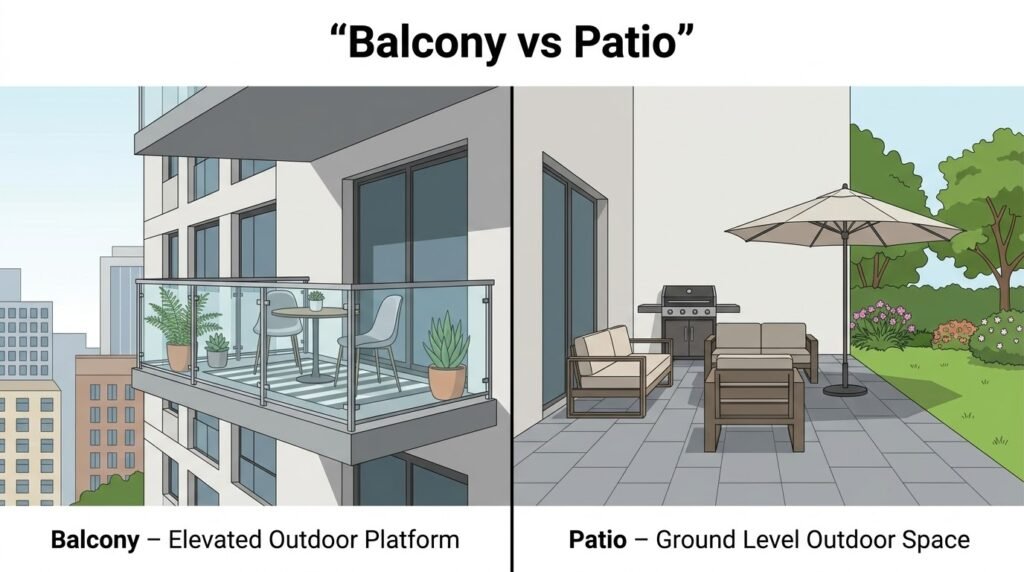
Quick Ans: The key difference between balcony vs patio is location and structure. A balcony is an elevated outdoor platform attached to a building, usually on an upper floor. In contrast, a patio is a ground level outdoor space built in a backyard, garden, or open yard area.
People often search for balcony vs patio when planning outdoor living spaces. Both provide fresh air, sunlight, and a place to relax. However, they are not the same.
A balcony extends from an upper floor of a building. A patio sits directly on the ground. Because of this structural difference, the two spaces serve different purposes.
Apartment residents often enjoy balconies because they provide private outdoor areas without needing a yard. Homeowners usually prefer patios because they offer larger spaces for gatherings, dining, and outdoor activities.
The confusion usually happens when people see outdoor furniture and assume both spaces work the same way. In reality, the design, size, and usage differ significantly.
Understanding balcony vs patio helps homeowners, renters, and property buyers make better decisions. It also helps when designing outdoor areas or improving property value.
This guide explains the differences clearly. You will learn definitions, advantages, disadvantages, examples, common mistakes, and practical exercises.
Quick Answer: Balcony vs Patio
Understanding balcony vs patio becomes easy when you focus on structure and location.
| Feature | Balcony | Patio |
|---|---|---|
| Location | Upper floor attached to building | Ground level outdoor area |
| Structure | Elevated platform | Flat paved surface |
| Size | Usually smaller | Usually larger |
| Access | Through interior room | Through yard or house |
| Common in | Apartments and condos | Houses and gardens |
In simple terms, a balcony is elevated while a patio is built on the ground.
What Is a Balcony?
A balcony is a platform that extends outward from a building above ground level. Access usually comes through a door from a bedroom or living room.
Balconies appear most often in:
- Apartments
- Condominiums
- Hotels
- Multi story homes
Safety railings surround the edges to prevent falls.
Typical Balcony Features
Several features define most balconies:
- Protective railing
- Concrete or metal platform
- Limited floor area
- Direct access from interior rooms
Because balconies sit higher than ground level, they often provide scenic views.
Common Balcony Uses
People use balconies in many practical ways. For example:
- Drinking coffee in the morning
- Growing small plants
- Reading outdoors
- Sitting in fresh air
- Drying clothes
Although space is limited, balconies still create valuable outdoor comfort.
How Balconies Are Built
Construction requires careful structural planning.
The process usually includes:
- Extending a reinforced platform from the building
- Supporting the base with steel or concrete
- Installing safety railings
- Adding durable flooring
Because of safety concerns, balconies must meet strict building codes.
What Is a Patio?
A patio is a paved outdoor space built directly on the ground. Most patios are located in backyards, gardens, or outdoor living areas.
Unlike balconies, patios do not attach to upper floors. Instead, they connect directly to the yard or garden.
Common Patio Materials
Patios can be constructed using different materials such as:
- Concrete
- Natural stone
- Brick
- Pavers
- Outdoor tile
Because they rest on the ground, patios can cover larger areas.
Typical Patio Uses
Patios support many outdoor activities. Popular uses include:
- Outdoor dining
- Barbecue gatherings
- Family relaxation
- Garden seating
- Fire pit areas
These spaces often become the center of backyard entertainment.
How Patios Are Built
Building a patio usually involves several steps.
- Prepare the ground surface
- Level the soil carefully
- Add gravel or sand base
- Install paving materials
- Arrange furniture and decorations
Compared to balconies, patios are easier to expand or redesign.
Key Differences Between Balcony vs Patio
Location
The biggest difference in balcony vs patio is location. A balcony sits above ground level and attaches to a building. A patio remains at ground level within a yard or garden.
Size
Structural limits make balconies smaller. Patios, however, can be designed much larger.
Privacy
Higher placement often gives balconies more privacy. Patios may feel more open unless fences or landscaping provide boundaries.
Views
Elevated positions allow balconies to offer wider views. Patios usually provide views of the yard or garden.
Accessibility
Ground level patios are easier to access. Balconies require interior entry and may involve stairs or elevators.
Advantages and Disadvantages
Balcony Advantages
Balconies offer several benefits:
- Elevated scenic views
- Private outdoor space in apartments
- Compact design for small areas
- No need for yard space
Balcony Disadvantages
Some limitations also exist:
- Limited space
- Weight restrictions
- Structural regulations
- Smaller furniture options
Patio Advantages
Patios provide many practical benefits:
- Larger outdoor space
- Perfect for entertaining guests
- Flexible layout options
- Easy installation of grills and seating
Patio Disadvantages
However, patios also have drawbacks:
- Require outdoor yard space
- Less privacy without fencing
- Potential landscaping maintenance
Therefore, lifestyle and property type influence the choice between balcony vs patio.
Real World Examples
Apartment Living
Urban apartments frequently include balconies. Residents enjoy fresh air without leaving the building.
Suburban Homes
Many suburban houses feature patios. Families use them for outdoor dining and weekend gatherings.
Vacation Resorts
Hotels often provide private balconies with scenic views. At the same time, large patios appear around pools and garden areas.
These examples show how balcony vs patio choices depend on building design and environment.
Regional and Global Usage
Urban Areas
Large cities commonly feature balconies because buildings grow vertically. Outdoor space remains limited at ground level.
Suburban Neighborhoods
Patios appear more often in suburban homes where yards are available.
Global Patterns
Many countries use both features. Dense cities usually prefer balconies, while spacious neighborhoods favor patios.
Housing style therefore influences the balcony vs patio decision worldwide.
Related Concepts and Comparisons
Balcony vs Deck
A deck is elevated like a balcony but usually supported by posts rather than attached directly to the building structure.
Patio vs Porch
A porch attaches to the front of a house and usually includes a roof. Patios are often uncovered and located in the backyard.
Balcony vs Patio vs Deck
| Feature | Balcony | Patio | Deck |
|---|---|---|---|
| Location | Upper floor | Ground level | Elevated |
| Structure | Attached platform | Paved ground area | Raised structure |
| Size | Small | Large | Medium to large |
| Support | Building wall | Ground base | Support posts |
These comparisons clarify the broader outdoor structure differences.
Common Mistakes About Balcony vs Patio
Confusing Balconies With Decks
Some people use these terms interchangeably. Decks rely on support posts, while balconies extend from buildings.
Mislabeling Ground Spaces
Calling every outdoor area a patio creates confusion. True patios are paved ground level surfaces.
Ignoring Weight Limits
Balconies have strict structural limits. Heavy furniture or planters may cause safety risks.
Poor Drainage Planning
Patios require good drainage. Water accumulation can damage paving materials.
Avoiding these mistakes helps maintain safe and functional outdoor spaces.
Beginner to Advanced Design Tips
Beginner Level
Start with simple outdoor furniture. Chairs, small tables, and plants work well.
Intermediate Level
Add outdoor rugs, decorative lighting, and weather resistant seating.
Advanced Level
Consider larger improvements such as:
- Outdoor kitchens
- Fire pits
- Pergolas
- Landscape lighting
These features can transform either space into a relaxing outdoor retreat.
Step By Step Design Scenario
Imagine creating an outdoor relaxation area.
If your home includes a balcony:
- Place compact seating
- Add small planters
- Install railing lights
- Use foldable furniture
If you have a patio:
- Add a dining table
- Place an outdoor grill
- Install a shade umbrella
- Include decorative plants
Both spaces provide outdoor comfort, but the design strategy differs.
Exercises With Answers
Exercise 1
Which structure is elevated in the balcony vs patio comparison?
Answer: Balcony.
Exercise 2
Which outdoor space sits directly on the ground?
Answer: Patio.
Exercise 3
Which space typically supports large gatherings?
Answer: Patio.
Exercise 4
Which outdoor area appears most often in apartments?
Answer: Balcony.
Exercise 5
True or False: Patios are always elevated above ground.
Answer: False.
When Should You Choose Balcony vs Patio?
Choose a balcony if you:
- Live in an apartment or condo
- Want elevated views
- Need a small private outdoor area
Choose a patio if you:
- Own a house with yard space
- Plan outdoor gatherings
- Want room for grills and furniture
Lifestyle, property design, and available space determine the best option.
FAQs About Balcony vs Patio
What is the main difference between balcony vs patio?
A balcony is an elevated platform attached to a building, while a patio is a ground level paved outdoor space.
Is a balcony the same as a patio?
No. In the balcony vs patio comparison, balconies are above ground level, whereas patios sit directly on the ground.
Which is better for apartments, balcony or patio?
Apartments usually benefit from balconies because they provide private outdoor space without needing a yard.
Can a patio be elevated?
No. Elevated outdoor spaces are usually called decks instead of patios.
Do balconies increase property value?
Yes. Balconies often increase property appeal because they provide private outdoor access.
Are patios expensive to build?
Costs depend on materials and size. However, patios generally cost less than elevated structures.
Can you grill on a balcony?
Some buildings allow it, but many restrict grilling for safety reasons.
Which needs more maintenance, balcony or patio?
Patios may require more cleaning and landscaping maintenance.
Are patios better for parties?
Yes. Patios usually offer more space for outdoor gatherings.
Can balconies hold heavy furniture?
Weight limits vary. Always check building guidelines before adding heavy items.
Conclusion
Understanding balcony vs patio helps homeowners and renters choose the right outdoor space. Both provide relaxation, fresh air, and connection to the outdoors. However, their structure and purpose differ significantly.
A balcony extends from an upper floor and creates a private elevated outdoor area. This option works well for apartments and buildings with limited ground space.
A patio sits directly on the ground and usually appears in backyards. Larger space makes patios perfect for entertaining guests, cooking outdoors, and enjoying family gatherings.
Property type often determines the best option. Apartment residents benefit most from balconies. Homeowners with yards typically enjoy patios more.
Thoughtful design can transform either space into a comfortable outdoor retreat. By understanding the differences between balcony vs patio, you can plan outdoor areas that match your lifestyle and property layout.
Discover More:-
- Grizzly vs Gorilla: Size, Strength, Fight Analysis, and Key Differences
- TheraBreath vs Listerine: Differences, Ingredients, Benefits, and Best Mouthwash Guide

Jennifer Collins is a professional grammar expert and language educator at gramtivo.com, specializing in English grammar, writing skills, and language improvement. She holds a Master’s degree in English Language and Literature from a recognized university in the United States. With years of teaching and content development experience, she is dedicated to helping learners improve their communication skills with clear and practical guidance.


Pingback: Blazer vs Trailblazer: Key Differences, Size, Features, and Buying Guide