
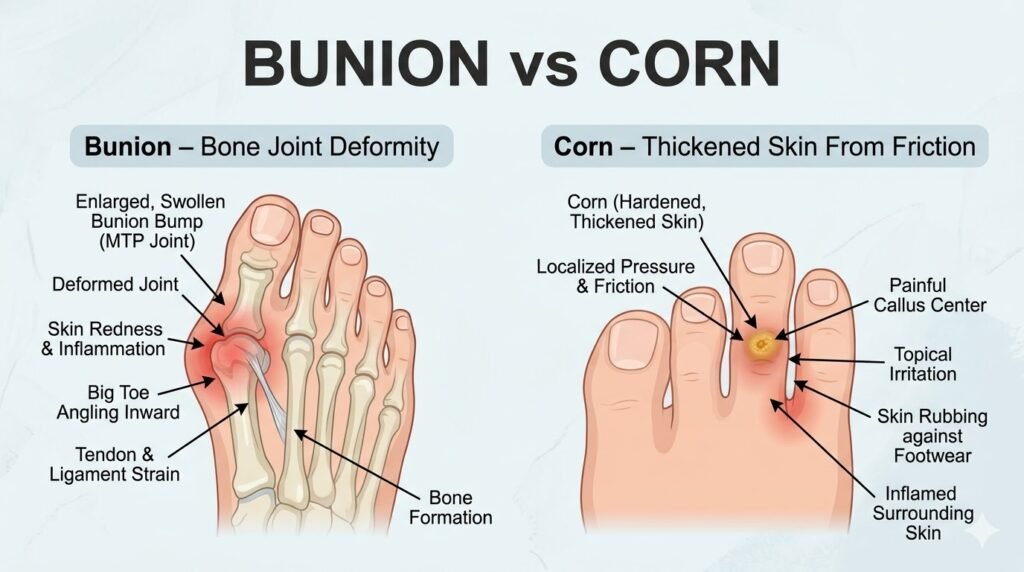
Quick Ans: The main difference between bunion vs corn is the type of foot problem and where it develops. A bunion is a bony bump that forms at the base of the big toe due to joint misalignment, while a corn is a small, hardened area of thick skin caused by repeated friction or pressure. Although both can cause foot pain, their causes, appearance, and treatment are very different.
Foot pain is a common problem for many people. Two conditions often confused are bunion vs corn. At first glance, both may appear as painful bumps on the foot. However, they are completely different issues.
A bunion affects the bone and joint of the big toe. A corn affects the skin. Because of this difference, treatment methods also vary.
Many people misidentify their condition. Some try to treat a bunion like a corn. Others think a corn is a bone problem. As a result, pain may continue or worsen.
Understanding the difference between bunion vs corn helps you choose the correct treatment. It also helps prevent further foot damage.
In this guide, you will learn the definitions, causes, symptoms, advantages and disadvantages of treatments, real world examples, common mistakes, and practical exercises. By the end, you will clearly know how bunions and corns differ and what to do about them.
Quick Answer: Bunion vs Corn
To quickly understand bunion vs corn, focus on the underlying cause.
| Feature | Bunion | Corn |
|---|---|---|
| Type | Bone deformity | Thickened skin |
| Location | Base of big toe joint | Toes or pressure areas |
| Cause | Joint misalignment | Friction or pressure |
| Appearance | Large bony bump | Small hard skin spot |
| Treatment | Footwear change, orthotics, surgery | Padding, removal, footwear change |
In simple terms, a bunion is a bone problem, while a corn is a skin problem.
What Is a Bunion?
A bunion is a bony bump that forms at the base of the big toe joint. The condition develops when the big toe gradually moves toward the second toe.
As the joint shifts out of position, the bone begins to stick out. Over time, swelling and pain may appear around the joint.
Common Symptoms of Bunions
Several symptoms may indicate a bunion:
- Visible bump on the side of the foot
- Pain near the big toe joint
- Redness or swelling
- Difficulty wearing tight shoes
- Limited movement in the big toe
These symptoms may worsen if the bunion grows larger.
Causes of Bunions
Multiple factors contribute to bunion formation:
- Tight or narrow shoes
- Genetic foot structure
- Arthritis
- Foot injuries
- Long periods of standing
Because bunions affect bone alignment, they may slowly worsen over time.
How Bunions Develop
The process usually follows these steps:
- Pressure pushes the big toe inward
- The joint shifts out of alignment
- Bone begins to protrude
- Swelling and pain develop
Early detection helps slow the progression.
What Is a Corn?
A corn is a thickened area of skin that forms due to repeated pressure or friction. The body creates this hardened skin to protect underlying tissue.
Corns commonly appear on:
- Tops of toes
- Between toes
- Soles of the feet
Unlike bunions, corns do not involve bone or joints.
Types of Corns
Several types exist:
- Hard corns on the tops of toes
- Soft corns between toes
- Seed corns on the sole of the foot
Each type forms in response to pressure from footwear or foot movement.
Common Symptoms of Corns
Typical signs include:
- Small hardened skin bump
- Rough or thick skin texture
- Pain when walking or pressing the area
- Tenderness under the skin
Although smaller than bunions, corns can still cause discomfort.
How Corns Form
The formation process usually occurs like this:
- Repeated friction irritates the skin
- Skin thickens for protection
- A small hard core develops
- Pressure causes pain
Proper footwear can often prevent corns.
Key Differences Between Bunion vs Corn
Structure
The most important difference in bunion vs corn involves structure. Bunions affect bones and joints. Corns affect only the skin.
Size
Bunions are typically larger and more visible. Corns are usually small but concentrated.
Cause
Joint misalignment causes bunions. Friction or pressure causes corns.
Pain Source
Bunions pain comes from joint inflammation. Pain from corns results from pressure on thickened skin.
Treatment
Bunions may require medical treatment or surgery. Corns often improve with simple skin care and better footwear.
Advantages and Disadvantages of Treatment Options
Bunion Treatment Advantages
Several treatment options help relieve bunion symptoms:
- Supportive shoes reduce pressure
- Orthotics improve alignment
- Physical therapy increases flexibility
- Surgery can permanently correct severe cases
Bunion Treatment Disadvantages
Some challenges also exist:
- Surgery may require recovery time
- Severe cases can limit mobility
- Conservative treatment may only reduce symptoms
Advantages of Corn Treatment
Corn treatments are usually simple:
- Padding protects the skin
- Proper footwear reduces pressure
- Moisturizing softens hardened skin
- Medical removal can relieve pain quickly
Corn Treatment Disadvantages
However, corns may return if pressure continues. Ignoring footwear issues often leads to recurrence.
Real World Examples
Workplace Scenario
Someone who stands for long hours in tight shoes may develop corns from constant friction.
Genetic Foot Structure
Another person may develop bunions because of inherited foot shape, even with comfortable shoes.
Sports Activities
Athletes sometimes develop corns from repeated shoe pressure during movement.
These examples show how different causes influence bunion vs corn development.
Regional and Global Usage
Lifestyle Factors
Foot conditions vary depending on lifestyle. People who wear narrow fashion shoes may experience bunions more often.
Climate Influence
Hot climates encourage open footwear, which may reduce friction and corns.
Global Health Awareness
Medical awareness about foot care has improved worldwide. Podiatrists now educate patients about prevention and early treatment.
Understanding bunion vs corn helps people worldwide maintain better foot health.
Related Concepts and Comparisons
Corn vs Callus
A callus is a broader area of thick skin. A corn is smaller and more concentrated.
Bunion vs Hammer Toe
Hammer toe involves abnormal bending of a toe joint, while a bunion affects the big toe joint.
Bunion vs Corn vs Callus
| Condition | Type | Cause | Location |
|---|---|---|---|
| Bunion | Bone deformity | Joint misalignment | Big toe joint |
| Corn | Thick skin | Friction | Toes or pressure points |
| Callus | Thick skin | Repeated pressure | Soles or palms |
These comparisons help clarify the bunion vs corn discussion.
Common Mistakes About Bunion vs Corn
Treating a Bunion Like a Corn
Some people attempt to remove bunions using skin treatments. This approach does not work because bunions involve bone structure.
Ignoring Footwear
Tight shoes increase pressure on both bunions and corns. Choosing proper footwear is essential.
Delaying Medical Advice
Severe pain may indicate advanced bunions or infected corns. Professional evaluation prevents complications.
Cutting Corns at Home
Using sharp tools at home can cause infection. Safe treatment should involve proper medical tools or professional care.
Avoiding these mistakes improves foot health and comfort.
Beginner to Advanced Foot Care Tips
Beginner Level
Start with comfortable shoes and proper foot hygiene.
Intermediate Level
Use protective pads and moisturizers to reduce pressure.
Advanced Level
Consider orthotic inserts, physical therapy, or medical consultation for persistent pain.
Consistent care helps prevent both bunions and corns.
Step By Step Prevention Scenario
Imagine someone experiencing foot discomfort.
If the problem is a bunion:
- Choose wide shoes
- Use toe spacers
- Try orthotic inserts
- Consult a podiatrist if pain increases
If the problem is a corn:
- Reduce friction with padding
- Wear properly fitting shoes
- Moisturize the skin
- Remove hardened skin carefully
Correct identification is essential in the bunion vs corn comparison.
Exercises With Answers
Exercise 1
Which condition affects the bone in the bunion vs corn comparison?
Answer: Bunion.
Exercise 2
Which condition is caused by friction on the skin?
Answer: Corn.
Exercise 3
Which condition usually forms near the big toe joint?
Answer: Bunion.
Exercise 4
Which condition appears as a small hardened skin spot?
Answer: Corn.
Exercise 5
True or False: Corns involve bone deformities.
Answer: False.
When Should You Seek Treatment?
Consider medical advice if you experience:
- Severe foot pain
- Difficulty walking
- Persistent swelling
- Signs of infection
Early treatment prevents complications in both bunions and corns.
FAQs About Bunion vs Corn
What is the main difference between bunion vs corn?
A bunion is a bony joint deformity at the base of the big toe, while a corn is a small area of thickened skin caused by friction.
Can a corn turn into a bunion?
No. Corns affect only skin, while bunions involve bone structure.
Which is more painful, bunion or corn?
Both can cause pain. However, bunions may create long term joint discomfort.
Are bunions permanent?
Bunions often remain unless treated medically or surgically.
Can corns be removed easily?
Yes. Proper skin care and reduced pressure can remove many corns.
What shoes help prevent bunions?
Wide toe box shoes help reduce pressure on the big toe joint.
Do corns go away on their own?
Sometimes they improve when pressure is removed.
Should I cut a corn at home?
No. Cutting corns yourself can lead to infection.
Can bunions affect walking?
Yes. Severe bunions may cause pain while walking.
Do bunions require surgery?
Surgery is usually recommended only for severe cases that cause ongoing pain.
Conclusion
Understanding bunion vs corn is important for maintaining healthy feet. Although both conditions cause discomfort, their causes and treatments are completely different.
A bunion develops when the big toe joint becomes misaligned. Over time, this misalignment creates a bony bump and may cause pain while walking. Corns, on the other hand, form when the skin thickens due to repeated friction or pressure.
Proper footwear plays a major role in preventing both conditions. Shoes with wide toe boxes reduce pressure on the toes. Regular foot care also helps prevent thickened skin and irritation.
If symptoms become severe or persistent, medical advice is important. Early treatment can prevent long term complications and improve comfort.
By recognizing the differences between bunion vs corn, you can take the right steps to protect your foot health and stay active.
Discover More:-
- Jeuveau vs Dysport: Key Differences, Results, Cost, and Expert Guide
- Grizzly vs Gorilla: Size, Strength, Fight Analysis, and Key Differences

Jennifer Collins is a professional grammar expert and language educator at gramtivo.com, specializing in English grammar, writing skills, and language improvement. She holds a Master’s degree in English Language and Literature from a recognized university in the United States. With years of teaching and content development experience, she is dedicated to helping learners improve their communication skills with clear and practical guidance.