
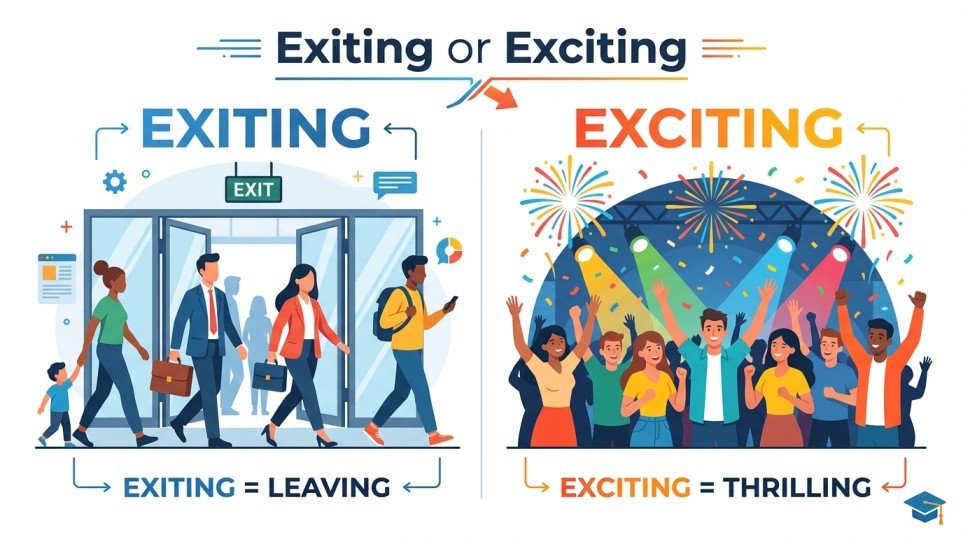
Quick Ans: The difference between exiting or exciting is simple but important. “Exiting” relates to leaving a place, while “exciting” describes something thrilling, fun, or emotionally stimulating. Although the words look similar, they have completely different meanings and uses in English grammar.
Many English learners confuse exiting or exciting because the words look and sound similar. A single missing letter changes the meaning completely. As a result, writers often make spelling mistakes in emails, essays, social media posts, and professional documents.
The word “exiting” comes from the verb “exit,” which means to leave. Meanwhile, “exciting” comes from the verb “excite,” which means to create strong feelings of happiness, interest, or energy.
For example, “The crowd was exiting the stadium” has a very different meaning from “The concert was exciting.”
This small spelling difference can create confusion for readers. In professional writing, mistakes like this may also affect credibility and clarity.
Understanding exiting or exciting helps improve grammar, vocabulary, and communication skills. This guide explains the meanings, examples, differences, common mistakes, and grammar rules in simple language. By the end, you will confidently know when to use each word correctly.
Quick Answer: Exiting or Exciting
The easiest way to understand exiting or exciting is by remembering their meanings.
| Word | Meaning | Example |
|---|---|---|
| Exiting | Leaving a place | People were exiting the mall |
| Exciting | Fun or thrilling | The movie was exciting |
In short:
- Exiting = leaving
- Exciting = thrilling
What Does “Exiting” Mean?
The word exiting comes from the verb “exit.” It refers to leaving a place, building, vehicle, or situation.
Common Uses of Exiting
People use “exiting” in situations involving movement out of something.
Examples include:
- Exiting a room
- Exiting a highway
- Exiting a building
- Exiting a program
- Exiting a vehicle
Example Sentences With Exiting
Here are some examples:
- Students were exiting the classroom quietly.
- Drivers were exiting the highway slowly.
- The audience started exiting the theater after the show.
Each sentence describes someone leaving a location.
Grammar Role of Exiting
“Exiting” is the present participle form of the verb “exit.”
For example:
- He is exiting the building.
- They are exiting through the back door.
Because it functions as a verb form, it often appears with helping verbs like “is,” “are,” and “was.”
What Does “Exciting” Mean?
The word exciting describes something interesting, thrilling, or emotionally stimulating.
Unlike “exiting,” this word relates to feelings and emotions rather than movement.
Common Uses of Exciting
People use “exciting” when talking about:
- Events
- Adventures
- Movies
- Sports
- News
- Experiences
Example Sentences With Exciting
Consider these examples:
- The football game was exciting.
- Traveling to another country feels exciting.
- She shared exciting news with her family.
In each sentence, “exciting” describes something enjoyable or emotionally engaging.
Grammar Role of Exciting
“Exciting” usually functions as an adjective.
For example:
- It was an exciting experience.
- The trip sounds exciting.
Therefore, it commonly describes nouns such as events, stories, or situations.
Key Differences Between Exiting or Exciting
Meaning
The biggest difference between exiting or exciting involves meaning.
- Exiting means leaving.
- Exciting means thrilling or interesting.
Part of Speech
“Exiting” mainly works as a verb form. “Exciting” mainly functions as an adjective.
Usage Context
Use “exiting” for movement out of places. Use “exciting” for emotions, entertainment, or energy.
Memory Trick
A helpful trick can make the difference easier to remember.
- “Exit” exists inside “exiting,” which relates to leaving.
- “Excite” exists inside “exciting,” which relates to excitement.
Advantages of Understanding Exiting or Exciting
Learning the difference offers several benefits.
Better Writing
Correct word choice improves clarity and professionalism.
Stronger Communication
Readers understand your meaning immediately when you use the correct term.
Fewer Grammar Mistakes
Understanding spelling patterns reduces confusion.
Improved Confidence
Knowing the difference helps students and professionals write more confidently.
Common Mistakes About Exiting or Exciting
Using Exiting Instead of Exciting
Many people accidentally write:
- “The party was exiting.”
This sentence is incorrect because parties do not leave buildings.
Correct version:
- “The party was exciting.”
Using Exciting Instead of Exiting
Another common mistake appears in directions or movement descriptions.
Incorrect example:
- “Cars were exciting the parking lot.”
Correct version:
- “Cars were exiting the parking lot.”
Spell Check Dependence
Spell check tools may not catch this mistake because both words are spelled correctly. Therefore, context matters greatly.
Real World Examples
In Business Writing
Correct grammar improves professional communication.
Example:
- Incorrect: “We are exciting the meeting room.”
- Correct: “We are exiting the meeting room.”
In Entertainment Reviews
Writers often use “exciting” when reviewing movies or games.
Example:
- “The final match was exciting from beginning to end.”
In Travel Situations
Airports and highways frequently use the word “exit.”
Example:
- “Passengers were exiting the plane.”
These real world examples show why understanding exiting or exciting matters in daily communication.
Regional and Global Usage
American English
Both “exiting” and “exciting” are common in American English writing and speech.
British English
British English uses the words in the same way. The spelling and grammar remain identical.
English Learning Worldwide
English learners around the world frequently confuse these words because pronunciation sounds similar.
Consequently, teachers often explain them together during vocabulary lessons.
Related Concepts and Comparisons
Boring vs Exciting
“Exciting” is often the opposite of boring.
Example:
- The lecture was boring.
- The concert was exciting.
Entrance vs Exit
“Exiting” connects closely with the word “exit.”
Example:
- Use the entrance to enter.
- Use the exit for exiting.
Exiting vs Leaving
Both words relate to going out of a place. However, “exiting” sounds more formal.
Beginner to Advanced Usage Tips
Beginner Level
Focus on remembering the meanings:
- Exiting = leaving
- Exciting = thrilling
Intermediate Level
Practice using both words in full sentences.
Examples:
- Fans were exiting the stadium.
- The championship game was exciting.
Advanced Level
Read books, articles, and news reports carefully. Pay attention to context and grammar patterns.
Regular practice strengthens vocabulary accuracy.
Step By Step Meaning Comparison
Imagine a concert ending.
People walk out of the building. They are exiting the arena.
At the same time, fans discuss how fun the concert was. They describe it as exciting.
One word describes movement. The other describes emotion.
This comparison makes the difference much easier to understand.
Exercises With Answers
Exercise 1
Choose the correct word:
“The roller coaster ride was very _____.”
Answer: Exciting.
Exercise 2
Choose the correct word:
“People were _____ the building after the fire alarm.”
Answer: Exiting.
Exercise 3
True or False:
“Exciting” means leaving a place.
Answer: False.
Exercise 4
Fill in the blank:
“The players were _____ the field after the match.”
Answer: Exiting.
Exercise 5
Fill in the blank:
“We watched an _____ movie last night.”
Answer: Exciting.
When Should You Use Exiting or Exciting?
Use exiting when talking about:
- Leaving buildings
- Going out of places
- Departing from locations
- Moving away from exits
Use exciting when talking about:
- Fun experiences
- Emotional reactions
- Adventures
- Entertainment
- Interesting news
Choosing the correct word depends entirely on context.
FAQs About Exiting or Exciting
What is the difference between exiting or exciting?
Exiting means leaving a place, while exciting describes something thrilling or interesting.
Is “the movie was exiting” correct?
No. The correct sentence is “the movie was exciting.”
Can exiting describe emotions?
No. Exiting only relates to leaving or going out.
Why do people confuse exiting or exciting?
The words look and sound similar, which causes spelling confusion.
Is exciting an adjective?
Yes. “Exciting” usually functions as an adjective.
Is exiting a verb?
Yes. “Exiting” is the present participle form of the verb “exit.”
What is a simple trick for remembering exiting or exciting?
Remember that “exit” means leaving, while “excite” means creating excitement.
Can spell check catch exiting or exciting mistakes?
Not always. Since both words are real English words, context matters.
Which word should be used for a fun event?
Use “exciting” for enjoyable or thrilling events.
Which word should be used for leaving a building?
Use “exiting” when describing people leaving a place.
Conclusion
Understanding exiting or exciting is important for clear English communication. Although the words look similar, their meanings differ completely.
“Exiting” relates to leaving a place or moving out of a location. Meanwhile, “exciting” describes something fun, interesting, or emotionally stimulating.
Many learners confuse these words because only one letter changes. However, context makes the difference clear. If the sentence involves movement, use “exiting.” If it involves emotion or enjoyment, use “exciting.”
Correct usage improves grammar, writing quality, and professional communication. It also helps avoid embarrassing mistakes in emails, school assignments, and conversations.
With regular practice and careful reading, distinguishing between exiting or exciting becomes easy. Remember the simple rule: exiting means leaving, while exciting means thrilling.
Discover More:-
- Nikon or Canon: Differences, Camera Comparison, and Buying Guide
- Anterolisthesis vs Spondylolisthesis: Key Differences, Symptoms, and Treatment Guide

Jennifer Collins is a professional grammar expert and language educator at gramtivo.com, specializing in English grammar, writing skills, and language improvement. She holds a Master’s degree in English Language and Literature from a recognized university in the United States. With years of teaching and content development experience, she is dedicated to helping learners improve their communication skills with clear and practical guidance.