
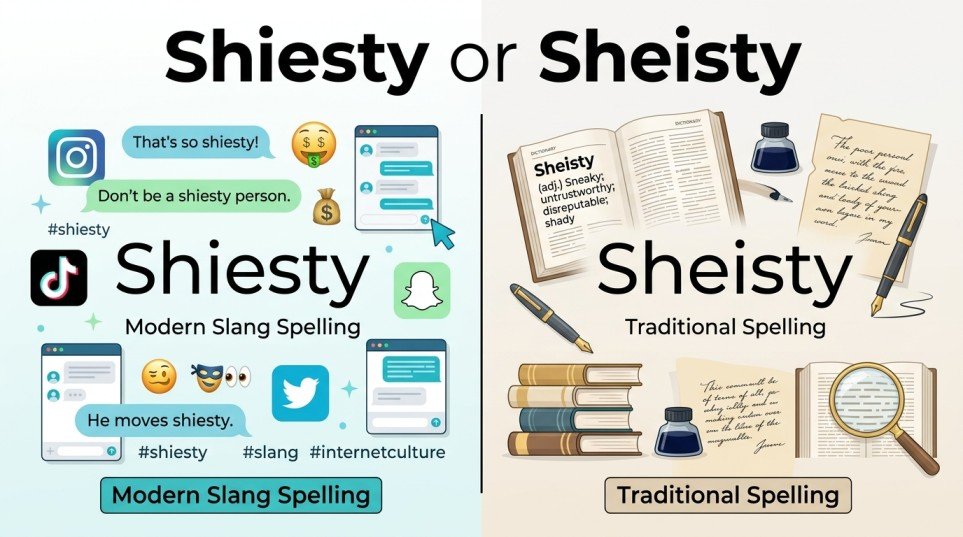
Quick Ans: The main difference between shiesty or sheisty is spelling accuracy and usage style. “Shiesty” is the more common modern slang spelling used online and in pop culture, while “sheisty” is the traditional spelling linked to the word “shyster,” meaning dishonest or untrustworthy. Both usually describe someone acting shady, sneaky, or suspicious.
Many people search for shiesty or sheisty because the words sound exactly the same. Social media, music, texting, and online slang have made the confusion even bigger.
One person writes “sheisty.” Another writes “shiesty.” Both seem correct. As a result, many writers wonder which spelling should actually be used.
The issue becomes more confusing because dictionaries, slang culture, and internet trends do not always agree. Traditional English sources usually recognize “sheisty.” However, modern slang and hip hop culture often prefer “shiesty.”
Understanding the difference matters for writing, texting, social media posts, and professional communication. Using the wrong spelling in formal writing can appear incorrect. On the other hand, slang communities may prefer the newer version.
This guide explains everything about shiesty or sheisty in simple language. You will learn meanings, spelling history, examples, common mistakes, regional usage, grammar tips, and real world scenarios.
Quick Answer: Shiesty or Sheisty
The quickest way to understand shiesty or sheisty is this:
| Word | Meaning | Common Usage |
|---|---|---|
| Shiesty | Slang spelling | Social media, music, texting |
| Sheisty | Traditional spelling | Dictionaries, older usage |
Both words describe someone who acts:
- Dishonest
- Sneaky
- Suspicious
- Untrustworthy
Today, “shiesty” appears more often in online slang and pop culture.
What Does Shiesty Mean?
The word shiesty describes someone acting shady, dishonest, sneaky, or suspicious. It is commonly used in casual conversation and internet slang.
For example:
- “That deal sounds shiesty.”
- “He acted shiesty during the negotiation.”
The word often refers to behavior that feels manipulative or untrustworthy.
Common Situations Where People Use Shiesty
People frequently use the slang term in situations involving:
- Bad business deals
- Suspicious behavior
- Manipulation
- Scams
- Dishonest actions
Because the word sounds informal, it appears mostly in casual communication.
Modern Popularity of Shiesty
Social media greatly increased the popularity of “shiesty.” Music culture also helped spread the spelling.
Platforms where the term appears often include:
- TikTok
- X
- YouTube comments
- Rap lyrics
As internet slang evolved, “shiesty” became the dominant modern spelling in many online spaces.
What Does Sheisty Mean?
The word sheisty has the same meaning as “shiesty.” However, this spelling is considered more traditional.
The term likely developed from the older English word “shyster,” which describes a dishonest person, especially in business or law.
Traditional Meaning
“Sheisty” usually describes someone who is:
- Deceptive
- Sneaky
- Dishonest
- Unethical
For instance:
- “That company uses sheisty tactics.”
- “Her behavior seemed sheisty.”
Although less common online today, the spelling still appears in writing and speech.
Historical Background
The older root word “shyster” dates back many years in American English. Over time, slang pronunciation changed the spelling into “sheisty” and later “shiesty.”
Consequently, both versions now exist side by side.
Key Differences Between Shiesty or Sheisty
Spelling Style
The biggest difference in shiesty or sheisty is spelling preference.
- “Shiesty” appears more in internet slang.
- “Sheisty” appears more in traditional English usage.
Popular Culture Influence
Modern rap music and online culture strongly favor “shiesty.”
Meanwhile, older speakers and dictionaries may still prefer “sheisty.”
Formal vs Informal Use
“Sheisty” may look slightly more acceptable in traditional writing. In contrast, “shiesty” feels highly informal and slang based.
Pronunciation
Interestingly, both spellings are pronounced exactly the same way:
“SHY stee”
Because pronunciation does not change, confusion remains common.
Advantages and Disadvantages
Advantages of Using “Shiesty”
- Popular online
- Recognized in modern slang
- Common in youth culture
- Frequently used on social media
Disadvantages of Using “Shiesty”
- Looks informal
- May appear incorrect in academic writing
- Not always recognized by dictionaries
Advantages of Using “Sheisty”
- Closer to traditional spelling
- More accepted in standard English contexts
- Easier to connect with the word “shyster”
Disadvantages of Using “Sheisty”
- Less common online today
- May appear outdated to younger audiences
Therefore, choosing between shiesty or sheisty depends on audience and context.
Real World Examples
Social Media Example
Someone posts:
- “That seller seems shiesty.”
This version feels modern and slang heavy.
Workplace Example
A professional review might say:
- “The company used sheisty business practices.”
Here, the traditional spelling may feel more appropriate.
Conversation Example
Friends may casually say:
- “That was a shiesty move.”
In spoken English, listeners usually understand both spellings the same way.
Regional and Global Usage
United States Usage
In the United States, both spellings appear often. However, younger audiences strongly favor “shiesty.”
Online Slang Communities
Internet communities almost always use “shiesty.” Social media trends helped normalize this spelling.
Traditional English Contexts
Formal editors and older publications may still lean toward “sheisty.”
As language evolves, spelling preferences continue changing.
Related Concepts and Comparisons
Shiesty vs Shady
“Shady” usually means suspicious or questionable. “Shiesty” often suggests dishonesty or manipulation.
Sheisty vs Sneaky
Sneaky behavior may simply involve secrecy. Sheisty behavior usually implies unethical intent.
Shiesty vs Scammer
A scammer commits fraud directly. A shiesty person may simply behave dishonestly or suspiciously.
Understanding these related words helps clarify the meaning of shiesty or sheisty.
Common Mistakes About Shiesty or Sheisty
Assuming One Spelling Is Completely Wrong
Both spellings exist in modern English usage. Context determines which works better.
Using the Word in Formal Academic Writing
These terms are slang or informal expressions. Professional alternatives may work better in formal documents.
Confusing Pronunciation
Some people incorrectly pronounce the word as “SHEE stee.” The common pronunciation is “SHY stee.”
Overusing Slang
Using “shiesty” too often in professional communication can reduce clarity and professionalism.
Avoiding these mistakes improves writing quality.
Beginner to Advanced Writing Tips
Beginner Level
Use “shiesty” in casual texting and social media.
Intermediate Level
Choose spelling based on audience. Use “sheisty” for more traditional readers.
Advanced Level
Consider replacing slang with professional alternatives such as:
- Dishonest
- Suspicious
- Manipulative
- Unethical
These choices improve clarity in formal writing.
Step By Step Usage Scenario
Imagine you are writing a message about a suspicious deal.
For casual texting:
- “That guy sounds shiesty.”
For professional writing:
- “The business practices appeared dishonest.”
Semi formal discussion:
- “The contract terms seemed sheisty.”
Choosing the right version depends on audience and tone.
Exercises With Answers
Exercise 1
Which spelling appears more commonly in modern internet slang?
Answer: Shiesty.
Exercise 2
Which spelling is more traditional?
Answer: Sheisty.
Exercise 3
Do “shiesty” and “sheisty” have different meanings?
Answer: No.
Exercise 4
Which pronunciation is correct?
Answer: “SHY stee.”
Exercise 5
True or False: “Shiesty” is commonly used in social media slang.
Answer: True.
When Should You Use Shiesty or Sheisty?
Use “shiesty” when:
- Writing casually online
- Posting on social media
- Texting friends
- Using modern slang
Use “sheisty” when:
- Writing for traditional audiences
- Using semi formal language
- Referring to older English slang styles
Audience and tone should guide your choice.
FAQs About Shiesty or Sheisty
What is the difference between shiesty or sheisty?
The difference is mainly spelling style. “Shiesty” is modern slang, while “sheisty” is the traditional form.
Which spelling is correct, shiesty or sheisty?
Both spellings are used today. However, “shiesty” is more popular online.
What does shiesty mean in slang?
It describes someone acting dishonest, shady, sneaky, or suspicious.
Is sheisty a real word?
Yes. “Sheisty” has existed for years and connects to the older word “shyster.”
Why do people spell it shiesty now?
Internet slang, music culture, and social media increased the popularity of the “shiesty” spelling.
How do you pronounce shiesty or sheisty?
Both are pronounced “SHY stee.”
Can you use shiesty in professional writing?
It is better to avoid slang in formal writing. Professional alternatives often work better.
Is shiesty considered rude?
It can sound insulting because it describes dishonest behavior.
What is another word for shiesty?
Possible alternatives include shady, dishonest, suspicious, manipulative, or sneaky.
Which spelling is more popular today?
“Shiesty” is currently more common in internet culture and modern slang usage.
Conclusion
Understanding shiesty or sheisty becomes easier once you know the difference is mostly about spelling style and cultural usage. Both words describe dishonest, shady, or suspicious behavior.
Modern slang communities strongly prefer “shiesty.” Social media, music, and texting helped this spelling become extremely popular. Meanwhile, “sheisty” remains connected to traditional English usage and the older word “shyster.”
Context matters when choosing which version to use. Casual online conversations often favor “shiesty.” Traditional or semi formal writing may look cleaner with “sheisty” or even more professional alternatives.
Language changes constantly, especially online. Because of this, both spellings continue to appear in everyday communication.
By understanding the meaning, history, and usage of shiesty or sheisty, you can choose the right spelling confidently for any audience or situation.
Discover More:-
- Cake or Death Meaning: Origin, Humor, and Popular Usage Explained
- Hemsworth or Pratt: Comparing Acting Style, Movies, and Hollywood Success

Robert Mitchell is a U.S.-based writer at Gramtivo.Com who focuses on grammar, writing improvement, and language-related content. He holds a degree in English and Linguistics from a U.S. university. His work aims to help readers enhance their writing skills with clear and practical guidance.