
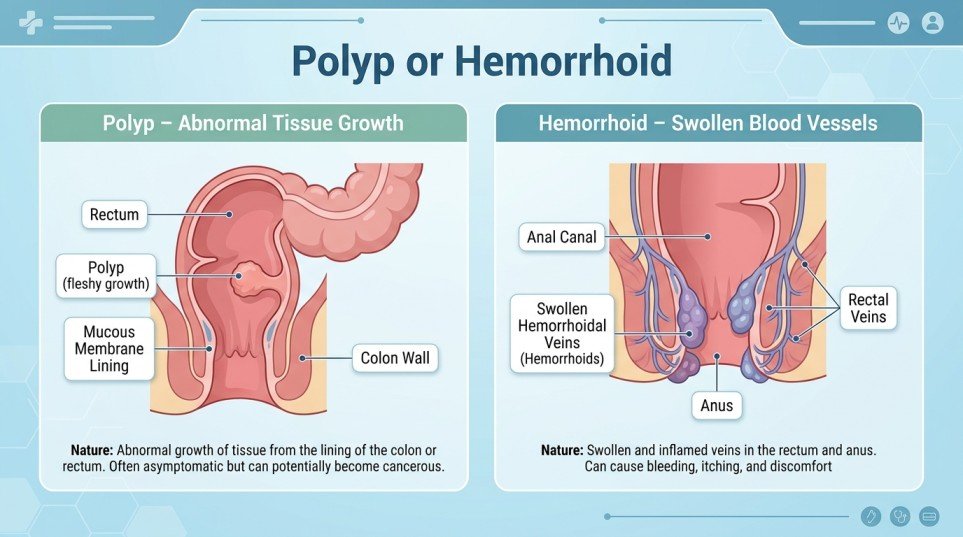
Quick Ans: The main difference between a polyp or hemorrhoid is where the growth develops and what causes it. A polyp is an abnormal tissue growth inside the colon or rectum, while a hemorrhoid is a swollen vein in the rectum or anus. Although both can cause rectal discomfort or bleeding, they are very different medical conditions.
Many people become worried when they notice rectal bleeding or discomfort. As a result, they often search for polyp or hemorrhoid to understand what might be causing the problem.
At first, the two conditions can seem similar. Both may involve bleeding during bowel movements. Both can affect the rectal area. In some cases, symptoms overlap enough to create confusion.
However, important differences exist.
A hemorrhoid involves swollen blood vessels. A polyp, on the other hand, is extra tissue growth inside the colon or rectum. Some polyps are harmless, but others can become cancerous over time. Because of this risk, understanding the difference matters.
Many people assume rectal bleeding always comes from hemorrhoids. Unfortunately, that assumption can delay medical care when a polyp or another condition is present.
This guide explains polyp or hemorrhoid in simple language. You will learn definitions, symptoms, causes, diagnosis methods, treatment options, common mistakes, and practical examples. By the end, you will better understand when to seek medical attention.
Quick Answer: Polyp or Hemorrhoid
The easiest way to understand polyp or hemorrhoid is by looking at what each condition actually is.
| Feature | Polyp | Hemorrhoid |
|---|---|---|
| What It Is | Abnormal tissue growth | Swollen blood vessel |
| Location | Colon or rectum lining | Rectum or anus |
| Cancer Risk | Some types may become cancerous | Not cancerous |
| Common Symptoms | Bleeding, bowel changes | Pain, itching, swelling |
| Treatment | Monitoring or removal | Lifestyle changes or procedures |
In simple terms, a polyp is tissue growth, while a hemorrhoid is a swollen vein.
What Is a Polyp?
A polyp is an abnormal growth of tissue that develops on the lining of the colon or rectum. Most polyps are small, but some can grow larger over time.
Polyps can appear in different shapes:
- Flat
- Raised
- Mushroom shaped
- Clustered
Many polyps do not cause symptoms early on. Therefore, people often discover them during colonoscopy screenings.
Common Types of Polyps
Several types of polyps exist.
Adenomatous Polyps
These are important because some may develop into colorectal cancer over time.
Hyperplastic Polyps
These are usually small and less likely to become cancerous.
Serrated Polyps
Some serrated polyps may carry cancer risk depending on size and location.
Common Symptoms of Polyps
Symptoms may include:
- Rectal bleeding
- Blood in stool
- Changes in bowel habits
- Constipation or diarrhea
- Abdominal discomfort
However, many people experience no symptoms at all.
Causes of Polyps
Several factors increase risk:
- Aging
- Family history
- Smoking
- Obesity
- Poor diet
- Lack of exercise
Because of these risks, regular screenings become very important after age 45.
What Is a Hemorrhoid?
A hemorrhoid is a swollen vein located in the rectum or anus. Hemorrhoids are extremely common and usually not dangerous.
There are two main types.
Internal Hemorrhoids
These develop inside the rectum. They may bleed but often cause little pain.
External Hemorrhoids
These form under the skin around the anus. They can become painful or itchy.
Common Symptoms of Hemorrhoids
Symptoms often include:
- Bright red bleeding
- Itching
- Swelling
- Pain during bowel movements
- Lump near the anus
Unlike polyps, hemorrhoids commonly cause irritation and discomfort.
Causes of Hemorrhoids
Several conditions increase pressure on rectal veins:
- Straining during bowel movements
- Chronic constipation
- Pregnancy
- Sitting too long
- Heavy lifting
- Obesity
Because pressure plays a major role, lifestyle habits strongly affect hemorrhoid development.
Key Differences Between Polyp or Hemorrhoid
Structure
A polyp is abnormal tissue growth. A hemorrhoid is a swollen blood vessel.
Cancer Risk
Some polyps may become cancerous. Hemorrhoids do not turn into cancer.
Pain Level
Hemorrhoids often cause pain or itching. Polyps usually do not hurt unless complications occur.
Location
Polyps grow inside the colon or rectum lining. Hemorrhoids affect veins in the anus or rectum.
Discovery
Doctors often discover polyps during colonoscopy screenings. Hemorrhoids may be visible during physical examination.
Symptoms Comparison Table
| Symptom | Polyp | Hemorrhoid |
|---|---|---|
| Rectal bleeding | Common | Common |
| Itching | Rare | Common |
| Pain | Rare | Common |
| Swelling | Rare | Common |
| Bowel habit changes | Common | Less common |
| Cancer concern | Possible | No |
This table helps simplify the polyp or hemorrhoid comparison.
Advantages and Disadvantages of Early Detection
Benefits of Early Polyp Detection
Early detection offers several important benefits:
- Prevents possible cancer development
- Allows easier removal
- Improves long term health outcomes
Challenges With Polyps
Some challenges include:
- Symptoms may not appear early
- Colonoscopy preparation can feel uncomfortable
- Follow up screenings may be necessary
Benefits of Early Hemorrhoid Treatment
Treating hemorrhoids early can:
- Reduce discomfort
- Prevent worsening symptoms
- Improve bowel movement comfort
Challenges With Hemorrhoids
Problems may include:
- Recurring symptoms
- Lifestyle changes required
- Embarrassment discussing symptoms
Because symptoms overlap, proper diagnosis matters greatly.
Real World Examples
Example 1: Rectal Bleeding
A person notices blood on toilet paper. They assume hemorrhoids are causing the issue. Later, a colonoscopy reveals a colon polyp instead.
This example shows why medical evaluation is important.
Example 2: Pain and Itching
Another person experiences itching and a painful lump near the anus. In this case, hemorrhoids are more likely.
Example 3: Routine Screening
Someone without symptoms gets a routine colonoscopy after age 45. Doctors discover and remove small polyps before they become dangerous.
These situations highlight the importance of understanding polyp or hemorrhoid symptoms correctly.
Regional and Global Usage
Worldwide Screening Efforts
Many countries now encourage colon cancer screening because colorectal cancer rates continue to rise.
Lifestyle Factors
Low fiber diets and inactive lifestyles contribute to both hemorrhoids and colorectal problems worldwide.
Medical Awareness
Doctors globally encourage people not to ignore rectal bleeding. Early testing can prevent serious disease.
As awareness improves, more people understand the difference between polyp or hemorrhoid.
Related Concepts and Comparisons
Polyp vs Colon Cancer
Not all polyps become cancerous. However, some types may develop into colorectal cancer over time.
Hemorrhoid vs Anal Fissure
An anal fissure is a small tear in the skin near the anus. Unlike hemorrhoids, fissures often cause sharp pain during bowel movements.
Polyp or Hemorrhoid vs Colon Cancer
| Condition | Cancer Risk | Common Pain | Bleeding |
|---|---|---|---|
| Polyp | Possible | Rare | Common |
| Hemorrhoid | No | Common | Common |
| Colon Cancer | Serious concern | Possible | Common |
Understanding related conditions helps avoid confusion.
Common Mistakes About Polyp or Hemorrhoid
Assuming All Bleeding Comes From Hemorrhoids
Many people ignore bleeding because they believe hemorrhoids are harmless. Unfortunately, polyps or colorectal cancer can also cause bleeding.
Avoiding Colonoscopy
Fear of testing prevents some people from getting screened. Early detection, however, saves lives.
Ignoring Family History
People with relatives who had colon cancer face higher risk for certain polyps.
Self Diagnosing Online
Internet searches help educate people, but proper diagnosis requires medical evaluation.
Avoiding these mistakes can improve long term health outcomes.
Beginner to Advanced Prevention Tips
Beginner Level
Simple lifestyle changes can reduce risk:
- Drink more water
- Eat more fiber
- Exercise regularly
Intermediate Level
Additional prevention strategies include:
- Reducing processed foods
- Maintaining healthy weight
- Avoiding smoking
Advanced Level
People with higher risk may need:
- Regular colonoscopy screenings
- Genetic counseling
- Personalized medical monitoring
These steps help lower risks associated with both conditions.
Step By Step Medical Evaluation Scenario
Imagine someone notices rectal bleeding.
A doctor may follow these steps:
- Review symptoms and medical history
- Perform physical examination
- Check for hemorrhoids
- Recommend colonoscopy if necessary
- Remove suspicious polyps for testing
This process helps determine whether the issue involves polyp or hemorrhoid or another condition entirely.
Exercises With Answers
Exercise 1
Which condition involves swollen veins?
Answer: Hemorrhoid.
Exercise 2
Which condition may carry cancer risk?
Answer: Certain polyps.
Exercise 3
Which symptom commonly appears with hemorrhoids?
Answer: Itching.
Exercise 4
Which test commonly detects colon polyps?
Answer: Colonoscopy.
Exercise 5
True or False: Hemorrhoids become colon cancer.
Answer: False.
When Should You See a Doctor?
Seek medical attention if you experience:
- Persistent rectal bleeding
- Sudden bowel habit changes
- Severe pain
- Unexplained weight loss
- Blood mixed into stool
Even when symptoms seem minor, medical evaluation is important.
FAQs About Polyp or Hemorrhoid
What is the main difference between polyp or hemorrhoid?
A polyp is abnormal tissue growth inside the colon or rectum, while a hemorrhoid is a swollen blood vessel near the anus or rectum.
Can hemorrhoids turn into cancer?
No. Hemorrhoids do not become cancerous.
Are colon polyps dangerous?
Some colon polyps can develop into colorectal cancer over time if not removed.
Can polyps cause rectal bleeding?
Yes. Rectal bleeding is a common symptom of certain colon or rectal polyps.
Do hemorrhoids always hurt?
Not always. Internal hemorrhoids may bleed without causing pain.
How are polyps diagnosed?
Doctors usually diagnose polyps through colonoscopy screening.
Can hemorrhoids go away naturally?
Mild hemorrhoids often improve with diet, hydration, and lifestyle changes.
Should I worry about blood in stool?
Yes. Blood in stool should always be evaluated by a healthcare professional.
What age should colonoscopy screening start?
Most guidelines recommend screening starting around age 45 for average risk adults.
Can someone have both a polyp and hemorrhoid at the same time?
Yes. A person may experience both conditions simultaneously.
Conclusion
Understanding polyp or hemorrhoid is important because the two conditions may share symptoms while requiring very different medical approaches.
A hemorrhoid involves swollen veins and usually causes itching, pain, or mild bleeding. Although uncomfortable, hemorrhoids are generally not dangerous.
Polyps, however, involve abnormal tissue growth inside the colon or rectum. Some remain harmless, but others may eventually become cancerous. Because symptoms are not always obvious, routine screening plays a major role in prevention.
Ignoring rectal bleeding can delay diagnosis and treatment. Therefore, anyone experiencing ongoing symptoms should speak with a healthcare professional.
Healthy habits such as eating more fiber, exercising regularly, and attending recommended screenings can lower risks associated with both conditions.
By understanding the differences between polyp or hemorrhoid, people can make informed decisions about their health and seek medical care when necessary.
Discover More:-

Robert Mitchell is a U.S.-based writer at Gramtivo.Com who focuses on grammar, writing improvement, and language-related content. He holds a degree in English and Linguistics from a U.S. university. His work aims to help readers enhance their writing skills with clear and practical guidance.