
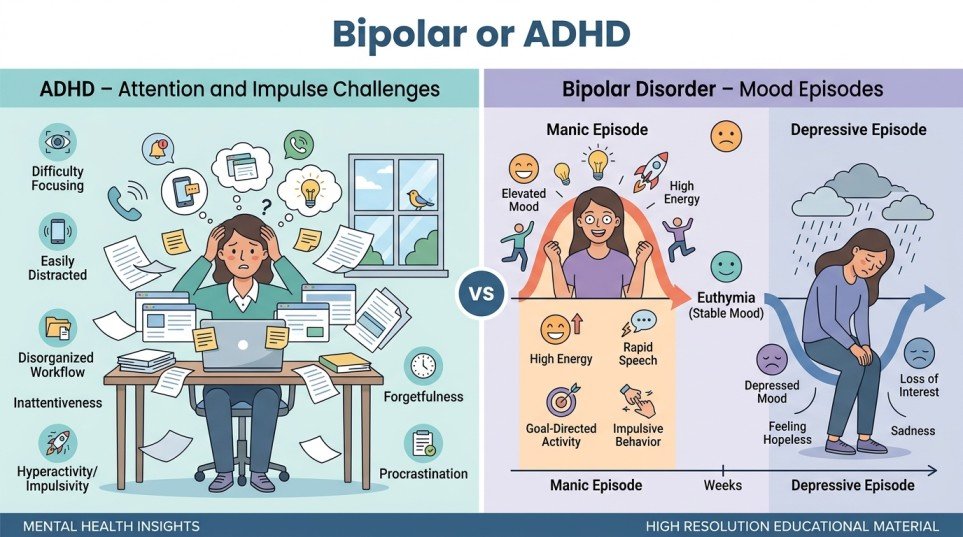
Quick Ans: The main difference between bipolar or ADHD is how symptoms appear over time. ADHD usually causes ongoing problems with attention, focus, and impulsive behavior, while bipolar disorder involves distinct mood episodes that shift between emotional highs and lows. Although some symptoms overlap, the two conditions affect the brain in different ways.
Many people become confused when comparing bipolar or ADHD because the symptoms can look similar. Both conditions may involve impulsive behavior, restlessness, emotional struggles, and difficulty concentrating. As a result, people sometimes mistake one condition for the other.
However, they are not the same.
ADHD, or Attention Deficit Hyperactivity Disorder, mainly affects attention, focus, organization, and impulse control. Bipolar disorder is primarily a mood disorder that causes episodes of depression and mania or hypomania.
The confusion often happens because both conditions can affect work, school, relationships, and daily routines. For example, someone with ADHD may appear energetic and distracted. Likewise, a person experiencing mania in bipolar disorder may also seem restless and impulsive.
Understanding the difference between bipolar or ADHD is important because treatment approaches are different. Proper diagnosis can improve emotional health, relationships, productivity, and overall quality of life.
This guide explains symptoms, causes, similarities, differences, treatments, examples, and common misunderstandings in simple language.
Quick Answer: Bipolar or ADHD
To quickly understand bipolar or ADHD, focus on symptom patterns.
| Feature | ADHD | Bipolar Disorder |
|---|---|---|
| Main Issue | Attention and impulse control | Mood episodes |
| Symptom Pattern | Constant and ongoing | Episodic and cyclical |
| Common Symptoms | Distractibility, hyperactivity | Mania, depression |
| Emotional Changes | Fast reactions | Extreme mood swings |
| Typical Start | Childhood | Teen or adult years |
In simple terms, ADHD symptoms are usually continuous, while bipolar disorder symptoms appear in episodes.
What Is ADHD?
ADHD stands for Attention Deficit Hyperactivity Disorder. It is a neurodevelopmental condition that affects focus, self control, organization, and activity levels.
People with ADHD may struggle to:
- Stay focused
- Finish tasks
- Follow instructions
- Control impulses
- Sit still for long periods
Although ADHD often begins in childhood, many adults continue experiencing symptoms later in life.
Common Types of ADHD
There are three main ADHD types:
- Inattentive type
- Hyperactive impulsive type
- Combined type
Each type affects people differently.
Common ADHD Symptoms
Symptoms may include:
- Forgetfulness
- Poor concentration
- Frequent interruptions
- Restlessness
- Difficulty organizing tasks
- Losing items regularly
These symptoms usually remain consistent over time rather than appearing in separate episodes.
What Is Bipolar Disorder?
Bipolar disorder is a mental health condition that causes major shifts in mood, energy, and activity levels.
People with bipolar disorder experience emotional highs called mania or hypomania along with periods of depression.
Types of Bipolar Disorder
The main forms include:
- Bipolar I Disorder
- Bipolar II Disorder
- Cyclothymic Disorder
Each type varies in symptom severity and duration.
Common Bipolar Symptoms
During manic or hypomanic episodes, symptoms may include:
- Extremely high energy
- Rapid speech
- Reduced need for sleep
- Risky behavior
- Racing thoughts
During depressive episodes, symptoms may include:
- Sadness
- Fatigue
- Loss of interest
- Hopelessness
- Low motivation
Unlike ADHD, bipolar symptoms tend to appear in cycles or episodes.
Key Differences Between Bipolar or ADHD
Symptom Timing
The biggest difference between bipolar or ADHD involves timing.
ADHD symptoms are usually ongoing and present most days. Bipolar disorder symptoms appear in mood episodes that may last days, weeks, or months.
Mood Changes
People with ADHD may become frustrated quickly. However, bipolar disorder causes more intense mood shifts involving mania or depression.
Sleep Patterns
ADHD may cause irregular sleep habits due to restlessness. Bipolar mania often reduces the need for sleep completely.
Energy Levels
ADHD can create constant hyperactivity. Bipolar disorder causes dramatic changes in energy depending on mood episodes.
Attention Problems
Both conditions affect concentration. However, ADHD causes chronic attention difficulties, while bipolar attention issues often appear during mood episodes.
Similarities Between Bipolar and ADHD
Several symptoms overlap, which explains why diagnosis can sometimes be difficult.
Shared symptoms include:
- Impulsivity
- Restlessness
- Fast talking
- Difficulty concentrating
- Emotional reactions
- Sleep problems
Because of these similarities, doctors carefully evaluate symptom history before making a diagnosis.
Advantages and Challenges
ADHD Strengths
Some people with ADHD may experience:
- Creativity
- High energy
- Fast thinking
- Strong curiosity
- Ability to multitask in exciting situations
ADHD Challenges
Difficulties may include:
- Poor organization
- Missed deadlines
- Relationship stress
- Academic struggles
Bipolar Strengths
During stable periods, some people report:
- Creativity
- Passion
- Strong motivation
- Emotional depth
Bipolar Challenges
Challenges may involve:
- Severe mood swings
- Risky decisions during mania
- Depression related isolation
- Sleep disruption
Understanding these strengths and challenges helps explain the real life impact of bipolar or ADHD.
Real World Examples
Example of ADHD
A student starts homework but quickly becomes distracted by social media, television, or unrelated thoughts. Even when trying hard, staying focused feels difficult every day.
Example of Bipolar Disorder
An adult suddenly feels unusually energetic for several days, sleeps very little, spends money impulsively, and talks rapidly. Weeks later, severe depression follows.
These examples show how symptom patterns differ.
Regional and Global Awareness
Childhood Diagnosis
ADHD is often diagnosed during childhood because teachers and parents notice attention difficulties early.
Adult Diagnosis
Bipolar disorder frequently appears during teenage years or adulthood when mood episodes become more obvious.
Worldwide Recognition
Mental health awareness has improved globally. Even so, many people still misunderstand the difference between bipolar or ADHD.
Related Concepts and Comparisons
Anxiety vs ADHD
Anxiety causes excessive worry and fear. ADHD mainly affects attention and impulse control.
Depression vs Bipolar Disorder
Depression involves low mood without mania. Bipolar disorder includes both depression and manic episodes.
Bipolar vs ADHD vs Anxiety
| Feature | ADHD | Bipolar Disorder | Anxiety |
|---|---|---|---|
| Main Issue | Focus and impulsivity | Mood episodes | Fear and worry |
| Symptom Pattern | Ongoing | Cyclical | Situational or chronic |
| Energy Levels | Restless | High or low extremes | Tense or nervous |
| Sleep Problems | Common | Very common | Common |
These comparisons help clarify overlapping mental health symptoms.
Common Mistakes About Bipolar or ADHD
Assuming Hyperactivity Means Bipolar Disorder
Hyperactivity alone does not indicate bipolar disorder. ADHD commonly causes restlessness and impulsive behavior.
Ignoring Mood Episodes
Bipolar disorder involves clear mood changes over time. Missing these patterns can lead to incorrect diagnosis.
Self Diagnosing Online
Reading symptom lists online cannot replace professional evaluation.
Overlooking Coexisting Conditions
Some people have both ADHD and bipolar disorder at the same time. Therefore, diagnosis may become more complex.
Avoiding these mistakes improves treatment accuracy.
Beginner to Advanced Understanding
Beginner Level
Learn the basic symptoms of each condition and observe how they differ.
Intermediate Level
Track symptom timing, emotional patterns, sleep habits, and energy changes.
Advanced Level
Understand how brain chemistry, genetics, and treatment approaches influence both disorders.
The more knowledge people gain, the easier it becomes to recognize important differences.
Treatment Approaches
ADHD Treatment
Common ADHD treatments include:
- Behavioral therapy
- Organization strategies
- School accommodations
- Stimulant or non stimulant medication
Bipolar Disorder Treatment
Treatment often includes:
- Mood stabilizers
- Therapy
- Sleep management
- Routine building
- Stress reduction
Because treatments differ, proper diagnosis matters greatly.
Step By Step Symptom Comparison
Imagine two people struggling with focus.
Person A has difficulty concentrating every day since childhood. Forgetfulness and impulsive behavior remain constant over time.
Person B suddenly experiences periods of intense energy, reduced sleep, risky behavior, and emotional highs followed by depression.
Person A may have ADHD. Person B may have bipolar disorder.
This comparison highlights how symptom patterns differ between bipolar or ADHD.
Exercises With Answers
Exercise 1
Which condition mainly involves mood episodes?
Answer: Bipolar disorder.
Exercise 2
Which condition usually begins during childhood?
Answer: ADHD.
Exercise 3
True or False: ADHD symptoms typically appear in cycles.
Answer: False.
Exercise 4
Which condition may involve mania and depression?
Answer: Bipolar disorder.
Exercise 5
Which condition mainly affects focus and impulse control?
Answer: ADHD.
When Should You Seek Professional Help?
Consider professional evaluation if symptoms:
- Affect school or work
- Harm relationships
- Disrupt sleep regularly
- Cause risky behavior
- Create emotional distress
Mental health professionals can assess symptom history and provide proper treatment plans.
FAQs About Bipolar or ADHD
What is the biggest difference between bipolar or ADHD?
The biggest difference is symptom pattern. ADHD symptoms are ongoing, while bipolar disorder involves mood episodes.
Can ADHD look like bipolar disorder?
Yes. Both conditions may involve impulsivity, restlessness, and concentration problems.
Can someone have both bipolar disorder and ADHD?
Yes. Some individuals experience both conditions together.
Which condition affects mood more strongly?
Bipolar disorder causes more severe mood changes involving mania and depression.
Does ADHD cause mood swings?
ADHD may cause emotional frustration, but bipolar disorder causes more extreme mood episodes.
Is bipolar disorder more serious than ADHD?
Both conditions can seriously affect daily life if untreated.
Can adults have ADHD?
Yes. Many adults continue experiencing ADHD symptoms after childhood.
Do people with bipolar disorder always experience mania?
Bipolar disorder includes manic or hypomanic episodes, although severity varies.
How is bipolar disorder diagnosed?
Doctors evaluate mood history, behavior patterns, and symptom timing.
Can therapy help bipolar or ADHD symptoms?
Yes. Therapy can improve coping skills, emotional regulation, and daily functioning.
Conclusion
Understanding bipolar or ADHD is important because the two conditions share overlapping symptoms while requiring different treatment approaches.
ADHD mainly affects attention, organization, and impulse control. Symptoms usually remain consistent over time. Bipolar disorder, however, involves emotional highs and lows that appear in distinct episodes.
Although confusion is common, careful observation of mood patterns, sleep changes, and symptom timing can help identify key differences.
Professional diagnosis plays a critical role. Proper treatment may improve work performance, school success, relationships, emotional stability, and overall well being.
Anyone experiencing persistent symptoms should seek guidance from a qualified mental health professional. Early support often leads to better long term outcomes.
Discover More:-

Lisa Thompson is a USA-based content writer and language specialist focused on grammar, writing improvement and digital publishing.
She holds a degree in English Language and Communication and has professional experience in educational and web content creation.
As the author of Gramtivo.Com, she aims to help readers improve their writing skills through clear and practical guidance.