
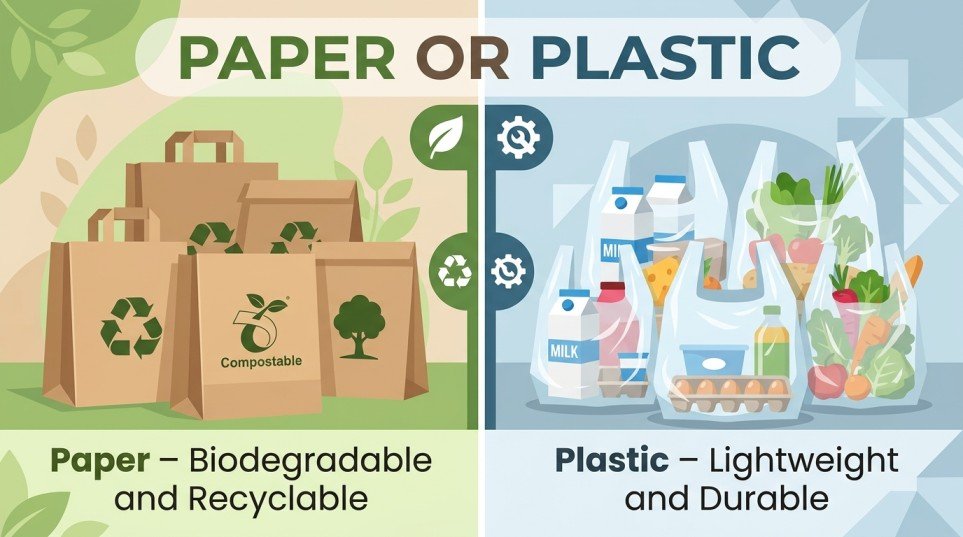
Quick Ans: The main difference in the paper or plastic debate is material and environmental impact. Paper bags are biodegradable and recyclable, while plastic bags are lightweight, waterproof, and more durable for carrying heavy items. Choosing between them depends on cost, convenience, reuse, and environmental concerns.
Many shoppers hear the question “paper or plastic” at grocery stores and retail shops. At first, the choice may seem simple. However, the debate has become much bigger over time.
Paper bags and plastic bags both have advantages and disadvantages. Some people prefer paper because it breaks down naturally and feels more eco friendly. Others choose plastic because it is lightweight, durable, and resistant to water.
The confusion often comes from environmental discussions. One option may seem greener at first glance, but the full picture includes recycling, manufacturing, transportation, and reuse. Because of this, many consumers struggle to decide which bag is truly better.
Businesses also face challenges. Retailers must balance customer convenience, environmental regulations, and operating costs.
Understanding paper or plastic helps consumers make smarter choices. It also helps businesses select practical packaging solutions.
This complete guide explains the differences clearly. You will learn about materials, environmental effects, costs, real world usage, common mistakes, and practical examples.
Quick Answer: Paper or Plastic
The easiest way to understand paper or plastic is to compare durability, environmental impact, and usability.
| Feature | Paper Bags | Plastic Bags |
|---|---|---|
| Material | Wood pulp | Petroleum based plastic |
| Biodegradable | Yes | No |
| Water Resistance | Low | High |
| Durability | Moderate | High |
| Recyclable | Yes | Sometimes |
| Reusable | Limited | Often reusable |
| Weight | Heavier | Lightweight |
In simple terms, paper bags are more biodegradable, while plastic bags are stronger and more water resistant.
What Are Paper Bags?
Paper bags are carrying bags made from processed wood pulp. Manufacturers shape paper into sheets and then form the sheets into bags for shopping and packaging.
Most paper bags are recyclable and biodegradable.
Common Features of Paper Bags
Paper bags usually include:
- Thick paper material
- Folded handles
- Flat bottoms for stability
- Printable surfaces for branding
Because of their appearance, many businesses use paper bags for premium packaging.
Common Uses of Paper Bags
Paper bags are often used for:
- Grocery shopping
- Clothing stores
- Bakery products
- Gift packaging
- Restaurant takeout
Many customers also reuse paper bags for storage or recycling purposes.
How Paper Bags Are Made
The production process usually includes:
- Harvesting wood pulp
- Processing pulp into paper
- Drying and cutting sheets
- Folding and shaping bags
- Adding handles and printing designs
Although paper bags break down naturally, manufacturing them requires significant water and energy.
What Are Plastic Bags?
Plastic bags are lightweight carrying bags made from synthetic polymers, usually derived from petroleum or natural gas.
Because they are flexible and durable, plastic bags became extremely popular worldwide.
Common Features of Plastic Bags
Plastic bags often include:
- Thin waterproof material
- Lightweight design
- High carrying strength
- Flexible structure
These features make plastic bags convenient for many shopping situations.
Common Uses of Plastic Bags
Plastic bags are commonly used for:
- Grocery stores
- Food packaging
- Retail shopping
- Trash liners
- Carrying wet items
Many households also reuse plastic bags for storage and garbage disposal.
How Plastic Bags Are Made
The manufacturing process generally involves:
- Processing petroleum based materials
- Creating plastic pellets
- Melting and shaping plastic film
- Cutting and sealing bags
- Printing logos or designs
Compared to paper bags, plastic bags usually require less energy during production.
Key Differences Between Paper or Plastic
Material
Paper bags come from wood pulp. Plastic bags are made from petroleum based materials.
Environmental Impact
Paper bags biodegrade naturally over time. Plastic bags may remain in the environment for many years.
Strength
Plastic bags handle moisture and heavy loads better. Paper bags may tear when wet.
Weight
Paper bags are heavier. Plastic bags are lightweight and easier to transport.
Recycling
Paper recycling systems are widely available. Plastic bag recycling can be more difficult in some areas.
These differences shape the ongoing paper or plastic debate.
Advantages and Disadvantages
Paper Bag Advantages
Paper bags offer several benefits:
- Biodegradable material
- Easier recycling process
- Better for branding and printing
- Made from renewable resources
Paper Bag Disadvantages
However, paper bags also have drawbacks:
- Tear easily when wet
- Heavier to transport
- Higher production energy in some cases
- Less durable for repeated use
Plastic Bag Advantages
Plastic bags provide important benefits:
- Lightweight design
- Water resistant material
- Strong carrying capacity
- Lower transportation costs
Plastic Bag Disadvantages
Plastic bags also create concerns:
- Long environmental lifespan
- Harm to wildlife if littered
- Difficult recycling process
- Dependence on fossil fuels
Therefore, choosing between paper or plastic depends on balancing convenience and environmental responsibility.
Environmental Impact Comparison
Environmental concerns are central to the paper or plastic discussion.
Paper Bag Environmental Impact
Paper bags:
- Break down naturally
- Come from renewable resources
- Recycle more easily
However, paper production may require:
- Large amounts of water
- Significant energy use
- Tree harvesting
Plastic Bag Environmental Impact
Plastic bags:
- Use less water during production
- Require less transportation fuel because they are lightweight
Still, they can:
- Pollute oceans and landfills
- Harm marine animals
- Take many years to decompose
As a result, many governments regulate single use plastic bags.
Real World Examples
Grocery Stores
Many grocery stores ask customers to choose between paper or plastic at checkout.
Paper bags work well for dry goods. Plastic bags are often preferred for frozen or wet products.
Restaurants
Restaurants commonly use paper bags for takeout orders because they hold food containers securely.
Clothing Stores
Retail clothing stores frequently use paper bags because they provide a premium appearance.
Household Use
Many people reuse plastic bags as trash liners. Others reuse paper bags for crafts or storage.
These examples show how practical needs influence the paper or plastic decision.
Regional and Global Usage
United States
Many states and cities have limited or banned single use plastic bags. Because of this, paper bags and reusable bags have become more common.
Europe
Several European countries heavily regulate plastic bag usage to reduce pollution.
Developing Countries
Plastic bags remain widely used because they are inexpensive and lightweight.
Global Environmental Trends
Worldwide, businesses increasingly encourage reusable shopping bags instead of choosing only paper or plastic.
Consequently, sustainability now shapes packaging decisions around the globe.
Related Concepts and Comparisons
Paper vs Reusable Bags
Reusable cloth bags often last much longer than paper or plastic options.
Plastic vs Biodegradable Plastic
Some newer plastic alternatives break down faster under certain conditions.
Paper or Plastic vs Cloth Bags
| Feature | Paper | Plastic | Cloth |
|---|---|---|---|
| Reusable | Limited | Moderate | High |
| Biodegradable | Yes | No | Often yes |
| Durability | Moderate | High | Very high |
| Environmental Impact | Moderate | High | Lower long term |
These comparisons help consumers understand broader packaging choices.
Common Mistakes About Paper or Plastic
Assuming Paper Is Always Better
Many people believe paper bags are automatically eco friendly. However, paper production can use large amounts of water and energy.
Ignoring Reuse
Reusing any bag reduces waste significantly. Single use habits increase environmental impact.
Recycling Incorrectly
Plastic bags often require special recycling collection points. Placing them in regular recycling bins may create problems.
Overloading Paper Bags
Paper bags can tear under heavy or wet loads.
Avoiding these mistakes helps consumers use bags more responsibly.
Beginner to Advanced Sustainability Tips
Beginner Level
Reuse shopping bags whenever possible. Even simple reuse reduces waste.
Intermediate Level
Separate recyclable materials correctly and follow local recycling guidelines.
Advanced Level
Switch to reusable cloth bags for regular shopping trips. Additionally, support businesses that use sustainable packaging.
Small habits can create long term environmental benefits.
Step By Step Shopping Scenario
Imagine you are shopping for groceries.
If you choose paper bags:
- Place dry groceries inside
- Avoid wet or leaking products
- Carry carefully to prevent tearing
- Recycle or reuse afterward
If you choose plastic bags:
- Pack heavier items securely
- Use for wet or frozen products
- Reuse for household purposes
- Return to proper recycling points
Both options have practical uses depending on the situation.
Exercises With Answers
Exercise 1
Which bag type is biodegradable in the paper or plastic comparison?
Answer: Paper bags.
Exercise 2
Which bag type is more water resistant?
Answer: Plastic bags.
Exercise 3
Which option is usually lighter in weight?
Answer: Plastic bags.
Exercise 4
Which type commonly tears when wet?
Answer: Paper bags.
Exercise 5
True or False: Plastic bags break down quickly in nature.
Answer: False.
When Should You Choose Paper or Plastic?
Choose paper bags if you:
- Want biodegradable packaging
- Carry dry products
- Prefer recyclable materials
- Need stronger flat support for boxed items
Choose plastic bags if you:
- Carry wet or frozen items
- Need lightweight durability
- Plan to reuse bags at home
In many situations, reusable cloth bags may provide the best long term solution.
FAQs About Paper or Plastic
What is the main difference between paper or plastic bags?
Paper bags are biodegradable and recyclable, while plastic bags are lightweight, durable, and water resistant.
Which is better for the environment, paper or plastic?
Both have environmental impacts. Paper decomposes naturally, but plastic often requires fewer production resources.
Why do stores ask paper or plastic at checkout?
Stores offer customers different carrying options based on convenience, durability, and environmental preferences.
Are paper bags stronger than plastic bags?
Plastic bags usually hold heavier loads better, especially when carrying wet items.
Can plastic bags be recycled?
Yes, but many require special recycling collection programs.
Do paper bags break down faster than plastic bags?
Yes. Paper bags biodegrade much faster in natural conditions.
Which costs more, paper or plastic bags?
Paper bags generally cost more to produce and transport.
Are reusable bags better than paper or plastic?
In many cases, reusable cloth bags create less long term waste.
Why are plastic bags banned in some places?
Governments restrict plastic bags to reduce pollution and environmental damage.
Can paper bags handle groceries safely?
Yes, but they may weaken when exposed to moisture or excessive weight.
Conclusion
The paper or plastic debate involves more than simple shopping convenience. Both bag types provide advantages and disadvantages depending on usage, environmental concerns, and cost.
Paper bags offer biodegradability, recyclability, and a more natural appearance. However, they may tear easily and often require more energy and water during production.
Plastic bags provide strength, water resistance, and lightweight convenience. Nevertheless, they create serious environmental concerns because they can remain in nature for many years.
For many consumers, reusable bags now offer the best long term solution. Reusing bags reduces waste and lowers environmental impact regardless of material type.
Ultimately, the best choice depends on your shopping habits, local recycling systems, and sustainability goals. Understanding the differences between paper or plastic helps consumers make smarter and more responsible decisions.
Discover More:-
- Shiesty or Sheisty: Correct Spelling, Meaning, and Usage Explained
- Mathew or Matthew: Correct Spelling, Meaning, and Key Differences

Jennifer Collins is a professional grammar expert and language educator at gramtivo.com, specializing in English grammar, writing skills, and language improvement. She holds a Master’s degree in English Language and Literature from a recognized university in the United States. With years of teaching and content development experience, she is dedicated to helping learners improve their communication skills with clear and practical guidance.