Quick Ans: The difference between HOCD or denial is based on the source of the thoughts and emotions. HOCD, also called Sexual Orientation OCD, involves intrusive fears and obsessive anxiety about sexual orientation, while denial usually means a person consciously or unconsciously avoids accepting their genuine feelings or identity. Although the two can feel similar, their patterns and emotional responses are very different.
Many people search for HOCD or denial because they feel confused about their thoughts, emotions, and identity. Questions about sexual orientation can create stress, fear, and uncertainty. Sometimes the worry becomes so intense that people constantly analyze every feeling or reaction.
However, not every experience means the same thing.
Some individuals experience intrusive thoughts caused by obsessive compulsive disorder, often called HOCD or Sexual Orientation OCD. Others may struggle with denial, where genuine feelings are pushed away due to fear, social pressure, or uncertainty.
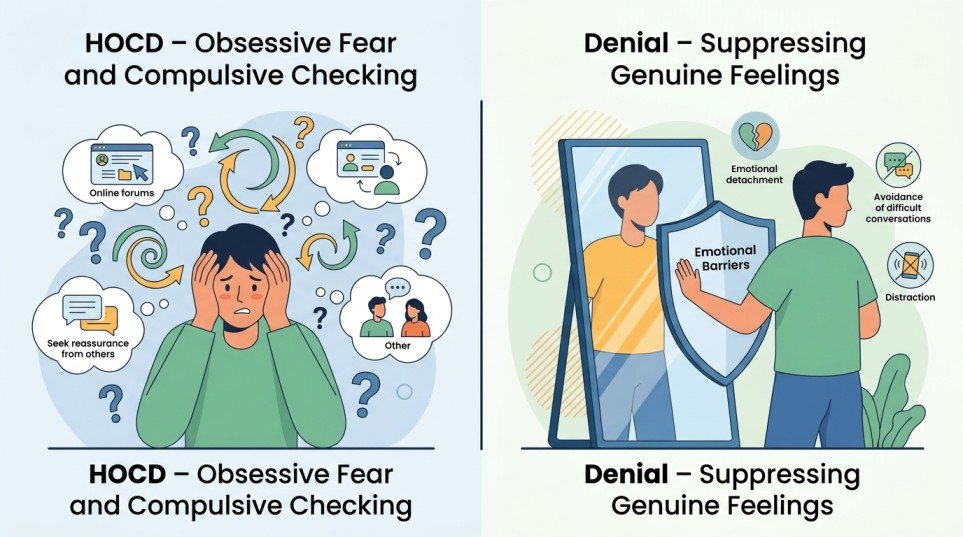
The confusion becomes difficult because both experiences can involve doubt and anxiety. Despite that similarity, the mental patterns are different. HOCD usually creates repetitive obsession and compulsive checking. Denial often involves avoiding or suppressing authentic emotions.
Understanding HOCD or denial can help people recognize unhealthy thought cycles and seek proper support. This guide explains the differences, symptoms, common mistakes, examples, and practical coping strategies in simple language.
Quick Answer: HOCD or Denial
The easiest way to understand HOCD or denial is by looking at the emotional pattern behind the thoughts.
| Feature | HOCD | Denial |
|---|---|---|
| Main Cause | OCD related intrusive thoughts | Avoidance of genuine feelings |
| Emotional Response | Fear and panic | Suppression or resistance |
| Thought Pattern | Repetitive obsession | Emotional avoidance |
| Compulsions | Constant checking and reassurance seeking | Avoiding self acceptance |
| Anxiety Level | Usually very high | Can vary |
In simple terms, HOCD creates obsessive fear about orientation, while denial involves difficulty accepting authentic feelings.
What Is HOCD?
HOCD stands for Homosexual Obsessive Compulsive Disorder, although many professionals now use the term Sexual Orientation OCD. It is considered a subtype of obsessive compulsive disorder.
People with HOCD experience intrusive thoughts about their sexual orientation. These thoughts feel unwanted, repetitive, and distressing.
Common HOCD Symptoms
Many symptoms appear repeatedly in people struggling with HOCD:
- Constant questioning of sexual orientation
- Fear of “becoming” gay or straight unexpectedly
- Obsessive mental checking
- Anxiety around attraction
- Seeking reassurance from others
- Replaying memories repeatedly
The key issue is usually anxiety rather than genuine desire.
How HOCD Feels
Someone with HOCD may constantly monitor their reactions around other people. For example, they might panic after noticing another person is attractive.
Instead of calmly processing the thought, they begin obsessive analysis.
Questions may include:
- “What does this mean?”
- “Am I lying to myself?”
- “Why did I notice that?”
As a result, the cycle of obsession becomes exhausting.
Why HOCD Happens
HOCD develops through obsessive compulsive patterns. OCD creates intrusive thoughts that attack areas important to the individual.
For some people, sexual orientation becomes the focus of those fears.
Because uncertainty feels unbearable, the person performs mental compulsions to seek certainty.
What Is Denial?
Denial involves resisting or avoiding acceptance of genuine emotions, feelings, or identity. In the context of sexual orientation, denial may happen when someone struggles to accept authentic attraction.
Unlike HOCD, denial is not driven mainly by obsessive fear.
Instead, the person may avoid self acceptance because of:
- Social pressure
- Cultural expectations
- Religious beliefs
- Fear of rejection
- Internal conflict
Common Signs of Denial
People experiencing denial may:
- Avoid discussing attraction
- Push away emotional feelings
- Ignore relationship desires
- Feel discomfort about identity exploration
- Pretend certain emotions do not exist
Although anxiety can still appear, the pattern differs from OCD driven obsession.
How Denial Feels
A person in denial may repeatedly suppress feelings instead of obsessively analyzing every thought.
For example, someone might genuinely feel attraction toward a certain gender but avoid acknowledging it due to fear or shame.
As time passes, emotional tension can increase.
Key Differences Between HOCD or Denial
Source of Anxiety
In HOCD, anxiety comes from intrusive obsessive thoughts. In denial, anxiety often comes from resisting authentic feelings.
Thought Patterns
HOCD creates repetitive mental checking and compulsions. Denial usually involves emotional suppression or avoidance.
Need for Certainty
People with HOCD desperately seek certainty about orientation. Meanwhile, people experiencing denial may avoid exploring the topic altogether.
Emotional Reaction
HOCD often produces panic and distress about uncertainty. Denial may create discomfort, confusion, or resistance instead.
Advantages and Disadvantages of Recognizing the Difference
Benefits of Understanding HOCD
Recognizing HOCD can help people:
- Seek OCD focused treatment
- Reduce compulsive checking
- Understand intrusive thoughts
- Lower anxiety over time
Challenges of HOCD
However, HOCD can create:
- Constant mental exhaustion
- Severe anxiety
- Relationship stress
- Obsessive reassurance seeking
Benefits of Addressing Denial
Acknowledging denial may help people:
- Develop self acceptance
- Build emotional honesty
- Reduce inner conflict
- Improve mental wellbeing
Challenges of Denial
At the same time, denial can lead to:
- Emotional suppression
- Long term stress
- Identity confusion
- Relationship difficulties
Understanding the difference between HOCD or denial helps people seek the right kind of support.
Real World Examples
Example of HOCD
A person happily identifies as straight for many years. One intrusive thought suddenly appears and creates panic.
Afterward, they begin:
- Constant internet searches
- Watching reactions carefully
- Seeking reassurance repeatedly
- Testing attraction mentally
The obsession becomes the main source of distress.
Example of Denial
Another person consistently experiences attraction toward the same gender but avoids accepting it because of family expectations.
Instead of obsessively checking reactions, they suppress their feelings and avoid discussing the topic.
These examples show how emotional patterns differ in HOCD or denial situations.
Psychological and Social Factors
Fear and Anxiety
Fear plays a major role in both experiences. However, the fear operates differently.
HOCD focuses on intrusive uncertainty. Denial focuses more on resisting acceptance.
Social Pressure
Cultural expectations can increase confusion. Some people fear judgment from family, friends, or society.
Identity Exploration
Exploring identity is normal for many individuals. Not every question or moment of uncertainty means HOCD or denial.
Therefore, context matters greatly.
Related Concepts and Comparisons
HOCD vs General Anxiety
General anxiety affects many life areas. HOCD specifically targets sexual orientation fears through obsessive compulsive patterns.
Denial vs Confusion
Confusion often involves temporary uncertainty. Denial usually involves resisting feelings that already exist.
HOCD vs Sexual Orientation Exploration
Healthy exploration feels curious and open. HOCD feels repetitive, fearful, and compulsive.
Common Mistakes About HOCD or Denial
Assuming Every Doubt Means Denial
Occasional questioning does not automatically mean someone is in denial.
Mistaking OCD for Identity Discovery
HOCD creates intrusive obsessive fear. Genuine self discovery usually feels different from compulsive panic.
Excessive Online Reassurance Seeking
Many people spend hours searching for certainty online. Unfortunately, this often increases anxiety.
Ignoring Mental Health Support
Professional support can help clarify obsessive patterns and emotional struggles.
Avoiding treatment may worsen stress over time.
Beginner to Advanced Coping Strategies
Beginner Level
Start by reducing compulsive checking behaviors. Practice noticing thoughts without immediate analysis.
Intermediate Level
Learn about OCD patterns and emotional processing. Journaling can help identify triggers and reactions.
Advanced Level
Professional therapy, especially Cognitive Behavioral Therapy and Exposure and Response Prevention, may help individuals struggling with OCD related symptoms.
Support groups and mental health education can also improve self understanding.
Step By Step Self Reflection Scenario
Imagine someone notices anxiety after seeing an attractive person.
If the experience involves HOCD:
- Panic appears immediately
- Obsessive questioning begins
- Mental checking increases
- Reassurance seeking follows
If the experience involves denial:
- Genuine attraction appears
- Emotional discomfort develops
- Feelings are suppressed
- Avoidance behaviors continue
Although both experiences involve uncertainty, the emotional patterns differ.
Exercises With Answers
Exercise 1
Which condition commonly involves compulsive checking behaviors?
Answer: HOCD.
Exercise 2
Which experience often involves suppressing authentic feelings?
Answer: Denial.
Exercise 3
True or False: Every intrusive thought reflects genuine desire.
Answer: False.
Exercise 4
Which condition is linked to obsessive compulsive disorder?
Answer: HOCD.
Exercise 5
What is a common behavior in HOCD?
Answer: Reassurance seeking.
When Should You Seek Professional Support?
Consider seeking professional help if:
- Anxiety becomes overwhelming
- Obsessive thoughts interfere with daily life
- Reassurance seeking becomes constant
- Emotional distress affects relationships
- Fear or confusion feels unmanageable
Mental health professionals can provide guidance without judgment.
Support becomes especially important when obsessive compulsive symptoms disrupt daily functioning.
FAQs About HOCD or Denial
What is the difference between HOCD or denial?
HOCD involves intrusive obsessive fear about sexual orientation, while denial involves resisting or avoiding genuine feelings.
Is HOCD considered OCD?
Yes. HOCD is a form of obsessive compulsive disorder focused on sexual orientation fears.
Can denial cause anxiety?
Yes. Suppressing emotions or identity can create stress and emotional conflict.
Do intrusive thoughts always reflect real desires?
No. Intrusive thoughts are common in OCD and often feel unwanted and distressing.
Can someone have both HOCD and denial?
Complex emotional experiences can overlap. Professional mental health support can help clarify patterns.
Does reassurance seeking help HOCD?
Usually not. Reassurance often strengthens the OCD cycle over time.
Is questioning sexual orientation normal?
Yes. Many people explore identity and attraction at different stages of life.
Can therapy help with HOCD?
Yes. Cognitive Behavioral Therapy and Exposure and Response Prevention are commonly used treatments.
Does denial always happen consciously?
No. Some people may unconsciously avoid difficult emotions or identity related feelings.
Should I self diagnose HOCD or denial online?
Self diagnosis can increase confusion and anxiety. Professional guidance is usually more helpful.
Conclusion
Understanding HOCD or denial requires looking closely at emotional patterns and thought processes. Although both experiences can involve uncertainty and anxiety, the underlying causes differ significantly.
HOCD is driven by intrusive obsessive thoughts and compulsive attempts to gain certainty. Denial, however, often involves resisting or suppressing authentic feelings because of fear, pressure, or emotional conflict.
Recognizing the distinction can reduce confusion and encourage healthier coping strategies. People experiencing obsessive compulsive symptoms may benefit from OCD focused treatment. Individuals struggling with denial may benefit from emotional support and self acceptance work.
Most importantly, questioning thoughts alone do not define identity. Mental health experiences are complex, and professional support can provide clarity and guidance.
With patience, education, and proper help, individuals can better understand their emotions and reduce unnecessary fear or confusion.
Discover More:-
- Descendent or Descendant: Meaning, Differences, and Correct Usage Guide
- Beemer or Beamer: Meaning, Differences, and Correct BMW Nicknames

Robert Mitchell is a U.S.-based writer at Gramtivo.Com who focuses on grammar, writing improvement, and language-related content. He holds a degree in English and Linguistics from a U.S. university. His work aims to help readers enhance their writing skills with clear and practical guidance.