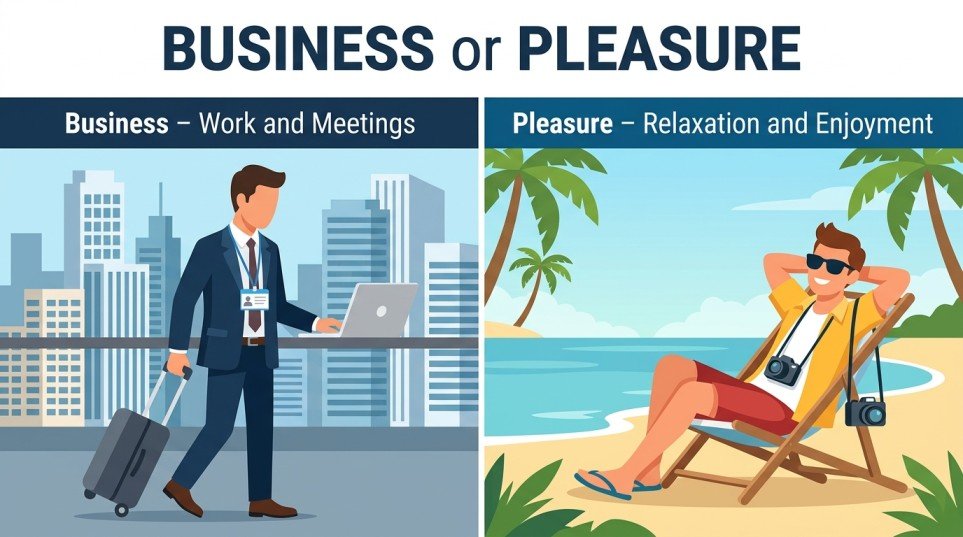
Quick Ans: The phrase business or pleasure asks whether a trip, activity, or visit is work related or meant for enjoyment. “Business” refers to professional purposes like meetings or conferences, while “pleasure” refers to vacations, relaxation, or personal enjoyment. The expression is commonly used in travel, hospitality, and everyday conversation.
Many people hear the phrase business or pleasure while traveling. Hotel staff, airport workers, and even new acquaintances often ask this question. Although the phrase sounds simple, many learners and travelers still feel confused about its exact meaning and usage.
The expression separates two common reasons for doing something. One reason involves work or professional duties. The other focuses on relaxation, entertainment, or personal enjoyment.
For example, someone attending a conference in another city is traveling for business. A person visiting a beach resort for vacation is traveling for pleasure.
Sometimes the answer can even be both.
Understanding business or pleasure helps with communication in professional settings, travel situations, and casual conversations. It also improves English vocabulary and speaking confidence.
This complete guide explains the meaning, usage, examples, advantages, disadvantages, common mistakes, and related expressions connected to business or pleasure.
Quick Answer: Business or Pleasure
The phrase business or pleasure asks why someone is traveling or doing an activity.
| Term | Meaning |
|---|---|
| Business | Work related purpose |
| Pleasure | Fun, relaxation, or personal enjoyment |
In short:
- Business means professional activity.
- Pleasure means enjoyment or leisure.
What Does Business Mean?
In the phrase business or pleasure, “business” refers to work related activities or professional responsibilities.
Common business activities include:
- Attending meetings
- Visiting clients
- Joining conferences
- Training employees
- Negotiating contracts
- Managing projects
Business travel usually follows a schedule and specific work goals.
Examples of Business Usage
Here are some simple examples:
- “She traveled to Dubai for business.”
- “He is attending a sales conference.”
- “They visited London for work meetings.”
In each example, the trip has a professional purpose.
Common Business Travel Situations
Business travel often includes:
- Corporate meetings
- Networking events
- Industry seminars
- Office visits
- Trade shows
Because of these responsibilities, business trips are usually structured and time limited.
What Does Pleasure Mean?
In the phrase business or pleasure, “pleasure” refers to enjoyment, relaxation, or personal activities.
People travel for pleasure when they want to:
- Relax
- Explore new places
- Spend time with family
- Take vacations
- Enjoy hobbies
- Celebrate special occasions
Pleasure activities are generally flexible and less stressful.
Examples of Pleasure Usage
Consider these examples:
- “We went to Spain for pleasure.”
- “They booked a beach vacation.”
- “She traveled during her summer holiday.”
These examples focus on enjoyment rather than work.
Common Pleasure Travel Activities
Pleasure trips often include:
- Sightseeing
- Resort vacations
- Family visits
- Adventure travel
- Cruises
- Cultural experiences
As a result, pleasure travel usually feels more relaxed than business travel.
Key Differences Between Business or Pleasure
Purpose
The biggest difference between business or pleasure is the reason behind the activity.
Business focuses on work responsibilities. Pleasure focuses on enjoyment and relaxation.
Schedule
Business trips usually follow strict schedules. Pleasure trips allow more flexibility.
Expenses
Companies often pay for business travel. Personal savings usually cover pleasure travel.
Stress Level
Business travel may involve deadlines and pressure. Pleasure travel often reduces stress.
Activities
Business activities include meetings and presentations. Pleasure activities include sightseeing and entertainment.
Comparison Table: Business vs Pleasure
| Feature | Business | Pleasure |
|---|---|---|
| Main Goal | Professional work | Enjoyment and relaxation |
| Schedule | Structured | Flexible |
| Paid By | Employer or company | Individual traveler |
| Stress Level | Often higher | Usually lower |
| Common Activities | Meetings, conferences | Vacations, tourism |
This table makes the business or pleasure comparison easier to understand.
Real World Examples
Hotel Check In
Hotel staff often ask, “Business or pleasure?” They want to understand the purpose of the guest’s stay.
A business traveler may need:
- Fast internet
- Meeting rooms
- Early breakfast
A leisure traveler may prefer:
- Tourist information
- Pool access
- Entertainment options
Airport Conversations
Immigration officers sometimes ask travelers about the purpose of their visit.
Examples include:
- “I’m here for business meetings.”
- “I’m visiting for pleasure.”
Networking Events
People also use the phrase casually during conversations.
For example:
“Are you in the city for business or pleasure?”
This question helps start friendly discussion.
Regional and Global Usage
In English Speaking Countries
The phrase business or pleasure is extremely common in airports, hotels, and tourism industries.
In International Travel
Travelers worldwide hear this phrase because English is widely used in hospitality and transportation.
In Professional Culture
Global business culture often separates professional travel from leisure travel for budgeting and scheduling reasons.
Therefore, the phrase remains important in international communication.
Advantages and Disadvantages
Advantages of Business Travel
Business travel can provide:
- Career growth
- Networking opportunities
- Professional experience
- Company benefits
- Exposure to new markets
Disadvantages of Business Travel
However, business travel may also include:
- Stress
- Tight schedules
- Jet lag
- Less free time
Advantages of Pleasure Travel
Pleasure travel often offers:
- Relaxation
- Better mental health
- Family bonding
- New experiences
Disadvantages of Pleasure Travel
Some challenges include:
- Personal expenses
- Vacation planning stress
- Crowded tourist areas
The best option depends on personal goals and circumstances.
Can a Trip Be Both Business and Pleasure?
Yes. Many people combine work and leisure travel.
This combination is sometimes called “bleisure travel,” which mixes business and leisure.
For example:
- A worker attends meetings during the week.
- The same traveler stays extra days for sightseeing.
This approach allows people to enjoy travel while completing professional responsibilities.
Common Situations Where People Ask “Business or Pleasure?”
The phrase appears in many everyday situations.
Hotels
Front desk employees ask the question during check in.
Airports
Immigration officers use it to understand travel purpose.
Conferences
Attendees often explain whether they are visiting professionally or personally.
Taxi Conversations
Drivers may ask casually to start conversation with travelers.
Because the phrase is polite and simple, it works in both formal and informal settings.
Common Mistakes About Business or Pleasure
Confusing Business With Busy
Some English learners think “business” means “being busy.” However, it specifically refers to professional or commercial activities.
Using Pleasure in the Wrong Context
“Pleasure” in this phrase means enjoyment or leisure. It does not always refer to excitement or entertainment.
Forgetting Context
The phrase usually relates to travel, visits, or activities. Using it randomly may sound unnatural.
Giving Overly Detailed Answers
Simple answers work best.
Examples:
- “I’m here for business.”
- “Mostly pleasure.”
- “A little of both.”
Short responses sound more natural.
Beginner to Advanced Usage Tips
Beginner Level
Learn the basic meaning first:
- Business equals work
- Pleasure equals enjoyment
Intermediate Level
Practice answering travel related questions naturally.
Examples:
- “I’m visiting for business meetings.”
- “We’re here for pleasure.”
Advanced Level
Use the phrase in professional networking and travel conversations confidently.
You can also discuss mixed travel purposes such as:
- “It started as business, but now it’s partly pleasure.”
These advanced responses sound more fluent and natural.
Step By Step Conversation Example
Imagine arriving at a hotel.
Scenario 1: Business Travel
Hotel employee: “Business or pleasure?”
Guest: “Business. I’m attending a conference.”
Scenario 2: Leisure Travel
Hotel employee: “Business or pleasure?”
Guest: “Pleasure. My family is on vacation.”
Scenario 3: Mixed Travel
Hotel employee: “Business or pleasure?”
Guest: “A bit of both.”
These examples show how naturally the phrase appears in conversation.
Related Concepts and Comparisons
Business Travel vs Vacation
Business travel involves professional responsibilities. Vacations focus on relaxation and personal enjoyment.
Work Life Balance
The phrase also connects to work life balance. People often try to separate business responsibilities from personal leisure.
Bleisure Travel
Bleisure combines work and leisure into one trip.
This modern travel trend continues growing worldwide.
Exercises With Answers
Exercise 1
What does “business” mean in the phrase business or pleasure?
Answer: Work related purpose.
Exercise 2
What does “pleasure” mean in this expression?
Answer: Relaxation or enjoyment.
Exercise 3
Which type of travel usually follows a strict schedule?
Answer: Business travel.
Exercise 4
Can a trip include both business and pleasure?
Answer: Yes.
Exercise 5
True or False: The phrase is commonly used in hotels and airports.
Answer: True.
When Should You Use the Phrase Business or Pleasure?
Use the phrase when asking about the purpose of travel, visits, or activities.
Common situations include:
- Hotel check ins
- Airport conversations
- Networking events
- Casual discussions with travelers
The phrase sounds polite, professional, and natural in these settings.
FAQs About Business or Pleasure
What does business or pleasure mean?
The phrase asks whether someone’s activity or travel is work related or for enjoyment.
Is business or pleasure a common phrase?
Yes. Hotels, airports, and travel industries use it frequently.
Can a trip be both business and pleasure?
Yes. Many travelers combine work responsibilities with vacation activities.
What is pleasure travel?
Pleasure travel refers to vacations, tourism, relaxation, or personal enjoyment.
What is business travel?
Business travel involves meetings, conferences, training, or professional responsibilities.
Why do hotels ask business or pleasure?
Hotels ask this question to better understand guest needs and services.
What is bleisure travel?
Bleisure travel combines business and leisure activities during the same trip.
How should I answer business or pleasure?
Simple answers work best, such as “business,” “pleasure,” or “both.”
Is the phrase formal or informal?
It works in both formal and casual conversations.
Do airports use the phrase business or pleasure?
Yes. Immigration officers and travel staff commonly ask it.
Conclusion
The phrase business or pleasure plays an important role in travel, hospitality, and everyday English communication. Although the question sounds simple, understanding it helps people respond naturally in professional and social situations.
Business refers to work related activities such as meetings, conferences, and professional responsibilities. Pleasure focuses on enjoyment, vacations, and relaxation.
The two purposes create different travel experiences. Business travel usually involves schedules and responsibilities. Pleasure travel offers flexibility and personal enjoyment.
Modern travelers sometimes combine both through bleisure travel, blending work with leisure activities.
Knowing how to use and answer the phrase confidently improves communication skills and travel experiences. Whether you travel for work, relaxation, or both, understanding business or pleasure makes conversations smoother and more professional.
Discover More:-

Lisa Thompson is a USA-based content writer and language specialist focused on grammar, writing improvement and digital publishing.
She holds a degree in English Language and Communication and has professional experience in educational and web content creation.
As the author of Gramtivo.Com, she aims to help readers improve their writing skills through clear and practical guidance.