
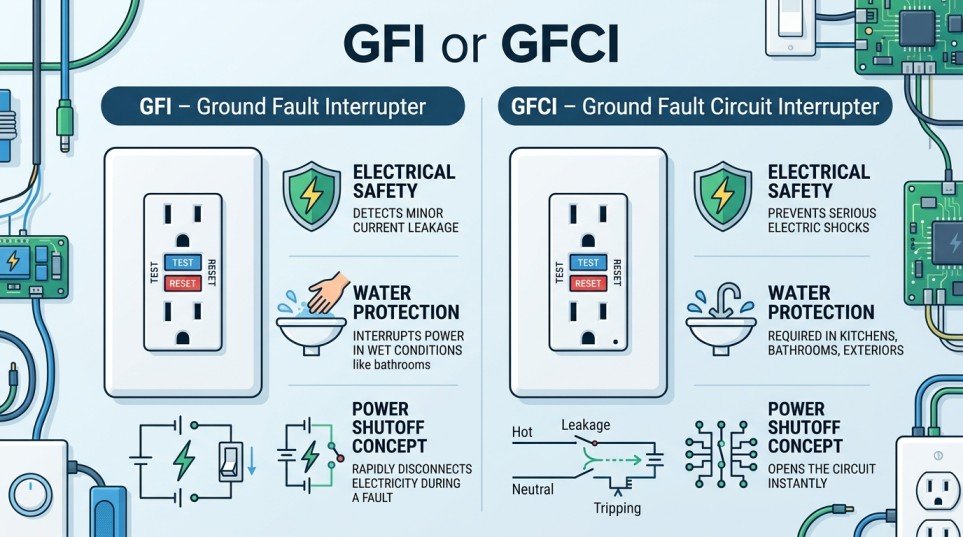
Quick Ans: The terms GFI or GFCI refer to the same electrical safety device designed to prevent electric shock. GFI stands for Ground Fault Interrupter, while GFCI means Ground Fault Circuit Interrupter. Although the names differ slightly, both devices work the same way by shutting off power when dangerous electrical leakage occurs.
Many homeowners and DIY beginners become confused when they hear the terms GFI or GFCI. Some electricians say GFI. Others use GFCI. Store packaging may even use both names.
This creates uncertainty.
People often wonder whether the two devices are different products or if one is newer than the other. Fortunately, the answer is simple. Both names describe the same electrical safety technology.
These devices protect people from electric shock. They monitor electrical current and quickly shut off power if they detect a dangerous imbalance. Because of this feature, they are extremely important in kitchens, bathrooms, garages, basements, and outdoor areas.
Understanding GFI or GFCI helps homeowners stay safe and follow electrical code requirements. It also makes shopping, troubleshooting, and installation much easier.
In this complete guide, you will learn definitions, advantages, disadvantages, real world examples, common mistakes, related electrical concepts, and practical exercises.
Quick Answer: GFI or GFCI
To quickly understand GFI or GFCI, focus on terminology.
| Term | Meaning | Difference |
|---|---|---|
| GFI | Ground Fault Interrupter | Same device |
| GFCI | Ground Fault Circuit Interrupter | Same device |
In simple terms, there is no functional difference between GFI and GFCI.
Both devices:
- Detect ground faults
- Prevent electrical shock
- Shut off power automatically
- Improve electrical safety
What Is a GFI?
A GFI stands for Ground Fault Interrupter. It is an electrical safety device designed to protect people from electric shock.
The device constantly monitors the flow of electricity through a circuit. If electricity leaks outside the intended path, the GFI cuts power almost instantly.
For example, if a hair dryer falls into water, the device can shut off electricity before serious injury occurs.
Common Places Where GFIs Are Used
GFIs commonly appear in:
- Bathrooms
- Kitchens
- Garages
- Basements
- Outdoor outlets
- Laundry rooms
These locations often involve moisture or water exposure.
How a GFI Works
The process works very quickly:
- Electricity flows through the outlet
- The device monitors incoming and outgoing current
- A ground fault occurs
- The GFI detects imbalance
- Power shuts off immediately
Because the shutdown happens within milliseconds, serious shocks can often be prevented.
What Is a GFCI?
A GFCI stands for Ground Fault Circuit Interrupter. It performs the exact same function as a GFI.
The term “GFCI” is simply the more formal and complete technical name.
Electricians, manufacturers, and building codes often use GFCI more frequently today. However, many people still say GFI for convenience.
Types of GFCI Devices
Several forms of GFCI protection exist:
- GFCI outlets
- GFCI circuit breakers
- Portable GFCI adapters
Each type provides ground fault protection in different situations.
GFCI Outlet Features
Most GFCI outlets include:
- Test button
- Reset button
- Built in protection system
- Shock prevention technology
These outlets are easy to identify because of the visible buttons on the front.
Key Differences Between GFI or GFCI
Terminology
The primary difference in GFI or GFCI is the wording.
- GFI = Ground Fault Interrupter
- GFCI = Ground Fault Circuit Interrupter
Functionality
There is no functional difference. Both devices:
- Detect electrical leakage
- Interrupt power flow
- Protect against shock
Industry Usage
Electricians and building codes often prefer the term GFCI. Meanwhile, homeowners frequently use the shorter term GFI.
Therefore, both names remain common in everyday conversation.
Why GFI and GFCI Protection Matters
Electrical shock can be deadly. Water greatly increases electrical danger because it improves conductivity.
GFI or GFCI devices reduce risk by reacting extremely fast.
Important Safety Benefits
These devices help prevent:
- Serious electric shock
- Electrical burns
- Electrocution
- Some electrical fires
Consequently, electrical codes require GFCI protection in many locations.
Areas Requiring GFCI Protection
Modern building codes often require protection near:
- Sinks
- Showers
- Pools
- Outdoor outlets
- Wet basements
These areas create higher shock risk due to moisture exposure.
Advantages and Disadvantages
GFI or GFCI Advantages
These devices provide many important benefits:
- Improved electrical safety
- Fast power shutoff
- Reduced shock risk
- Code compliance
- Easy testing and resetting
GFI or GFCI Disadvantages
Some limitations also exist:
- Can trip unexpectedly
- Slightly higher cost than standard outlets
- Require occasional testing
- Older homes may need upgrades
Even with these disadvantages, the safety benefits greatly outweigh the drawbacks.
Real World Examples
Bathroom Hair Dryer Accident
Imagine using a hair dryer near a sink. If the device falls into water, a GFCI outlet can immediately shut off power.
Without protection, severe injury could occur.
Outdoor Power Tools
Electric lawn tools often operate in damp conditions. GFCI protection reduces the chance of dangerous shock.
Kitchen Appliance Safety
Blenders, coffee makers, and toasters operate near water sources. Therefore, kitchens commonly require GFCI outlets.
These examples show why GFI or GFCI protection is so important.
Regional and Global Usage
United States
The term GFCI appears frequently in electrical codes and professional installations.
Canada
Canadian electrical systems also use GFCI protection in wet locations.
International Usage
Some countries use similar technologies under different names. However, the core purpose remains electrical shock prevention.
As electrical safety standards improve globally, ground fault protection becomes more common worldwide.
Related Concepts and Comparisons
GFI vs Standard Outlet
A standard outlet simply provides electricity. A GFI outlet adds shock protection.
GFCI vs AFCI
AFCI stands for Arc Fault Circuit Interrupter.
| Feature | GFCI | AFCI |
|---|---|---|
| Main Purpose | Prevent shock | Prevent electrical fires |
| Detects | Ground faults | Arc faults |
| Common Locations | Wet areas | Bedrooms and living areas |
GFCI Breaker vs GFCI Outlet
A GFCI breaker protects the entire circuit. A GFCI outlet protects specific outlets connected to it.
Understanding these concepts helps clarify the full GFI or GFCI discussion.
Common Mistakes About GFI or GFCI
Thinking GFI and GFCI Are Different
This is the most common misunderstanding. Both names describe the same safety device.
Ignoring Test Buttons
Many people never test their outlets. However, regular testing ensures proper operation.
Installing Standard Outlets Near Water
Using ordinary outlets in wet areas increases electrical danger.
Resetting Without Finding the Problem
If a GFCI trips repeatedly, an electrical fault may exist. Simply resetting it without investigation can be risky.
Avoiding these mistakes improves home electrical safety.
Beginner to Advanced Electrical Tips
Beginner Level
Learn how to identify GFCI outlets by locating the TEST and RESET buttons.
Intermediate Level
Test GFCI outlets monthly to confirm proper operation.
Advanced Level
Understand how line and load wiring works when installing multiple protected outlets.
Proper knowledge improves both safety and troubleshooting ability.
Step By Step Testing Scenario
Testing a GFCI outlet is simple.
- Plug in a lamp or device
- Press the TEST button
- Confirm power shuts off
- Press RESET button
- Verify power returns
If the outlet does not trip correctly, replacement may be necessary.
Exercises With Answers
Exercise 1
What does GFCI stand for?
Answer: Ground Fault Circuit Interrupter.
Exercise 2
Are GFI and GFCI different devices?
Answer: No. They are the same type of device.
Exercise 3
Which rooms commonly require GFCI outlets?
Answer: Bathrooms, kitchens, garages, and outdoor areas.
Exercise 4
What happens when a GFCI detects a ground fault?
Answer: It quickly shuts off electrical power.
Exercise 5
True or False: Standard outlets provide the same shock protection as GFCI outlets.
Answer: False.
When Should You Use GFI or GFCI Protection?
Use GFCI protection in locations involving:
- Water exposure
- Outdoor electrical equipment
- Damp environments
- Kitchen appliances
- Bathroom electronics
Most modern electrical codes require these safety devices in high risk areas.
FAQs About GFI or GFCI
What is the difference between GFI or GFCI?
There is no functional difference. Both terms describe the same electrical safety device.
Which term is correct, GFI or GFCI?
Both are correct. However, GFCI is the more formal technical term.
Do GFCI outlets prevent electrocution?
They greatly reduce the risk by shutting off power during dangerous electrical leakage.
Where should GFCI outlets be installed?
They are commonly required in bathrooms, kitchens, garages, basements, and outdoor areas.
Can I replace a normal outlet with a GFCI outlet?
Yes. Many homeowners upgrade outlets for added safety.
Why does my GFCI outlet keep tripping?
Possible causes include moisture, damaged appliances, or wiring problems.
How often should GFCI outlets be tested?
Most experts recommend monthly testing.
Are GFCI breakers better than GFCI outlets?
Both provide protection. Breakers protect entire circuits, while outlets protect specific areas.
Do older homes need GFCI upgrades?
Yes. Older homes may lack modern electrical safety protection.
Can a GFCI outlet stop electrical fires?
Its main purpose is shock prevention, although it may reduce some electrical hazards.
Conclusion
Understanding GFI or GFCI is important for electrical safety. Although the two terms sound different, they refer to the same protective device.
These outlets and breakers monitor electrical current continuously. If dangerous leakage occurs, they quickly shut off power to reduce shock risk.
Bathrooms, kitchens, garages, outdoor spaces, and wet locations commonly require this protection. Because of their life saving role, modern electrical codes heavily rely on GFCI technology.
Homeowners should learn how to identify, test, and maintain these devices properly. Regular testing helps ensure reliable performance.
Whether someone says GFI or GFCI, the purpose remains identical: protecting people from dangerous electrical shock.
By understanding the difference and proper usage, you can improve safety, meet code requirements, and make smarter electrical decisions.

Lisa Thompson is a USA-based content writer and language specialist focused on grammar, writing improvement and digital publishing.
She holds a degree in English Language and Communication and has professional experience in educational and web content creation.
As the author of Gramtivo.Com, she aims to help readers improve their writing skills through clear and practical guidance.