
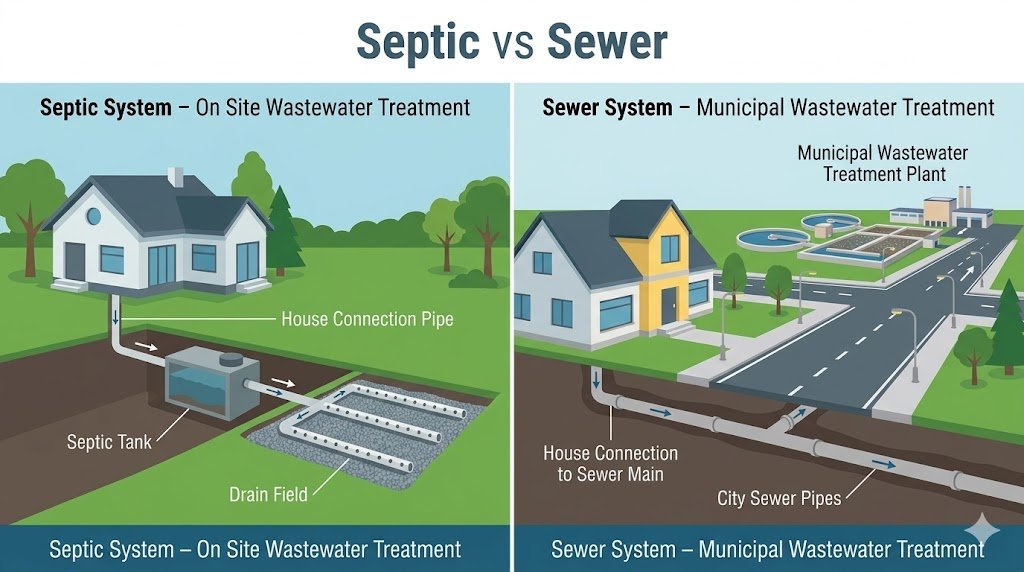
Quick Ans: The main difference between septic vs sewer systems is where wastewater goes after leaving your home. A septic system treats and disposes of wastewater on your property using a tank and drain field. In contrast, a sewer system sends wastewater through underground pipes to a municipal treatment facility.
Many homeowners search for septic vs sewer when buying property or planning plumbing systems. Both systems remove wastewater from homes. Both handle water from sinks, showers, toilets, and washing machines.
Despite serving the same purpose, these systems work very differently.
A sewer system connects homes to a city managed network of pipes. Wastewater travels through these pipes until it reaches a large treatment plant. On the other hand, a septic system treats wastewater directly on private property.
The difference matters for cost, maintenance, environmental impact, and long term responsibility. For example, sewer users pay utility fees. Septic owners handle maintenance themselves.
Understanding septic vs sewer helps homeowners avoid costly mistakes. It also helps buyers evaluate properties in rural or suburban areas.
This guide explains the differences clearly. You will learn definitions, advantages, disadvantages, real world examples, and common mistakes. Practical exercises and FAQs will also help reinforce the key ideas.
Quick Answer: Septic vs Sewer
Understanding septic vs sewer becomes easier when you compare how wastewater moves.
| Feature | Septic System | Sewer System |
|---|---|---|
| Wastewater Treatment | On property | At municipal facility |
| Ownership | Private homeowner | City or municipality |
| Maintenance | Homeowner responsibility | Managed by city |
| Installation | Requires tank and drain field | Requires connection to city pipes |
| Common Location | Rural areas | Urban and suburban areas |
In simple terms, a septic system treats wastewater at home, while a sewer system sends wastewater to a city treatment plant.
What Is a Septic System?
A septic system is a private wastewater treatment system installed on a property. It processes household wastewater using natural filtration and bacteria.
The system typically includes two main components:
- Septic tank
- Drain field (also called a leach field)
Because treatment occurs on site, septic systems are common in rural areas where city sewer lines are unavailable.
How a Septic System Works
The process follows several steps.
- Wastewater flows from the house into the septic tank.
- Heavy solids settle at the bottom of the tank.
- Oils and grease float to the top.
- Liquid wastewater moves into the drain field.
- Soil filters and treats the remaining water.
Bacteria inside the tank break down organic waste, which helps reduce solid buildup.
Typical Septic System Uses
Septic systems handle water from many household activities:
- Toilet flushing
- Showering
- Laundry
- Dishwashing
- Kitchen sinks
With proper maintenance, these systems can operate effectively for decades.
What Is a Sewer System?
A sewer system is a network of underground pipes operated by a city or municipality. These pipes transport wastewater from homes and businesses to a centralized treatment facility.
Unlike septic systems, sewer systems do not treat wastewater at the property level.
How Sewer Systems Work
The sewer process usually follows this path:
- Wastewater leaves the house through a main drain pipe.
- The water enters the municipal sewer line.
- Pipes carry the wastewater to a treatment plant.
- Treatment facilities remove contaminants.
- Cleaned water returns safely to the environment.
Large cities rely heavily on sewer systems because they can handle wastewater from thousands of buildings.
Common Sewer System Uses
Sewer networks serve:
- Residential neighborhoods
- Apartment buildings
- Commercial properties
- Industrial areas
City governments maintain the infrastructure and manage treatment plants.
Key Differences Between Septic vs Sewer
Wastewater Treatment Location
The most important difference in septic vs sewer is where treatment occurs.
Septic systems treat wastewater directly on the property. Sewer systems transport wastewater to a municipal treatment plant.
Maintenance Responsibility
Homeowners maintain septic systems themselves. City authorities manage sewer infrastructure.
Installation Requirements
Septic systems require a tank and drain field. Sewer connections require access to municipal pipes.
Costs
Septic systems involve installation and pumping costs. Sewer systems usually involve monthly utility fees.
Location
Rural properties often rely on septic systems. Urban areas typically connect to sewer networks.
Advantages and Disadvantages
Septic System Advantages
Septic systems offer several benefits:
- Lower monthly utility costs
- Independent wastewater treatment
- Environmentally friendly when maintained
- Suitable for rural properties
Disadvantages of Septic System
However, septic systems also present challenges:
- Regular pumping required
- Risk of drain field failure
- Limited capacity for large households
- Responsibility for repairs falls on homeowner
Advantages of Sewer System
Sewer systems provide convenience:
- Minimal homeowner maintenance
- Large capacity for communities
- Reliable wastewater removal
- Professional management
Sewer System Disadvantages
Despite these advantages, some drawbacks exist:
- Monthly sewer fees
- Dependence on municipal infrastructure
- Potential city system failures
- Limited availability in rural areas
Choosing between septic vs sewer depends on property location and homeowner preferences.
Real World Examples
Rural Homes
Many rural homes use septic systems because municipal sewer lines do not extend into remote areas.
Urban Neighborhoods
Cities rely heavily on sewer systems. Apartment complexes and densely populated neighborhoods require centralized wastewater treatment.
Suburban Developments
Some suburban communities offer both options. New housing developments sometimes install sewer connections. Older properties may still use septic systems.
These examples highlight how geography influences the septic vs sewer decision.
Regional and Global Usage
Rural Regions
Septic systems dominate rural regions around the world. Limited infrastructure makes on site treatment necessary.
Urban Centers
Large cities depend on sewer networks because centralized treatment supports millions of residents.
Developing Areas
In developing regions, septic systems or simple wastewater treatment methods are often more common.
Population density therefore plays a major role in determining septic vs sewer usage.
Related Concepts and Comparisons
Septic Tank vs Cesspool
A septic tank treats wastewater using natural bacteria. A cesspool simply collects waste without advanced treatment.
Sewer vs Storm Drain
Storm drains remove rainwater from streets. Sewer systems carry wastewater from buildings.
Septic vs Sewer vs Cesspool
| Feature | Septic System | Sewer System | Cesspool |
|---|---|---|---|
| Treatment Location | On property | City treatment plant | Minimal treatment |
| Ownership | Private homeowner | Municipality | Private property |
| Maintenance | Owner responsible | City responsible | Owner responsible |
| Environmental Safety | Moderate to high | High | Low |
These comparisons help clarify the broader wastewater management landscape.
Common Mistakes About Septic vs Sewer
Ignoring Septic Maintenance
Septic tanks require pumping every few years. Neglecting maintenance can cause backups or system failure.
Flushing Harmful Materials
Items such as grease, wipes, and chemicals damage both septic and sewer systems.
Misunderstanding Drain Fields
Septic drain fields need open soil for filtration. Parking vehicles or building structures above them can cause damage.
Assuming Sewer Systems Never Fail
Municipal sewer systems occasionally experience blockages or overflow during heavy storms.
Avoiding these mistakes helps maintain reliable wastewater systems.
Beginner to Advanced Maintenance Tips
Beginner Level
Use water efficiently and avoid flushing non biodegradable items.
Intermediate Level
Schedule regular septic tank inspections. Check plumbing systems for leaks.
Advanced Level
Install water efficient appliances. Consider adding septic system monitoring tools.
These practices extend the life of both septic and sewer systems.
Step By Step Wastewater Scenario
Imagine wastewater leaving your home.
If your property uses a septic system:
- Wastewater enters the septic tank.
- Solids settle inside the tank.
- Liquid flows into the drain field.
- Soil filters the remaining water.
If your property uses a sewer system:
- Wastewater exits through the main drain pipe.
- Municipal pipes transport the water.
- The treatment plant processes contaminants.
- Clean water returns to rivers or lakes.
The final outcome remains similar, but the path differs significantly.
Exercises With Answers
Exercise 1
Which system treats wastewater on the property in the septic vs sewer comparison?
Answer: Septic system.
Exercise 2
Which system sends wastewater to a municipal treatment facility?
Answer: Sewer system.
Exercise 3
Which system requires regular pumping?
Answer: Septic system.
Exercise 4
Which system usually involves monthly utility fees?
Answer: Sewer system.
Exercise 5
True or False: Sewer systems are typically used in rural areas without city infrastructure.
Answer: False.
When Should You Choose Septic vs Sewer?
Choose a septic system if you:
- Live in a rural location
- Want independence from municipal utilities
- Have enough land for a drain field
Choose a sewer system if you:
- Live in a city or suburban neighborhood
- Prefer minimal maintenance
- Want centralized wastewater treatment
Property location usually determines which option is available.
FAQs About Septic vs Sewer
What is the main difference between septic vs sewer?
A septic system treats wastewater on private property, while a sewer system transports wastewater to a city treatment facility.
Which is better, septic or sewer?
The answer depends on location and lifestyle. Sewer systems offer convenience, while septic systems provide independence.
Do septic systems smell?
Properly maintained septic systems rarely produce noticeable odors.
How often should a septic tank be pumped?
Most septic tanks require pumping every three to five years depending on usage.
Do sewer systems require maintenance by homeowners?
Homeowners usually maintain only the pipes on their property. The city maintains the main sewer system.
Can a house switch from septic to sewer?
Yes, but the process requires access to municipal sewer lines and may involve significant installation costs.
Are septic systems environmentally safe?
When properly maintained, septic systems treat wastewater effectively and protect groundwater.
Do sewer systems ever fail?
Yes. Heavy rainfall or blockages can sometimes cause sewer overflows.
Which system is more expensive long term?
Septic systems require periodic maintenance. Sewer systems involve monthly fees, so costs vary over time.
Can both systems handle the same household wastewater?
Yes. Both septic and sewer systems process water from toilets, sinks, showers, and appliances.
Conclusion
Understanding septic vs sewer helps homeowners manage wastewater responsibly. Both systems perform the same essential function, yet they operate in very different ways.
Septic systems treat wastewater directly on the property using tanks and soil filtration. This approach works best in rural areas where municipal sewer lines do not exist. Regular maintenance ensures long term reliability.
Sewer systems transport wastewater through city pipes to centralized treatment facilities. Urban and suburban communities depend on these networks for efficient large scale wastewater management.
Choosing between septic vs sewer often depends on location rather than preference. However, knowing how each system works allows homeowners to maintain plumbing properly and avoid costly repairs.
With proper care and understanding, either system can safely manage household wastewater for many years.
Discover More:-
- Aquasonic vs Sonicare: Which Electric Toothbrush Is Better?
- Fracture vs Broken: Key Differences, Types, and Medical Explanation

Lisa Thompson is a USA-based content writer and language specialist focused on grammar, writing improvement and digital publishing.
She holds a degree in English Language and Communication and has professional experience in educational and web content creation.
As the author of Gramtivo.Com, she aims to help readers improve their writing skills through clear and practical guidance.