
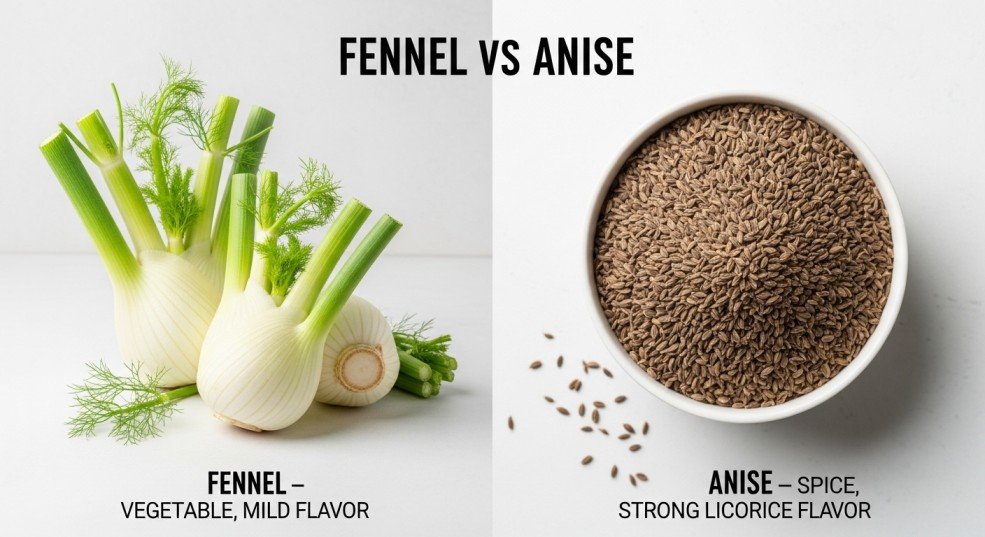
Quick Ans: The main difference between fennel vs anise is the plant type and flavor source. Fennel is a vegetable with a bulb, stalks, and seeds, while anise is a spice mainly used for its seeds. Although both share a similar licorice like taste, they come from different plants and are used in different ways.
Many people search for fennel vs anise because the two ingredients taste very similar. Both are used in cooking and baking. Both appear in spice racks and recipes around the world.
However, they are not the same.
Fennel is a full plant that includes a bulb, stalks, leaves, and seeds. Anise, on the other hand, is mainly used as a seed spice. Because of this difference, their uses vary widely in the kitchen.
Confusion often happens when recipes mention seeds or flavor. For example, a dish may call for anise, but someone might use fennel seeds instead. While the taste is close, the result can still change slightly.
Understanding fennel vs anise helps you cook more accurately. It also improves your ability to follow recipes and create balanced flavors.
This guide explains everything in simple terms. You will learn definitions, uses, benefits, mistakes, and practical examples.
Quick Answer: Fennel vs Anise
To understand fennel vs anise quickly, focus on plant type and usage.
| Feature | Fennel | Anise |
|---|---|---|
| Plant Type | Vegetable and herb | Spice plant |
| Edible Parts | Bulb, stalk, leaves, seeds | Mainly seeds |
| Flavor | Mild licorice | Strong licorice |
| Usage | Cooking and salads | Baking and flavoring |
| Origin | Mediterranean | Mediterranean and Middle East |
In simple terms, fennel is a vegetable with multiple uses, while anise is mainly a spice used for flavor.
What Is Fennel?
Fennel is a flowering plant that belongs to the carrot family. It has a white bulb, green stalks, and feathery leaves. Every part of the plant can be used in cooking.
Parts of Fennel
Fennel offers several edible parts:
- Bulb for salads and cooking
- Stalks for soups and broths
- Leaves (fronds) for garnish
- Seeds for spice
Because of this versatility, fennel appears in many dishes.
Flavor Profile
Fennel has a mild, slightly sweet flavor. The taste resembles licorice but is softer and fresher.
Common Uses of Fennel
Fennel works well in both raw and cooked dishes. For example:
- Fresh salads
- Roasted vegetables
- Soups and stews
- Fish dishes
- Herbal teas
Chefs often use fennel to add a light aromatic touch.
What Is Anise?
Anise is a plant grown mainly for its seeds. These seeds are used as a spice in cooking and baking.
Unlike fennel, anise is not commonly eaten as a vegetable.
Parts of Anise
The seeds are the most important part:
- Small, brown seeds
- Strong aroma
- Concentrated flavor
Flavor Profile
Anise has a stronger licorice flavor than fennel. The taste is more intense and slightly sweet.
Common Uses of Anise
Anise is widely used in:
- Baked goods
- Cookies and cakes
- Herbal teas
- Spice blends
- Liquor flavoring
Because of its bold flavor, only small amounts are needed.
Key Differences Between Fennel vs Anise
Plant Structure
Fennel is a full vegetable plant. Anise is mainly used for its seeds.
Flavor Strength
Fennel has a mild flavor. Anise delivers a stronger and more concentrated taste.
Culinary Use
Fennel works in savory dishes and fresh meals. Anise appears more often in desserts and spices.
Versatility
Fennel offers multiple edible parts. Anise provides mostly seeds for flavoring.
Advantages and Disadvantages
Fennel Advantages
- Versatile ingredient
- Mild and fresh flavor
- Can be eaten raw or cooked
- Provides texture and aroma
Fennel Disadvantages
- Short shelf life for fresh bulb
- Mild flavor may not stand out
- Requires preparation
Anise Advantages
- Strong and distinctive flavor
- Long shelf life as a spice
- Easy to store
- Small amount needed
Anise Disadvantages
- Limited to seeds
- Flavor can be overpowering
- Not suitable for all dishes
Therefore, choosing between fennel vs anise depends on the recipe and flavor intensity.
Nutritional Comparison
Both fennel and anise offer health benefits, though their forms differ.
| Nutrient | Fennel | Anise |
|---|---|---|
| Fiber | High (bulb) | Moderate |
| Vitamins | Vitamin C, potassium | Small amounts |
| Calories | Low | Low |
| Antioxidants | Present | Present |
Fennel provides more nutrients when eaten as a vegetable. Anise contributes smaller amounts due to its use in small quantities.
Real World Examples
Cooking at Home
A salad recipe may include fresh fennel slices for crunch. Meanwhile, a cookie recipe might use anise seeds for flavor.
Baking
Anise works well in sweet recipes. Fennel seeds can sometimes replace anise but will produce a milder taste.
Tea Preparation
Both fennel and anise seeds can be used in herbal teas. However, anise creates a stronger flavor.
These examples highlight practical uses of fennel vs anise.
Regional and Global Usage
Mediterranean Cuisine
Fennel appears in salads, seafood dishes, and roasted meals. Anise is used in desserts and drinks.
Middle Eastern Cooking
Anise is common in spice blends and sweets. Fennel seeds may also appear in savory dishes.
Global Use
Both ingredients are popular worldwide. However, their usage depends on local recipes and traditions.
Cultural differences influence how people use fennel vs anise.
Related Concepts and Comparisons
Fennel vs Anise Seeds
Fennel seeds are larger and milder. Anise seeds are smaller and stronger.
Anise vs Star Anise
Star anise comes from a different plant. It has a stronger flavor and a star shape.
Fennel vs Anise vs Licorice
All three share similar flavor notes. However, they come from different plants and are used differently.
Common Mistakes About Fennel vs Anise
Using Them Interchangeably Without Adjustment
Although flavors are similar, anise is stronger. Using equal amounts can overpower a dish.
Confusing Seeds
Fennel seeds and anise seeds look similar. However, their flavor intensity differs.
Ignoring Recipe Requirements
Recipes specify ingredients for a reason. Substituting without understanding can change results.
Overusing Anise
Too much anise can dominate a dish. Always use small amounts.
Avoiding these mistakes improves cooking accuracy.
Beginner to Advanced Cooking Tips
Beginner Level
Start with small amounts of anise. Use fresh fennel in salads.
Intermediate Level
Try roasting fennel for deeper flavor. Experiment with fennel seeds in spice mixes.
Advanced Level
Blend both ingredients in complex recipes. Balance sweet and savory flavors carefully.
As skills improve, experimenting with fennel vs anise becomes easier.
Step By Step Cooking Scenario
Imagine preparing a dish with a licorice flavor.
If you choose fennel:
- Slice the bulb
- Add to salad or roast
- Season lightly
- Serve fresh or warm
If you choose anise:
- Measure a small amount of seeds
- Add to dough or spice mix
- Cook or bake
- Adjust flavor if needed
Although both provide similar taste notes, the preparation differs greatly.
Exercises With Answers
Exercise 1
Which ingredient is a full vegetable in the fennel vs anise comparison?
Answer: Fennel.
Exercise 2
Which ingredient has a stronger licorice flavor?
Answer: Anise.
Exercise 3
Which one is commonly used in baking?
Answer: Anise.
Exercise 4
Which part of fennel is used in salads?
Answer: Bulb.
Exercise 5
True or False: Anise is commonly eaten as a vegetable.
Answer: False.
When Should You Choose Fennel vs Anise?
Choose fennel if you:
- Want a mild flavor
- Need a fresh vegetable
- Are cooking savory dishes
Choose anise if you:
- Need a strong licorice taste
- Are baking sweets
- Want concentrated spice flavor
The choice depends on the dish and flavor strength required.
FAQs About Fennel vs Anise
What is the main difference between fennel vs anise?
Fennel is a vegetable with multiple edible parts, while anise is mainly a seed spice with a stronger flavor.
Do fennel and anise taste the same?
They taste similar, but anise has a stronger and more intense flavor.
Can I substitute fennel for anise?
Yes, but you may need more fennel to match the flavor strength of anise.
Are fennel seeds the same as anise seeds?
No. Fennel seeds are milder, while anise seeds are stronger in taste.
Is anise used in savory dishes?
It can be used in some savory recipes, but it is more common in baking and sweets.
Is fennel healthy?
Yes. Fennel provides fiber, vitamins, and antioxidants.
Can I eat fennel raw?
Yes. The bulb is often sliced and eaten raw in salads.
What is star anise?
Star anise is a different plant with a stronger flavor and star shaped pods.
Which is better for tea, fennel or anise?
Both work well. Anise produces stronger tea, while fennel creates a milder drink.
Why do recipes specify fennel vs anise?
Each ingredient has a different strength and usage, so using the correct one ensures the intended flavor.
Conclusion
Understanding fennel vs anise helps you cook with confidence and accuracy. Although both share a similar licorice flavor, they differ in plant type, usage, and intensity.
Fennel is a versatile vegetable that can be eaten raw or cooked. It offers a mild flavor and works well in salads, soups, and savory dishes. Anise, on the other hand, is a spice used mainly for its seeds. It provides a strong, sweet flavor commonly found in baked goods and teas.
Choosing the right ingredient depends on the recipe. Use fennel when you need freshness and texture. Choose anise when you want a bold and concentrated flavor.
With this knowledge, you can confidently decide between fennel vs anise and create balanced, flavorful dishes every time.
Discover More:-
- Anterolisthesis vs Spondylolisthesis: Key Differences, Symptoms, and Treatment Guide
- Exception vs Acception: Meaning, Differences, and Correct Usage Guide

Lisa Thompson is a USA-based content writer and language specialist focused on grammar, writing improvement and digital publishing.
She holds a degree in English Language and Communication and has professional experience in educational and web content creation.
As the author of Gramtivo.Com, she aims to help readers improve their writing skills through clear and practical guidance.