
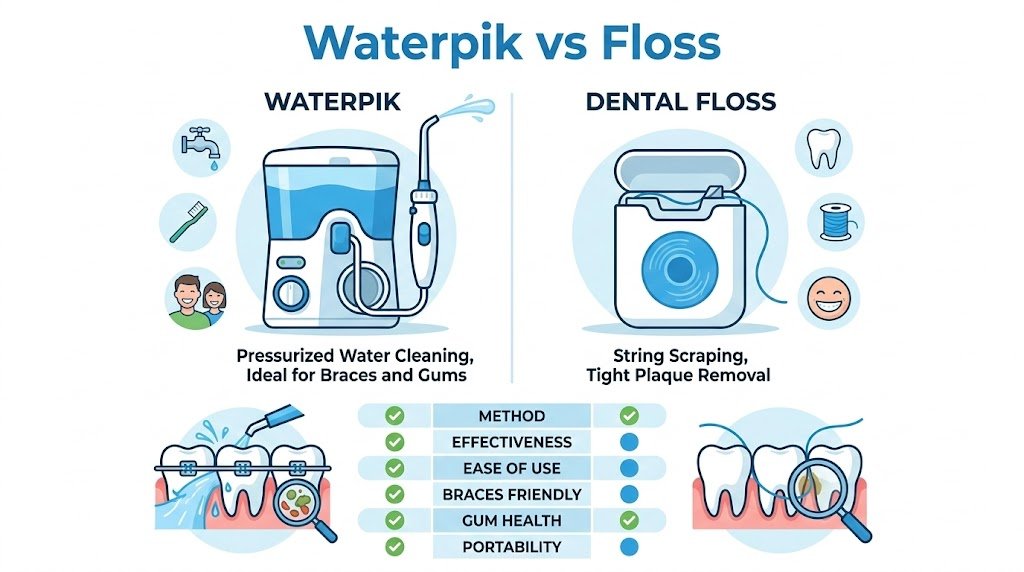
Quick Ans: The main difference between Waterpik vs floss is the cleaning method. A Waterpik uses a stream of pressurized water to remove plaque and food particles, while floss uses a thin string to scrape between teeth. Both improve gum health, but each works best in different situations.
Many people wonder about Waterpik vs floss when trying to improve their oral hygiene routine. Dentists always say to clean between your teeth. However, choosing the right tool can feel confusing.
Traditional floss has been used for decades. On the other hand, Waterpik devices, also called water flossers, are more modern. Some people prefer string floss because it is simple and cheap. Others like a Waterpik because it feels easier and more comfortable.
So which one should you use?
The answer depends on your teeth, gums, lifestyle, and dental needs. For example, someone with braces may need something different than someone with healthy gums.
In this complete guide, you will learn the difference between Waterpik vs floss, including benefits, drawbacks, real world examples, expert recommendations, common mistakes, and practice exercises. By the end, you will know which option fits your smile.
Quick Answer: Waterpik vs Floss
Here is a simple comparison.
| Feature | Waterpik | Floss |
|---|---|---|
| Cleaning Method | Pressurized water | Thin string scraping |
| Ease of Use | Easy for most people | Requires technique |
| Best For | Braces, implants, sensitive gums | Tight spaces, plaque removal |
| Portability | Less portable | Very portable |
| Cost | Higher | Very low |
| Power Source | Electric or battery | None |
In short:
- Waterpik uses water pressure.
- Floss uses physical scraping.
Both remove debris, but they do it differently.
What Is a Waterpik?
A Waterpik is a brand name commonly used for water flossers. A water flosser sprays a controlled stream of water between teeth and along the gumline.
It is powered by electricity or batteries. The device includes:
- A water reservoir
- A pump
- Adjustable pressure settings
- A small nozzle tip
When turned on, it sends pulses of water that wash away food particles and plaque.
How It Works
First, fill the tank with water.
Next, aim the tip between your teeth.
Then, turn on the device.
Finally, move along the gumline slowly.
Because the water reaches deep pockets, many dentists recommend Waterpik devices for people with gum disease.
What Is Dental Floss?
Dental floss is a thin strand of nylon or similar material used to clean between teeth. It removes plaque by scraping the tooth surface.
Floss comes in different types:
- Waxed floss
- Unwaxed floss
- Floss picks
- Tape floss
- Super floss for braces
Unlike a Waterpik, floss requires manual movement.
How It Works
First, wrap floss around your fingers.
Then, slide it gently between teeth.
Next, curve it into a C shape around one tooth.
After that, move it up and down to scrape plaque.
Finally, repeat for each tooth.
Floss physically removes plaque, which helps prevent cavities and gum disease.
Key Differences Between Waterpik vs Floss
Cleaning Action
Floss scrapes plaque directly from tooth surfaces. In contrast, a Waterpik flushes debris using water pressure.
Effectiveness
Studies show both tools improve gum health. However, floss may be slightly better at removing sticky plaque from tight contact points.
Meanwhile, Waterpik devices are very effective at reducing gum bleeding and inflammation.
Ease of Use
Many people find Waterpik easier. However, it requires electricity and water.
Floss is simple but needs proper technique.
Comfort Level
People with sensitive gums often prefer Waterpik because it feels gentle. On the other hand, floss can cause bleeding if used incorrectly.
Advantages and Disadvantages
Waterpik Advantages
- Easy to use
- Gentle on gums
- Excellent for braces and implants
- Reduces gum bleeding
Waterpik Disadvantages
- Expensive
- Needs power and water
- Takes up space in bathroom
Floss Advantages
- Very affordable
- Portable
- No electricity needed
- Excellent plaque removal
Floss Disadvantages
- Requires practice
- Can irritate gums
- Harder with braces
Therefore, the choice in Waterpik vs floss depends on your personal needs.
Effectiveness for Different Dental Conditions
Braces
Waterpik is often better because water can clean around brackets and wires more easily than floss.
Implants and Bridges
Water flossers are helpful for cleaning under dental work.
Tight Teeth
Floss may work better because it scrapes tightly packed surfaces.
Gum Disease
Waterpik devices are often recommended for reducing gum pockets and inflammation.
Real World Examples
Example 1: College Student
A student living in a dorm may prefer floss because it is small and portable.
Example 2: Person With Braces
Someone wearing braces usually benefits more from a Waterpik due to easier cleaning.
Example 3: Busy Professional
A busy person may choose Waterpik because it feels faster and simpler.
Example 4: Traveler
Floss is easier to carry during travel. However, portable water flossers are also available.
Regional and Global Usage
In many countries, traditional floss is still more common because it is inexpensive and widely available.
However, in developed countries, Waterpik devices have become popular due to advanced dental awareness and technology.
Dentists globally recommend cleaning between teeth daily, whether using floss or a Waterpik.
Related Concepts and Comparisons
Waterpik vs String Floss
This is the most common comparison. String floss scrapes plaque. Waterpik flushes debris.
Waterpik vs Floss Picks
Floss picks are easier to hold but may not clean as effectively as traditional floss.
Electric Toothbrush vs Manual Toothbrush
Just like this comparison, technology can make cleaning easier but does not always replace traditional tools.
Common Mistakes in Waterpik vs Floss Use
Using Too Much Pressure
High pressure can hurt gums. Always start with low settings.
Snapping Floss Into Gums
Floss should glide gently. Snapping causes injury.
Skipping Daily Cleaning
Both tools must be used daily for best results.
Thinking One Replaces Brushing
Neither replaces brushing. You still need a toothbrush and toothpaste.
Beginner to Advanced Tips
Beginner Level
Start slowly. If using floss, learn proper technique. If using Waterpik, begin with low pressure.
Intermediate Level
Combine brushing, flossing, and mouthwash for better oral health.
Advanced Level
Some dentists recommend using both Waterpik and floss for maximum plaque control.
For example, floss first to scrape plaque, then use Waterpik to flush debris.
Step By Step Daily Routine Example
If using floss:
- Brush teeth.
- Floss carefully between all teeth.
- Rinse mouth.
If using Waterpik:
- Brush teeth.
- Fill reservoir.
- Use water flosser along gumline.
- Rinse device and mouth.
Both routines support healthy gums when done correctly.
Exercises With Answers
Exercise 1
Which tool uses water pressure in the Waterpik vs floss comparison?
Answer: Waterpik.
Exercise 2
Which tool physically scrapes plaque?
Answer: Floss.
Exercise 3
True or False: Waterpik requires electricity.
Answer: True.
Exercise 4
Which option is usually more affordable?
Answer: Floss.
Exercise 5
Which tool is often better for braces?
Answer: Waterpik.
When Should You Choose Waterpik vs Floss?
Choose Waterpik if you:
- Have braces or implants
- Experience gum bleeding
- Prefer easier cleaning
- Have limited hand movement
Choose floss if you:
- Have tight teeth
- Want a low cost option
- Travel often
- Prefer traditional methods
Ultimately, your dentist can provide personalized advice.
FAQs About Waterpik vs Floss
Is Waterpik better than floss?
Waterpik can be better for gum health and braces, but floss may remove plaque more effectively between tight teeth.
Can Waterpik replace floss completely?
In some cases, yes. However, many dentists suggest using both for best results in the Waterpik vs floss debate.
Is floss still necessary if I use a Waterpik?
It depends on your dental condition. Some people benefit from combining both.
Does Waterpik hurt gums?
Not usually. However, high pressure settings may cause discomfort.
Why does floss make my gums bleed?
Bleeding often happens when gums are inflamed. Regular gentle flossing usually reduces bleeding over time.
Which is better for gum disease, Waterpik or floss?
Waterpik is often recommended for gum disease because it reduces inflammation and cleans deep pockets.
Is Waterpik safe for kids?
Yes, with supervision and low pressure settings.
How often should I floss or use Waterpik?
At least once daily, preferably before bedtime.
Does Waterpik remove plaque as well as floss?
It removes loose plaque and debris very well. However, floss may remove sticky plaque more directly.
Is Waterpik worth the money?
For people with braces, implants, or gum issues, it can be a valuable investment.
Conclusion
The comparison of Waterpik vs floss focuses on cleaning method, ease of use, cost, and dental condition. Waterpik uses pressurized water to flush debris and reduce gum inflammation. Floss uses a thin string to scrape plaque from between teeth.
While both improve oral health, they serve slightly different purposes. Floss is affordable, portable, and excellent for tight spaces. Waterpik is gentle, convenient, and ideal for braces or sensitive gums.
For many people, the best solution is not choosing one over the other. Instead, combining both can provide the most complete cleaning.
Talk to your dentist about your specific needs. Then build a routine that keeps your teeth and gums healthy for life.

Lisa Thompson is a USA-based content writer and language specialist focused on grammar, writing improvement and digital publishing.
She holds a degree in English Language and Communication and has professional experience in educational and web content creation.
As the author of Gramtivo.Com, she aims to help readers improve their writing skills through clear and practical guidance.