
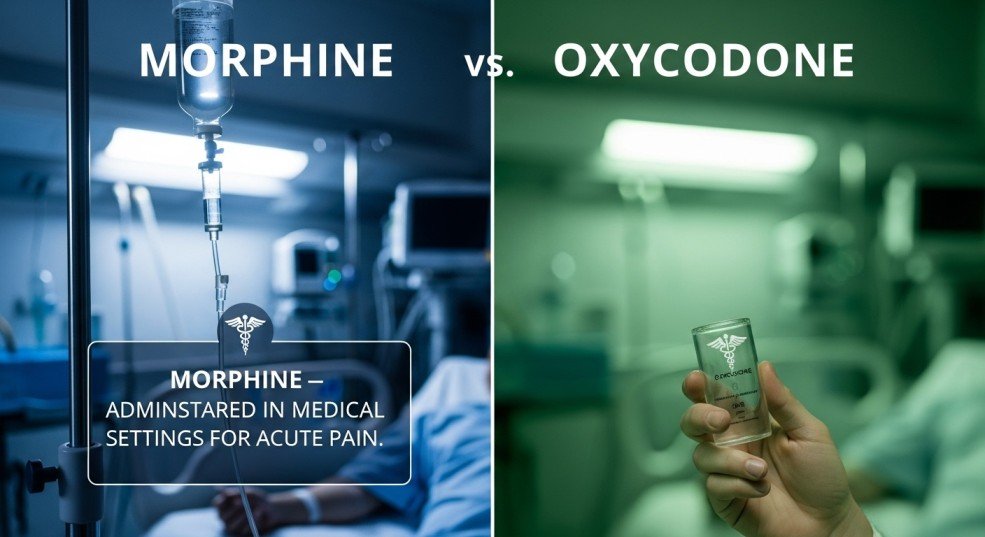
Quick Ans: The main difference between morphine vs oxycodone is how they are used and how strong they feel for different types of pain. Morphine is often used in hospitals for severe pain and has a long medical history. Oxycodone is commonly prescribed for moderate to severe pain and is available in more outpatient forms, including tablets and controlled release options.
Many people search for morphine vs oxycodone when they are prescribed pain medication. Both drugs belong to the same class. Both require careful use under medical supervision.
However, they are not identical.
Differences in strength, duration, side effects, and usage settings make each drug suitable for different situations. Some patients respond better to one medication than the other. Doctors also choose based on pain type, patient history, and risk factors.
Confusion often happens because both medications are opioids. Many assume they work the same way or have the same risks. In reality, small differences can have a big impact on safety and effectiveness.
Understanding morphine vs oxycodone helps patients make informed decisions and follow prescriptions correctly. It also helps caregivers understand treatment plans.
This guide explains the differences clearly. You will learn definitions, advantages, disadvantages, real world uses, safety considerations, and practical exercises.
Quick Answer: Morphine vs Oxycodone
To understand morphine vs oxycodone quickly, compare their common uses and forms.
| Feature | Morphine | Oxycodone |
|---|---|---|
| Drug Type | Opioid analgesic | Opioid analgesic |
| Common Use | Severe pain, hospital care | Moderate to severe pain |
| Forms | Injection, tablet, liquid | Tablet, capsule, extended release |
| Strength | Strong | Strong, sometimes perceived as stronger per dose |
| Setting | Often hospital | Often home and outpatient |
In simple terms, morphine is widely used in clinical settings, while oxycodone is commonly prescribed for home use.
What Is Morphine?
Morphine is a powerful opioid medication used to treat severe pain. Doctors have used it for many years, especially in hospital environments.
It works by binding to opioid receptors in the brain. As a result, it reduces how the body feels pain.
Common Uses of Morphine
Morphine is often used in:
- Post surgery pain
- Cancer related pain
- Emergency care
- Palliative care
Because of its strength, doctors usually monitor its use closely.
Forms of Morphine
Morphine comes in several forms:
- Injectable solutions
- Immediate release tablets
- Extended release tablets
- Oral liquid
Hospital settings frequently use injections for quick relief.
How Morphine Works
Morphine affects the central nervous system. It changes how pain signals travel in the brain.
Consequently, patients feel less pain and more comfort. However, this effect also causes side effects such as drowsiness.
What Is Oxycodone?
Oxycodone is another opioid used for pain relief. It is often prescribed for moderate to severe pain that requires ongoing treatment.
Doctors frequently prescribe oxycodone for home use.
Common Uses of Oxycodone
Oxycodone is used for:
- Injury related pain
- Chronic pain conditions
- Post surgical recovery at home
- Back pain and joint pain
Because it is available in oral forms, patients can take it without hospital supervision.
Forms of Oxycodone
Oxycodone is available as:
- Immediate release tablets
- Extended release tablets
- Combination medications with other drugs
Extended release versions provide long lasting pain control.
How Oxycodone Works
Like morphine, oxycodone binds to opioid receptors. This action reduces pain signals and changes perception.
As a result, patients experience pain relief along with relaxation.
Key Differences Between Morphine vs Oxycodone
Strength and Potency
Both drugs are strong. However, oxycodone may feel stronger per milligram in some cases. Doctors adjust doses carefully to avoid overdose.
Usage Setting
Morphine is often used in hospitals or controlled environments. Oxycodone is commonly prescribed for outpatient use.
Duration
Some forms of both drugs last short periods. Extended release versions provide longer relief. Oxycodone extended release is widely used for chronic pain.
Availability
Oxycodone is more commonly prescribed in tablet form for home use. Morphine is more common in clinical settings, especially injections.
Advantages and Disadvantages
Morphine Advantages
- Strong pain relief
- Fast acting when injected
- Widely studied and understood
- Effective for severe pain
Morphine Disadvantages
- Requires close monitoring
- Higher risk of side effects in high doses
- Less convenient for home use
- Can cause drowsiness and nausea
Oxycodone Advantages
- Available in convenient tablet forms
- Suitable for home treatment
- Effective for chronic pain
- Extended release options available
Oxycodone Disadvantages
- Risk of misuse and dependence
- Can cause similar opioid side effects
- Requires strict prescription control
Therefore, choosing between morphine vs oxycodone depends on medical needs and supervision level.
Safety and Side Effects
Both medications share similar risks because they are opioids.
Common Side Effects
- Drowsiness
- Constipation
- Nausea
- Dizziness
Serious Risks
- Breathing problems
- Dependence
- Overdose
Because of these risks, doctors prescribe the lowest effective dose.
Patients should always follow medical advice carefully.
Real World Examples
Hospital Scenario
A patient recovering from major surgery may receive morphine through an IV. This provides fast and controlled pain relief.
Home Recovery Scenario
A patient recovering from minor surgery may receive oxycodone tablets for home use.
Chronic Pain Management
Patients with long term pain conditions may use extended release oxycodone for consistent relief.
These examples show how morphine vs oxycodone applies in real life.
Regional and Global Usage
Hospitals Worldwide
Morphine remains a standard pain medication in hospitals across the world.
Outpatient Care
Oxycodone is commonly prescribed in many countries for home use, although regulations vary.
Regulation Differences
Some regions restrict opioid prescriptions more strictly. Doctors follow local guidelines to ensure safety.
Related Concepts and Comparisons
Opioids vs Non Opioids
Opioids like morphine and oxycodone treat severe pain. Non opioid medications such as ibuprofen treat mild to moderate pain.
Immediate vs Extended Release
Immediate release drugs act quickly but last shorter. Extended release drugs provide longer lasting effects.
Morphine vs Oxycodone vs Codeine
| Drug | Strength | Common Use |
|---|---|---|
| Morphine | Very strong | Severe pain |
| Oxycodone | Strong | Moderate to severe pain |
| Codeine | Mild to moderate | Mild pain |
Understanding these comparisons helps clarify the morphine vs oxycodone discussion.
Common Mistakes About Morphine vs Oxycodone
Assuming They Are Safe Without Supervision
Both drugs require medical guidance. Misuse can be dangerous.
Thinking One Is Always Stronger
Strength depends on dosage and patient response.
Ignoring Side Effects
Side effects should be reported to a doctor immediately.
Taking More Than Prescribed
Increasing dosage without approval increases risk of overdose.
Avoiding these mistakes improves safety.
Beginner to Advanced Usage Guidance
Beginner Level
Follow prescription instructions exactly. Never adjust dosage without consulting a doctor.
Intermediate Level
Track pain levels and side effects. Share this information with healthcare providers.
Advanced Level
Work with doctors to adjust treatment plans for long term pain management.
Step By Step Usage Scenario
Imagine managing post surgery pain.
If prescribed morphine:
- Receive medication in hospital
- Monitor vital signs
- Adjust dose under supervision
If prescribed oxycodone:
- Take tablets as directed
- Follow schedule carefully
- Avoid mixing with alcohol
- Report side effects
Each medication requires careful use based on the setting.
Exercises With Answers
Exercise 1
Which drug is more commonly used in hospitals?
Answer: Morphine.
Exercise 2
Which medication is often prescribed for home use?
Answer: Oxycodone.
Exercise 3
Are both drugs opioids?
Answer: Yes.
Exercise 4
Which type of medication requires careful monitoring?
Answer: Both morphine and oxycodone.
Exercise 5
True or False: These drugs are safe to use without medical supervision.
Answer: False.
When Should You Use Morphine vs Oxycodone?
Use morphine when:
- Pain is severe
- Hospital care is available
- Immediate relief is needed
Use oxycodone when:
- Pain continues after discharge
- Home treatment is required
- Long term management is needed
Doctors make the final decision based on patient needs.
FAQs About Morphine vs Oxycodone
What is the main difference between morphine vs oxycodone?
Morphine is often used in hospitals for severe pain, while oxycodone is commonly prescribed for home use.
Is oxycodone stronger than morphine?
It can feel stronger per dose in some cases, but strength depends on dosage and patient response.
Are both drugs addictive?
Yes. Both have a risk of dependence and must be used carefully.
Which works faster, morphine or oxycodone?
Injected morphine works faster. Oral oxycodone takes longer to act.
Can you take both medications together?
Only under strict medical supervision.
Which is better for chronic pain?
Oxycodone is often used for chronic pain management.
Do both cause side effects?
Yes. Common effects include drowsiness, nausea, and constipation.
Are these medications safe?
They are safe when used exactly as prescribed by a doctor.
Can you stop them suddenly?
Stopping suddenly may cause withdrawal symptoms. Always consult a doctor.
Why are these drugs controlled?
Because of their potential for misuse, dependence, and overdose.
Conclusion
Understanding morphine vs oxycodone is important for safe and effective pain management. Although both are powerful opioid medications, their usage differs based on setting, duration, and patient needs.
Morphine is commonly used in hospitals for severe pain and rapid relief. Oxycodone is often prescribed for home use and long term pain control.
Each medication has benefits and risks. Therefore, proper medical guidance is essential. Patients should always follow prescriptions carefully and report any side effects.
Choosing between morphine vs oxycodone is not about which is better. Instead, it depends on the type of pain, treatment setting, and individual response.
With the right knowledge and medical support, both medications can provide effective pain relief while minimizing risks.
Discover More:-
- Yuca vs Yucca: Differences, Uses, Benefits, and Complete Guide
- Crest vs Colgate: Differences, Benefits, and Which Toothpaste Is Better

Robert Mitchell is a U.S.-based writer at Gramtivo.Com who focuses on grammar, writing improvement, and language-related content. He holds a degree in English and Linguistics from a U.S. university. His work aims to help readers enhance their writing skills with clear and practical guidance.