
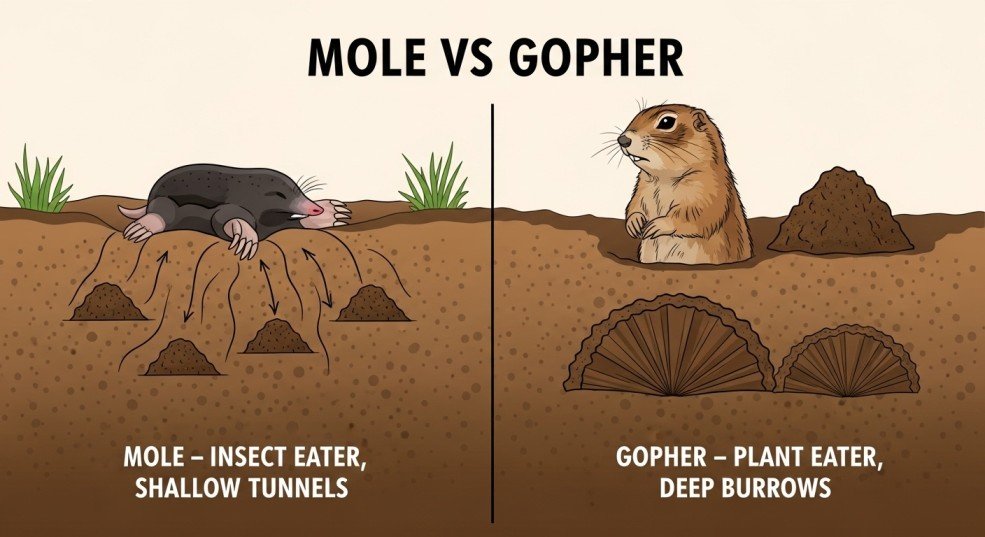
Quick Ans: The main difference between mole vs gopher is their behavior and diet. Moles are insect-eating mammals that dig tunnels just below the surface, while gophers are plant-eating rodents that create deeper burrows and feed on roots. Although both damage lawns, they affect soil and plants in very different ways.
Many homeowners struggle to tell the difference between mole vs gopher. Both animals dig underground. Both leave mounds of soil.
However, they are not the same.
Moles mainly eat insects and help control pests. Gophers feed on plants and often destroy roots. Because of this, the type of damage they cause is very different.
The confusion usually happens when people see soil piles in their yard. It is easy to assume one animal is responsible. In reality, identifying the correct pest is important before taking action.
Choosing the wrong solution can waste time and money. For example, treating for insects may not stop a gopher. Likewise, plant protection will not remove a mole problem.
Understanding mole vs gopher helps you protect your lawn effectively. This guide explains their differences, behavior, damage patterns, advantages, disadvantages, and control methods in simple terms.
Quick Answer: Mole vs Gopher
To quickly understand mole vs gopher, focus on diet and tunneling behavior.
| Feature | Mole | Gopher |
|---|---|---|
| Diet | Insects and worms | Roots and plants |
| Tunnels | Shallow surface tunnels | Deep burrow systems |
| Soil Mounds | Small, volcano shaped | Large, fan shaped |
| Damage Type | Lawn surface disturbance | Plant root destruction |
| Body Type | Insectivore | Rodent |
In short, moles eat insects, while gophers eat plants.
What Is a Mole?
A mole is a small insect eating mammal that lives underground. It belongs to a group of animals known for digging and hunting below the surface.
Moles have:
- Velvety fur
- Small eyes
- Strong front claws
- Pointed snout
These features help them move easily through soil.
How Moles Behave
Moles spend most of their time underground. They dig tunnels close to the surface to hunt insects like worms and grubs.
Because they search for food daily, they create long networks of tunnels. These tunnels often appear as raised ridges in lawns.
What Moles Eat
Moles mainly feed on:
- Earthworms
- Grubs
- Insects
- Larvae
Since they eat pests, moles can actually benefit soil health in some situations.
How Moles Dig
The digging process follows a simple pattern:
- Use strong claws to push soil aside
- Create shallow tunnels
- Move quickly through passages
- Search for insects
As a result, lawns may look uneven but plants are usually not eaten.
What Is a Gopher?
A gopher is a burrowing rodent that lives underground and feeds on plant material. Unlike moles, gophers are herbivores.
Gophers have:
- Large front teeth
- Strong digging claws
- Fur lined cheek pouches
- Stocky body
These features help them gather and store food.
How Gophers Behave
Gophers dig deeper burrows than moles. They create complex tunnel systems where they live, store food, and raise young.
Because they stay underground most of the time, they are rarely seen above ground.
What Gophers Eat
Gophers feed mainly on:
- Plant roots
- Tubers
- Bulbs
- Stems
As a result, they can kill plants by cutting off their root systems.
How Gophers Dig
Gopher digging includes:
- Creating deep tunnels
- Pushing soil to the surface
- Forming large mounds
- Expanding burrow systems
This activity causes serious damage to gardens and crops.
Key Differences Between Mole vs Gopher
Diet
The biggest difference in mole vs gopher is diet. Moles eat insects. Gophers eat plants.
Tunnel Depth
Moles dig shallow tunnels near the surface. Gophers build deeper, more complex burrows.
Soil Mounds
Mole mounds are smaller and more rounded. Gopher mounds are larger and fan shaped.
Damage Type
Moles disturb soil but rarely kill plants. Gophers destroy roots and damage crops.
Visibility
Moles create visible surface ridges. Gophers leave large dirt piles without visible tunnels.
Advantages and Disadvantages
Mole Advantages
Moles offer some benefits:
- Control insect populations
- Improve soil aeration
- Support natural ecosystem balance
Mole Disadvantages
However, they also cause issues:
- Create uneven lawns
- Damage grass roots slightly
- Leave surface tunnels
Gopher Advantages
Gophers have limited benefits:
- Help mix soil layers
- Improve soil turnover
Gopher Disadvantages
Their damage is more serious:
- Destroy plant roots
- Kill crops and garden plants
- Create large unsightly mounds
Therefore, the impact of mole vs gopher differs greatly.
Real World Examples
Lawn Damage
A homeowner notices raised lines across the lawn. This pattern usually indicates mole activity.
Another homeowner sees large dirt piles with no surface ridges. This sign points to gophers.
Garden Impact
Moles rarely kill plants directly. Gophers, however, often destroy vegetables and flowers by eating roots.
Farming Areas
Farmers worry more about gophers than moles. Gophers can damage crops quickly and reduce yields.
These examples show why identifying mole vs gopher is important.
Regional and Global Usage
North America
Both moles and gophers are common in many regions. Lawns and gardens often experience their activity.
Rural Areas
Gophers appear more frequently in agricultural zones. Their feeding habits make them a serious concern for farmers.
Urban Areas
Moles are more common in residential lawns. Their tunnels follow insect populations in soil.
Therefore, environment plays a role in the mole vs gopher presence.
Related Concepts and Comparisons
Mole vs Vole
Voles are small rodents that live above ground more often and feed on plants, similar to gophers.
Gopher vs Groundhog
Groundhogs are larger animals that create visible burrows and spend time above ground.
Mole vs Gopher vs Vole
| Feature | Mole | Gopher | Vole |
|---|---|---|---|
| Diet | Insects | Plants | Plants |
| Tunnel Depth | Shallow | Deep | Shallow |
| Damage | Lawn surface | Roots | Plants and grass |
Understanding these differences helps clarify pest identification.
Common Mistakes About Mole vs Gopher
Assuming All Lawn Damage Is the Same
Different patterns indicate different animals. Identifying the correct pest is essential.
Using the Wrong Control Method
Treating insects may reduce moles but will not stop gophers. Likewise, plant protection alone does not solve mole problems.
Ignoring Soil Clues
Mound shape and tunnel patterns provide important identification clues.
Acting Too Late
Delaying action allows tunnel systems to grow larger and damage to increase.
Avoiding these mistakes improves pest control success.
Beginner to Advanced Control Tips
Beginner Level
Start by identifying the animal correctly. Observe mound shape and tunnel patterns.
Intermediate Level
Use traps or barriers based on the specific pest. Choose methods suitable for your lawn type.
Advanced Level
Combine strategies such as:
- Soil treatment
- Habitat modification
- Professional pest control
Integrated approaches provide better long term results.
Step By Step Identification Scenario
Imagine you see damage in your yard.
If you notice raised tunnels across the surface:
- Check for ridges in grass
- Look for small mounds
- Confirm mole activity
If you see large soil piles:
- Observe mound shape
- Look for fan shaped patterns
- Identify gopher presence
Correct identification helps you choose the right solution.
Exercises With Answers
Exercise 1
Which animal eats insects in the mole vs gopher comparison?
Answer: Mole.
Exercise 2
Which animal feeds on plant roots?
Answer: Gopher.
Exercise 3
Which creates shallow surface tunnels?
Answer: Mole.
Exercise 4
Which causes more damage to plants?
Answer: Gopher.
Exercise 5
True or False: Moles usually eat plant roots.
Answer: False.
When Should You Worry About Mole vs Gopher?
Worry about moles if you:
- See raised tunnels in lawns
- Notice uneven grass surfaces
- Observe insect activity
Worry about gophers if you:
- Find large soil mounds
- See plants dying suddenly
- Notice root damage
Recognizing these signs helps protect your property.
FAQs About Mole vs Gopher
What is the main difference between mole vs gopher?
The main difference is diet. Moles eat insects, while gophers eat plants and roots.
Which is more harmful, mole or gopher?
Gophers are more harmful because they destroy plant roots and crops.
Do moles damage plants?
Moles rarely eat plants, but their tunnels can disturb roots.
How can I tell if I have a mole or gopher?
Look at soil patterns. Moles create surface ridges, while gophers create large mounds.
Are gophers rodents?
Yes. Gophers are rodents, while moles are not.
Do moles help the soil?
Yes. Moles improve soil aeration and control insects.
Can both animals live in the same yard?
Yes. However, they usually prefer different conditions.
What attracts moles?
Moles are attracted to areas with many insects and worms.
What attracts gophers?
Gophers are attracted to plants, roots, and crops.
Which is harder to remove, mole or gopher?
Gophers are often harder to control because of their deep burrow systems.
Conclusion
Understanding mole vs gopher is essential for protecting lawns and gardens. Although both animals live underground and create soil mounds, their behavior and impact differ greatly.
Moles focus on insects and create shallow tunnels. Their activity may disturb lawns, but they can also benefit soil health. Gophers, on the other hand, feed on plant roots and cause serious damage to gardens and crops.
Identifying the correct pest is the first step toward effective control. Observing tunnel patterns and mound shapes provides clear clues. Once identified, you can choose the right solution and avoid unnecessary effort.
Homeowners should act early to prevent damage from spreading. Using proper methods based on the specific animal leads to better results.
By understanding the differences in mole vs gopher, you can protect your outdoor space and maintain a healthy lawn.
Discover More:-
- Crest vs Colgate: Differences, Benefits, and Which Toothpaste Is Better
- Yuca vs Yucca: Differences, Uses, Benefits, and Complete Guide

Jennifer Collins is a professional grammar expert and language educator at gramtivo.com, specializing in English grammar, writing skills, and language improvement. She holds a Master’s degree in English Language and Literature from a recognized university in the United States. With years of teaching and content development experience, she is dedicated to helping learners improve their communication skills with clear and practical guidance.