
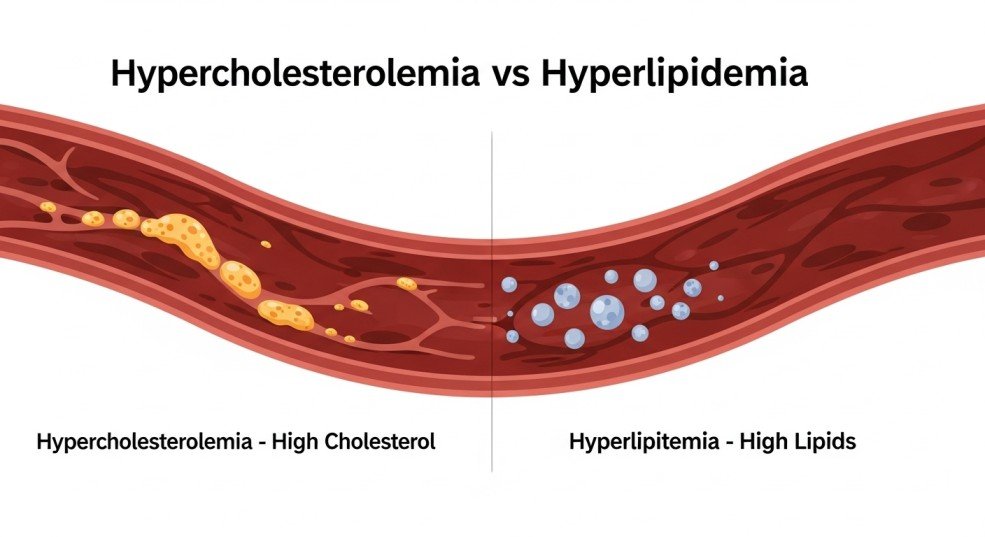
Quick Ans: The key difference between hypercholesterolemia vs hyperlipidemia is what is elevated in the blood. Hypercholesterolemia refers specifically to high cholesterol levels, especially LDL cholesterol. In contrast, hyperlipidemia is a broader term that includes high levels of cholesterol, triglycerides, or both.
Many people feel confused when they hear the terms hypercholesterolemia vs hyperlipidemia. Both relate to fats in the blood. Both increase the risk of heart disease.
However, they are not the same.
Hypercholesterolemia focuses only on cholesterol levels. Hyperlipidemia includes cholesterol plus other lipids such as triglycerides. Because of this difference, doctors use each term in specific situations.
Understanding the difference is important. It helps you read lab reports correctly. It also helps you follow the right treatment plan.
For example, some people have high cholesterol but normal triglycerides. Others have both elevated. These conditions require different lifestyle changes and sometimes different medications.
This guide explains hypercholesterolemia vs hyperlipidemia in simple terms. You will learn definitions, causes, symptoms, treatment options, real world examples, common mistakes, and practical exercises.
Quick Answer: Hypercholesterolemia vs Hyperlipidemia
To quickly understand hypercholesterolemia vs hyperlipidemia, focus on what is elevated in the blood.
| Feature | Hypercholesterolemia | Hyperlipidemia |
|---|---|---|
| Meaning | High cholesterol only | High lipids (cholesterol + triglycerides) |
| Scope | Narrow | Broad |
| Includes Triglycerides | No | Yes |
| Common Marker | High LDL cholesterol | High LDL, triglycerides, or both |
| Medical Use | Specific diagnosis | General category |
In simple terms, hypercholesterolemia is a type of hyperlipidemia.
What Is Hypercholesterolemia?
Hypercholesterolemia means having high levels of cholesterol in the blood. Cholesterol is a waxy substance that the body needs for building cells and hormones.
However, too much cholesterol can be harmful.
Types of Cholesterol
Cholesterol is carried in the blood by lipoproteins:
- LDL cholesterol (bad cholesterol)
- HDL cholesterol (good cholesterol)
High LDL cholesterol increases the risk of plaque buildup in arteries. This condition is linked to atherosclerosis.
Causes of Hypercholesterolemia
Several factors can raise cholesterol levels:
- Unhealthy diet high in saturated fats
- Lack of physical activity
- Obesity
- Smoking
- Genetic conditions such as familial hypercholesterolemia
Because genetics can play a role, some people develop high cholesterol even with a healthy lifestyle.
Symptoms
Hypercholesterolemia often shows no symptoms. Many people discover it only through blood tests.
What Is Hyperlipidemia?
Hyperlipidemia refers to high levels of lipids in the blood. Lipids include cholesterol and triglycerides.
This term covers a wider range of conditions compared to hypercholesterolemia.
Types of Lipids
Lipids in the blood include:
- Cholesterol (LDL and HDL)
- Triglycerides
Triglycerides store unused calories and provide energy. High levels increase cardiovascular risk.
Causes of Hyperlipidemia
Common causes include:
- Poor diet
- Excess sugar intake
- Alcohol consumption
- Sedentary lifestyle
- Diabetes
- Genetic disorders
Because hyperlipidemia includes multiple lipid types, its causes can be more complex.
Symptoms
Like hypercholesterolemia, hyperlipidemia usually has no visible symptoms. Blood tests are required for diagnosis.
Key Differences Between Hypercholesterolemia vs Hyperlipidemia
Scope
The main difference in hypercholesterolemia vs hyperlipidemia is scope. Hypercholesterolemia is specific to cholesterol. Hyperlipidemia includes all blood lipids.
Triglycerides
Hypercholesterolemia does not involve triglycerides. Hyperlipidemia includes elevated triglycerides.
Diagnosis
Doctors use hypercholesterolemia when cholesterol alone is high. They use hyperlipidemia when multiple lipid levels are abnormal.
Clinical Use
Hyperlipidemia acts as a general category. Hypercholesterolemia is a specific diagnosis within that category.
Advantages and Disadvantages of Understanding Each Term
Benefits of Identifying Hypercholesterolemia
- Helps target cholesterol reduction
- Guides LDL focused treatment
- Useful for genetic diagnosis
Limitations
- Does not include triglyceride issues
- May miss broader lipid problems
Benefits of Identifying Hyperlipidemia
- Covers all lipid abnormalities
- Helps in comprehensive treatment
- Provides complete risk assessment
Limitations
- Less specific
- Requires more detailed analysis
Understanding both terms improves medical awareness and treatment accuracy.
Nutritional and Health Impact Comparison
| Factor | Hypercholesterolemia | Hyperlipidemia |
|---|---|---|
| Risk | Heart disease | Heart disease + metabolic issues |
| Focus | LDL cholesterol | LDL + triglycerides |
| Diet Change | Reduce fats | Reduce fats and sugars |
| Exercise | Important | Essential |
Because hyperlipidemia includes more factors, it often requires broader lifestyle changes.
Real World Examples
Example 1: High Cholesterol Only
A patient has high LDL but normal triglycerides. Doctors diagnose hypercholesterolemia. Treatment focuses on lowering cholesterol.
Example 2: Mixed Lipid Disorder
Another patient has high LDL and high triglycerides. Doctors diagnose hyperlipidemia. Treatment includes diet, exercise, and medication.
Example 3: Routine Health Check
During a routine test, a doctor may first note hyperlipidemia. Later, detailed analysis may confirm hypercholesterolemia.
These examples show how hypercholesterolemia vs hyperlipidemia applies in real life.
Regional and Global Usage
Medical Practice
Doctors worldwide use both terms. Hyperlipidemia appears more often in general reports.
Public Awareness
Many people recognize the term high cholesterol more than hyperlipidemia.
Healthcare Systems
Different healthcare systems may prefer one term over the other depending on guidelines.
Therefore, understanding both improves communication with healthcare providers.
Related Concepts and Comparisons
LDL vs HDL
LDL increases risk. HDL helps remove excess cholesterol.
Triglycerides vs Cholesterol
Triglycerides store energy. Cholesterol supports cell structure.
Hyperlipidemia vs Dyslipidemia
Dyslipidemia refers to abnormal lipid levels, including low HDL or high LDL.
| Term | Meaning |
|---|---|
| Hypercholesterolemia | High cholesterol |
| Hyperlipidemia | High lipids |
| Dyslipidemia | Abnormal lipid balance |
These related terms help clarify the broader lipid health picture.
Common Mistakes About Hypercholesterolemia vs Hyperlipidemia
Using Terms Interchangeably
Many people treat both terms as identical. In reality, hypercholesterolemia is only one type of hyperlipidemia.
Ignoring Triglycerides
Focusing only on cholesterol can miss important triglyceride issues.
Skipping Regular Tests
Since both conditions lack symptoms, regular blood tests are essential.
Assuming Diet Alone Is Enough
Lifestyle changes help, but some cases require medication.
Avoiding these mistakes leads to better health management.
Beginner to Advanced Health Tips
Beginner Level
Start with simple changes:
- Eat less saturated fat
- Walk daily
- Reduce processed food
Intermediate Level
Add more structured habits:
- Follow a balanced diet plan
- Monitor lipid levels regularly
- Maintain healthy weight
Advanced Level
Consider medical guidance:
- Use prescribed medications
- Track detailed lipid profiles
- Manage underlying conditions
These steps support long term control of both conditions.
Step By Step Health Scenario
Imagine you receive a blood test report.
If only cholesterol is high:
- Doctor diagnoses hypercholesterolemia
- Focus on reducing LDL
- Adjust diet and exercise
- Consider medication if needed
If multiple lipids are high:
- Doctor diagnoses hyperlipidemia
- Address cholesterol and triglycerides
- Modify diet more broadly
- Follow comprehensive treatment plan
Understanding hypercholesterolemia vs hyperlipidemia helps you follow the correct approach.
Exercises With Answers
Exercise 1
Which condition includes triglycerides?
Answer: Hyperlipidemia.
Exercise 2
Which condition refers only to cholesterol?
Answer: Hypercholesterolemia.
Exercise 3
True or False: Hyperlipidemia is more specific than hypercholesterolemia.
Answer: False.
Exercise 4
Which condition is broader?
Answer: Hyperlipidemia.
Exercise 5
Which condition focuses on LDL cholesterol?
Answer: Hypercholesterolemia.
When Should You Focus on Hypercholesterolemia vs Hyperlipidemia?
Focus on hypercholesterolemia if:
- Only cholesterol levels are high
- LDL reduction is the main goal
Focus on hyperlipidemia if:
- Multiple lipid levels are elevated
- You need comprehensive treatment
Doctors decide based on blood test results.
FAQs About Hypercholesterolemia vs Hyperlipidemia
What is the difference between hypercholesterolemia vs hyperlipidemia?
Hypercholesterolemia refers to high cholesterol only, while hyperlipidemia includes high cholesterol and triglycerides.
Is hypercholesterolemia a type of hyperlipidemia?
Yes. Hypercholesterolemia is a specific form within the broader hyperlipidemia category.
Which is more dangerous, hypercholesterolemia or hyperlipidemia?
Both can be serious. Hyperlipidemia may carry broader risk because it includes multiple lipid abnormalities.
Do both conditions cause symptoms?
No. Both are usually silent and detected through blood tests.
Can diet control both conditions?
Diet plays a major role, but some cases require medication.
What tests diagnose hyperlipidemia?
A lipid profile test measures cholesterol and triglycerides.
Is high triglyceride part of hypercholesterolemia?
No. Triglycerides are part of hyperlipidemia, not hypercholesterolemia.
Can exercise reduce both conditions?
Yes. Regular physical activity helps improve lipid levels.
Are these conditions genetic?
Some forms, especially hypercholesterolemia, can be inherited.
How often should you test lipid levels?
Adults should test regularly based on medical advice, usually every few years or more often if at risk.
Conclusion
Understanding hypercholesterolemia vs hyperlipidemia is important for managing heart health. Although both involve fats in the blood, they differ in scope and meaning.
Hypercholesterolemia refers specifically to high cholesterol, especially LDL. This condition focuses on one type of lipid. Hyperlipidemia, however, includes high cholesterol, high triglycerides, or both.
Because hyperlipidemia covers a broader range, it often requires more comprehensive treatment. Lifestyle changes such as healthy diet, exercise, and weight management play a key role in both conditions.
Regular blood testing remains essential since symptoms are usually absent. Early detection allows better control and reduces the risk of heart disease.
By understanding the difference between hypercholesterolemia vs hyperlipidemia, you can make informed health decisions and follow the right treatment plan.
Discover More:-
- Dissolution vs Divorce: Key Differences, Process, and Legal Guide
- AG1 vs 8Greens: Differences, Benefits, Ingredients, and Which to Choose

Robert Mitchell is a U.S.-based writer at Gramtivo.Com who focuses on grammar, writing improvement, and language-related content. He holds a degree in English and Linguistics from a U.S. university. His work aims to help readers enhance their writing skills with clear and practical guidance.