
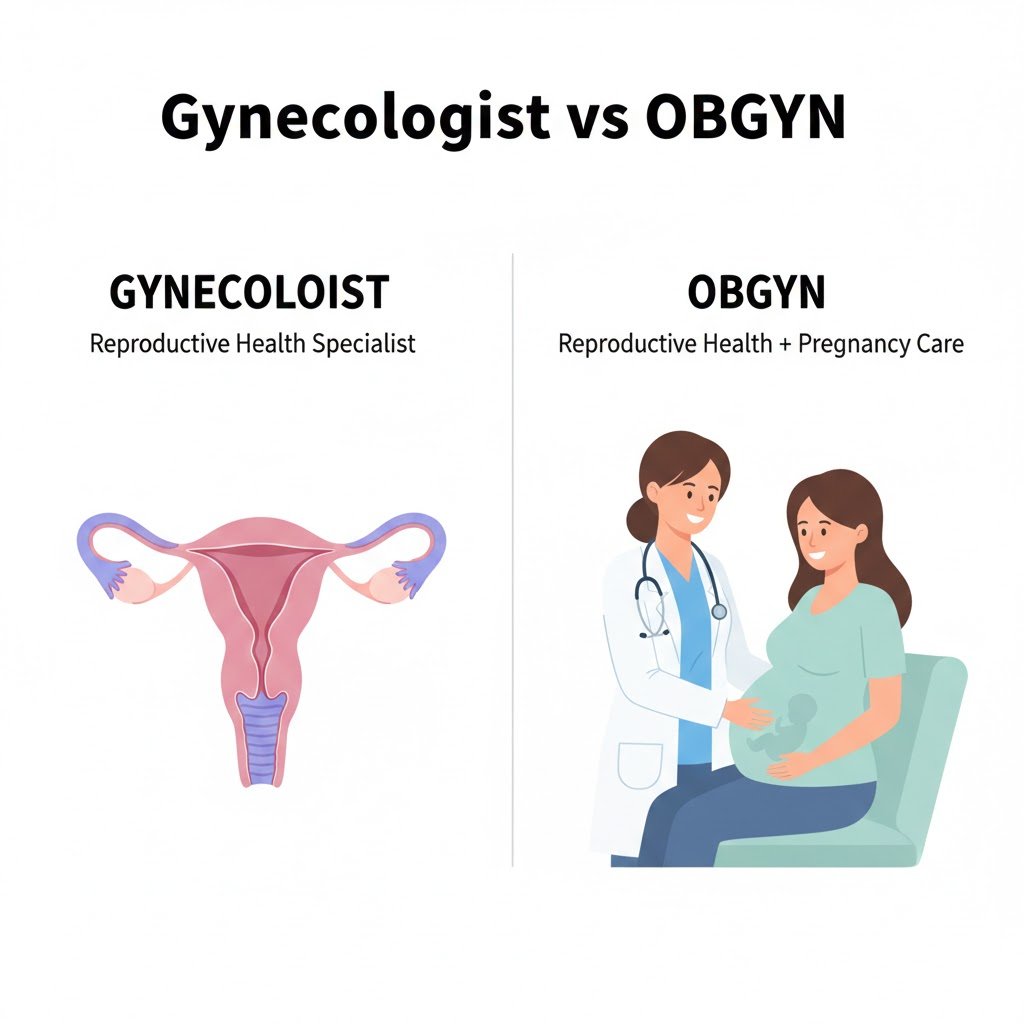
Quick Answer: The main difference between a gynecologist vs OBGYN is scope of practice. A gynecologist focuses only on female reproductive health, while an OBGYN is trained in both gynecology and obstetrics, meaning they care for women during pregnancy and childbirth as well. In simple terms, every OBGYN is a gynecologist, but not every gynecologist is an OBGYN.
Many people feel confused about gynecologist vs OBGYN. The words sound similar. In fact, they are often used as if they mean the same thing. However, there is a small but important difference.
When you book a doctor for women’s health, you may see both titles listed. As a result, you might wonder which one you actually need. Should you see a gynecologist? Or is an OBGYN better?
The answer depends on your situation.
If you are pregnant, your choice matters. Likewise, if you need routine exams, birth control advice, or help with menstrual problems, the right specialist can make a big difference.
Understanding gynecologist vs OBGYN helps you choose the correct doctor, avoid confusion, and receive proper care. In this guide, you will learn definitions, training differences, advantages, real world examples, common mistakes, FAQs, and more. By the end, the difference will be clear and simple.
Quick Answer: Gynecologist vs OBGYN
Here is a simple comparison.
| Feature | Gynecologist | OBGYN |
|---|---|---|
| Focus | Female reproductive health | Reproductive health + pregnancy |
| Handles pregnancy | No | Yes |
| Delivers babies | No | Yes |
| Performs surgeries | Yes | Yes |
| Annual exams | Yes | Yes |
In short:
- A gynecologist treats issues related to the female reproductive system.
- An OBGYN treats those same issues and also manages pregnancy and childbirth.
What Is a Gynecologist?
A gynecologist is a medical doctor who specializes in the health of the female reproductive system.
This includes:
- Uterus
- Ovaries
- Fallopian tubes
- Cervix
- Vagina
They diagnose and treat conditions such as:
- Irregular periods
- Pelvic pain
- Ovarian cysts
- Endometriosis
- Menopause symptoms
- Sexually transmitted infections
In addition, gynecologists perform routine screenings like Pap smears and pelvic exams.
However, they do not manage pregnancy or deliver babies. That is the key point in the gynecologist vs OBGYN comparison.
Training of a Gynecologist
After medical school, a gynecologist completes specialized training in women’s reproductive health. Some may focus even further on areas such as:
- Fertility
- Hormonal disorders
- Minimally invasive surgery
Therefore, a gynecologist is highly trained in non pregnancy related reproductive care.
What Is an OBGYN?
An OBGYN is a doctor trained in two areas:
- Obstetrics
- Gynecology
Obstetrics focuses on pregnancy, childbirth, and care after delivery. Meanwhile, gynecology focuses on the reproductive system outside of pregnancy.
Because of this dual training, OBGYNs provide a wider range of services.
They:
- Confirm and monitor pregnancy
- Perform ultrasounds
- Manage labor and delivery
- Handle high risk pregnancies
- Provide postpartum care
At the same time, they also offer routine gynecological services.
Thus, in the gynecologist vs OBGYN comparison, the OBGYN covers everything a gynecologist does plus pregnancy care.
Key Differences Between Gynecologist vs OBGYN
Scope of Practice
The most important difference is scope.
- Gynecologist focuses only on reproductive health.
- OBGYN handles reproductive health and pregnancy.
Pregnancy Care
If you are pregnant or planning to conceive, you need an OBGYN. A gynecologist does not deliver babies.
Continuity of Care
An OBGYN can treat a woman from teenage years through menopause and also manage pregnancy. Therefore, some women prefer having one doctor for all stages of life.
Specialization Focus
Some gynecologists choose to focus deeply on non pregnancy conditions. As a result, they may provide specialized expertise in areas like endometriosis or menopause.
Advantages and Disadvantages
Gynecologist Advantages
- Focused expertise in non pregnancy issues
- May have more time for complex reproductive conditions
- Suitable for women not planning pregnancy
Gynecologist Disadvantages
- Cannot manage pregnancy
- May require referral if pregnancy occurs
OBGYN Advantages
- Provides complete women’s health care
- Manages pregnancy and delivery
- One doctor for long term care
OBGYN Disadvantages
- May have busy schedules due to deliveries
- Sometimes less focused on specialized non pregnancy issues
Therefore, choosing between gynecologist vs OBGYN depends on your health goals.
Real World Examples
Scenario 1: Routine Checkup
If you need a Pap smear or birth control consultation, both a gynecologist and an OBGYN can help.
Scenario 2: Pregnancy
If you are pregnant, you must see an OBGYN. They monitor fetal development and handle delivery.
Scenario 3: Severe Endometriosis
A gynecologist who specializes in surgical treatment may be ideal. However, some OBGYNs also specialize in this area.
Scenario 4: Long Term Family Planning
An OBGYN may provide complete care from contraception to pregnancy and postpartum support.
These examples make the gynecologist vs OBGYN decision clearer.
Regional and Global Usage
In many countries, the term OBGYN is commonly used in hospitals and clinics. In other regions, doctors may simply be called gynecologists even if they also practice obstetrics.
The United States, OBGYN is widely used to describe doctors trained in both fields.
Some healthcare systems, obstetrics and gynecology are separate departments. Therefore, the job title may vary depending on location.
Understanding local medical terminology can reduce confusion when searching for care.
Related Concepts and Comparisons
Obstetrician vs Gynecologist
An obstetrician focuses only on pregnancy and childbirth. A gynecologist focuses only on reproductive health. An OBGYN combines both roles.
Midwife vs OBGYN
Midwives manage normal pregnancies and births. However, OBGYNs handle high risk pregnancies and perform surgeries such as cesarean sections.
Primary Care Doctor vs OBGYN
Primary care doctors handle general health issues. OBGYNs specialize in women’s reproductive health and pregnancy.
Comparing these roles helps clarify gynecologist vs OBGYN differences.
Common Mistakes About Gynecologist vs OBGYN
Thinking They Are Completely Different
In reality, all OBGYNs are trained gynecologists. The difference is that OBGYNs also practice obstetrics.
Assuming Gynecologists Deliver Babies
They do not. Only doctors trained in obstetrics handle childbirth.
Choosing Based on Title Alone
Instead of focusing only on the title, check the doctor’s experience, certifications, and specialties.
Waiting Too Long for Care
Some women delay visits because they are unsure which doctor to see. However, either specialist can handle most non pregnancy concerns.
Beginner to Advanced Understanding
Beginner Level
A gynecologist treats reproductive health. An OBGYN treats reproductive health and pregnancy.
Intermediate Level
OBGYNs receive combined training in obstetrics and gynecology. Gynecologists may narrow their practice to specific conditions.
Advanced Level
Some OBGYNs sub specialize further in:
- Maternal fetal medicine
- Reproductive endocrinology
- Gynecologic oncology
Therefore, even within the gynecologist vs OBGYN category, there are advanced layers of expertise.
Step By Step Decision Guide
If you are choosing between gynecologist vs OBGYN, follow this guide:
- Are you pregnant?
If yes, choose an OBGYN. - Are you planning pregnancy soon?
An OBGYN may be helpful. - Do you need routine exams only?
Either specialist works. - Do you have a complex non pregnancy condition?
A gynecologist with specialization may be ideal.
This simple checklist makes the decision easier.
Exercises With Answers
Exercise 1
Which specialist can deliver babies?
Answer: OBGYN.
Exercise 2
Which doctor focuses only on reproductive health without pregnancy care?
Answer: Gynecologist.
Exercise 3
True or False: Every OBGYN is also trained in gynecology.
Answer: True.
Exercise 4
If someone is pregnant, who should they see?
Answer: OBGYN.
Exercise 5
Can both specialists perform pelvic exams?
Answer: Yes.
When Should You Choose Gynecologist vs OBGYN?
Choose a gynecologist if you:
- Are not pregnant
- Need help with menstrual or hormonal issues
- Want specialized non pregnancy care
Choose an OBGYN if you:
- Are pregnant
- Plan to conceive
- Want one doctor for full reproductive care
Ultimately, the right choice depends on your life stage and health needs.
FAQs About Gynecologist vs OBGYN
What is the difference between gynecologist vs OBGYN?
A gynecologist treats reproductive health only, while an OBGYN treats reproductive health and manages pregnancy and childbirth.
Is an OBGYN better than a gynecologist?
Not necessarily. The better choice depends on whether you need pregnancy care.
Can a gynecologist deliver a baby?
No. In the gynecologist vs OBGYN comparison, only an OBGYN handles delivery.
Do I need an OBGYN if I am not pregnant?
Not always. A gynecologist can handle routine reproductive care.
Are OBGYNs trained as gynecologists?
Yes. All OBGYNs receive gynecology training.
Who should I see for birth control?
Both gynecologists and OBGYNs provide birth control services.
Can I switch from a gynecologist to an OBGYN during pregnancy?
Yes. Many women switch once pregnancy is confirmed.
Is an obstetrician the same as an OBGYN?
No. An obstetrician focuses only on pregnancy, while an OBGYN practices both obstetrics and gynecology.
Which doctor handles menopause?
Both can help, but some gynecologists specialize in menopause management.
How do I choose the right doctor?
Consider your health needs, pregnancy plans, and the doctor’s experience.
Conclusion
Understanding gynecologist vs OBGYN is important for making informed healthcare decisions. While both specialists treat the female reproductive system, only OBGYNs manage pregnancy and childbirth.
If you are not pregnant and need routine care, a gynecologist may be perfect. However, if you are expecting or planning to conceive, an OBGYN is essential.
Both roles are highly trained and valuable. Therefore, your choice should depend on your personal health goals and life stage.
By knowing the difference between gynecologist vs OBGYN, you can confidently schedule appointments and receive the right care at the right time.

Jennifer Collins is a professional grammar expert and language educator at gramtivo.com, specializing in English grammar, writing skills, and language improvement. She holds a Master’s degree in English Language and Literature from a recognized university in the United States. With years of teaching and content development experience, she is dedicated to helping learners improve their communication skills with clear and practical guidance.