
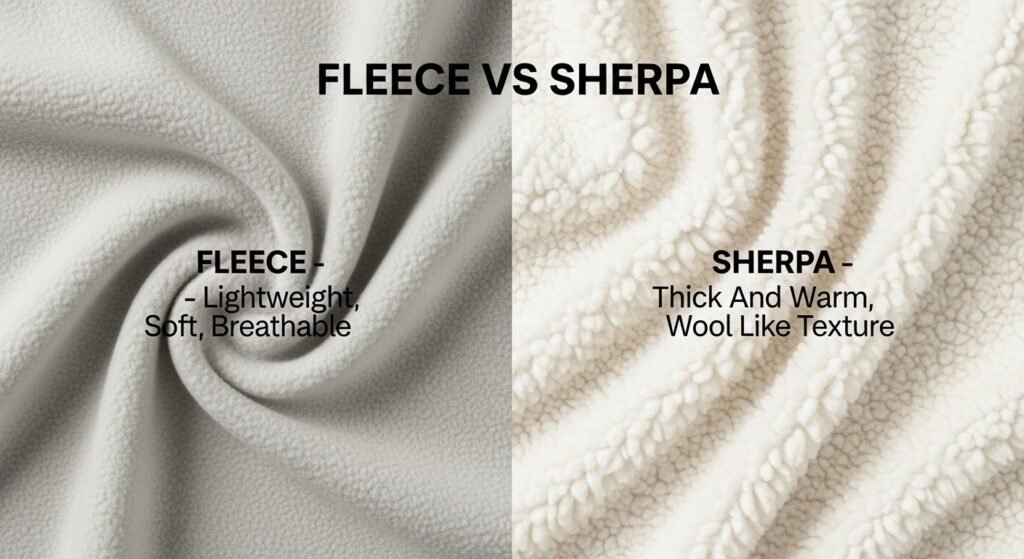
Quick Ans: The main difference between fleece vs sherpa is texture and warmth. Fleece is a smooth, lightweight synthetic fabric designed for insulation, while sherpa is a soft, fluffy material that mimics sheep wool and provides extra warmth. Both are cozy, but they serve slightly different comfort needs.
Many people compare fleece vs sherpa when choosing warm clothing or blankets. Both fabrics feel soft. Both are widely used in jackets, hoodies, and winter accessories.
However, they are not the same.
Fleece has a smooth and slightly fuzzy surface. Sherpa feels thicker and fluffier, similar to wool. Because of this difference, each fabric creates a unique warmth experience.
Shoppers often feel confused when they see both options in stores. One looks lighter and sleek. The other looks plush and heavy. Without understanding the difference, it becomes hard to choose the right one.
This guide will help you understand fleece vs sherpa clearly. You will learn definitions, advantages, disadvantages, real world uses, common mistakes, and helpful tips. By the end, you will know exactly which fabric suits your needs.
Quick Answer: Fleece vs Sherpa
To understand fleece vs sherpa quickly, focus on texture and weight.
| Feature | Fleece | Sherpa |
|---|---|---|
| Texture | Smooth and soft | Fluffy and wool like |
| Warmth | Moderate to high | High |
| Weight | Lightweight | Heavier |
| Breathability | Good | Moderate |
| Appearance | Flat surface | Thick, textured surface |
In simple terms, fleece is lighter and smoother, while sherpa is thicker and warmer.
What Is Fleece?
Fleece is a synthetic fabric made from polyester fibers. It is designed to trap heat while remaining lightweight and breathable.
The material became popular because it offers warmth without the heaviness of wool.
Key Features of Fleece
Fleece has several important qualities:
- Lightweight feel
- Soft texture
- Good insulation
- Quick drying ability
- Easy maintenance
Because it dries quickly, fleece works well for outdoor activities.
Common Uses of Fleece
Fleece appears in many everyday items:
- Jackets
- Hoodies
- Blankets
- Hats and gloves
- Sportswear
People often choose fleece for layering during cold weather.
How Fleece Is Made
Manufacturers create fleece through a process that includes:
- Melting polyester fibers
- Spinning them into threads
- Weaving the fabric
- Brushing the surface to create softness
As a result, fleece feels soft while staying lightweight.
What Is Sherpa?
Sherpa is a fabric designed to look and feel like sheep wool. It is usually made from polyester or a blend of fibers.
The inside of many jackets uses sherpa lining for added warmth.
Key Features of Sherpa
Sherpa stands out because of its texture:
- Thick and fluffy surface
- Excellent heat retention
- Soft wool like feel
- Cozy and plush appearance
Because of its structure, sherpa traps more heat than fleece.
Common Uses of Sherpa
Sherpa is commonly used in:
- Jacket linings
- Blankets
- Hoodies
- Winter coats
- Slippers
This fabric works best in colder environments.
How Sherpa Is Made
The manufacturing process includes:
- Creating a base fabric
- Adding loops of yarn
- Brushing the loops to create a fluffy texture
Therefore, sherpa gains its signature wool like appearance.
Key Differences Between Fleece vs Sherpa
Texture
The most noticeable difference in fleece vs sherpa is texture. Fleece feels smooth and soft. Sherpa feels thick and fluffy.
Warmth
Sherpa provides higher insulation. Fleece still keeps you warm but feels lighter.
Weight
Fleece remains lightweight and easy to carry. Sherpa feels heavier due to its dense structure.
Breathability
Fleece allows better airflow. Sherpa traps heat more effectively but may feel less breathable.
Appearance
Fleece has a flat and uniform look. Sherpa appears textured and resembles wool.
Advantages and Disadvantages
Advantages Fleece
Fleece offers many benefits:
- Lightweight and comfortable
- Easy to wash and dry
- Breathable for active use
- Affordable
Fleece Disadvantages
Some drawbacks include:
- Less warmth in extreme cold
- Can pill over time
- Not as plush as sherpa
Advantages of Sherpa
Sherpa provides excellent comfort:
- Very warm and insulating
- Soft and cozy feel
- Stylish winter appearance
Sherpa Disadvantages
However, sherpa also has limits:
- Heavier than fleece
- Can trap too much heat
- Takes longer to dry
Choosing between fleece vs sherpa depends on comfort needs and weather conditions.
Real World Examples
Outdoor Activities
For hiking or running, fleece works better because it is lightweight and breathable. Sherpa may feel too warm during physical activity.
Home Comfort
Sherpa blankets are perfect for cold nights. Fleece blankets also work well but feel lighter.
Winter Clothing
Many winter jackets combine both fabrics. The outer layer may use fleece, while the inner lining uses sherpa for extra warmth.
These examples show how fleece vs sherpa fits different situations.
Regional and Climate Usage
Cold Climates
In very cold regions, sherpa is often preferred because it provides maximum warmth.
Mild Winters
Fleece works well in moderate climates where heavy insulation is not needed.
Indoor Use
Both fabrics are popular indoors. However, sherpa is often chosen for comfort, while fleece is used for practicality.
Climate plays a key role in choosing between fleece vs sherpa.
Related Concepts and Comparisons
Fleece vs Wool
Wool is natural and warmer but heavier. Fleece is lighter and easier to maintain.
Sherpa vs Faux Fur
Sherpa mimics wool, while faux fur imitates animal fur and often looks more decorative.
Fleece vs Sherpa vs Wool
| Feature | Fleece | Sherpa | Wool |
|---|---|---|---|
| Weight | Light | Medium to heavy | Heavy |
| Warmth | Moderate | High | Very high |
| Material | Synthetic | Synthetic blend | Natural |
| Maintenance | Easy | Moderate | More care needed |
Understanding these materials helps clarify the fleece vs sherpa comparison.
Common Mistakes About Fleece vs Sherpa
Assuming They Are the Same
Although both feel soft, they differ in texture, warmth, and weight.
Choosing Only Based on Looks
Sherpa looks cozy, but it may feel too warm for active use.
Ignoring Climate Needs
Warm climates require lighter fabrics like fleece. Cold climates benefit from sherpa.
Poor Washing Practices
Improper washing can damage fibers. Always follow care instructions.
Avoiding these mistakes helps extend fabric life and comfort.
Beginner to Advanced Buying Tips
Beginner Level
Start with fleece if you want a simple and versatile option.
Intermediate Level
Choose sherpa lined jackets for extra warmth during winter.
Advanced Level
Look for hybrid designs that combine fleece and sherpa for balanced comfort.
These tips help you choose wisely when comparing fleece vs sherpa.
Step By Step Selection Scenario
Imagine you need a winter jacket.
If you choose fleece:
- Pick lightweight design
- Ensure good fit
- Use for layering
- Wear during active use
If you choose sherpa:
- Select thicker jacket
- Check lining quality
- Use in colder weather
- Wear for comfort and warmth
Each option serves a different purpose.
Exercises With Answers
Exercise 1
Which fabric is fluffier in the fleece vs sherpa comparison?
Answer: Sherpa.
Exercise 2
Which material is lighter?
Answer: Fleece.
Exercise 3
Which fabric provides more warmth?
Answer: Sherpa.
Exercise 4
Which is better for active use?
Answer: Fleece.
Exercise 5
True or False: Sherpa is always lighter than fleece.
Answer: False.
When Should You Choose Fleece vs Sherpa?
Choose fleece if you:
- Need lightweight warmth
- Plan outdoor activities
- Want breathable fabric
Choose sherpa if you:
- Want maximum warmth
- Prefer cozy texture
- Stay in very cold environments
Your choice depends on comfort level and usage.
FAQs About Fleece vs Sherpa
What is the main difference between fleece vs sherpa?
The main difference is texture and warmth. Fleece is smooth and lightweight, while sherpa is thick and fluffy.
Which is warmer, fleece or sherpa?
Sherpa is generally warmer because it traps more heat.
Is fleece better for outdoor activities?
Yes. Fleece is lighter and more breathable, making it suitable for active use.
Does sherpa feel like wool?
Yes. Sherpa is designed to mimic the texture of sheep wool.
Which fabric is easier to wash?
Fleece is easier to wash and dries faster than sherpa.
Can sherpa be used in summer?
No. Sherpa is too warm for hot weather.
Is fleece waterproof?
No. Fleece resists light moisture but is not fully waterproof.
Does sherpa last long?
Yes. With proper care, sherpa can last a long time.
Which is better for blankets?
Both work well. Sherpa is warmer, while fleece is lighter.
Can both fabrics be combined?
Yes. Many jackets use fleece outside and sherpa inside.
Conclusion
Understanding fleece vs sherpa helps you choose the right fabric for comfort and warmth. Although both materials feel soft and cozy, they serve different purposes.
Fleece is lightweight, breathable, and ideal for active use. It works well in mild weather and everyday wear. Sherpa, on the other hand, is thicker, warmer, and designed for colder conditions.
The choice depends on your needs. If you want flexibility and movement, fleece is the better option. If you prefer maximum warmth and softness, sherpa is the right choice.
Both fabrics offer great benefits when used correctly. By understanding their differences, you can make smarter buying decisions and enjoy better comfort in every season.
Discover More:-
- Septic vs Sewer: Key Differences, Costs, Maintenance, and Homeowner Guide
- Flyers vs Fliers: Differences, Meaning, Usage, and Examples

Robert Mitchell is a U.S.-based writer at Gramtivo.Com who focuses on grammar, writing improvement, and language-related content. He holds a degree in English and Linguistics from a U.S. university. His work aims to help readers enhance their writing skills with clear and practical guidance.