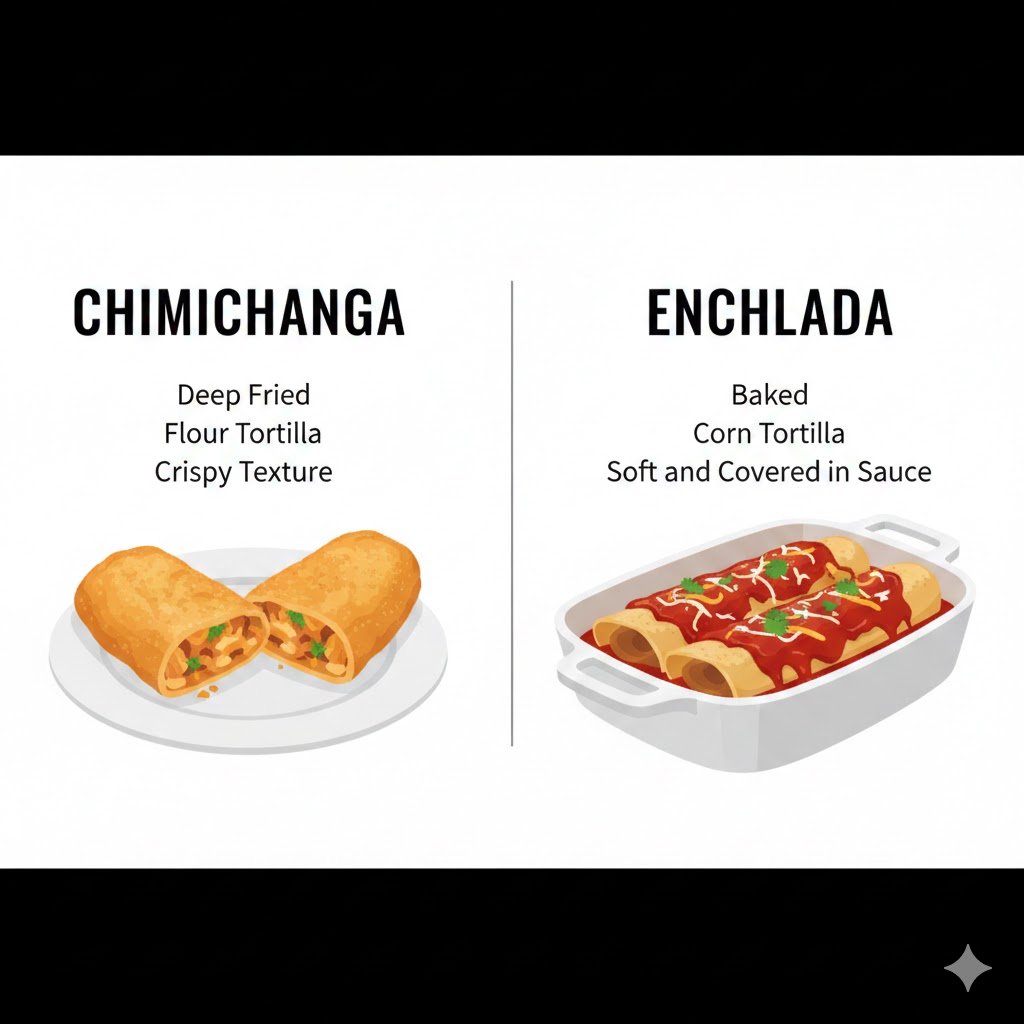
Quick Answer: The main difference between a chimichanga vs enchilada is how they are cooked. A chimichanga is a deep fried burrito that turns crispy and golden, while an enchilada is a soft tortilla rolled around filling and covered in sauce, then baked. Both are popular Mexican inspired dishes, but they offer very different textures and flavors.
Many people search for chimichanga vs enchilada because the two dishes look similar at first glance. Both use tortillas. Both contain fillings like meat, beans, and cheese.
However, they are not the same.
The confusion usually starts when someone sees rolled tortillas on a plate and assumes they are identical. In reality, the cooking method changes everything. Texture, taste, calories, and even cultural background differ between the two.
Choosing the wrong one can leave you surprised. For example, if you expect something soft and receive a crispy fried dish, the experience feels completely different. On the other hand, if you want crunch but get a saucy meal, you may feel disappointed.
Therefore, understanding chimichanga vs enchilada helps you order confidently and cook smarter at home. In this complete guide, you will learn definitions, cooking methods, advantages, disadvantages, real world examples, and practical exercises. By the end, the difference will be clear.
Quick Answer: Chimichanga vs Enchilada
To quickly understand chimichanga vs enchilada, look at the cooking method and texture.
| Feature | Chimichanga | Enchilada |
|---|---|---|
| Cooking Method | Deep fried | Baked |
| Texture | Crispy outside | Soft and saucy |
| Sauce | Added after frying or on top | Baked in sauce |
| Origin Style | Tex Mex and Southwestern US | Traditional Mexican |
| Calories | Higher | Lower |
| Messiness | Less messy | More saucy |
In short, a chimichanga is crispy and fried. In contrast, an enchilada is soft and covered in sauce.
What Is a Chimichanga?
A chimichanga is essentially a burrito that has been deep fried until golden brown. Typically, it uses a flour tortilla. After filling the tortilla with meat, beans, rice, or cheese, the cook rolls it tightly and fries it in hot oil.
As a result, the outside becomes crispy while the inside stays warm and soft.
Common fillings include:
- Shredded beef
- Chicken
- Refried beans
- Rice
- Cheese
- Peppers
After frying, many restaurants top the chimichanga with sour cream, guacamole, salsa, or melted cheese. Consequently, the dish becomes rich and satisfying.
Where Did Chimichangas Come From?
Although chimichangas are associated with Mexican flavors, they are most strongly linked to Mexican American cuisine in the Southwestern United States. In particular, Arizona often claims credit for popularizing the dish.
Food historians believe the dish was created by accident when a burrito was dropped into hot oil. Instead of throwing it away, the cook served it fried. Since then, it has become a menu favorite in Tex Mex restaurants.
How It Is Cooked
First, prepare the filling.
Next, place the filling inside a flour tortilla.
Then, roll it tightly and secure the ends.
After that, deep fry in hot oil until crispy.
Finally, drain excess oil and add toppings.
Because of the frying process, the chimichanga develops its signature crunch.
What Is an Enchilada?
An enchilada is a rolled tortilla filled with meat, cheese, beans, or vegetables and covered in chili sauce before baking. Traditionally, enchiladas use corn tortillas rather than flour tortillas.
The word enchilada means “covered in chili,” which clearly reflects how the dish is prepared.
Unlike chimichangas, enchiladas are not fried. Instead, they are assembled in a baking dish, coated generously with sauce, sprinkled with cheese, and baked until bubbling.
Types of Enchiladas
There are several popular types, and each offers a unique flavor profile:
- Red enchiladas with red chili sauce
- Green enchiladas with tomatillo sauce
- Enchiladas suizas with creamy sauce
- Cheese enchiladas
Moreover, different regions of Mexico prepare enchiladas in their own way. Therefore, the taste and style can vary widely depending on location.
Key Differences Between Chimichanga vs Enchilada
Cooking Style
The most important difference in chimichanga vs enchilada is the cooking method. Chimichangas are deep fried. Enchiladas are baked.
Tortilla Type
Generally, chimichangas use flour tortillas because they hold together during frying. Meanwhile, enchiladas traditionally use corn tortillas, which absorb sauce well.
Texture
Due to frying, chimichangas have a crunchy exterior. In contrast, enchiladas are soft and moist from the sauce.
Flavor Experience
A chimichanga delivers:
- Crunchy texture
- Rich flavor
- Heavier bite
An enchilada provides:
- Saucy consistency
- Tender texture
- Balanced flavor
Therefore, even with similar fillings, the experience differs significantly.
Advantages and Disadvantages
Chimichanga Advantages
- Crispy and satisfying
- Very filling
- Holds shape well
- Less messy to eat
Chimichanga Disadvantages
- Higher calorie content
- More oil and fat
- Can feel heavy
Enchilada Advantages
- Rich sauce flavor
- Often lower in fat
- More traditional
- Highly customizable
Enchilada Disadvantages
- Can become soggy if overcooked
- Requires baking dish
- Messier to serve
As you can see, the choice in chimichanga vs enchilada depends on preference and dietary goals.
Nutritional Comparison
Nutritional values vary by recipe; however, general comparisons are helpful.
| Nutrient | Chimichanga | Enchilada |
|---|---|---|
| Calories | 400 to 800+ | 250 to 500 |
| Fat | High | Moderate |
| Protein | Moderate to high | Moderate |
| Carbs | High | Moderate |
Because chimichangas are deep fried, they usually contain more fat and calories. On the other hand, enchiladas tend to be lighter, especially when filled with vegetables or lean protein.
Real World Examples
At a Restaurant
Imagine you are extremely hungry. If you want something crunchy and indulgent, choose a chimichanga. However, if you prefer a softer and saucier dish, enchiladas are the better option.
At Home Cooking
When cooking at home, safety matters. Frying requires hot oil, which can be risky. Therefore, enchiladas are often easier for beginners. Nevertheless, if you own an air fryer, you can make a lighter chimichanga with less oil.
At a Party
For buffet style serving, chimichangas maintain their shape and are easier to plate individually. Meanwhile, enchiladas are perfect for family style meals served directly from the baking dish.
Regional and Global Usage
In Mexico
Enchiladas are deeply rooted in Mexican culinary tradition. They appear in many regional forms across the country. In contrast, chimichangas are rarely found in traditional Mexican kitchens.
In the United States
Both dishes are popular in Tex Mex restaurants. Particularly in Arizona and Texas, chimichangas are menu highlights. Meanwhile, enchiladas are common nationwide.
Globally
Internationally, enchiladas are more widely recognized as authentic Mexican cuisine. Chimichangas, however, are viewed as an American adaptation.
Thus, cultural background plays a major role in the chimichanga vs enchilada discussion.
Related Concepts and Comparisons
Chimichanga vs Burrito
A burrito is soft and not fried. A chimichanga is essentially a burrito that has been deep fried.
Enchilada vs Burrito
Enchiladas are baked in sauce. Burritos are wrapped and served without baking in sauce.
Chimichanga vs Enchilada vs Taco
| Dish | Fried | Sauce Covered | Soft | Crispy |
|---|---|---|---|---|
| Chimichanga | Yes | Sometimes | Inside | Outside |
| Enchilada | No | Yes | Yes | No |
| Taco | Sometimes | No | Sometimes | Often |
By understanding these related dishes, you can better grasp the full comparison of chimichanga vs enchilada.
Common Mistakes About Chimichanga vs Enchilada
Assuming They Are Identical
Although they share ingredients, the cooking method creates two distinct dishes.
Choosing the Wrong Tortilla
Using flour tortillas for traditional enchiladas changes the texture. Similarly, using corn tortillas for chimichangas can cause tearing during frying.
Overfilling the Tortilla
Too much filling can cause chimichangas to burst in hot oil. Likewise, overfilled enchiladas may fall apart in the baking dish.
Skipping Tortilla Warming
Cold tortillas crack easily. Therefore, always warm tortillas before rolling.
Beginner to Advanced Cooking Tips
Beginner Level
Start with store bought enchilada sauce for simplicity. Also, secure chimichangas with toothpicks before frying.
Intermediate Level
Try making homemade chili sauce. Additionally, experiment with baking chimichangas for a healthier option.
Advanced Level
Explore regional enchilada sauces from different parts of Mexico. Furthermore, test air frying techniques for crispy chimichangas with less oil.
As your skills improve, you can customize flavors and textures more confidently.
Step By Step Comparison Cooking Scenario
Suppose you have chicken, cheese, tortillas, and sauce.
If you prepare enchiladas:
- Warm corn tortillas.
- Add filling.
- Roll and place in baking dish.
- Cover with sauce.
- Bake until hot.
If you prepare chimichangas:
- Fill flour tortillas.
- Roll tightly and secure.
- Fry in hot oil.
- Drain excess oil.
- Add toppings.
Although the ingredients are similar, the outcome is completely different. Therefore, understanding chimichanga vs enchilada helps you choose the right cooking method.
Exercises With Answers
Exercise 1
Which dish is deep fried in the chimichanga vs enchilada comparison?
Answer: Chimichanga.
Exercise 2
Which tortilla is traditionally used for enchiladas?
Answer: Corn tortilla.
Exercise 3
If someone wants a crispy exterior, which dish should they choose?
Answer: Chimichanga.
Exercise 4
Which dish is baked in sauce?
Answer: Enchilada.
Exercise 5
True or False: Chimichangas are more traditional in Mexico than enchiladas.
Answer: False.
When Should You Choose Chimichanga vs Enchilada?
Choose a chimichanga if you:
- Love crispy texture
- Want a heavy, filling meal
- Enjoy fried comfort food
Choose enchiladas if you:
- Prefer saucy dishes
- Want a softer texture
- Desire a more traditional option
Ultimately, the decision depends on taste, health goals, and occasion.
FAQs About Chimichanga vs Enchilada
What is the biggest difference between chimichanga vs enchilada?
The biggest difference is cooking method. Chimichangas are deep fried, whereas enchiladas are baked in sauce.
Is a chimichanga the same as a fried enchilada?
No. In the chimichanga vs enchilada comparison, a chimichanga is a fried burrito made with flour tortilla, not a sauce baked corn tortilla.
Which is healthier, chimichanga or enchilada?
Generally, enchiladas are healthier because they are baked instead of deep fried.
Do enchiladas always use corn tortillas?
Traditionally yes. However, some modern recipes use flour tortillas.
Can you bake a chimichanga instead of frying it?
Yes. Baking or air frying offers a lighter version of a chimichanga.
Why are enchiladas covered in sauce?
The sauce defines the dish and adds moisture and flavor in the chimichanga vs enchilada comparison.
Are chimichangas authentic Mexican food?
They are more common in Mexican American cuisine than in traditional Mexican cooking.
Are enchiladas spicy?
They can be mild or spicy depending on the chili sauce used.
Which reheats better, chimichanga or enchilada?
Enchiladas usually reheat better because the sauce keeps them moist.
Can both dishes use the same fillings?
Yes. Chicken, beef, beans, and cheese work in both dishes. The cooking method creates the main difference.
Conclusion
The comparison of chimichanga vs enchilada comes down to one main factor: cooking method. Chimichangas are deep fried, crispy, and rich. Enchiladas are baked, soft, and covered in flavorful sauce.
Although both dishes use similar ingredients, their texture and experience are completely different. Therefore, your choice should depend on your mood, health preference, and dining occasion.
If you crave crunch and indulgence, order a chimichanga. However, if you want a balanced, saucy meal rooted in tradition, choose enchiladas.
For home cooks, enchiladas are simpler and safer to prepare. Meanwhile, chimichangas can be a fun treat when you want something special.
Now that you clearly understand chimichanga vs enchilada, you can confidently decide which dish belongs on your plate.

Jennifer Collins is a professional grammar expert and language educator at gramtivo.com, specializing in English grammar, writing skills, and language improvement. She holds a Master’s degree in English Language and Literature from a recognized university in the United States. With years of teaching and content development experience, she is dedicated to helping learners improve their communication skills with clear and practical guidance.